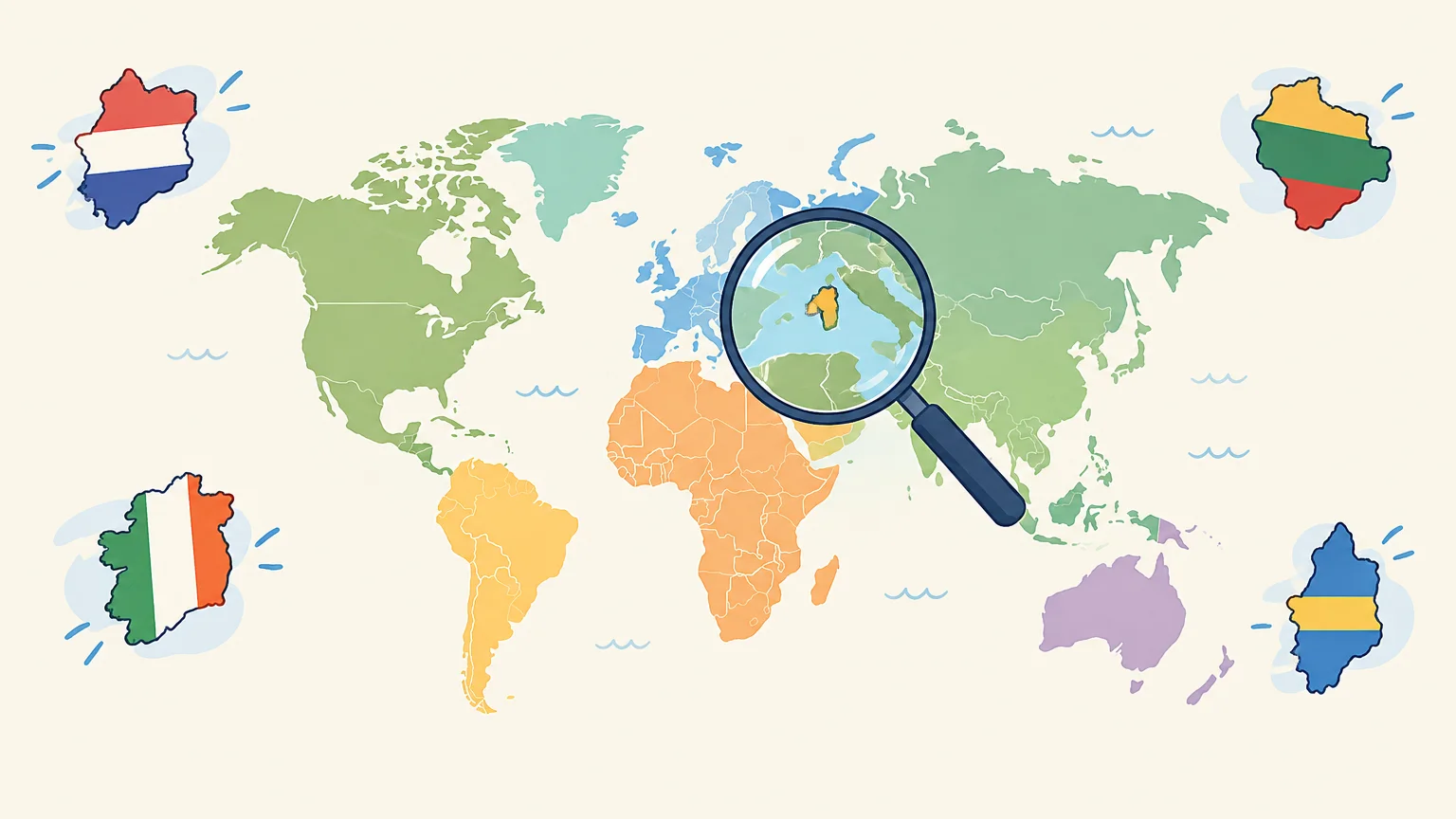

Can a few minutes with a world map make country names easier to retrieve later? A daily geography quiz gives you a small, repeatable prompt, whether you identify a flag, locate a country, name a capital, or solve a mystery from clues. If you’re comparing formats, our best daily geography games page gives you a place to start.
The format matters because different questions exercise different knowledge. A flag puzzle trains visual recognition, while a map question asks you to connect a place with its position and neighbors. Choose a quiz that matches your goal, and treat wrong answers as useful signals about what to review.
What makes a geography quiz “daily”?
A daily quiz presents a new challenge on a regular schedule, often with the same puzzle available to everyone that day. That shared answer gives you a simple way to compare results with classmates or friends, while the limited daily round makes it easier to fit practice into a routine.
Some quizzes focus on one question type, such as naming a capital or recognizing a flag. Others combine several rounds around a country or theme. Either way, the useful part is the attempt: before looking up the answer, pause and recall what you already know.
Which quiz format fits your geography goal?
Start with the skill you want to practise. A quiz that asks for country names alone won’t exercise every part of geography, so choose a format that makes you think about the places, symbols, or facts you want to learn.
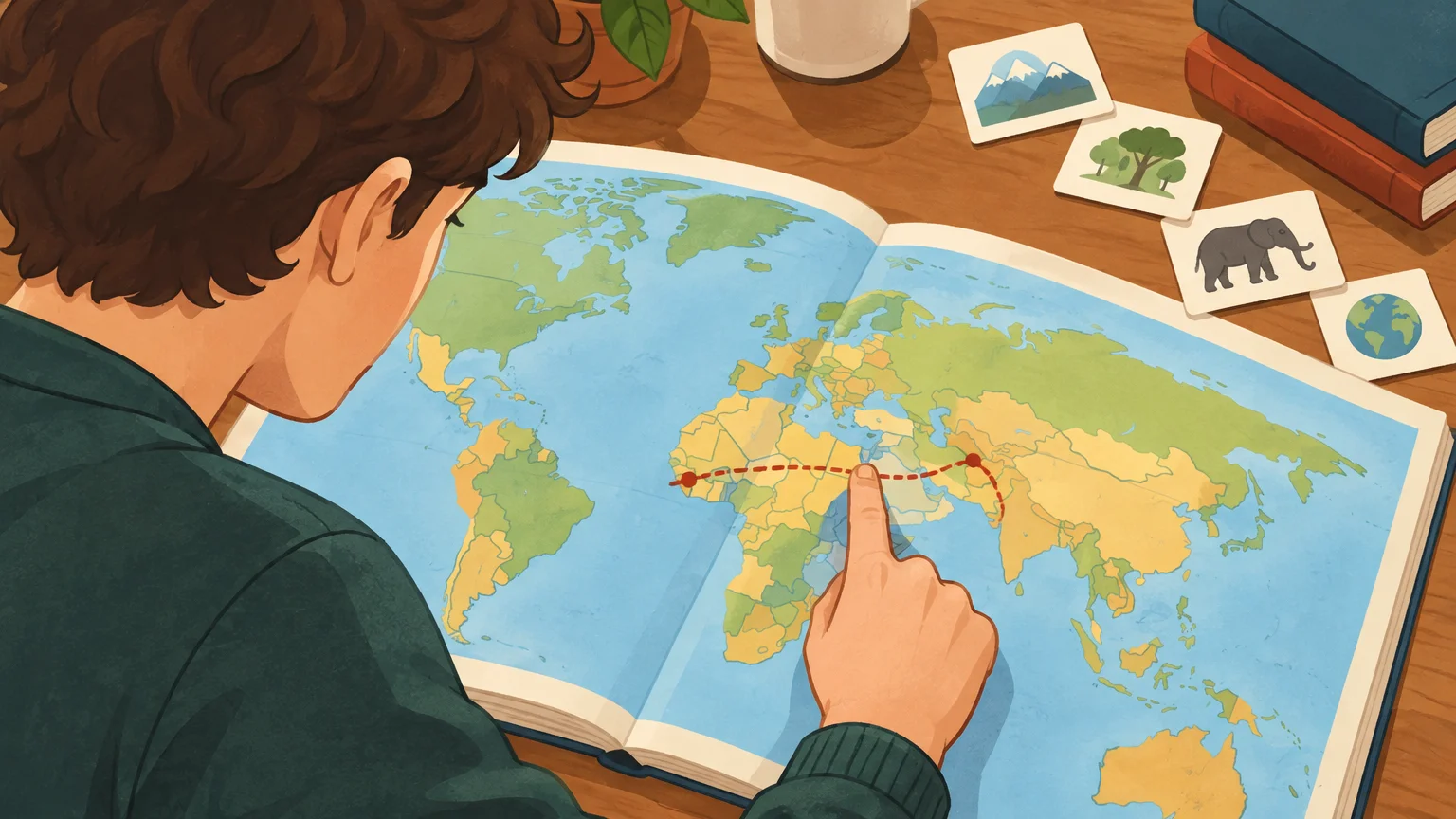
- Country identification questions ask you to name a country from its location, outline, or facts. They suit broad country knowledge and spatial reasoning.
- Flag recognition builds familiarity with national flags and the visual details that distinguish similar designs.
- Capital quizzes connect countries with their capital cities. Add a map or continent clue when you want context, not just memorization.
- Map-based quizzes ask you to locate countries or identify neighbors. They’re useful when you want to understand where a place sits in relation to others.
- Progressive clues reveal information step by step, such as a continent, language, or population. They let you reason toward an answer instead of guessing from one image.
For a mix of these approaches, our daily geography quiz options article covers different quiz styles. At Flagdle, we bring together flags, capitals, country clues, silhouettes, and themed quizzes. Our Daily Challenge follows one mystery country through connected country-focused mini-games. The browser game covers 195 UN-recognised countries and supports English and French, with no account required.
Why do clues and answer feedback matter?
A useful quiz asks you to retrieve an answer, then gives you enough information to understand whether your thinking was on track. Guessing a country from a silhouette, for example, can prompt you to consider its shape, location, and neighboring regions. A hint makes the next attempt more informed, rather than simply repeating the same guess.
A 2026 perspective in npj Science of Learning analyzed 23,850 publications and described evidence that active recall supports learning compared with passive study. The authors also note that findings may not apply equally to every learner group. Read the 2026 research perspective as support for trying active recall, not as proof that one quiz format works for everyone.
When you miss an answer, take a moment to connect the reveal to a reason: perhaps you recognized the continent but confused two neighboring countries. That short explanation makes the result more useful than a score alone.
How often should you practise?
Keep the routine short enough that you’ll actually return to it. A daily round can provide a convenient prompt, but it doesn’t mean you need to spend every day testing the same facts. Mix new questions with a quick review of past mistakes, and leave time to revisit what you learned.
A 2026 study followed 100 high-school students in Shenyang for 12 weeks, using quizzes in mathematics, science, and history. Its medium-frequency group had the highest recall, application, and retention scores among the groups studied. The results don’t establish an ideal schedule for geography games, but they do caution against assuming that more frequent quizzes always produce proportionally greater gains. See the 2026 quiz-frequency study for its scope and findings.
In geography teaching, the Geographical Association discusses retrieval practice and spaced practice as useful approaches, while noting that evidence about quiz effects is not conclusive. You can use a daily puzzle as one small prompt, then return to challenging facts later. Our article on how to build a daily geography habit offers ideas for keeping that practice manageable.
How can you choose a quiz and learn from each round?
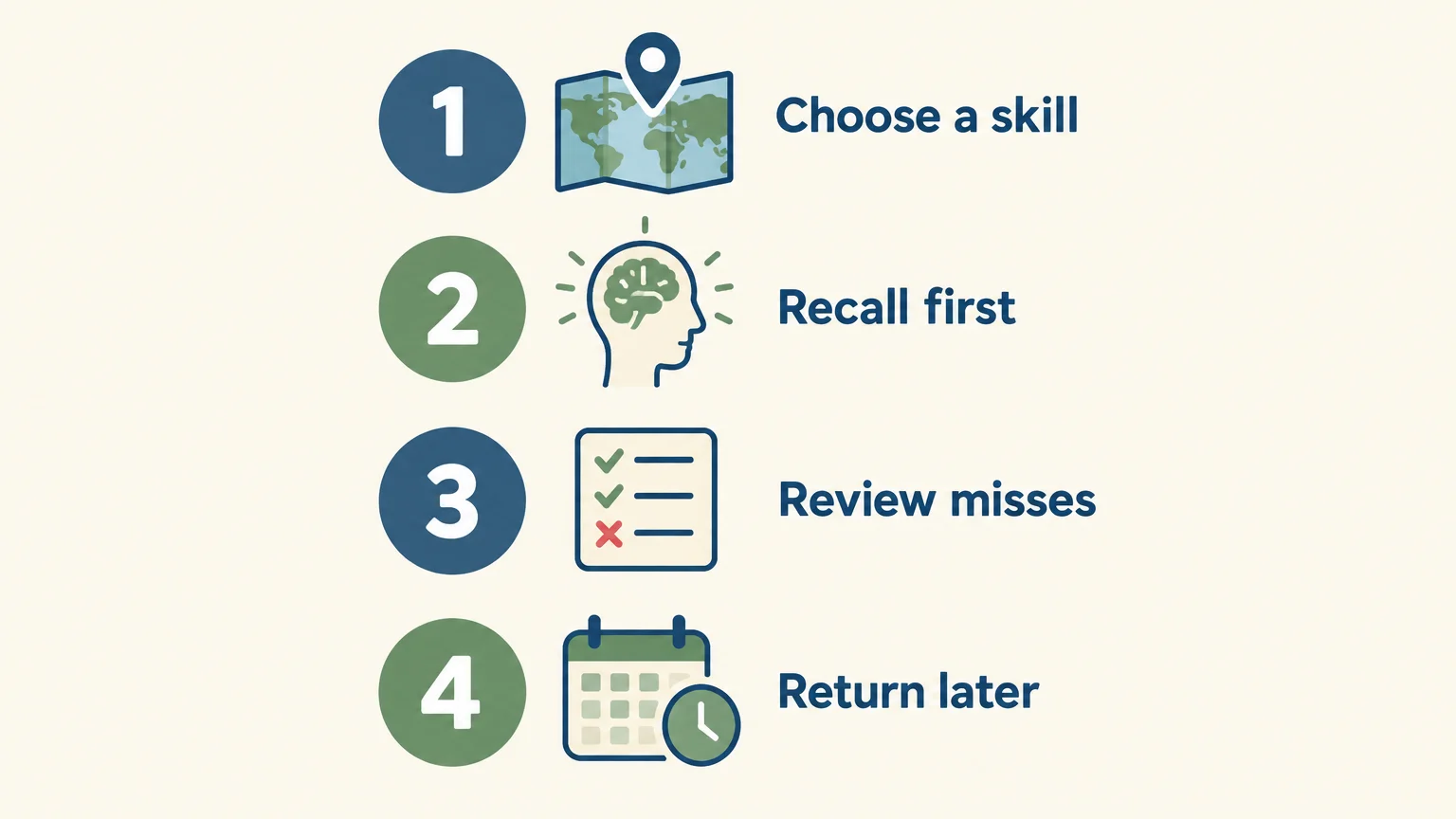
Before you start, decide what you want to practise and how much support you prefer. Then use a simple routine: make an attempt from memory, pay attention to the clue or correction, and revisit a difficult answer after some time has passed.
- Choose one focus, such as flags, capitals, country locations, or geographic facts.
- Try to answer before using a hint or checking a reference.
- After a miss, name the detail that would help you recognize the answer next time.
- Return to difficult items later, rather than repeating guesses immediately.
If you’ve finished a daily puzzle and want more practice, our guide to replay daily geography quizzes explains how to use repeat play. Flagdle also has replay practice for random flags after the daily flag puzzle, so you can keep working on recognition without waiting for the next daily round.
Make each quiz a useful practice round
The right daily geography quiz matches the kind of knowledge you want to recall, whether that’s capitals, flags, country locations, or clues. Try to answer before revealing help, learn from missed questions, and return to tricky facts later. A steady, focused routine makes each round more useful than chasing a perfect score.
Put a Daily Geography Challenge Into Practice
If you want a short routine that moves beyond memorising one flag, choose a game that asks you to identify countries through several kinds of clues. Our Daily Challenge links country-focused mini-games around one mystery country, so each answer gives the next round more context.

Flagdle runs in your browser, is free to play without an account, and covers 195 UN-recognised countries in English and French. Choose flags, capitals, factual hints, country silhouettes, or themed quizzes, then compare Daily Challenge scores with other players. You can add the responsive web app to your device home screen. When you have a few minutes, play the daily geography game.
Frequently Asked Questions
What is a daily geography quiz?
It’s a geography question or puzzle published on a daily schedule. Formats include identifying countries, naming capitals, recognizing flags, and solving map or clue challenges.
What skills can a geography quiz practise?
Depending on its format, a quiz can practise country recognition, capital-city recall, flag recognition, and map reading. Pick questions that match the facts or spatial skills you want to strengthen.
Are daily quizzes enough to learn geography?
A quiz gives you a chance to recall facts, but learning also means understanding why an answer is correct. Use feedback, references, and later review to build context around what you missed.
How do I choose between a map, flag, or capital quiz?
Choose a map quiz for locations and neighbors, a flag quiz for visual recognition, or a capital quiz for country and city associations. If you’re unsure, try a format that combines clues with more than one type of question.
Can I practise more after finishing a daily puzzle?
Some games provide repeatable practice in addition to the daily round. At Flagdle, you can practise random flags after completing the daily flag puzzle.