
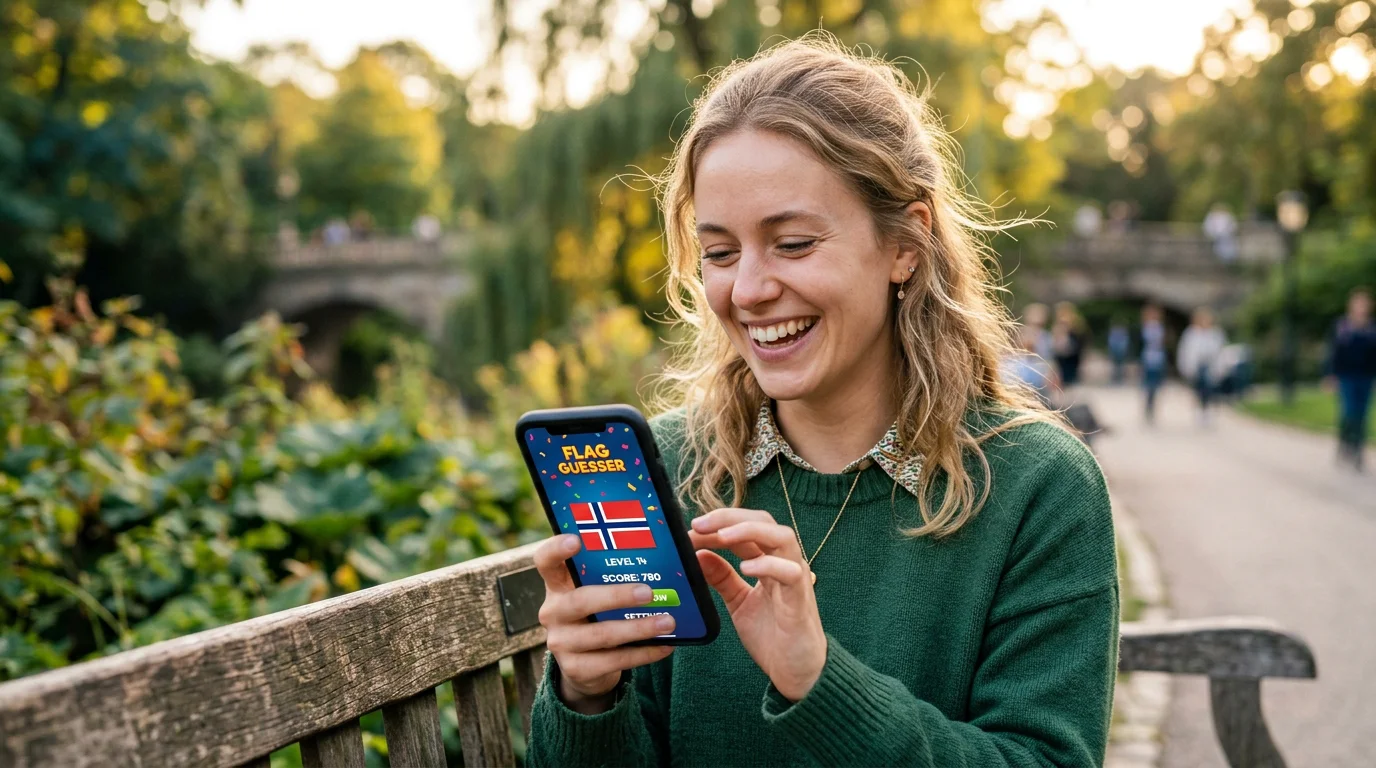

Here's a fun fact: most people can recognize a handful of flags on sight, yet freeze the moment they hit anything outside their home continent. That gap is exactly why a good flag guessing game is so weirdly addictive. You get instant feedback, a tiny dopamine hit, and you're learning without noticing. If you want the short version, just play our daily flag game for a week and watch your score climb.
The French search for a "drapeaux jeu" (flag game) reflects a real appetite for playful learning, and the numbers back it up. The gamified education space is booming, and daily-challenge formats inspired by Wordle have pushed millions of casual players toward geography they'd never crack open in a textbook. Below, we'll break down why these games work, what to look for, and how to actually get good.
Why a flag game beats flashcards
Think about how you usually try to memorize something. You reread it. You highlight it. You feel productive. Then you forget it three days later. That feeling of productivity is a trap, and cognitive science has known it for a while.
In a recent review of study habits, researchers found that 91% of students relied on passive re-reading, even though retrieval practice (testing yourself) produces far stronger long-term retention. A flag game is retrieval practice in disguise. Every guess forces your brain to pull the answer out instead of just recognizing it, and that struggle is exactly what makes the memory stick.
Pair that with spaced repetition, where you revisit material at growing intervals, and you've got the two most evidence-backed learning techniques wrapped into a game you play for fun. A daily flag puzzle naturally spaces your exposure: you see new countries every day, and the tricky ones keep coming back until they click.

The daily-challenge format that hooked everyone
Ever wondered why "one puzzle a day" games exploded? Scarcity. When you only get one shot per day, you actually show up. No infinite scroll, no burnout, just a quick hit and a reason to come back tomorrow.
Our version leans into that. The core mode gives you a flag hidden behind 9 tiles, and you get 3 tries to name the country. Each guess peels back more of the flag, so you're never totally stuck. It's the same flag for every player worldwide that day, which means you can compare scores with friends or climb the daily, weekly, and monthly leaderboards.
This format matters commercially too. The gamification in education market is projected to grow from $2.5 billion in 2025 to $3.19 billion in 2026, a 27.5% jump driven by falling student engagement and demand for experiential learning. Daily geography games are riding that wave precisely because they turn a chore into a ritual.
More than flags: capitals, silhouettes, and quizzes
Flags are the gateway drug, but real geography knowledge needs variety. That's why sticking to a single mode gets stale fast, and why the better platforms bundle several ways to learn.
Here's how the modes stack up in our game:
- Flags mode: identify the country in 3 tries with 9 tiles revealing progressively.
- Capitals mode: 6 tries, with progressive hints on the continent then the first letter.
- Worldle-style silhouette: 6 tries to name a country from its outline.
- Themed quizzes: 10 fresh questions a day for a quick trivia fix.
- Daily challenge: the same puzzle for everyone, with global rankings.
Rotating between these hits different memory pathways. Recognizing a flag, recalling a capital, and matching a silhouette all reinforce the same country from different angles. If you want to drill the visual side specifically, our flag memorization game is built exactly for that kind of repetition.
How the top flag games actually compare
Not all flag games play the same way. Some throw you a timer and make you type every country before the clock runs out. Others are pure multiple-choice, which is easier but teaches recognition rather than recall. The daily-guess format sits in a sweet spot: low pressure, high retention.
| Feature | Our daily flag game | Typed speed quizzes | Multiple-choice apps |
|---|---|---|---|
| Format | Daily guess, progressive tiles | Timed typing sprint | Pick from 4 options |
| Tries per flag | 3 (with hints) | One shot, race the clock | Usually one tap |
| Countries covered | 195 UN members | 190-215 varies | 200 varies |
| Account required | No | Sometimes | Often |
| Intrusive ads | None | Varies | Frequent |
| Same puzzle for all players | Yes, daily | No | No |
The typed-sprint approach is great if you already know your flags and just want to speed-run them. Multiple-choice apps are gentle for beginners but let you coast on lucky guesses. For steady learning that actually sticks, a limited-try daily format keeps the challenge honest. And because we store your stats locally on your device, there's no server-side data collection to worry about.
Who actually benefits from playing
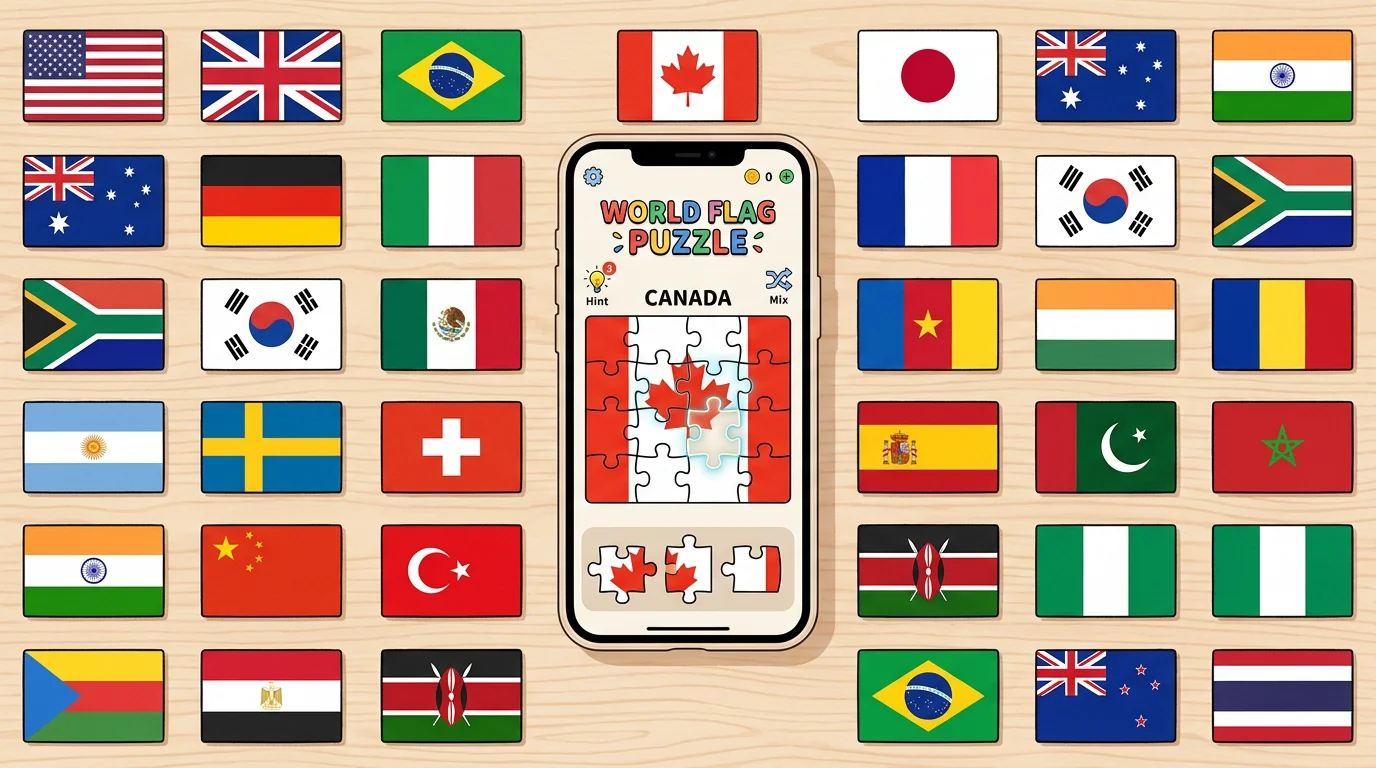
Picture a teacher who needs five calm minutes to settle a class. A daily flag puzzle is a ready-made ritual: everyone plays the same challenge, compares scores, and quietly absorbs geography. Students revising for exams get low-stakes retrieval practice. Travelers prepping an itinerary start recognizing flags and capitals before they even land.
Then there are the trivia diehards and the merely curious, the folks who just want to finally learn all 195 countries from the smallest to the most populous. The beauty is that the same game serves all of them without changing a thing. A quick round of our flag quiz works whether you're a total beginner or chasing a perfect streak.
The best learning tool is the one you'll actually open tomorrow. A 5-minute daily habit beats a 2-hour cram session you never repeat.
The bigger picture: gamified learning is here to stay
This isn't a passing fad. The wider gamification market was valued at around $36.46 billion in 2026, growing at a 25.24% CAGR, as game mechanics spread across education, training, and beyond. Geography games are a small but sticky slice of that, precisely because flags are visual, finite, and satisfying to master.
What makes a daily flag game durable is that it respects your time. You're not grinding levels or dodging paywalls. You show up, you guess, you learn one more country, and you leave. Over a few months, that quiet consistency adds up to genuinely knowing the world map, and you never once felt like you were studying.
Tips to get genuinely good, fast
Want to level up quicker? A few habits make a huge difference. First, don't rush your first guess; use the visible tiles to narrow the region before you commit. Second, learn flags in clusters, since neighboring countries often share colors and symbols. Third, mix modes so you're recalling capitals and silhouettes, not just flags.
Finally, play every single day, even when you're busy. The whole point of a daily geography challenge is the streak. Missing a day breaks the spacing that makes it work. Five minutes is all it takes, and the compounding is real.
Conclusion
Learning flags doesn't have to mean flashcards and boredom. With retrieval practice baked in and a market growing past $3 billion in 2026, a well-designed flag guessing game turns memorization into a habit you actually look forward to. The science is clear: testing yourself daily beats passive review every time, and a limited-try format keeps that challenge honest. What sets us apart is a genuinely free experience, no account, no intrusive ads, and the same daily puzzle for players everywhere, so your scores mean something. Ready to see how many of the 195 countries you really know? Jump into our daily flag quiz and start your streak today.
Frequently Asked Questions
Is the flag game really free?
Yes, completely. You can play right in your browser with no account and no intrusive ads. Your stats are stored locally on your device, not sent to a server.
How many countries can I learn?
The core mode covers all 195 UN-recognized countries. Between flags, capitals, silhouettes, and themed quizzes, you'll eventually recognize every nation from the smallest to the most populous.
How long does it take to see improvement?
Most players notice real progress within a couple of weeks of daily play. Since each round takes about five minutes, the daily challenge fits easily into a break or a classroom warm-up.