
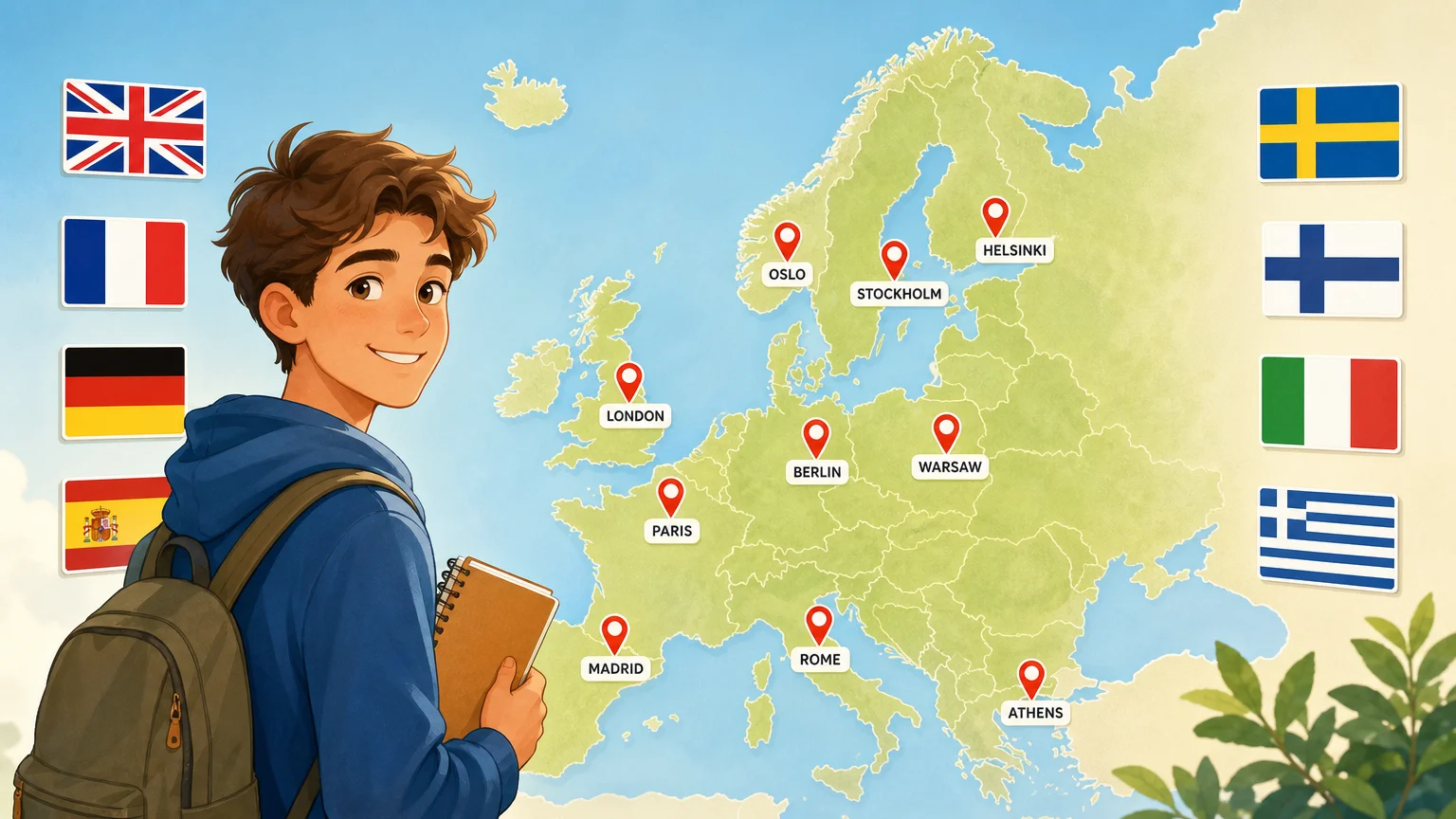

Can you identify a country from its flag, then name its capital without hesitation? If you’re building that skill, our European capitals and flags guide gives you a clear starting point for study, travel preparation, or a quick geography challenge.
Europe can be surprisingly difficult to organize because geographic, political, and cultural definitions do not always match. The list below uses a consistent scope, keeps current English names, and explains the edge cases that often create confusion.
What counts as a European country in this list?
The word Europe does not produce one universally accepted country count. For this reference, the core list includes internationally recognized sovereign states whose capitals are geographically located in Europe. Russia is included because it is transcontinental and its capital, Moscow, is in Europe.
This is a practical study list rather than a legal or political census. The Eurostat’s 2026 edition also separates EU and EFTA countries and uses regional groupings, which shows why a clear geographic scope matters.
Within this scope, you will find 44 countries. Kosovo is listed separately later because its international recognition is not treated uniformly. Cyprus, Türkiye, Armenia, Azerbaijan, Georgia, and Kazakhstan may also appear in broader European study materials because of political, cultural, or transcontinental classifications.
The complete list of European capitals and flags
Here is the core reference list in alphabetical order. The flag symbols are convenient for quick revision, although their appearance can vary slightly between devices. Pay attention to accented spellings such as Reykjavík and Chișinău.
| Country | Flag | Capital |
|---|---|---|
| Albania | 🇦🇱 | Tirana |
| Andorra | 🇦🇩 | Andorra la Vella |
| Austria | 🇦🇹 | Vienna |
| Belarus | 🇧🇾 | Minsk |
| Belgium | 🇧🇪 | Brussels |
| Bosnia and Herzegovina | 🇧🇦 | Sarajevo |
| Bulgaria | 🇧🇬 | Sofia |
| Croatia | 🇭🇷 | Zagreb |
| Czechia | 🇨🇿 | Prague |
| Denmark | 🇩🇰 | Copenhagen |
| Estonia | 🇪🇪 | Tallinn |
| Finland | 🇫🇮 | Helsinki |
| France | 🇫🇷 | Paris |
| Germany | 🇩🇪 | Berlin |
| Greece | 🇬🇷 | Athens |
| Hungary | 🇭🇺 | Budapest |
| Iceland | 🇮🇸 | Reykjavík |
| Ireland | 🇮🇪 | Dublin |
| Italy | 🇮🇹 | Rome |
| Latvia | 🇱🇻 | Riga |
| Liechtenstein | 🇱🇮 | Vaduz |
| Lithuania | 🇱🇹 | Vilnius |
| Luxembourg | 🇱🇺 | Luxembourg |
| Malta | 🇲🇹 | Valletta |
| Moldova | 🇲🇩 | Chișinău |
| Monaco | 🇲🇨 | Monaco |
| Montenegro | 🇲🇪 | Podgorica |
| Netherlands | 🇳🇱 | Amsterdam |
| North Macedonia | 🇲🇰 | Skopje |
| Norway | 🇳🇴 | Oslo |
| Poland | 🇵🇱 | Warsaw |
| Portugal | 🇵🇹 | Lisbon |
| Romania | 🇷🇴 | Bucharest |
| Russia | 🇷🇺 | Moscow |
| San Marino | 🇸🇲 | San Marino |
| Serbia | 🇷🇸 | Belgrade |
| Slovakia | 🇸🇰 | Bratislava |
| Slovenia | 🇸🇮 | Ljubljana |
| Spain | 🇪🇸 | Madrid |
| Sweden | 🇸🇪 | Stockholm |
| Switzerland | 🇨🇭 | Bern |
| Ukraine | 🇺🇦 | Kyiv |
| United Kingdom | 🇬🇧 | London |
| Vatican City | 🇻🇦 | Vatican City |
Some pairs are easy because the country and capital are familiar, such as France and Paris or Italy and Rome. Others need deliberate practice, especially when several countries share similar colors, symbols, or regional naming patterns.
Why are some European flags and capitals easy to confuse?
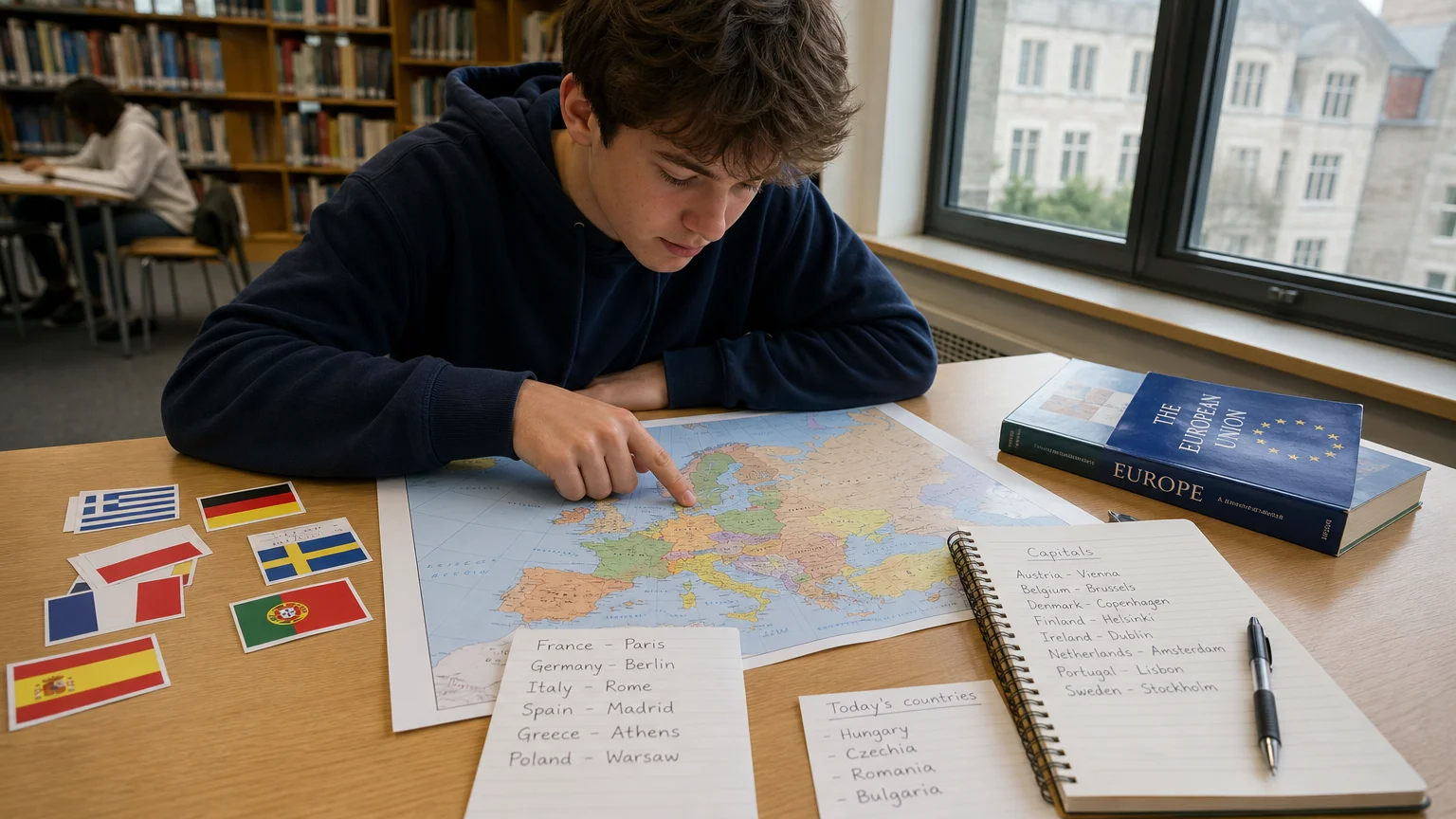
Why does memorizing a list feel harder than recognizing the same facts in a quiz? The answer is often visual interference. Your brain may remember red, white, and blue, but still confuse which arrangement belongs to the Netherlands, Luxembourg, France, Russia, or Croatia.
Start by learning each national flag as a visual signature. Look for the feature that separates it from nearby examples. Poland has a simple white and red horizontal design. Indonesia and Monaco use a similar arrangement, but they are not European countries. Croatia adds a central coat of arms, which gives its flag a stronger identifying detail.
Capitals need a different type of memory hook. Grouping helps because nearby countries often share historical or linguistic connections. For example, Bratislava, Ljubljana, and Skopje all belong to southeastern or central European revision groups, but their sounds and spellings are distinct when practiced together.
We make this type of recognition more active through our European flags mode. Instead of only reading a list, you identify a country from a gradually revealed flag, which encourages you to notice structure, color, and symbols.
It also helps to separate similar pairs into contrast sets:
- Austria and Latvia: both use red and white, but Latvia has a darker red and a narrower white band.
- Romania and Chad: their vertical blue, yellow, and red designs are close, so keep the European country attached to Bucharest.
- Slovakia and Slovenia: both use Pan-Slavic colors and coats of arms, so study their shield placement and national symbols.
- Netherlands and Luxembourg: both use red, white, and blue horizontal stripes, but their proportions and blue shades differ.
Which European edge cases should you know?
What should you do when two reputable lists contain different countries? First, check the rule behind each list. A geographic list may exclude countries whose capitals are outside Europe, while a political or cultural list may include them.
- Kosovo: Kosovo, 🇽🇰, has Pristina as its capital. Add it when your course or quiz uses a broader European political list.
- Cyprus: Cyprus, 🇨🇾, has Nicosia as its capital. It is frequently included in European political and cultural contexts, although the island lies in the eastern Mediterranean.
- Türkiye: Türkiye, 🇹🇷, has Ankara as its capital. The country is transcontinental, while Ankara lies in the Asian part of the country.
- Armenia: Armenia, 🇦🇲, has Yerevan as its capital. It is often grouped with Europe in cultural, political, and sporting contexts.
- Azerbaijan: Azerbaijan, 🇦🇿, has Baku as its capital. Its inclusion depends on whether the list follows a geographic, political, or cultural definition.
- Georgia: Georgia, 🇬🇪, has Tbilisi as its capital. Like Armenia and Azerbaijan, it is commonly treated as a boundary case.
- Kazakhstan: Kazakhstan, 🇰🇿, has Astana as its capital. A small part of the country lies west of the Ural River, but its capital is outside Europe.
These cases do not make one list automatically wrong. They show that you should learn the classification rule alongside the country and capital. That habit is especially useful in exams, travel quizzes, and geography competitions.
How can you memorize European capitals and flags faster?
A useful method is to combine three memory layers: image, name, and location. Look at the flag first, say the country aloud, then recall the capital without looking. After that, place the country in a regional group such as the Baltics, the Balkans, Scandinavia, or western Europe.
Use spaced recall instead of rereading the same list repeatedly. Review a small group today, test yourself tomorrow, and revisit difficult pairs several days later. The European Union’s Council activity book uses country facts, capitals, and flags together in an educational format, which reflects the value of connecting these facts rather than studying them in isolation.
Try these memory hooks:
- Attach the capital to a distinctive flag detail, such as Switzerland’s white cross or Portugal’s coat of arms.
- Build short regional groups instead of trying to memorize all 44 pairs at once.
- Write the country on one side of a card and the flag, capital, and region on the other.
- Say difficult names aloud, especially Chișinău, Ljubljana, Bratislava, and Andorra la Vella.
- Keep a short error list and review only the pairs you missed.
For a broader reference beyond Europe, you can also use our World capitals list. It helps you compare European pairs with capitals from other continents without changing your revision method.
What does a simple daily practice routine look like?
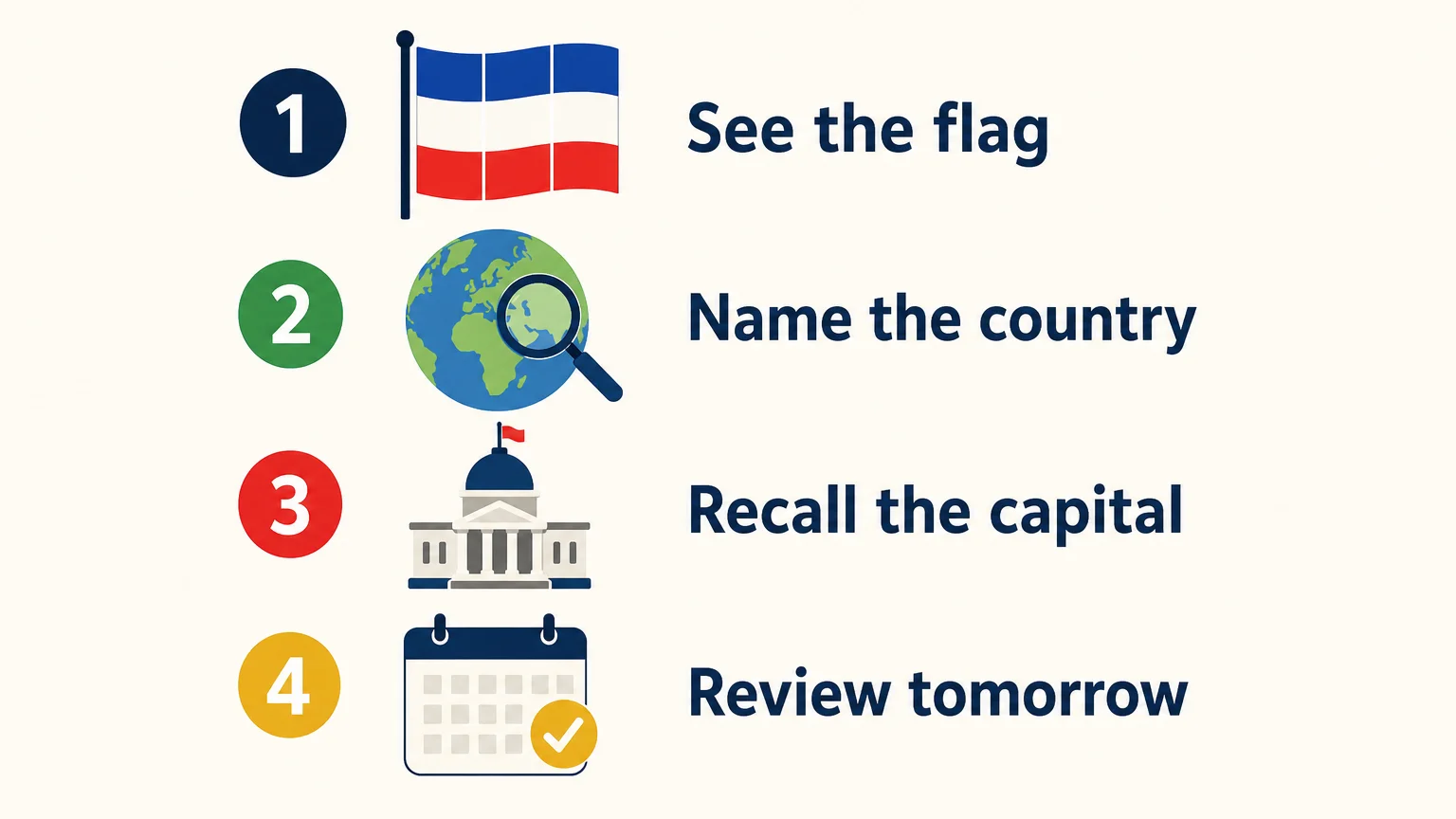
Try this five-minute routine when you want steady progress without turning geography into a long study session.
- See the flag: study three to five flags and identify their most distinctive features.
- Name the country: cover the labels and test yourself from the visual design.
- Recall the capital: say or write each capital before checking the answer.
- Compare mistakes: place similar flags side by side and note the difference.
- Review tomorrow: test the same group again, then add a few new pairs.
This routine works because it moves from recognition to recall. Recognition feels easy when the answer is visible, but recall shows whether the country and capital are actually stored in memory.
If you prefer a game format, our daily capitals practice guide can help you turn the routine into a repeatable habit. Short sessions are easier to maintain, and regular testing gives you clearer feedback than passive reading.
Build a clearer mental map of Europe
European capitals and flags are easiest to learn when you connect each visual design with a country, capital, region, and distinctive clue. Start with the 44-country core list, separate the geographic edge cases, and practice difficult pairs through active recall. A few focused minutes each day can make the full map feel much more manageable.
Take action with Flagdle
Once you know the reference list, the next step is to test whether you can recognize a country without seeing its name. That turns memorization into practical geography knowledge and helps you spot the flags and capitals that still need review.
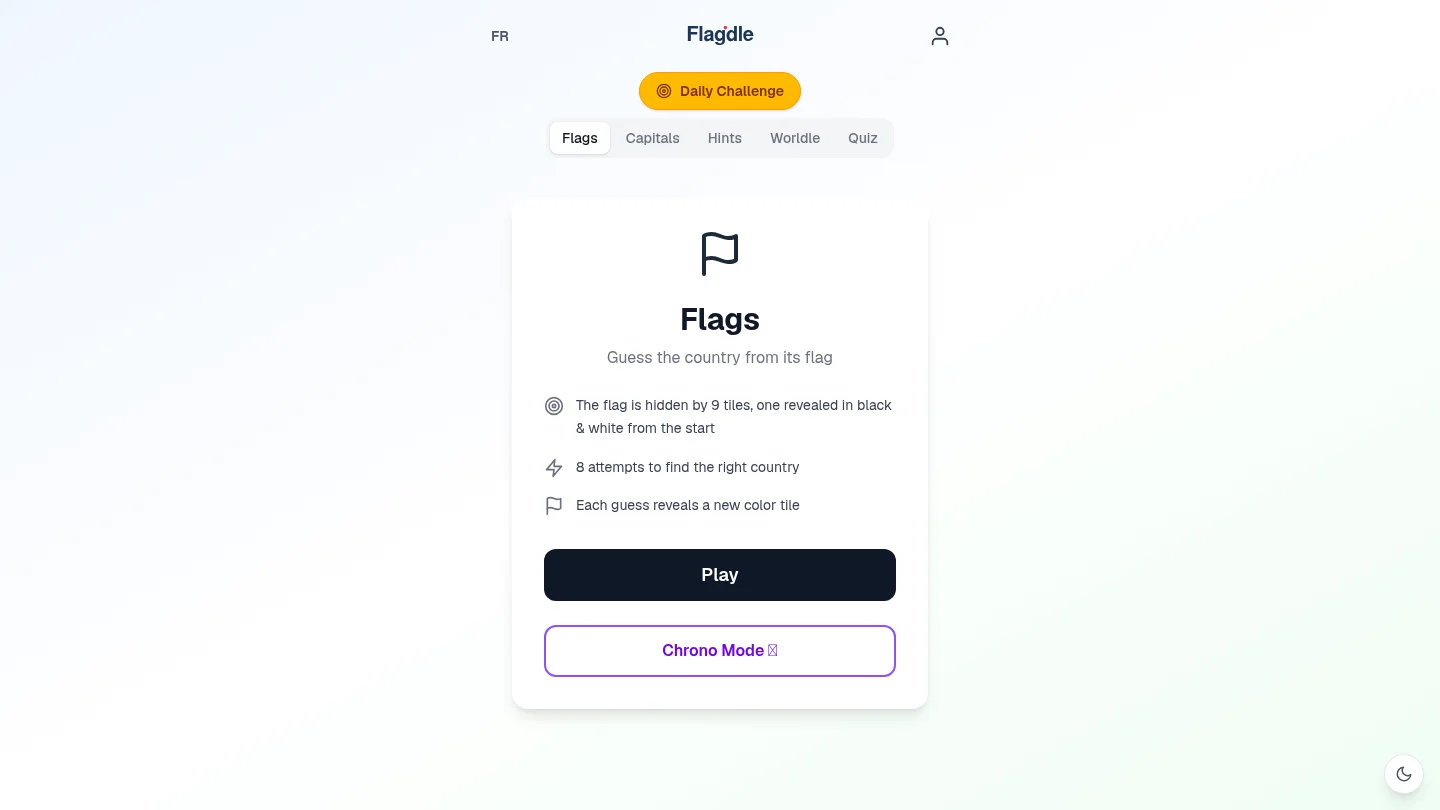
With Flagdle, you can explore a free browser based collection of geography games covering flags, capitals, country clues, silhouettes, and themed quizzes. The daily format gives you a short challenge, while replay practice lets you keep working on recognition at your own pace. Explore the capitals of the world and build your geography routine one challenge at a time.
Frequently Asked Questions
How many European countries are included in this guide?
The core list contains 44 internationally recognized sovereign states whose capitals are geographically located in Europe. Kosovo and other geographic or political edge cases are explained separately.
Is the European Union the same as Europe?
No. The European Union is a political and economic group, while Europe is a continent with countries that belong to the EU and countries that do not. A country can be European without being an EU member.
Why is Russia included in the list?
Russia is transcontinental, but Moscow is located in the European part of the country. This guide includes Russia because its capital is geographically in Europe.
What is the best way to learn flags and capitals together?
Look at a flag, name the country, recall the capital, and then check your answer. Flagdle’s Flags and Capitals modes can add short active recall sessions to that process.
Are emoji flags exactly the same on every device?
No. Emoji designs can vary slightly between operating systems and fonts. For precise visual study, compare the emoji with an official flag image or a reliable reference illustration.