

Only about 6 percent of American adults can ace a basic quiz on world geography and international affairs. That's a humbling number, and it points to something bigger: most of us never really learned to find a country from a flag, an outline, or a capital. The good news is that this is a trainable skill, not a talent you're born with. Our guide on how to guess a country by its flag, shape and capital is a friendly place to start building it.
That figure comes from a survey of more than two thousand adults, and it fits a long pattern. According to a CFR and Gallup survey, respondents answered just over half of the knowledge questions correctly. Across decades, studies keep flagging the same blind spots in how we picture the map. Once you know the tricks, though, those blank spaces fill in quickly, and the whole planet starts to feel smaller.
Why spotting a country is tougher than it looks
Sit someone down and ask them to find country after country on a blank map, and the gaps show up fast. It's not just a modern problem or a single nation's weakness. A National Geographic survey found that, on average, fewer than 25 percent of young people worldwide could locate Israel on the map, and only about 20 percent could pinpoint places like Afghanistan or Iraq.
Part of the issue is how we learn. Maps get memorized once for a test, then quietly fade. Another part is exposure: the same survey noted that geographic knowledge climbs with travel and speaking more than one language. You don't need a plane ticket to fix this, though. You just need better clues and a bit of repetition.
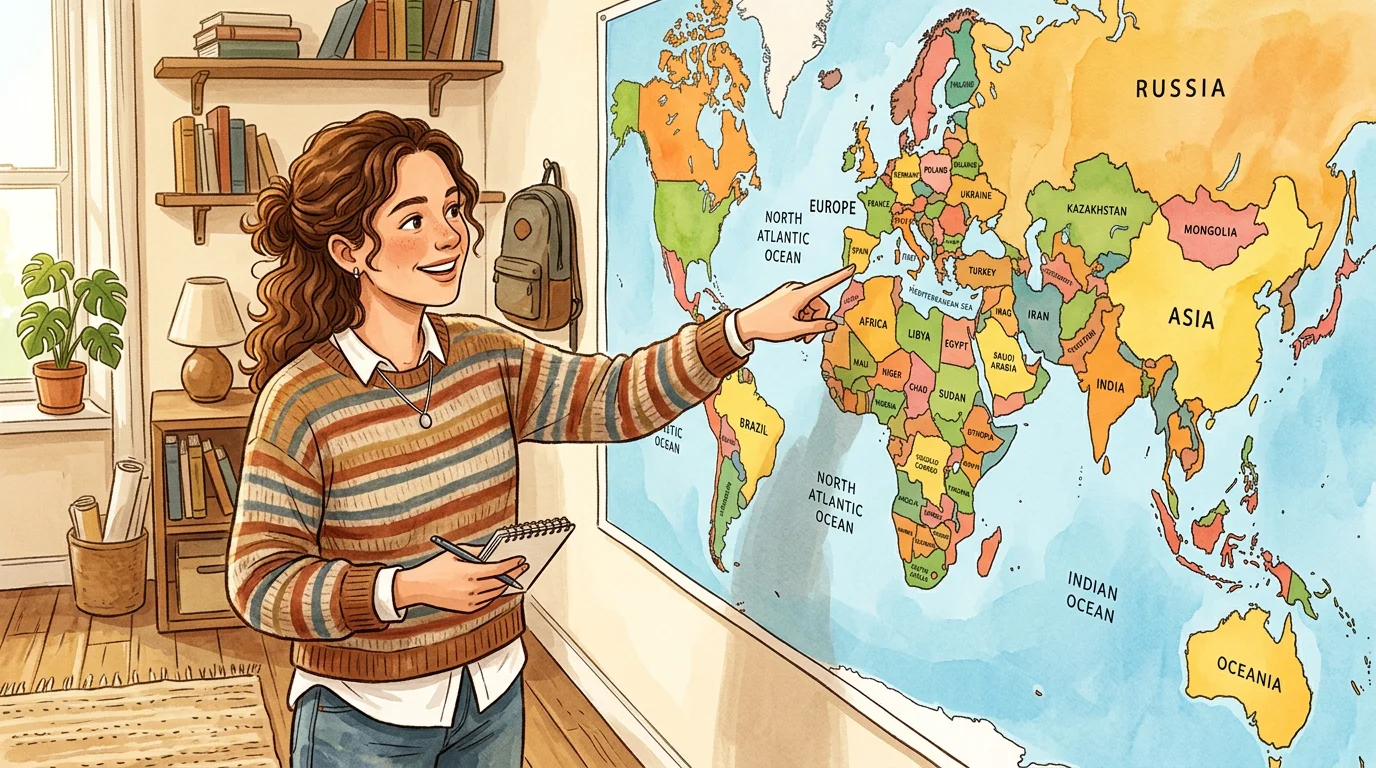
Start with the flag: colors and symbols
A flag is a compact fingerprint. Before you name anything, scan for three things: the color palette, the layout (horizontal bands, vertical stripes, a central emblem), and any standout symbol like a star, crescent, cross, or animal.
- Color clusters hint at regions. Pan-African red, gold and green; Nordic crosses in Scandinavia; red-white-blue tricolors scattered across Europe.
- Symbols narrow it fast. A maple leaf, a cedar tree, or a specific constellation often points to a single country.
- Ratios and quirks matter too. Nepal's non-rectangular flag is a giveaway all by itself.
The trap is stopping at the color match. Plenty of flags share the same three colors, so treat the flag as your opening guess, not your final answer, and let the shape and capital confirm it.
Read the shape: silhouettes as clues
Country outlines are surprisingly distinctive once you train your eye. Italy's boot, Chile's long ribbon, and the wide sprawl of Russia are hard to mistake. When you strip a country down to a plain silhouette, you're forced to notice coastlines, island chains, and odd borders instead of leaning on labels.
A smart move is to work from big to small. Guess the continent first, then zero in. If you enjoy that reverse-engineering feel, our game to guess the country by its shape gives you distance and direction hints after each try, so every wrong answer still teaches you something.
Capitals and other clues seal the deal
Flags and shapes get you close; capitals and context confirm it. Pairing a country with its capital doubles your recall, because the two facts reinforce each other in memory. It also helps when a flag alone is ambiguous.
This layered approach matters because raw recognition is shaky for most of us. CBS News reported that on one world map test, Americans could find, on average, only seven of 16 countries, while Swedes managed about 13. The difference wasn't intelligence; it was familiarity and practice. Progressive hints like continent, population, or main language act as guardrails, steering you toward the right answer instead of leaving you to guess blind.
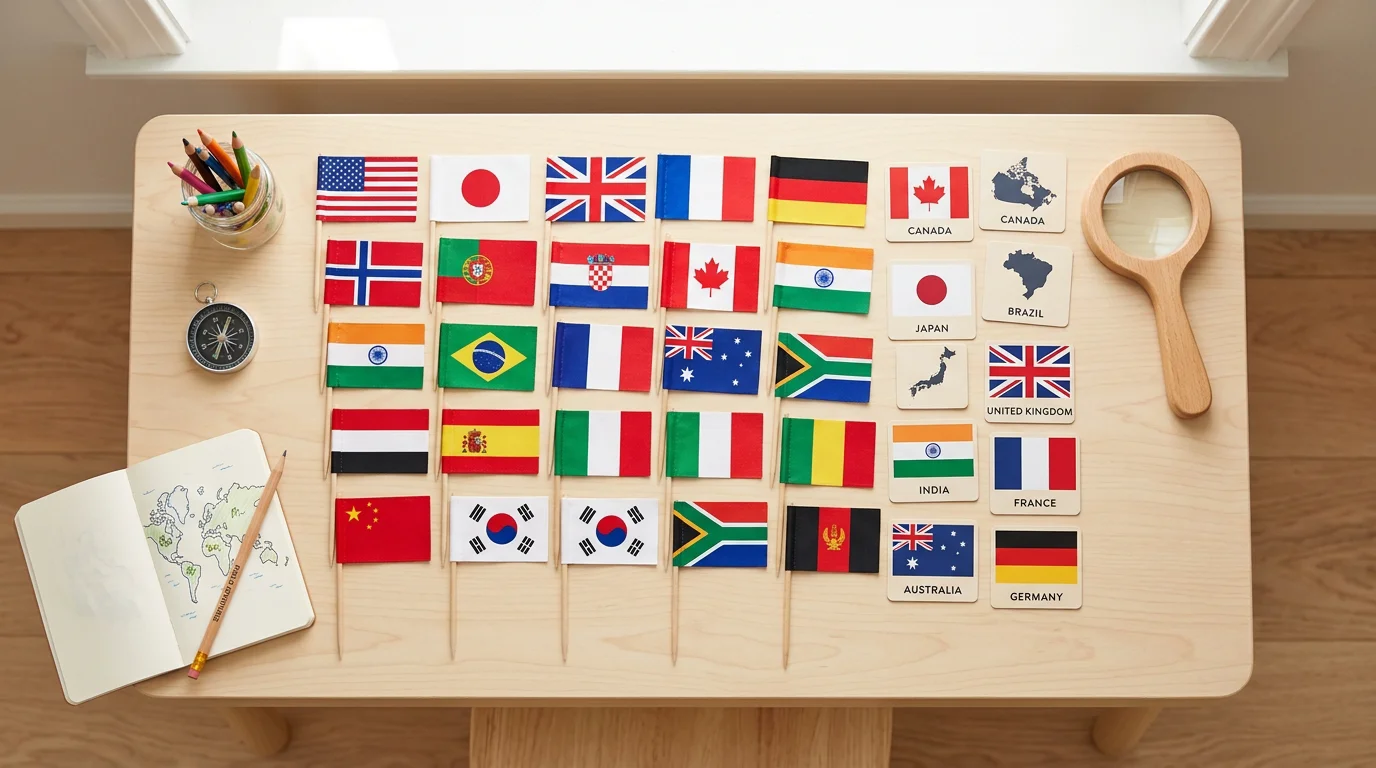
Turn practice into a five-minute daily habit
Cramming 195 countries in one sitting doesn't stick. Short, daily reps do. A five-minute round each day builds the pattern recognition that flashcards alone rarely deliver, and it's low-pressure enough to keep up.
That's the whole idea behind what we do. Each day we reveal one masked flag to identify in three tries, and it's the same flag for everyone in the world, so you can compare scores with friends. If you want variety, our roundup of geography guess games to sharpen your skills mixes capitals, silhouettes, and progressive clues into one habit. Teachers use quick rounds like this as a five-minute classroom ritual, and travelers use them to prep for trips.
Which method should you lean on?
No single clue wins every time. Here's how the main approaches stack up, and where a combined daily game fits in.
| Approach | What you use | Best for |
|---|---|---|
| Flag recognition | Colors, layout, symbols | Fast first guesses |
| Shape / silhouette | Outline, coastlines, borders | Narrowing by region |
| Capital matching | City-to-country pairing | Confirming ambiguous cases |
| Our daily flag game (Flagdle) | Flags, capitals, shapes and progressive hints in one free habit | Building lasting recall day by day |
Use the flag to open, the shape to narrow, and the capital to lock it in. Wrap all three into a short daily routine, and the memorizing takes care of itself.
Your takeaway
Learning to find a country from a flag, a silhouette, or a capital isn't about a photographic memory. It's about stacking small, reliable clues and repeating them until they stick. Start with the flag's colors and symbols, confirm with the outline, and anchor it all to the capital city. Do a little every day instead of a lot once, and within a few weeks the world map stops feeling like a wall of blanks and starts feeling like a place you actually know.
Take action with Flagdle
Reading about clues is one thing; using them daily is what makes them stick. If you're ready to turn flags, shapes, and capitals into real recall, the easiest next step is to just start playing a quick round today.
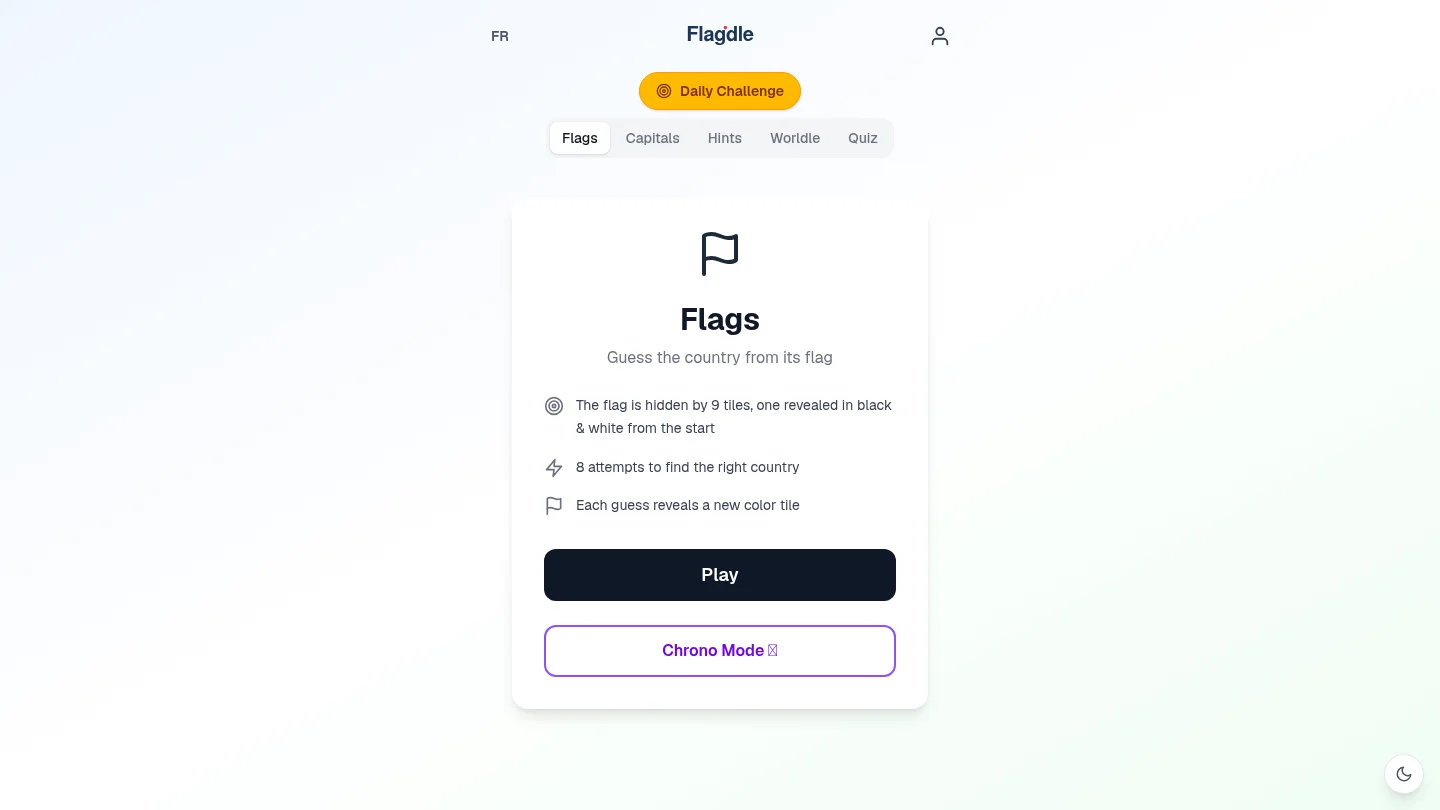
With our free daily flag guessing game, you identify one masked flag in three tries, the same one for players worldwide, then compare scores on daily, weekly, and monthly leaderboards. It's free, needs no account, has no intrusive ads, and covers all 195 UN countries. Add capitals, silhouettes, and progressive-hint modes, and you've got a five-minute habit that quietly builds a complete mental world map.
Frequently Asked Questions
What's the fastest way to identify a country from its flag?
Scan the color palette and layout first, then look for a standout symbol like a star, cross, or emblem. Use that to make a quick guess, then confirm with the country's shape or capital so similar flags don't trip you up.
Can I really learn geography in just five minutes a day?
Yes, short daily repetition beats occasional cramming for long-term recall. A quick round each day builds pattern recognition steadily, which is exactly why our daily flag game keeps the challenge to a few minutes.
Why do so many adults struggle to place countries on a map?
Most geography gets memorized once for a test, then fades without regular use. Limited travel and single-language exposure also play a role, so many well-educated adults carry surprising blind spots, especially around smaller or less-covered nations.
Is the shape or the flag a more reliable clue?
They work best together, not alone. A flag gives you a fast opening guess, while the silhouette helps you narrow down the region and rule out lookalikes. Pairing both with the capital gives you the strongest confirmation.
Do I need to memorize all 195 countries at once?
No, and trying to usually backfires. Learn a handful at a time through daily play, and let flags, shapes, and capitals reinforce each other. Over a few weeks, the full map fills in without any marathon study sessions.