

There are 195 countries recognized by the United Nations, and most people can name maybe a dozen flags on sight. That gap is exactly why a good find-the-flag game is so addictive. You start out guessing, and within a few weeks you're spotting the difference between Chad and Romania like a pro. If you want a quick way in, our Find the Flag challenge is built around that daily "one more try" feeling.
The appeal isn't just trivia bragging rights. Recognizing flags trains visual memory, pattern recognition, and geography all at once. And because the best versions run on a short daily loop, you build knowledge without ever feeling like you're studying. That's the sweet spot we'll dig into below.
What a Find-the-Flag Game Actually Is
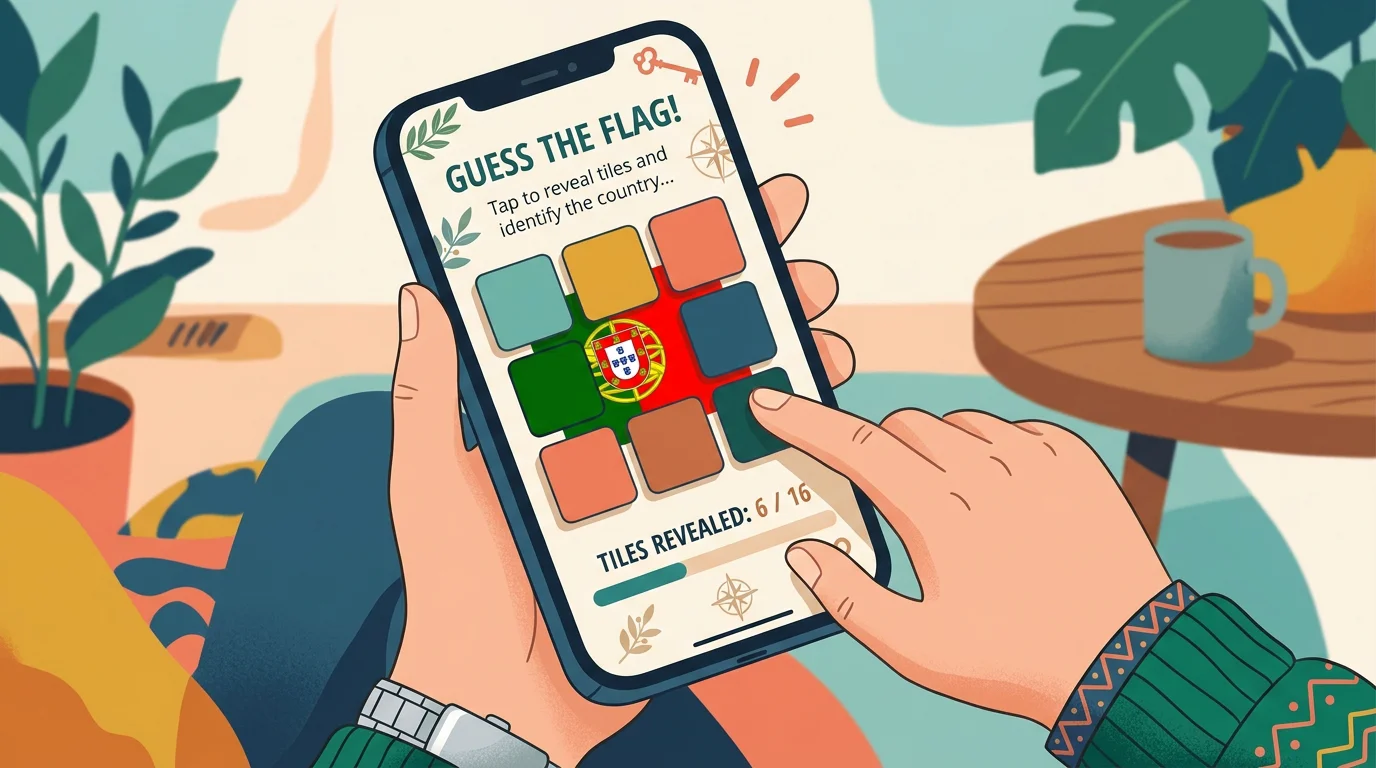
At its core, a find the flag game shows you a flag (or hides one behind tiles) and asks you to name the country. Simple premise, endless depth. Some versions use multiple choice, others make you type the answer, and the trickiest ones reveal the flag piece by piece so every guess counts.
Flags are surprisingly hard to tell apart. Take two classic troublemakers: as one flag quiz notes, Chad and Romania are nearly identical apart from slight shade differences, while Senegal and Mali differ mainly by a green star. That's what makes a good flag quiz genuinely challenging instead of a walk in the park.
Why Flag Games Beat Passive Studying
Ever tried memorizing flags from a chart? It doesn't stick. Games work better because they force active recall: your brain has to fetch the answer, not just recognize it. That retrieval effort is what cements memory.
There's also a curiosity payoff. Geography is full of "gotcha" facts that stick once you meet them in a game. For example, one trivia guide points out that France spans 12 time zones thanks to its overseas territories, more than any other country. Learn that inside a challenge and you'll never forget it.
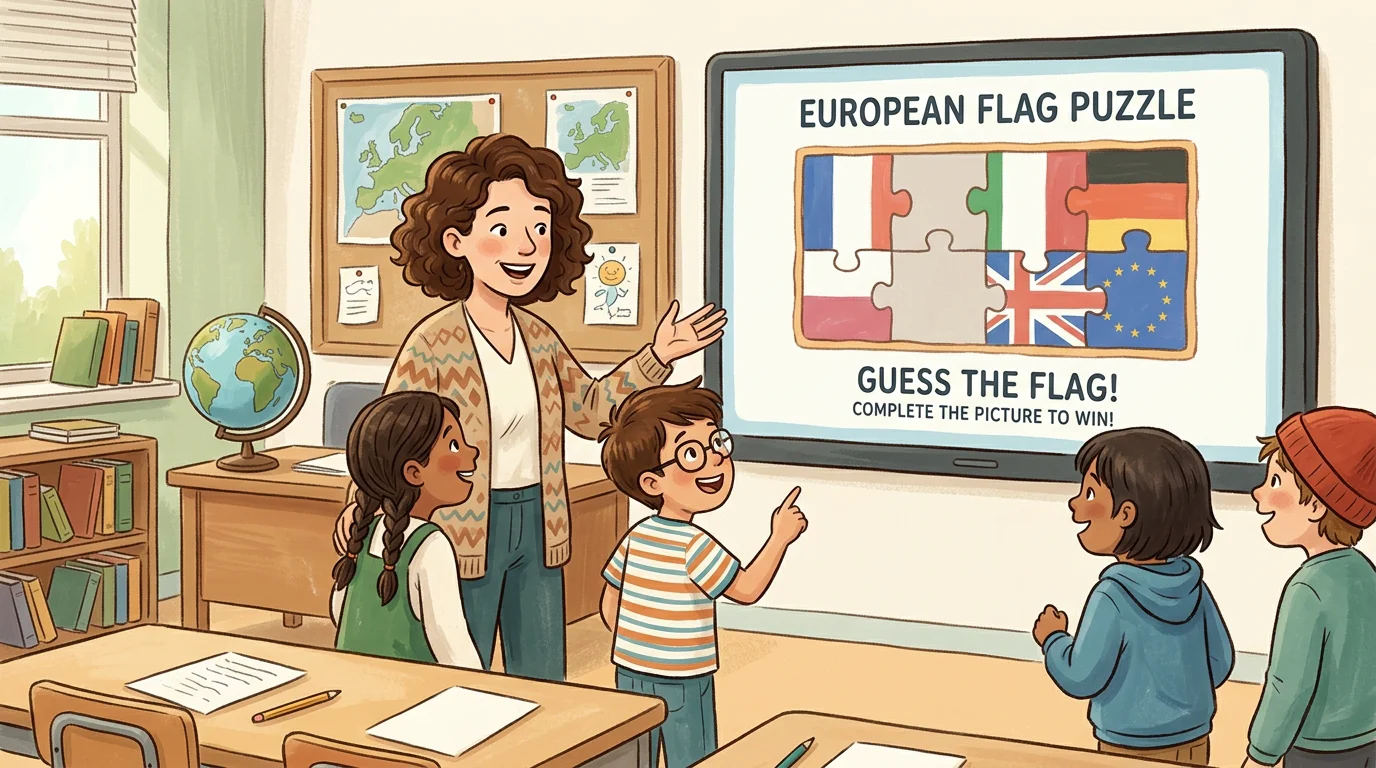
Short sessions matter too. A five-minute daily geography challenge fits into a coffee break, a commute, or the start of a class. Teachers love it as a warm-up ritual, and students actually look forward to it. The trick is consistency, not marathon cramming.
The Modes That Keep It Fresh
Guessing raw flags is fun, but variety is what keeps you coming back. That's why we built several ways to play into one place. Here's how the main modes stack up:
| Mode | Goal | Attempts | Extra help |
|---|---|---|---|
| Flags | Name the country | 3 tries | 9 tiles reveal the flag gradually |
| Capitals | Match capital to country | 6 tries | Continent hint, then first letter |
| Worldle | Guess from the silhouette | 6 tries | Country shape shown |
| Themed quiz | Answer trivia | 10 questions/day | Fresh set daily |
The daily flag challenge is the heart of it: the same flag for every player worldwide, so you can compare scores with friends or on the leaderboard. If you want the full breakdown of every mode and how to approach them, our Ultimate Flag Game guide walks through each one.
Smart Tricks to Guess Faster
Want to actually get good? A few habits speed things up dramatically:
- Read the colors first. Pan-African red-yellow-green, Nordic crosses, and Arab red-white-black-green palettes instantly narrow the region.
- Spot the symbols. A cedar, a dragon, a specific star arrangement, these are giveaways once you learn them.
- Group the lookalikes. Study confusing pairs together (Chad/Romania, Indonesia/Monaco, Chad/Andorra) so you never mix them up.
- Use progressive hints wisely. When tiles or clues reveal slowly, hold your guess until a distinctive feature appears.
Capitals are their own game. Plenty of people confidently pick Sydney over Canberra for Australia; capital cities quizzes are packed with these traps. Practicing capitals alongside flags builds a fuller mental map of each country.
What Makes a Flag Game Worth Your Time in 2026
Not all flag games are created equal. The frustrating ones bury the fun under ads and forced accounts. In a 2026 roundup of geography quiz apps, one honest review singled out full-screen video ads after every round as the fastest way to kill momentum. If you've rage-quit a quiz app, you know the feeling.
The features that actually matter this year are simple: no intrusive ads, no login wall, instant play in the browser, and a fair daily puzzle everyone shares. That's the philosophy behind Flagdle. We keep it completely free, store your stats locally on your device instead of on a server, and give every player the same flag each day so scores mean something.
Coverage counts too. A game that only teaches you 30 famous flags plateaus fast. Spanning all 195 UN-recognized countries plus multiple modes means there's always a harder layer to unlock as you improve.
Turning It Into a Daily Habit
The players who learn the most treat it like brushing their teeth: one short round, every day. Because the puzzle refreshes daily, there's a natural stopping point, so you don't burn out or binge. Streaks and leaderboards add just enough friendly pressure to keep you honest.
Travelers use it to prep itineraries, students use it to revise for exams, and trivia fans use it to stay sharp. Whatever your reason, the compounding effect is real: a flag or two a day adds up to genuine fluency within a couple of months.
Conclusion
The math is motivating: 195 flags, five minutes a day, and pattern recognition doing the heavy lifting. A well-designed find-the-flag game turns a daunting memorization task into a quick daily win, blending active recall, curiosity, and a bit of competition. Start with the colors, group the lookalikes, and practice capitals alongside flags to lock it all in. What sets our approach apart is that it stays free, ad-light, and identical for every player worldwide, so your progress is real and your scores actually compare. Ready to test your instincts? Play our daily Flag Game to learn every flag.
Frequently Asked Questions
How many flags are there to learn?
There are 195 countries recognized by the United Nations, so that's the standard target. Our Flags mode covers all of them, letting you progress from the well-known ones to the trickier lookalikes.
Is a flag game good for kids and classrooms?
Absolutely. A quick daily round works as a five-minute warm-up that builds visual memory and geography skills. Because there's no account needed and no intrusive ads, it's easy to drop into a lesson.
How can I tell apart flags that look identical?
Focus on tiny distinguishing details: a star, a shade of color, or an emblem. Pairs like Chad and Romania or Senegal and Mali are famously close, so studying them side by side is the fastest fix.