
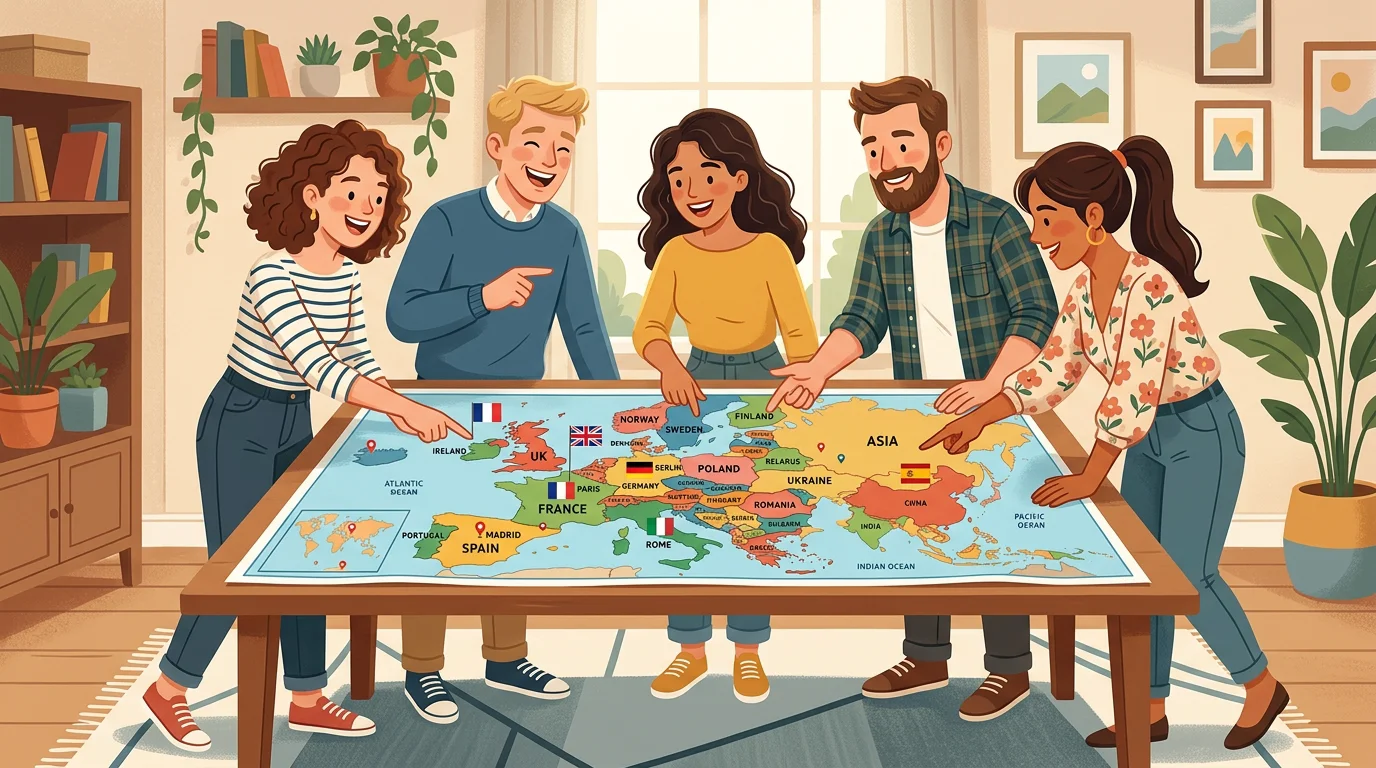

Here's a humbling fact. In a 2002 global literacy survey, only 17 percent of young adults in the United States could point to Afghanistan on a map, even while it dominated the news. If a whole country in the headlines can vanish from memory, no wonder plenty of us freeze when asked to guess a country from a flag or a strange-looking outline. The good news? It's a skill, not a talent.
That means you can train it. With a handful of tricks for reading flags, shapes and capitals, you'll start recognizing nations in seconds. If you want a quick warm-up, our shape guessing guide is a fun place to begin. The rest of this piece breaks down the how, so the next mystery flag doesn't stand a chance.
Why guessing countries trips people up
The core task sounds easy: you have to guess country names from a flag, an outline, or a short clue. In practice, your brain juggles 195 possibilities with very little to go on. That's a lot of noise. According to a National Geographic survey, young adults across nine nations struggled badly with basic map tasks in 2002, and the US placed near the bottom.
Part of the problem is how we learn geography. We memorize names and facts, but rarely connect them to visual patterns. So when you see a red-and-white flag or a boot-shaped landmass, there's no shortcut wired in yet. The fix is to stop guessing randomly and start using visual clues in a set order.
The three signals that give a country away
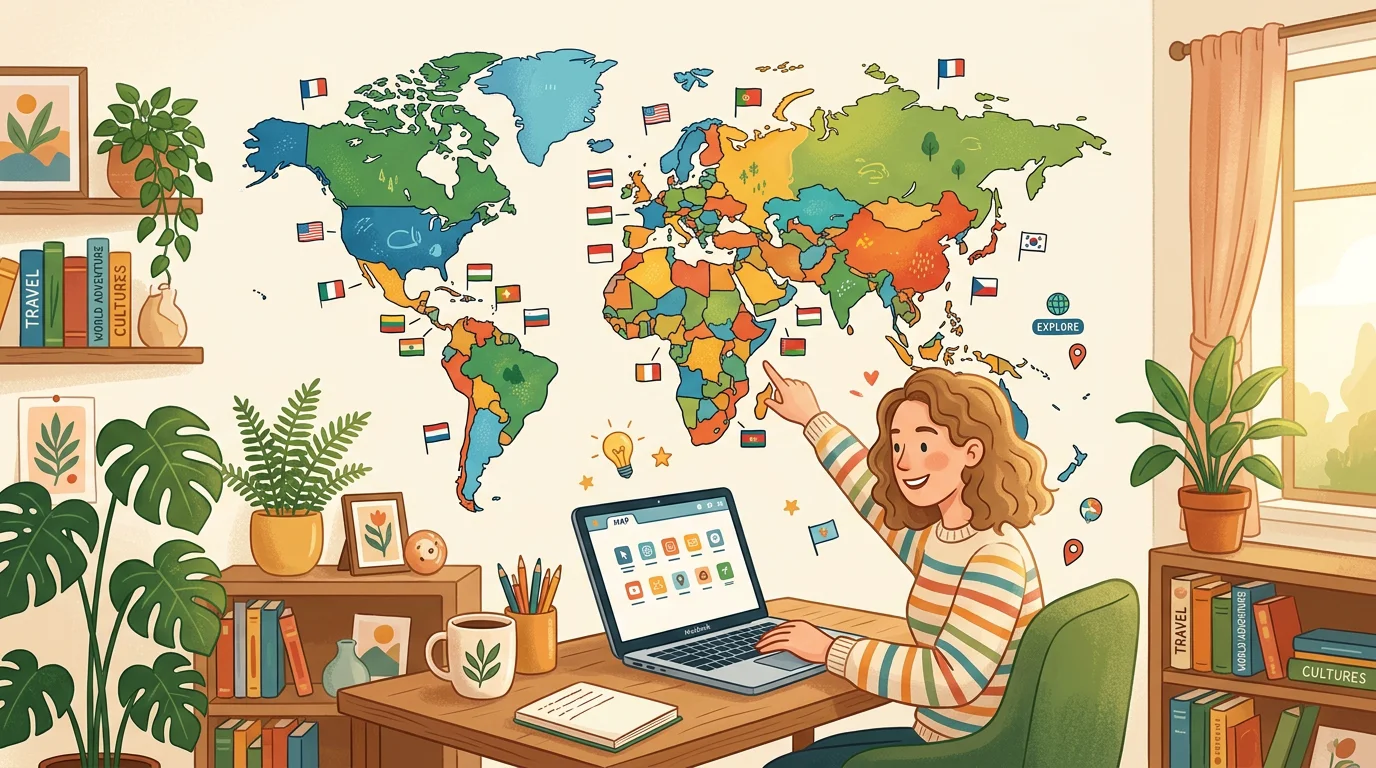
Almost every country-guessing challenge hands you one of three clues: a flag, a shape, or facts like the capital and continent. Each one rewards a different approach. Master all three and you cover nearly any puzzle you'll meet.
- Flags: colors, stripes, symbols and layout point to a region fast.
- Shapes: coastlines, islands and borders create recognizable silhouettes.
- Clues: capital city, continent and first letter narrow the field.
The smartest move is to always go from broad to specific. Nail the continent first, then the region, then the exact country. That order stops you from wasting guesses on the wrong side of the planet.
Reading a flag like a pro
Flags are packed with hints once you know the patterns. Pan-Arab flags lean on red, black, green and white. Nordic countries share the off-center cross. Many African flags use the pan-African red, gold and green. Spotting the family gets you to the neighborhood before you even name the country.
Then look at the details: a central emblem, a star, a specific animal, or a unique shape. Nepal's non-rectangular flag is a dead giveaway. If you want a structured drill, our flag guessing tips walk through these cues step by step, and our guide to flags without names helps you practice with no labels to lean on.
Cracking country shapes and silhouettes
Shapes feel intimidating because a bare outline hides scale and color. But distinctive features do the heavy lifting. Italy's boot, Chile's long ribbon, and island clusters like the Philippines are unmistakable once you've seen them a few times. The trick is to hunt for the one feature that only fits a handful of nations.
Recognition really does improve with reps. In a 2002 study reported by CBS News, young Americans could locate only seven of 16 countries on average, while Swedes managed 13. The gap wasn't talent; it came down to exposure and practice. See more outlines, and your accuracy climbs. When you're ready to test yourself, our country guessing approach turns silhouette practice into a quick daily routine.
Using capitals, continents and progressive clues
Sometimes you get facts instead of pictures: a capital city, a continent, a first letter, or whether the country is landlocked. These are gold when you use them in sequence. Continent slashes your options first. The capital or first letter then usually points to a single answer.
This matters because verbal knowledge and map knowledge are stored differently in your head. Way back in 1988, a National Geographic study reported by Education Week found adults valued map-reading skills highly, yet many still couldn't place countries on a map. Pairing facts with images bridges that gap and locks the country in.
Comparing the ways to guess a country
Different modes suit different moods, and the number of tries changes how you play. Here's how the main approaches stack up, based on how we run each mode.
| Mode | Main clue | Attempts | Best for |
|---|---|---|---|
| Flags (our daily pick) | Flag hidden behind 9 tiles | 3 tries | Fast, shared daily challenge |
| Capitals | Continent then first letter | 6 tries | Linking cities to countries |
| Silhouette | Country shape | 6 tries | Training shape recognition |
| Themed quiz | Mixed trivia | 10 questions | Broad general knowledge |
The daily flag mode is the sweet spot for most people: it's quick, it's the same puzzle for everyone, and the tiles reveal more with each try so you stay in the game.

Turn guessing into a five-minute daily habit
Skills fade without upkeep, and geography is no exception. A short, repeatable challenge beats a once-a-year cram session because it uses spaced repetition. A few minutes a day keeps flags, shapes and capitals fresh in your memory.
Real-world exposure helps too. A 2002 survey noted by RFE/RL found that in the highest-scoring countries, more than 70 percent of young adults had traveled internationally in the last three years. You don't need plane tickets to copy the effect, though. Seeing the same countries pop up daily builds the same familiarity that travel does, just from your couch.
The takeaway
When you want to guess a country quickly, the method matters more than raw memory. Read the flag family, hunt the shape's standout feature, and lean on continent-then-capital clues to narrow things down. Go broad first, then specific. Above all, keep it short and regular: a few reps a day beats occasional marathons, and before long you'll be naming nations from the tiniest hint.
Take action with Flagdle
Reading about flags and shapes is one thing; testing yourself is where it clicks. If you're ready to see how fast you can spot a nation from a single clue, a quick daily puzzle is the easiest way to build the habit without it feeling like homework.
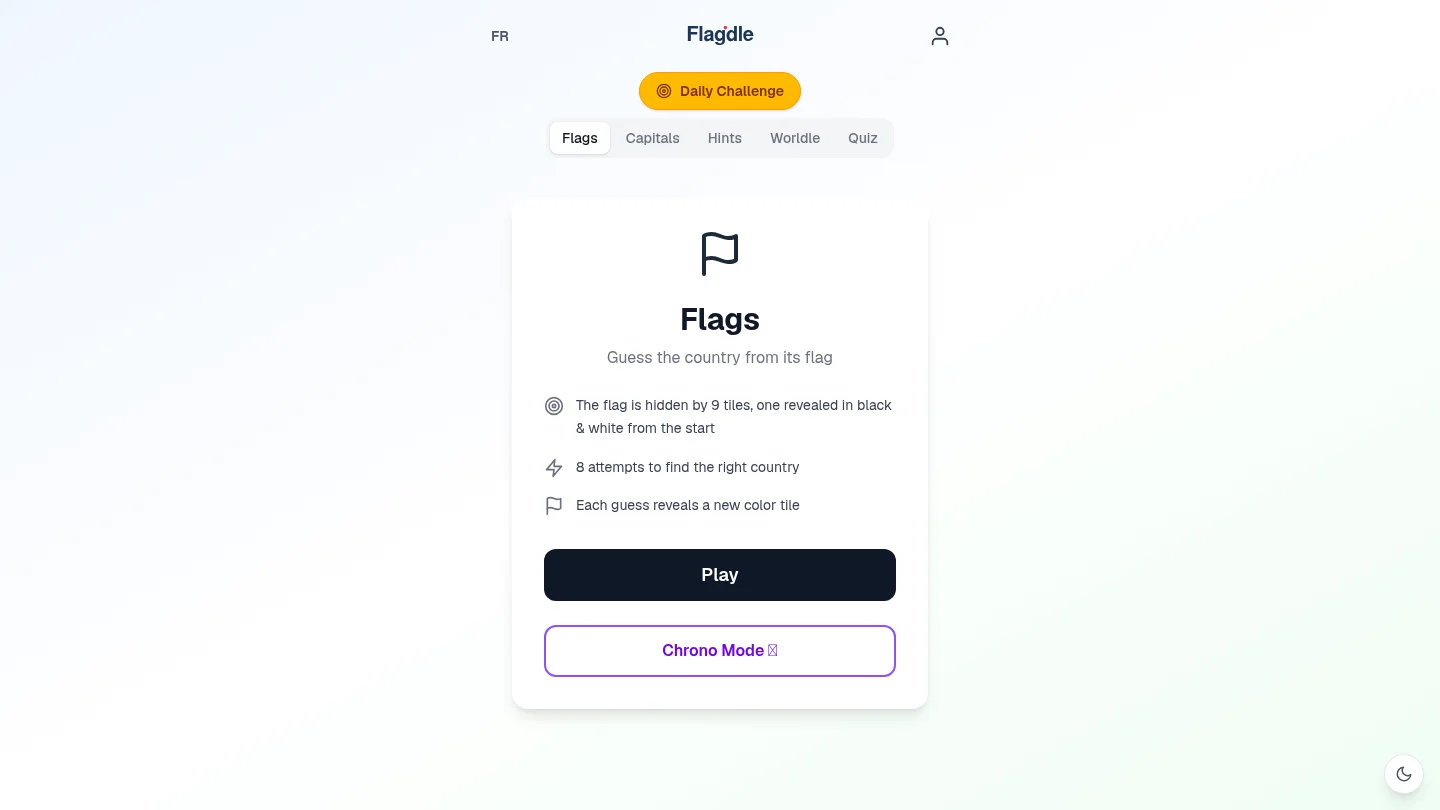
Jump into our free daily flag challenge and identify the country in just three tries as nine tiles reveal the flag. It's free, needs no account, and covers all 195 UN-recognized countries, with extra modes for capitals, silhouettes and themed quizzes. The same puzzle drops worldwide each day, so you can compare scores with friends on the daily, weekly and monthly leaderboard.
Frequently Asked Questions
What's the fastest way to guess a country?
Start broad and narrow down. Identify the continent or flag family first, then use a standout detail like a capital, a symbol or a coastline. That order beats random guessing every time.
How do I recognize a country from its flag?
Look at the color family and layout before the details. Pan-Arab, Nordic and pan-African flags share telltale patterns that point to a region. Then a central emblem or unusual shape usually seals the exact answer.
Are country shapes really learnable?
Yes, and mostly through repetition. Distinctive features like Italy's boot or island clusters become instant tells once you've seen them a few times. The more outlines you view, the faster your accuracy climbs.
Can a daily game actually improve my geography?
It can, thanks to spaced repetition. Short, regular sessions keep flags, capitals and shapes fresh far better than occasional cramming. Our daily flag challenge is built around this quick, five-minute rhythm.
How many countries should I be able to guess?
Aim for all 195 UN-recognized countries over time, but don't rush it. Focus on one region a week and let the daily puzzles reinforce the rest. Steady exposure adds up faster than you'd expect.