
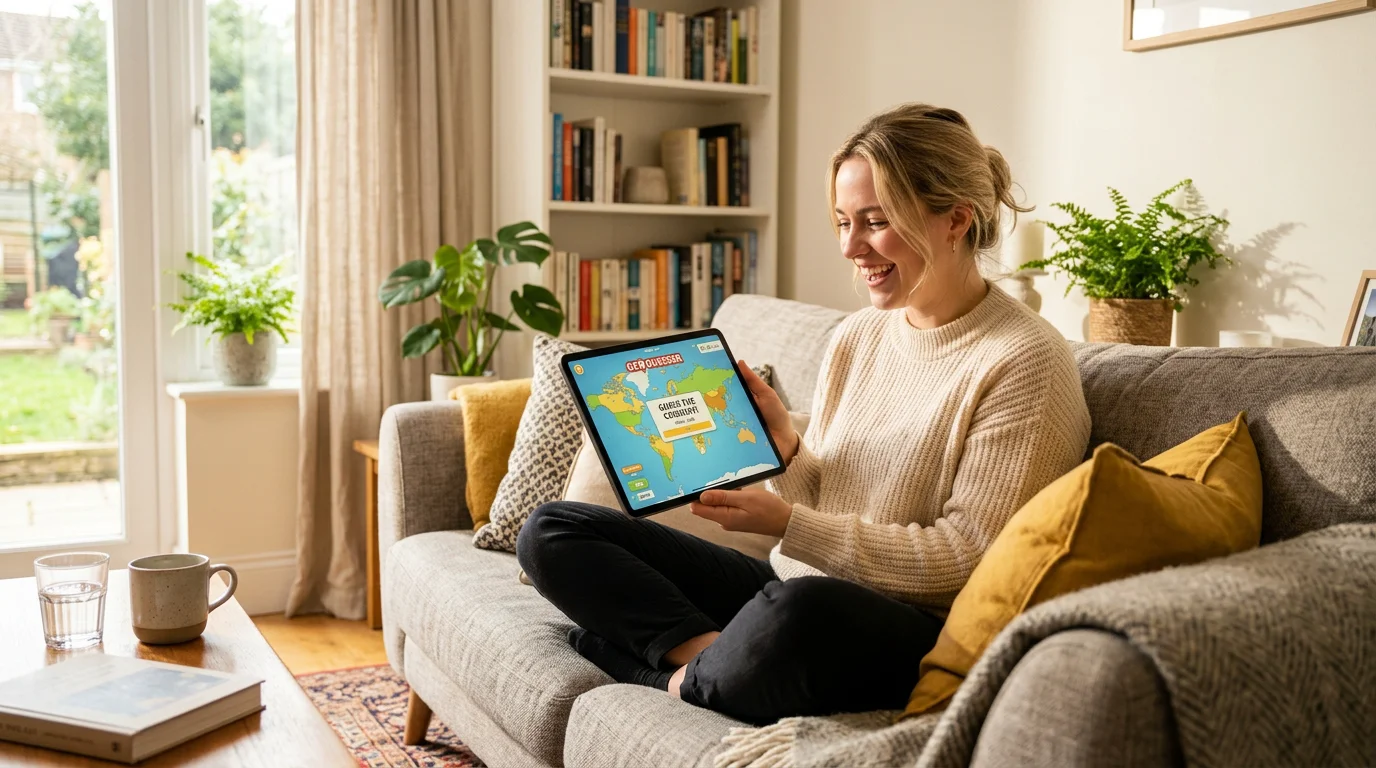

Nearly nine in ten teachers who bring digital games into class say students get more engaged. That tells you something simple: guessing beats memorizing. When you turn world geography into a quick daily puzzle, a guess country game stops feeling like homework and starts feeling like a habit you actually want to keep. Curious how to get good at it fast? our guide to guessing a country by flag, shape and capital is a solid starting point.
The format is everywhere in 2026, from flag reveals to country silhouettes, and it keeps growing alongside the wider game-based learning boom. According to market research, the game-based learning market is projected to reach USD 26.3 billion in 2026. The reason is straightforward: play sticks better than rote drilling, and geography is perfect for it.
What a country guessing game actually is
At its core, the idea is dead simple. You get one clue, you make a guess, and each attempt narrows things down. The clue changes depending on the mode: a masked flag, a country outline, a capital city, or a set of progressive hints.
Most versions cap you at a few tries, which is what makes them tense in a good way. On our rundown of world guessing games, you'll see the pattern repeat: limited attempts, instant feedback, one shared puzzle per day. That daily reset is the hook. You play once, you compare, you come back tomorrow.

The main modes you'll run into
Not all country guessing games play the same way. The clue you start with shapes the whole experience, so it helps to know your options before you pick one.
- Flag mode: a masked flag reveals itself tile by tile as you guess. Great for building visual recognition of the 195 countries.
- Silhouette mode: you identify a country from its shape alone, often with distance and direction arrows after each try. Italy's boot is easy; small islands are brutal.
- Capital mode: you match a capital to its country, with hints like the continent or a first letter.
- Progressive hint mode: clues stack up until the answer clicks.
Silhouette games are a popular entry point because the shape does a lot of the teaching for you. If that's your thing, our breakdown of guessing a country by its shape walks through the tricks that make it click.
Why these games actually teach you geography
Here's the part that surprises people: this isn't just fun, it works. When you're forced to reason from a clue instead of reading a fact, the knowledge sticks harder.
Academic work backs this up. A university study on game-based geography found that map guessing practice increased student interest in the subject and supported more permanent learning, while sharpening map reading and visual examination skills. Educators have leaned into this for years. The team at National Geographic Education has highlighted free interactive geography games built on research findings, some using a 3D globe instead of a flat map to deepen spatial understanding.
The mechanism is repetition without boredom. You see a flag, you guess wrong, you learn. Tomorrow you see a similar one and you nail it. That loop is why a five minute daily geography quiz can outperform an hour of passive studying.
The daily shared puzzle: the real differentiator
What separates the sticky games from the forgettable ones? A single daily puzzle that's identical for everyone on the planet.
That shared challenge turns a solo drill into a social ritual. You and a friend get the same flag, so a screenshot of your score grid becomes a friendly dare. This is exactly how we built our approach: the daily flag challenge is the same worldwide, with a leaderboard for daily, weekly, and monthly scores. Want to sharpen up before you compare? Our tips in our guide to geography guess games help you shave off wasted attempts.
How the popular formats compare
Different games optimize for different clues and attempt counts. Here's how the common formats stack up, including our own modes so you can see where each fits.
| Format | Starting clue | Attempts | Cost |
|---|---|---|---|
| Our flag mode (Flagdle) | Masked flag (9 tiles) | 3 | Free, no account |
| Our capitals mode | Capital city | 6 | Free, no account |
| Our silhouette (Worldle) mode | Country shape | 6 | Free, no account |
| Silhouette games elsewhere | Country shape | 6 | Free (archive often paid) |
| Map click quizzes | Country name | Timed | Free |
The takeaway: we cover multiple clue types under one roof, from flags to capitals to silhouettes, so you're not hopping between sites to switch how you learn. Everything runs in your browser, and your stats stay stored locally on your device.
Simple tricks to guess faster
Want to stop guessing blind? A few habits make a huge difference, whether you're staring at a flag or a shape.
- Start broad, then narrow. In silhouette mode, an early guess in the wrong continent gives you a useful distance and direction clue.
- Learn flag families. Nordic crosses, pan-African colors, and Gulf state palettes cluster by region. Spot the pattern, shrink the options.
- Respect the small countries. Tiny territories are easy to forget and often the answer.
- Play daily. Consistency beats cramming. Five minutes a day compounds fast.
None of this requires a textbook. It just requires showing up, guessing, and paying attention to why you were wrong.
The bottom line
A good country guessing game works because it hides the studying inside the fun. You show up for the daily puzzle, you compare with friends, and the geography sinks in almost by accident. Pick a mode that matches how you like to learn, whether that's flags, shapes, or capitals, and commit to a short daily run. The consistency, not the intensity, is what turns you into the person who actually knows where every country sits on the map.
Take action with Flagdle
Ready to test yourself? If you want a quick daily habit that actually makes world geography stick, this is where the theory turns into practice. No textbook, no pressure, just one puzzle a day and a score to beat tomorrow.
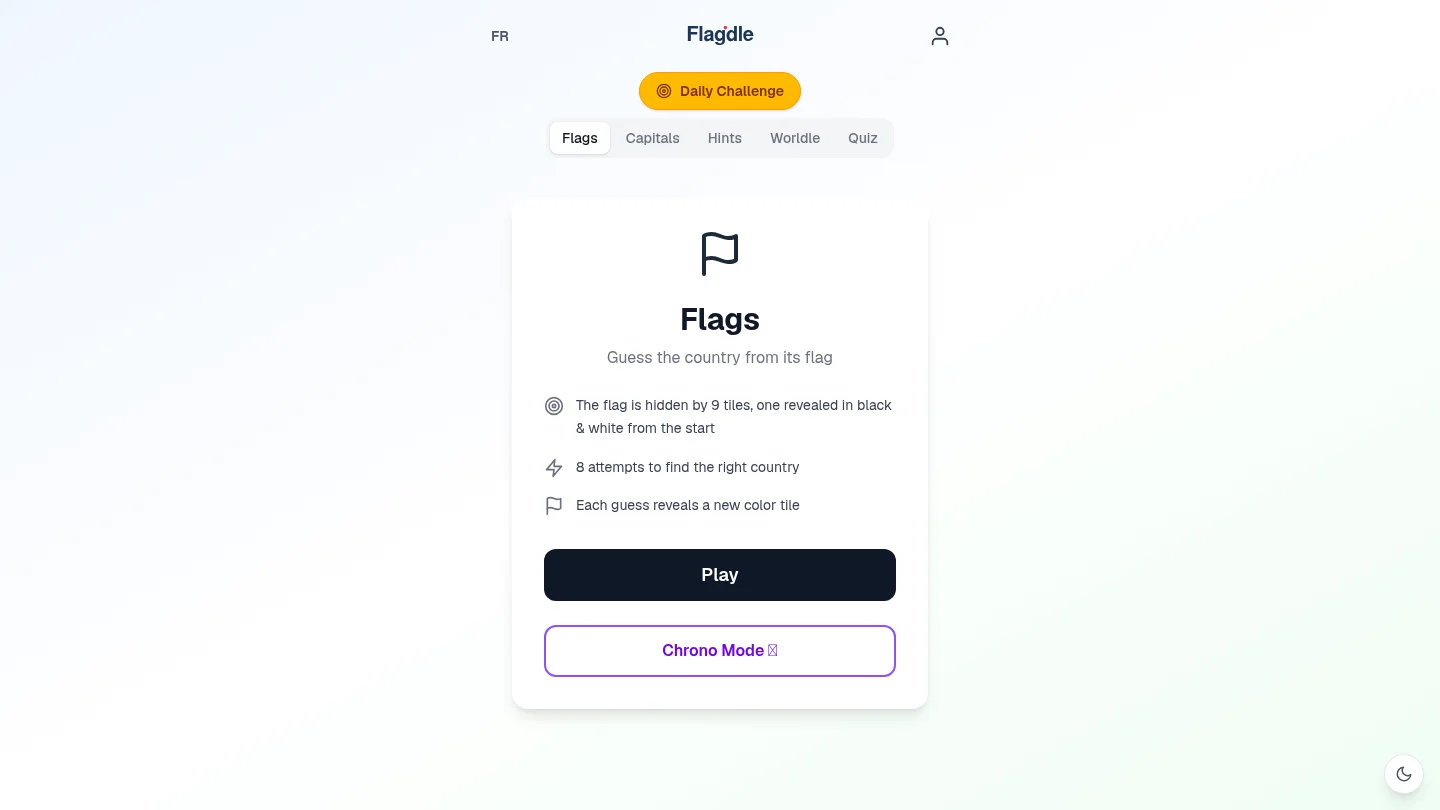
Try our free daily flag guessing game, where you identify the country in just 3 tries as 9 tiles reveal the flag bit by bit. It's completely free, needs no account, and covers all 195 UN countries. Switch between flags, capitals, silhouettes, and themed quizzes, then compare your daily, weekly, and monthly scores on the same puzzle everyone else is playing worldwide.
Frequently Asked Questions
Is a country guessing game free to play?
Most are free to play in your browser, though some lock features like puzzle archives behind a subscription. Our game is entirely free, with no account and no intrusive ads. You get the flags, capitals, and silhouette modes without paying anything.
How many tries do you usually get?
It depends on the mode. Flag guessing typically gives you 3 attempts, while silhouette and capital modes often allow 6. The tight limit is what keeps each puzzle exciting.
Do these games really help you learn geography?
Yes, and research supports it. Studies on game-based geography show increased student interest and more durable learning compared to passive study. The trick is the daily repetition, which builds recognition without feeling like work.
Can I play with friends?
Absolutely. Because the daily puzzle is identical for every player worldwide, you can compare score grids and race to guess in fewer tries. That shared challenge is half the fun.
Which mode should a beginner start with?
Flag mode is a friendly entry point since the tiles reveal gradually and reward pattern spotting. Silhouette mode is great once you want a spatial challenge. Try a few and stick with whichever keeps you coming back daily.