
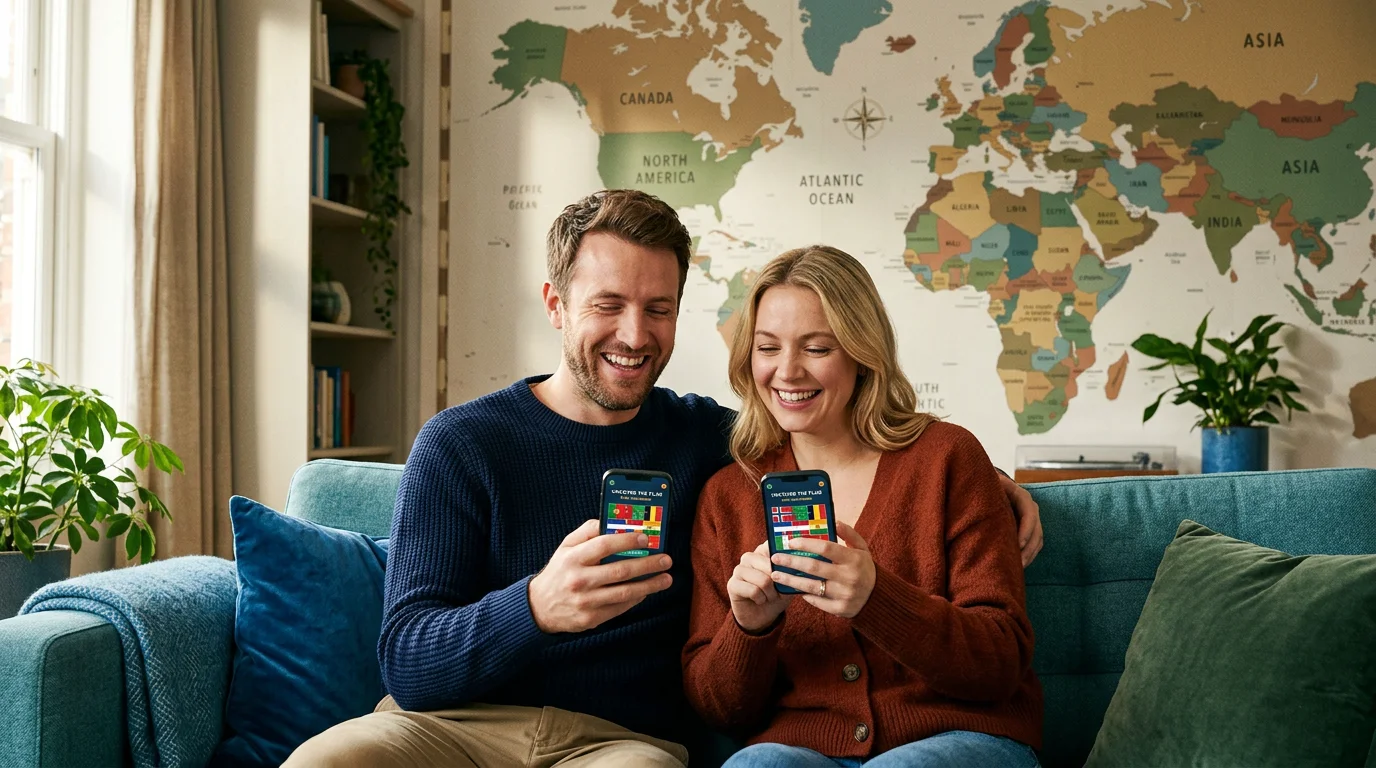

Can you name more than 100 countries off the top of your head? Most people can't, and that gap is exactly why a good country guessing game is so addictive. You get a fresh puzzle, a handful of tries, and instant feedback. It's a five-minute brain snack that quietly teaches you the map of the world. If you want to test yourself right now, our Guess the Country by Its Shape mode is a great place to start.
Here's the thing though: geography knowledge is thinner than we like to admit. A survey by the Council on Foreign Relations found that adult Americans show real gaps in their knowledge about geography and world affairs, even though seven in ten see international issues as relevant to daily life. That mix of curiosity and rusty knowledge is what a daily geography puzzle fixes so well.
So what exactly is a country guessing game?
At its core, a jeu des pays is simple: the game picks a country, and you have to figure out which one it is using limited clues. The clue might be a flag, a capital city, a map silhouette, or a set of hints like population and continent.
The format borrows heavily from Wordle. You get a small number of attempts, tiles or hints reveal themselves as you go, and everyone in the world plays the same puzzle on the same day. That shared challenge is what makes it fun to compare scores with friends.
Unlike a giant "name all the countries" quiz, this style rewards deduction over raw memory. You're not racing a clock to type 195 names. You're reading small signals and narrowing things down, which feels more like solving a riddle than sitting an exam.
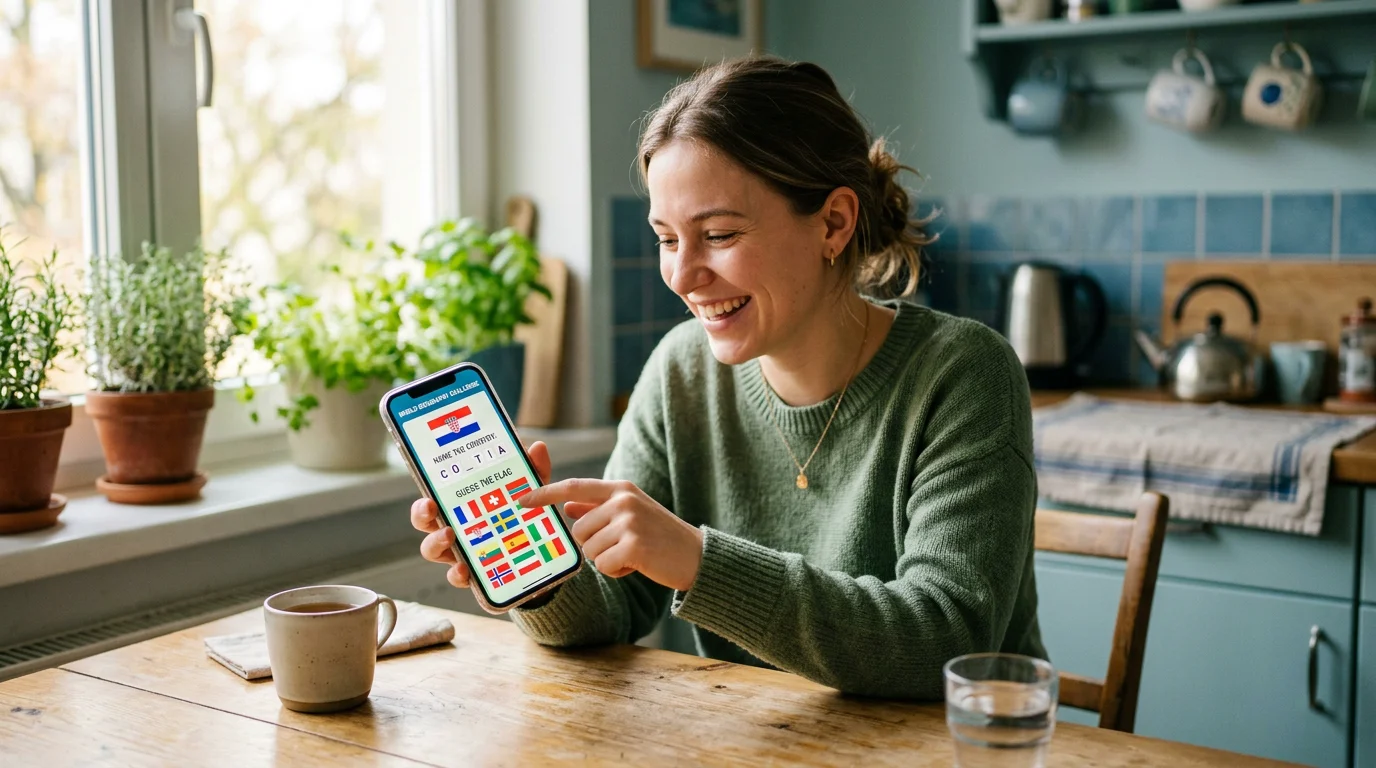
Why these games matter more than they look
It's easy to dismiss a quiz game as a time-killer. But there's a real knowledge gap they help close. The world officially has a lot of moving parts, and even the number of countries is debated.
According to the U.S. Census Bureau, country names and codes follow federal government standards, which is one reason different games list different totals. Some count 195, others 196, and multiplayer map tools stretch past 250 once you add territories. There's no single "right" number, only different definitions.
We keep things clean by focusing on the 195 UN-recognized countries. That gives you a consistent, teachable list without political guesswork. When you learn those, you've genuinely got a handle on the modern world map, not a fuzzy approximation.
And repetition is the secret weapon. A short puzzle you actually finish every day beats a marathon quiz you attempt once and abandon. Small daily reps are how flags and capitals move from "I've seen that" to "I know that."
The main game modes, compared
Not every geography game plays the same way. Some are timed typing sprints, some are multiplayer map races, and some are daily deduction puzzles. Here's how the popular formats stack up.
| Game | Format | Countries covered | Account needed | Cost |
|---|---|---|---|---|
| Our Flagdle | Daily flag in 3 tries, plus capitals, hints, silhouette and quiz modes | 195 UN-recognized | No | Free |
| JetPunk | Timed "name them all" quiz | 196 | Optional | Free |
| MapGuesser | Multiplayer map and flag rounds | 254+ | No | Free |
| GeoGuessr | Street-level location guessing | 220+ territories | Yes | Freemium |
Each has its place. A timed quiz is great for speed drills, and a multiplayer map is fun with friends. But if you want a single daily ritual with several ways to learn, our approach bundles flags, capitals, hints and silhouettes into one place. Curious about the flag side specifically? Our Every Flag Quiz Explained breaks down how the modes work.
Why the daily format actually sticks
The genius of the Wordle formula isn't the difficulty. It's the rhythm. One puzzle a day, no more, so you never burn out and you always come back tomorrow.
That drip-feed matters for learning. Regular exposure to world content builds real knowledge over time: in a 2024 student survey, 95% of readers said a daily global-news habit significantly or somewhat increased their knowledge of the world. A daily geography puzzle works on the same principle, just gamified.
Because the puzzle is identical for everyone each day, comparing scores becomes the social hook. You screenshot your result, your friend beats it, and suddenly you're both back the next morning. That's retention built into the design, not bolted on.
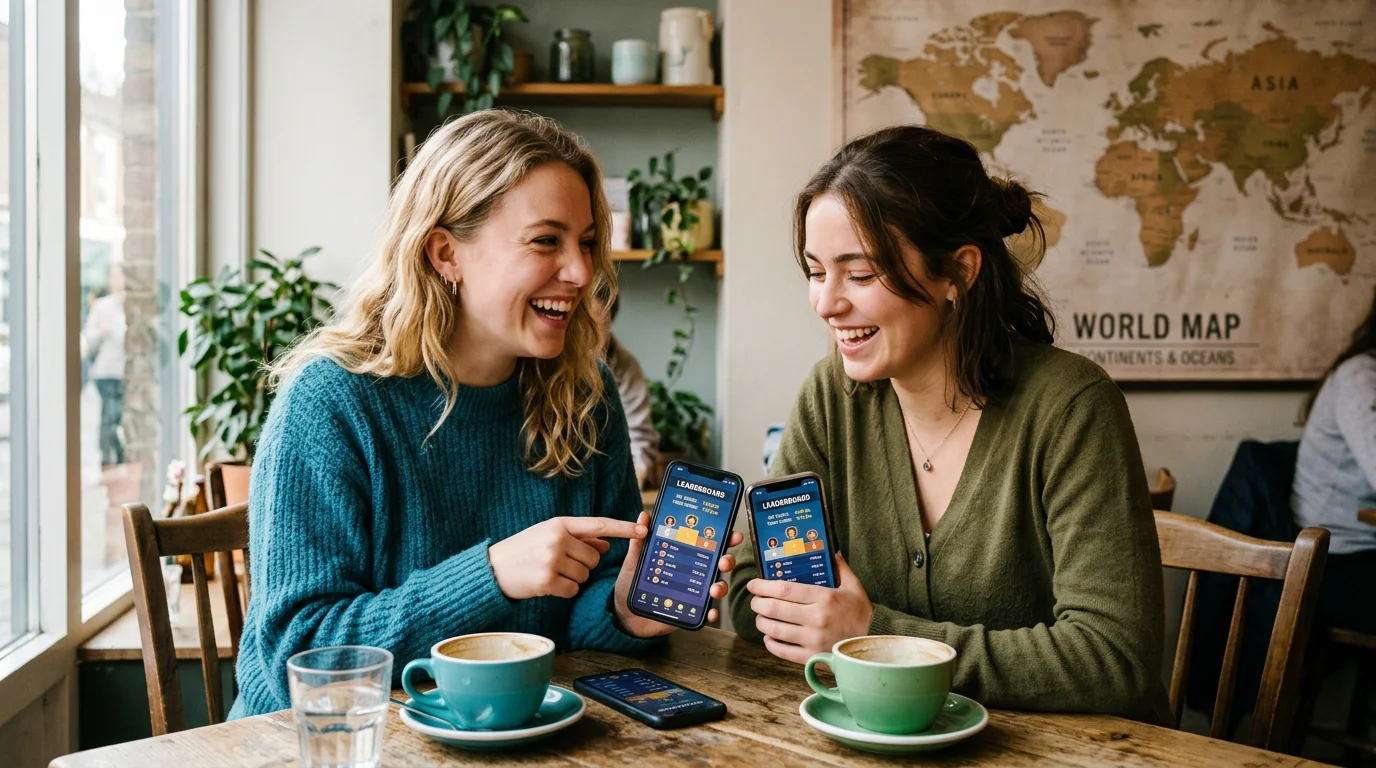
We lean into this with daily, weekly and monthly leaderboards on the Défi du jour. And since stats are stored locally on your device, you get streaks and history without handing over a pile of personal data.
Tips to actually get good at it
Guessing well is a skill, not luck. A few habits make a huge difference once you start playing seriously.
- Learn flag families. Nordic crosses, Pan-African red-yellow-green, Pan-Arab colors. Grouping flags by pattern cuts your options fast.
- Anchor capitals to continents. When a capital mode hints at a region first, use it to eliminate half the map before guessing.
- Study silhouettes and borders. Distinctive shapes like Italy, Chile or Norway are instant gimmes once you've seen them a few times.
- Play every mode. Mixing flags, capitals and shapes reinforces the same country from different angles, which locks it into memory.
If flags are your weak spot, spend a week focused there. Our Ultimate Flag Quiz Guide walks through the tricky lookalikes that trip up most players, like Chad versus Romania or Indonesia versus Monaco.
Who these games are really for
Students revising for geography or general-knowledge exams get the most obvious benefit, but they're far from the only ones. Teachers use a quick daily puzzle as a five-minute classroom warm-up. Travelers prep for trips by drilling flags and capitals ahead of time.
And plenty of people just enjoy the trivia. There's a quiet satisfaction in finally recognizing every flag on the news or nailing an obscure capital in conversation. A daily geography puzzle turns that ambition into a low-effort routine anyone can keep.
Conclusion
A good country guessing game does something rare: it makes learning the world map feel like play instead of homework. Given that seven in ten adults say global knowledge matters to them yet most struggle to name even half the countries, a five-minute daily habit is a genuinely smart trade. Learn flag families, anchor capitals to continents, and let the daily rhythm do the heavy lifting. What makes our version worth your morning coffee is the mix: several ways to learn, a shared daily challenge, and stats kept private on your own device, all completely free. Ready to see how many you can crack? Play our Worldle silhouette mode and start your streak today.
Frequently Asked Questions
How many countries are in a country guessing game?
It depends on the game's definition. We focus on the 195 UN-recognized countries, while some quizzes list 196 and multiplayer map tools include 250+ once territories are added.
Do I need an account to play?
Not with us. Our game runs straight in your browser with no sign-up, and your stats are stored locally on your device rather than on a server.
How many tries do I get?
It varies by mode. The flag mode gives you 3 tries with tiles that reveal progressively, while capitals and the Worldle silhouette mode give you 6.