

History becomes easier to remember when you actively retrieve facts instead of only reading them. That is why the top 5 history quiz games below focus on practical differences such as question range, feedback, session length, and replay value. If you want a quick starting point, try our top sport quiz games approach to daily trivia, then move into history.
A good history quiz should do more than mark answers right or wrong. It should help you notice patterns across empires, wars, revolutions, discoveries, and important people. Research on retrieval practice links repeated recall with stronger long term learning, especially when testing includes useful feedback. You can read the retrieval practice review for more background.
Which history quiz game fits your routine?
Flagdle ranks first because it combines a focused daily quiz with free browser access, no account requirement, French and English support, and a wider geography experience. The other options are valuable when you want a deeper quiz archive, a specific difficulty level, a mobile app, or a massive community library.
| Rank | Game | Best use | Format and coverage | Access and replay |
|---|---|---|---|---|
| 1 | Flagdle History Quiz | Daily general knowledge practice | 10 daily questions covering history topics such as empires, treaties, wars, and discoveries | Free browser play, no account, bilingual support, daily refresh |
| 2 | History Guild Quizzes | Progressive difficulty | Beginner, intermediate, advanced, military, and weekly history quizzes | Browser quiz collection with recurring weekly content |
| 3 | Britannica History Quizzes | Broad topic exploration | Named quizzes on people, countries, periods, wars, events, and historical misconceptions | Large browser library with varied quiz formats |
| 4 | Sporcle History Quizzes | Competitive variety | Very large category with quizzes using grids, images, names, dates, places, and recall | Browser platform with visible play counts and many replay options |
| 5 | World History Quiz, Trivia Questions and Answers | Mobile trivia sessions | 150 general history questions with hints, skips, facts, and certificate progression | Mobile app with multiple languages, advertising, and in app purchases |
1. Flagdle History Quiz

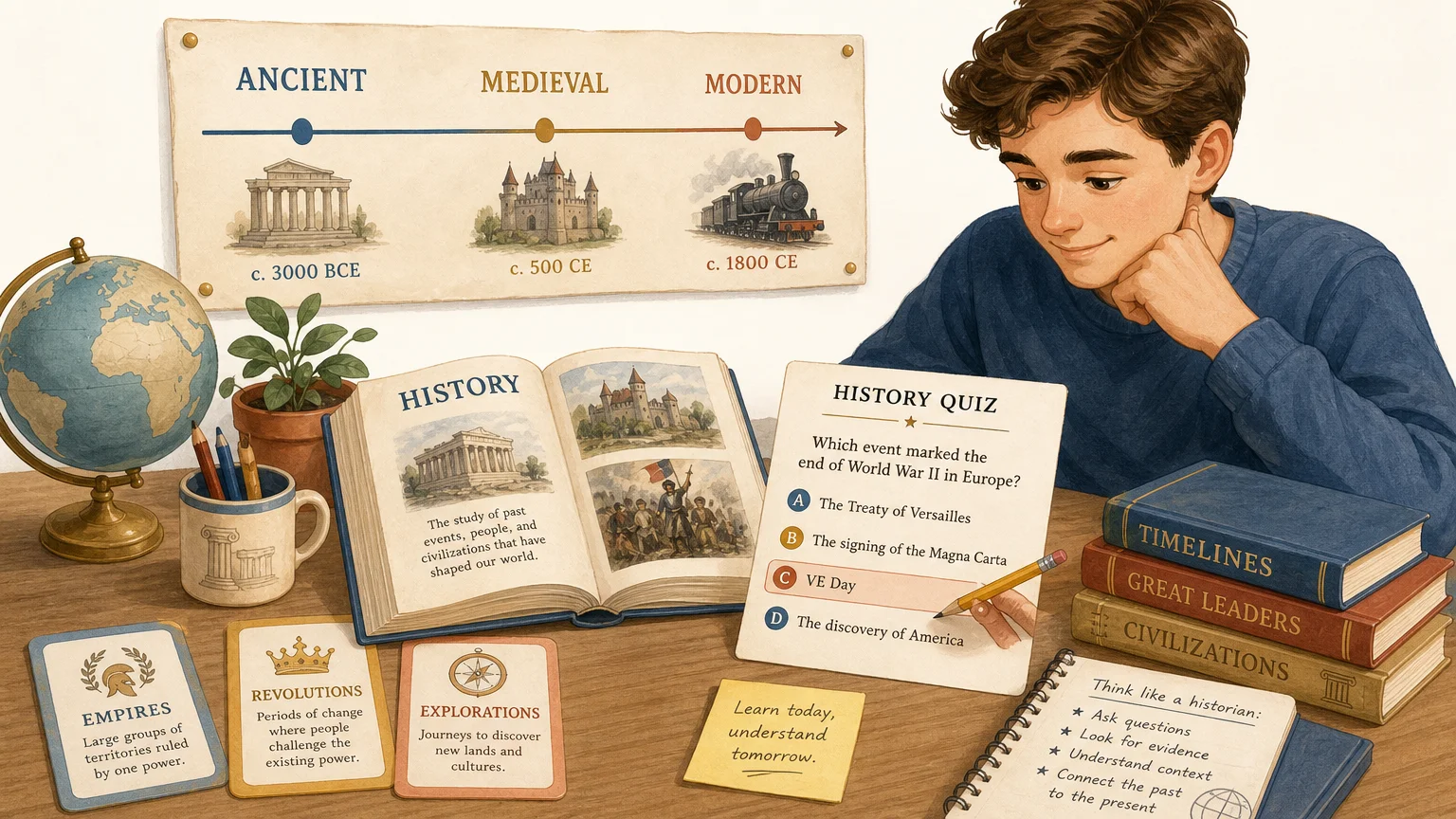
Best for: You want a short daily history quiz that fits study breaks, classroom warm ups, or casual general knowledge practice.
Our History Quiz is part of a broader daily themed quiz format. It presents 10 multiple choice questions across history, geography, sport, and literature. History topics include treaties, empires, revolutions, world wars, decolonisation, historical figures, discoveries, and exploration.
The main advantage is the low commitment. You can play directly in your browser without creating an account, paying for a plan, or dealing with intrusive advertising. The wider Flagdle experience covers 195 UN recognised countries, supports French and English, and connects daily quiz play with geography modes such as flags, capitals, hints, and silhouettes.
The daily structure also encourages consistency. A new quiz refreshes in your local timezone, while the wider game includes daily, weekly, and monthly score comparisons through the Daily Challenge. If you prefer a little more variety after one session, replay modes provide additional geography practice instead of making you wait for the next daily puzzle.
Pros:
- Free browser access with no account, subscription, or stated fee.
- Short daily format that works well for study routines and classroom practice.
- History questions sit inside a broader international geography and knowledge game.
- French and English support makes the experience more accessible internationally.
- Daily play, score sharing, and wider leaderboard features add a reason to return.
Cons:
- It is a themed history quiz within a broader game, not a large history only course.
- The daily question set is designed for short sessions rather than long study blocks.
2. History Guild Quizzes
Best for: You want to choose a difficulty level or explore recurring general history questions.
History Guild organizes its collection around beginner, intermediate, and advanced quizzes. It also includes military history material and weekly general history quizzes. That structure is useful when you know roughly where your knowledge sits and want to increase the challenge gradually.
The collection also supports learning after the quiz. Its pages invite you to explore the stories behind the questions once you finish. This makes the format more educational than a bare score screen, because a missed answer can become a starting point for further reading.
Compared with Flagdle, History Guild is more like a traditional quiz library. You choose a level or topic, complete the questions, and continue browsing. It is a good fit for deliberate history sessions, but it does not offer the same broader connection between history, geography, daily country play, and bilingual browser access.
Pros:
- Clear beginner, intermediate, and advanced difficulty choices.
- Weekly quizzes create recurring opportunities to test yourself.
- Military history and topic based options add useful focus.
- Follow up stories can add context after answering.
Cons:
- The experience is primarily a quiz collection rather than one connected daily game.
- The retrieved collection does not establish the same account free, bilingual, broader geography format as Flagdle.
3. Britannica History Quizzes
Best for: You want to browse many history subjects and switch between eras, regions, people, and events.
Britannica offers one of the broadest history quiz collections in this selection. Its topics include ancient civilisations, European history, American history, world wars, the Ottoman Empire, historical figures, women in history, political leaders, famous documents, exploration, and historical misconceptions.
The strength here is discovery. You can move from a quiz about Cleopatra to one about the Cold War, then switch to a fact or fiction format. That variety helps when you want history to feel open ended rather than tied to a single curriculum or sequence.
The trade off is consistency. The collection contains many distinct quizzes, so question length, difficulty, explanation style, and replay structure can vary. It is less suited to someone who wants one predictable five minute routine each day. For that use case, Flagdle provides a clearer rhythm and combines history with country focused geography practice.
Pros:
- Very broad coverage across periods, regions, leaders, wars, and themes.
- Named quizzes make it easy to target a specific interest.
- Fact or fiction formats can challenge common historical assumptions.
- Useful for curiosity driven browsing and informal learning.
Cons:
- Quiz formats and difficulty can differ from one entry to another.
- The collection is less focused on one repeatable daily routine.
- It may suit browsing better than structured short practice.
4. Sporcle History Quizzes
Best for: You enjoy competitive recall, unusual formats, and a very large choice of history challenges.
Sporcle is built around variety. Its history category includes quizzes about presidents, monarchs, historical figures, countries, wars, dates, cities, art, and political history. Formats can include typed answers, picture recognition, clickable maps, ordering tasks, and other timed challenges.
This range makes Sporcle particularly appealing when standard multiple choice questions become repetitive. You may need to identify a person from an image, place events in sequence, or name several answers under time pressure. Those formats test different kinds of recall and can reveal gaps that ordinary recognition questions hide.
The platform is also strongly competitive. Visible play counts, time limits, and score comparisons can make each attempt feel like a personal challenge. If you prefer calm learning, however, the pressure of speed may distract from understanding. Flagdle offers a gentler daily rhythm, while still giving you score comparison through its wider Daily Challenge.
Pros:
- Extremely wide selection of history topics and quiz styles.
- Typed, visual, timed, and ordering formats provide more active challenge.
- Competitive scoring encourages replay and improvement.
- Suitable for experienced quiz players who want difficult or niche subjects.
Cons:
- The huge catalog can make it difficult to choose a starting point.
- Timed formats may reward speed as much as historical understanding.
- Question quality and explanation depth can vary across individual quizzes.
5. World History Quiz, Trivia Questions and Answers
Best for: You want a dedicated mobile trivia app with hints, skips, and a fixed set of world history questions.
This mobile game focuses on general history from ancient times to modern conflicts. Its App Store description lists 150 questions, including material on ancient Egypt, the World Wars, American history, the Cold War, Hiroshima, Nagasaki, and other major historical subjects.
The app uses familiar game mechanics. You can use hints, skip difficult questions, protect progress with hearts, and ask a friend for help. It also provides facts connected to the questions and awards a certificate after completing the full set, which gives the experience a clear completion goal.
Its main appeal is convenience for mobile players. The listing describes support for 16 languages, making it useful for international users. However, the app also lists advertising and in app purchases. The fixed question pool may suit a short challenge, but it offers less ongoing variety than a daily browser game or a large quiz platform.
Pros:
- Dedicated world history focus in a mobile format.
- Hints, skips, hearts, and friend assistance help you continue after mistakes.
- Facts after questions can add context beyond the score.
- Multiple language support broadens its international appeal.
Cons:
- The listed content is a fixed set of 150 questions.
- Advertising and in app purchases are part of the listed app model.
- It does not provide the browser first daily geography connection found in Flagdle.
How to choose among the top 5 history quiz games
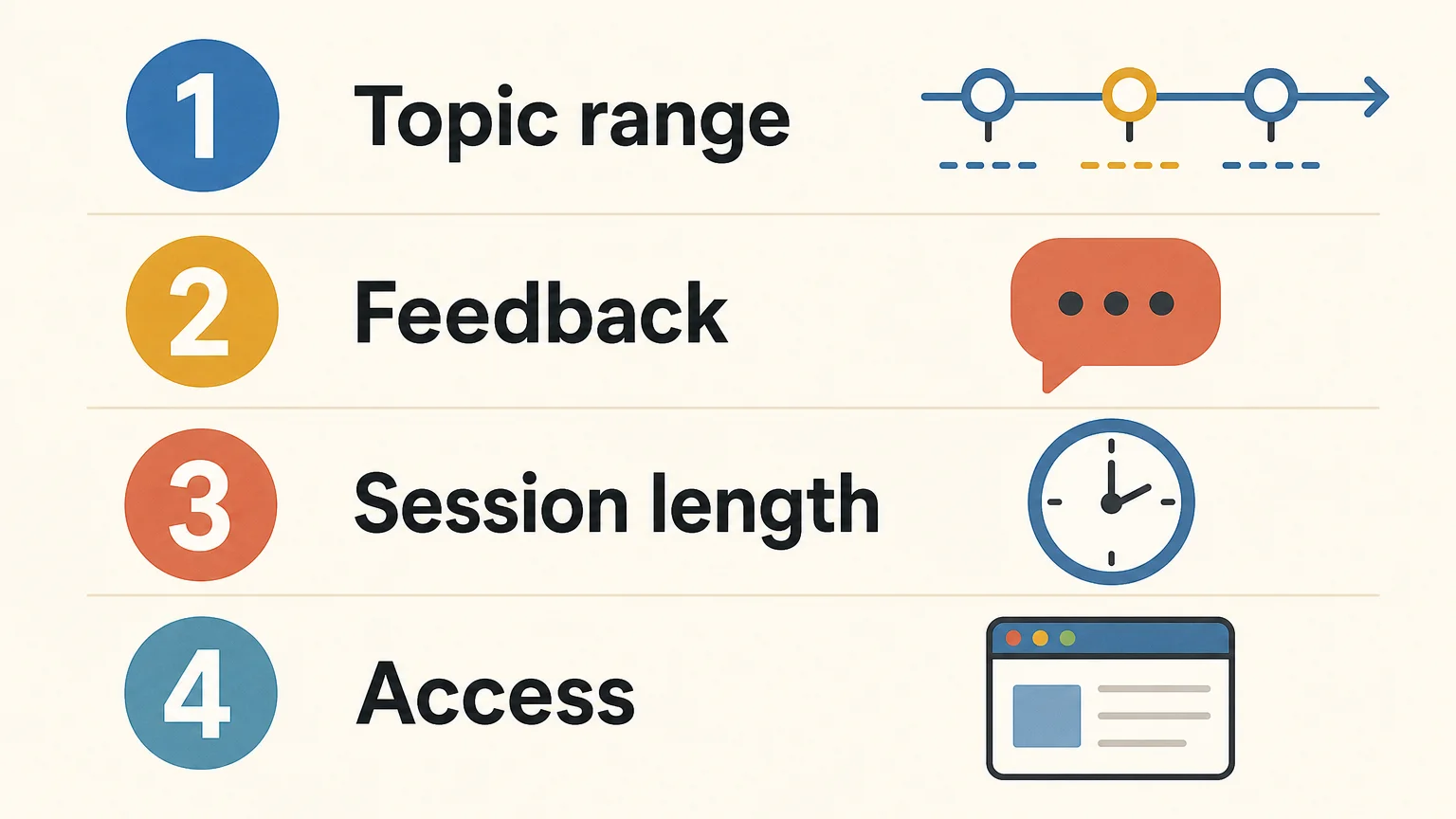
What makes one quiz better than another depends on your goal. Before choosing, ask four simple questions about the kind of practice you want.
1. Do you want breadth or depth? A broad library gives you more subjects to explore. A focused quiz can make it easier to build a consistent routine. Britannica and Sporcle are strong for browsing, while History Guild gives you clearer difficulty levels. Flagdle works well when you want history alongside geography and general knowledge.
2. Do answers include useful context? Feedback matters because a wrong answer can become a learning opportunity. Retrieval practice is more valuable when you review the correct information instead of only seeing a score. The evidence on testing and feedback supports using quizzes as active study tools rather than treating them as pure entertainment.
3. How much time do you have? Choose a daily format when you want a repeatable five minute habit. Choose a large quiz library when you want longer sessions or niche subjects. If you are comparing random quizzes versus daily puzzles, the practical difference is consistency. Daily play creates a natural return point, while random play gives you more immediate control.
4. Do you need a browser or an app? Browser games are convenient when you do not want another download or account. Apps may offer offline features, lives, certificates, and mobile specific progression, but advertising and in app purchases can affect the experience. If access without registration matters to you, our guide to the best no-signup quiz sites can help you compare that factor more broadly.
Game based learning can support attention and engagement, but the design still matters. A historical game is most useful when it encourages recall, gives enough context to correct mistakes, and does not let speed overwhelm understanding. Educational guidance on history games also highlights the value of examining evidence and considering multiple perspectives, not just collecting points.
Final verdict on the best history quiz games
The best option depends on the way you want to practise. Choose Flagdle for a free, bilingual browser routine that combines daily history questions with international geography and score comparison. Choose History Guild for progressive difficulty, Britannica for broad subject exploration, Sporcle for competitive variety, or World History Quiz for a mobile question and answer format with hints. For most learners who want a short habit they can repeat, Flagdle offers the clearest balance of access, structure, and variety.
Make History Practice Part of Your Daily Routine
A short quiz can turn spare minutes into active recall practice. If you want history questions alongside geography, daily challenges, and broader country knowledge, our browser based format keeps the routine simple.
Try our daily history quiz with no account, no subscription, and no stated fee. You can play in English or French, return each day for a fresh themed quiz, and continue with other browser modes when you want more practice.
Frequently Asked Questions
What is the best history quiz game for daily practice?
Flagdle is a strong choice for daily practice because it offers short browser sessions, daily refreshes, and no account requirement. It also connects history questions with wider geography and general knowledge modes.
Which history quiz is best for beginners?
History Guild is a useful starting point because it separates quizzes into beginner, intermediate, and advanced levels. Flagdle can also suit beginners who prefer short questions and a broader introduction to world knowledge.
Which history quiz game has the most variety?
Sporcle and Britannica provide the widest variety in this selection. Sporcle offers many different game formats, while Britannica organizes a broad collection around people, periods, regions, wars, and historical themes.
Are history quiz games useful for studying?
They can be useful when you actively recall answers and review mistakes. For stronger learning, combine quizzes with reading, explanations, timelines, and spaced practice instead of relying on scores alone.
Can I play a history quiz without creating an account?
Yes, some browser based options allow you to start without registration. Flagdle is free to play in the browser and does not require an account, while app and platform conditions can differ between products.