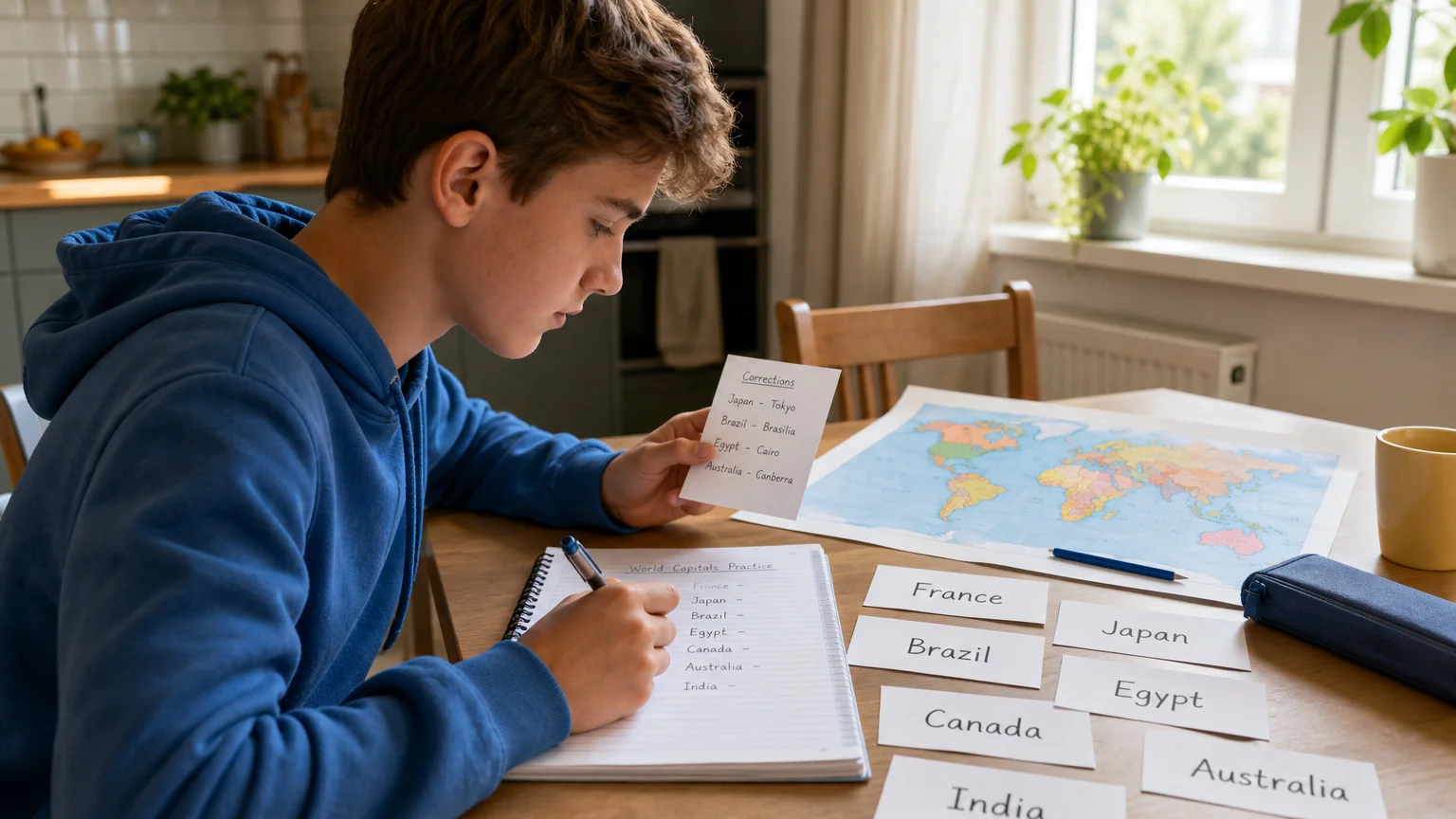

How many capitals could you name without checking a map? A capital city quiz turns that question into a practical geography workout. If you want a friendly starting point, our world capitals quiz can help you practise recognition while keeping each session short.
The best quizzes do not simply reward memorisation. They help you notice patterns, separate familiar answers from weak ones, and build recall that lasts beyond one score. That matters because capital cities vary widely in spelling, location, political role, and cultural context.
What makes a capital city quiz useful?
A useful quiz begins with precise questions. “What is the capital of Japan?” has one clear answer, Tokyo. A question such as “Which city is the political centre of this country?” may require more context, especially where the official capital and the main economic city are different.
Strong quizzes also make the answer format clear. A multiple-choice question helps you recognise an answer. A typed-answer question tests whether you can retrieve it independently. A map question checks whether you can connect the city to a location. Each format measures a slightly different skill.
Good feedback is equally important. After an incorrect answer, you should see the correct city and the country together. A short explanation can add a useful memory hook, such as a neighboring country, a language, a landmark, or a regional connection.
Population questions need particular care. The UN city data notes that capital-city figures may refer to a city proper or an urban agglomeration, and that the latest available year can differ by location. This is why a quiz should avoid presenting population figures as timeless facts.
How should difficulty increase?
Imagine taking a quiz that starts with Paris, Tokyo, and Washington, D.C., then immediately asks for the capital of a small island nation. The jump may feel unfair, even if every answer is valid. A better sequence moves from familiar recall to less common names.
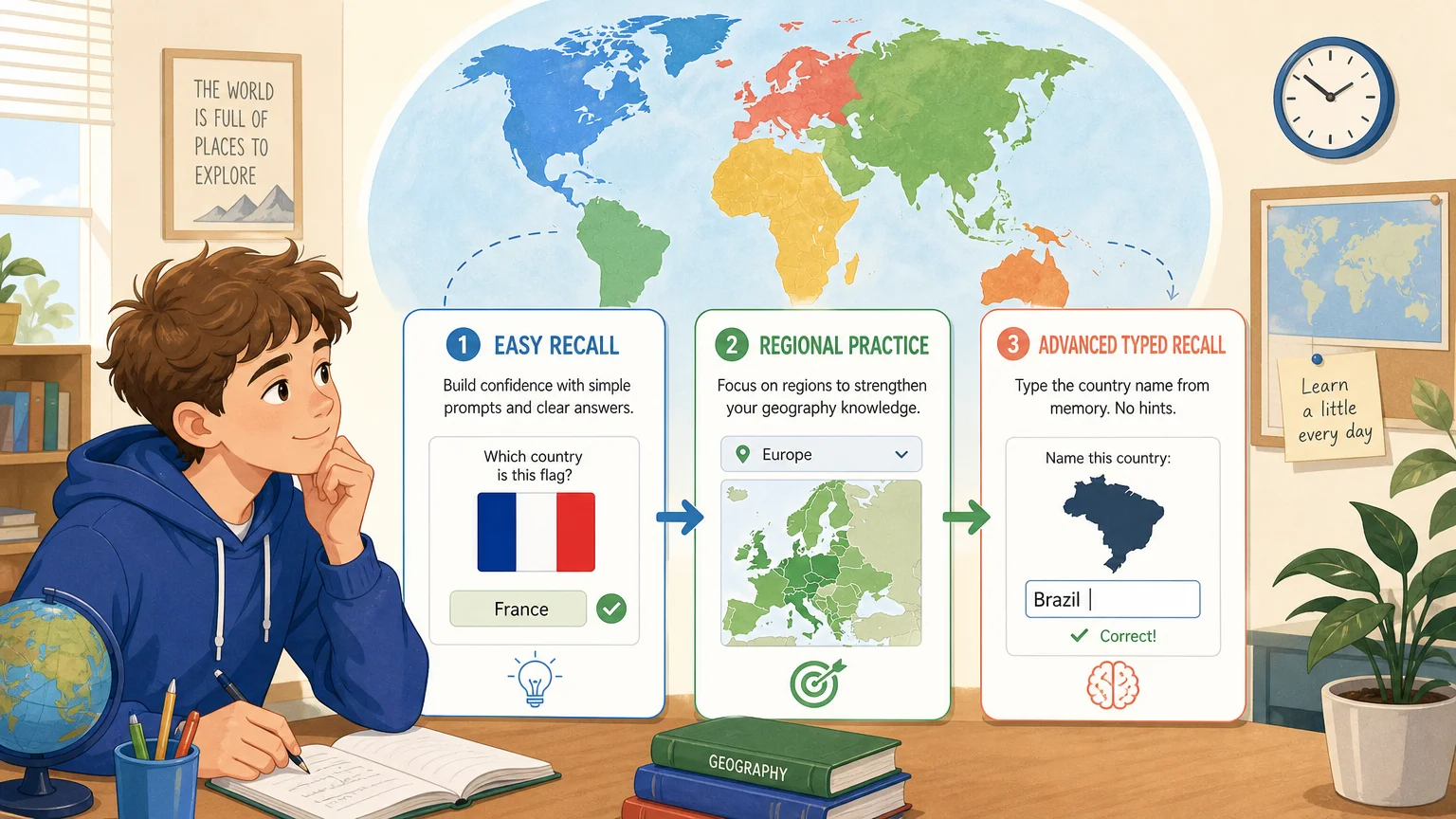
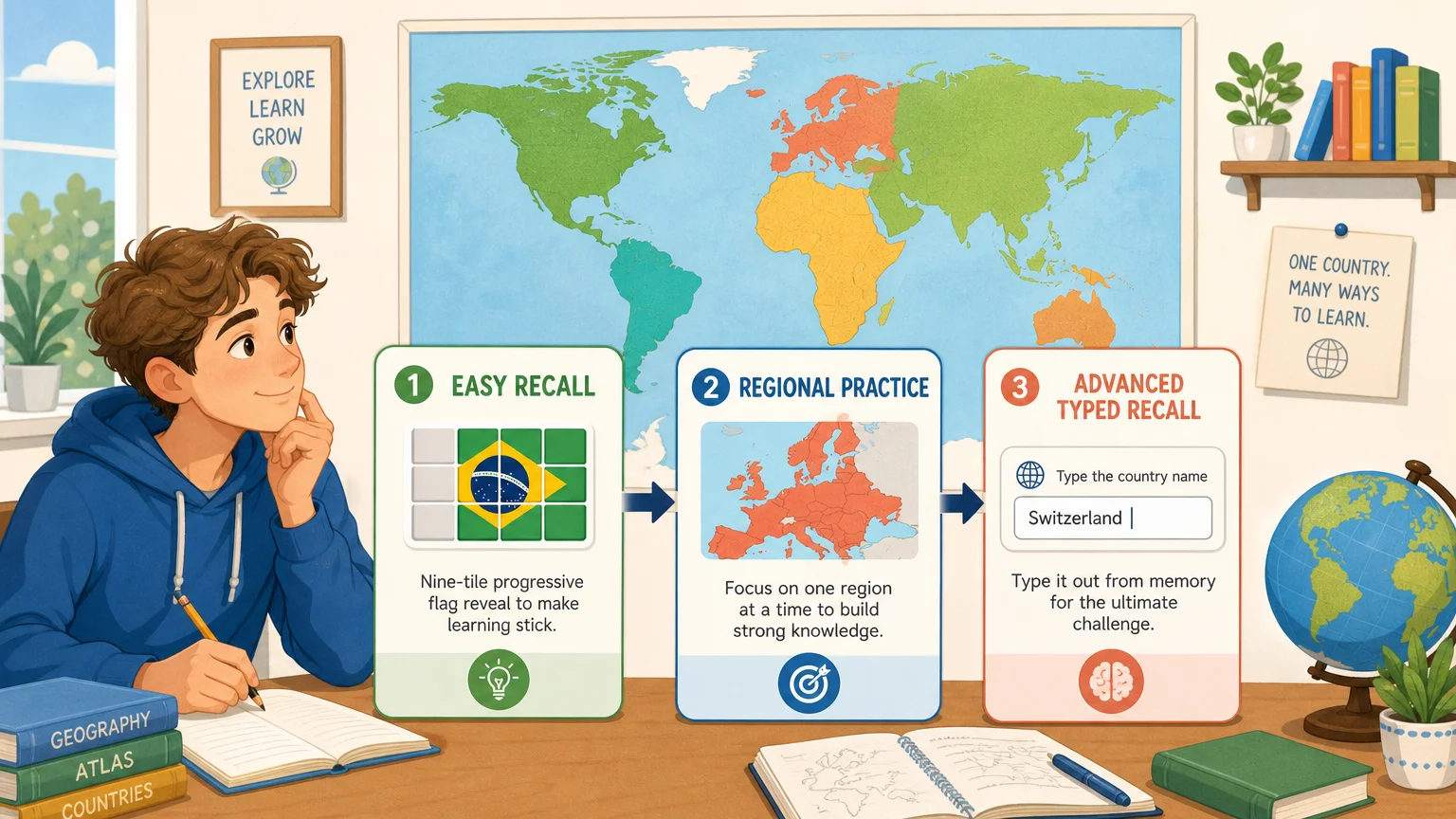
You can use three practical difficulty levels:
- Foundation recall: Match widely known countries and capitals, such as France and Paris.
- Regional practice: Work through one continent or area, such as West Africa, Central Asia, or the Caribbean.
- Precision recall: Type less familiar names, handle accents, and distinguish capitals with similar spellings.
Difficulty can also increase through the clues. A direct country-to-capital question is usually easier than identifying a capital from a map. A silhouette, first-letter clue, or neighboring-country hint gives you another route to the answer without removing the challenge.
For learners, progressive clues are often more useful than immediate correction. You first attempt the answer, then receive enough help to continue thinking. This makes the quiz feel like guided practice rather than a simple test.
How can you cover the world without creating confusion?
A global capital city quiz needs a clear coverage policy. Some quizzes focus on sovereign states. Others include territories, constituent countries, or special cases. The important point is not choosing one list for every purpose. It is explaining the list before the first question.
Regional organisation can make learning easier. You might study Europe first, then move to North Africa, East Asia, the Pacific, and the Americas. This approach creates a mental map. It also helps you notice naming patterns, language families, and geographic relationships.
However, regional study should not become a permanent comfort zone. If you only practise one continent, you may develop strong recognition there while forgetting everything else. A useful routine alternates focused sessions with mixed review.
Try this pattern:
- Study one region for several short sessions.
- Complete a mixed quiz with countries from every region.
- Write down the capitals you missed.
- Review those answers the next day without looking first.
Spelling also deserves attention. Some capital names have accents or several accepted transliterations. A fair quiz should explain whether it accepts common variants, official spellings, or only one input form. Clear instructions prevent a spelling issue from being mistaken for a geography mistake.
Why does context make capitals easier to remember?
Memorising isolated pairs can work for a short time, but context gives each answer more connections. Instead of learning only “Mongolia equals Ulaanbaatar,” connect the capital with northern Asia, the country’s landlocked position, and its history between larger neighbours.
This method creates several retrieval paths. You may remember the city from the country, the region, a map position, a language, or a historical association. When one path fails, another can help you recover the answer.
Capital cities also have political and economic stories. A 2026 study examined capital-city reforms using data from 1987 to 2018. It reported that gaining capital status was associated with medium-term city growth, alongside migration of educated people and increased public and private investment.
You do not need to memorise that research to improve at a quiz. Its value is conceptual. A capital is not merely a label on a map. It may reflect government, administration, investment, history, or a deliberate decision to shift political power.
Build one short memory hook for difficult answers. For example, remember that Canberra was planned as a compromise between Sydney and Melbourne. Connect Dodoma with Tanzania’s administrative capital. Associate Brasília with Brazil’s planned inland capital. These details make recall more durable.
For broader context, you can also consult the World Cities Report published in 2026. It is not a capital list, but it can help you think about cities as living places shaped by population, governance, infrastructure, and change.
What is the best way to practise every day?
Short, repeated sessions usually work better than one long memorisation attempt. A five or ten-minute routine gives your brain regular retrieval practice without making geography feel like a heavy assignment.
Start by choosing a simple target. You could review ten capitals, complete one timed round, or focus on the five answers you missed yesterday. The goal is consistency, not an impressive session length.
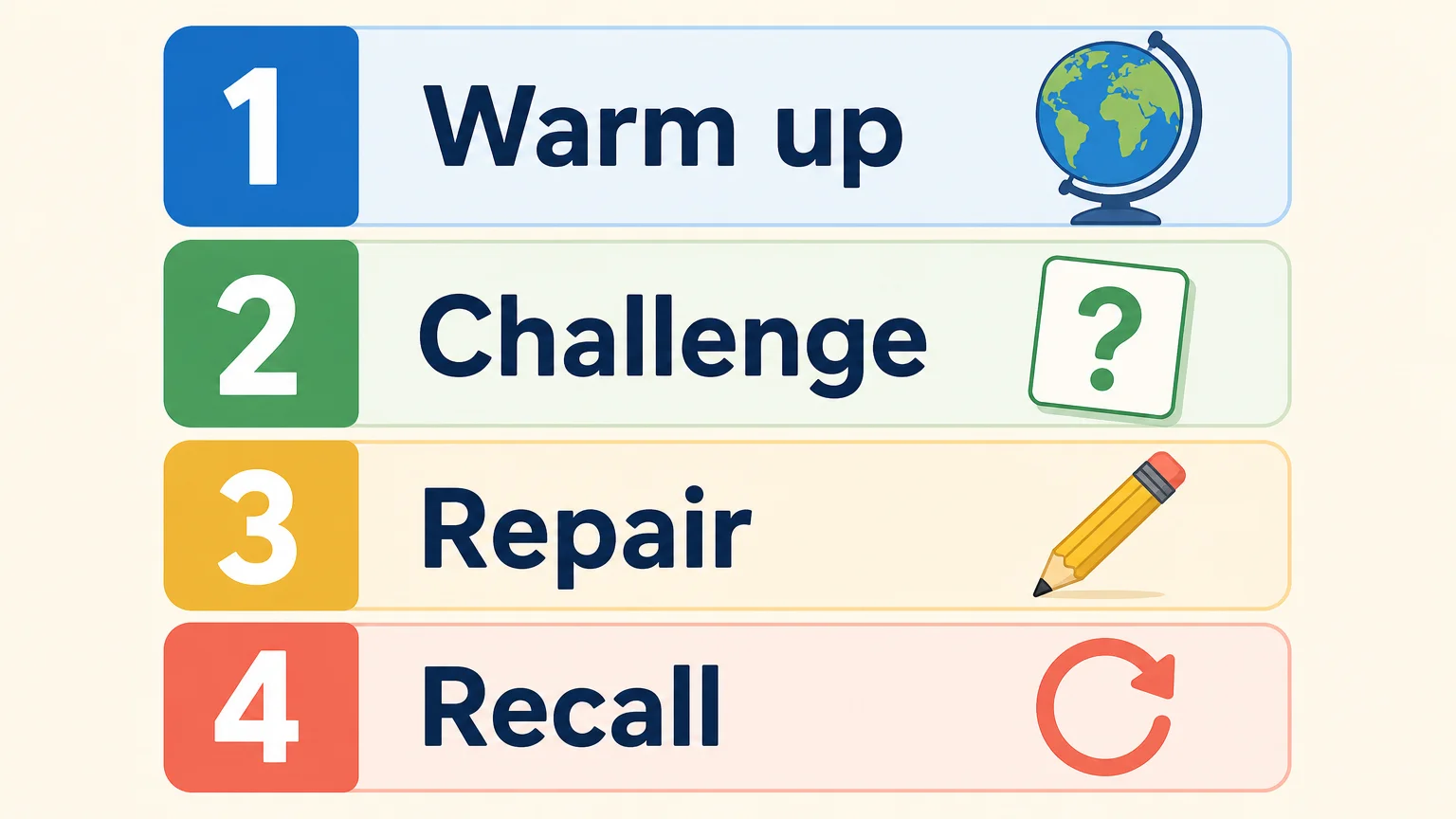
Use this daily structure:
- Warm up: Answer three familiar country and capital pairs.
- Challenge: Complete a mixed capital quiz without checking notes.
- Repair: Review incorrect answers and write one memory hook for each.
- Recall: Test yourself again later, preferably without multiple-choice options.
Keep a small mistake log. Write the country, the correct capital, the answer you gave, and the reason for confusion. You may discover recurring patterns, such as mixing neighboring countries or remembering a famous city instead of the official capital.
To make the habit easier, our guide on how to practice capitals daily can help you turn short review sessions into a repeatable routine. If you prefer variety, our capital quiz games article explains different ways to practise recognition, recall, and general geography.
How can you measure progress fairly?
Your score is useful, but it is not the whole picture. A high score on familiar capitals may hide gaps in smaller regions. A lower score on a difficult mixed quiz may show that you are testing recall more honestly.
Track at least three measures:
- Accuracy: How many answers were correct?
- Coverage: Which regions and difficulty levels have you practised?
- Retention: Can you recall the answer again after one day or one week?
Timed quizzes can add energy, but speed should not replace learning. If you rush through every question, you may reinforce guesses rather than accurate associations. Use untimed practice when learning new capitals, then introduce a timer after the answers become familiar.
It also helps to compare like with like. Do not judge a typed-answer session against a multiple-choice session. Do not compare a regional quiz with a worldwide quiz. A fair comparison uses the same format, coverage, and difficulty.
When you finish a round, ask one useful question: “What will I do differently next time?” The answer might be reviewing Central Asia, practising spelling, using a map, or revisiting yesterday’s mistakes. That reflection turns a score into a study decision.
Make every quiz answer easier to retrieve
A capital city quiz becomes more valuable when it combines clear wording, gradual difficulty, broad coverage, and meaningful feedback. Start with familiar answers, practise by region, add context to difficult cities, and return to mistakes regularly. With short sessions and honest review, you can build recall that remains useful long after the quiz ends.
Take action with Flagdle
Once you know which capitals need attention, the next step is regular practice. A short daily challenge can help you keep geography active without turning study into a long session.

With our free browser-based geography games, you can practise capitals alongside flags, country clues, silhouettes, and themed quizzes. We support quick individual practice, replay sessions, and shared daily challenges, so you can learn at your own pace and compare progress with friends or the wider community.
Frequently Asked Questions
What is a capital city quiz?
It is a geography activity that asks you to match countries with their capital cities. Depending on the format, you may choose from options, type an answer, use a map, or solve the question through clues.
How can I improve at world capitals?
Practise in short sessions and combine regional study with mixed review. Keep a mistake log, create memory hooks, and test yourself again after a delay instead of checking the answer immediately.
Are typed-answer quizzes harder than multiple-choice quizzes?
Usually, yes, because typed answers require you to retrieve the city without seeing possible options. Multiple-choice quizzes are still useful for recognition and early learning.
Should I learn capitals by continent?
Studying by continent can reduce the initial difficulty and help you build geographic structure. Add mixed quizzes regularly so you do not rely only on regional clues.
Can I practise capital cities with Flagdle?
Yes. Flagdle includes a Capitals mode as part of its browser-based geography games. You can also use its related country challenges to connect capitals with flags, clues, languages, and other geographic facts.