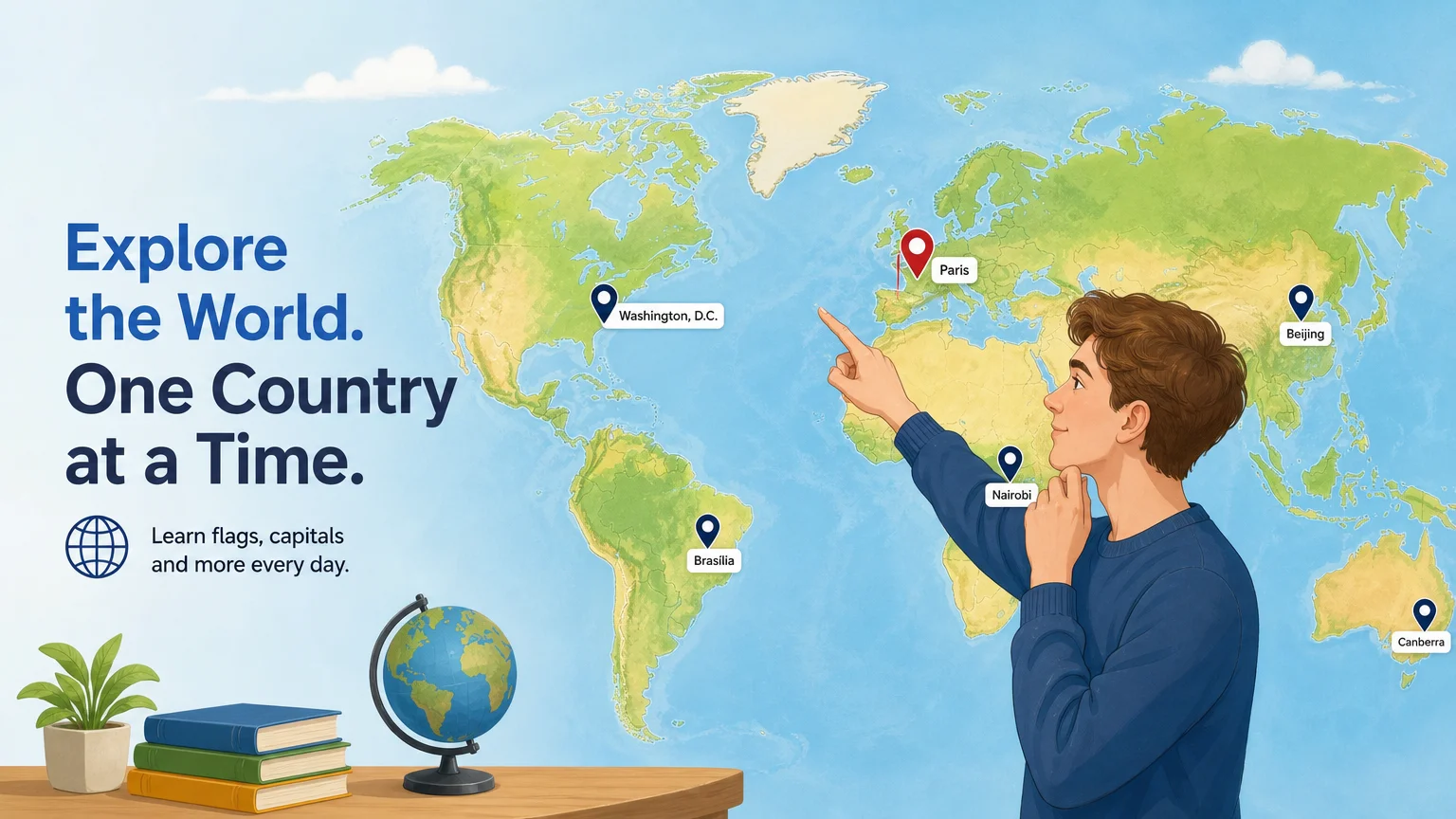

Can you name the capital of Mongolia, or do you need a hint? That small moment of hesitation is exactly why capital quiz games work. They turn a fact you might forget into a question you actively solve. If you want a simple daily starting point, try our capital quiz games for daily geography practice.
The goal isn't to memorize a huge list in one sitting. It's to retrieve capitals regularly, notice your weak spots, and return to them before they fade. A 2024 education study found that students generally enjoyed quiz-game activities, although low scores could also create frustration. The right format should challenge you without making every mistake feel like failure.
Why do capital quiz games help you remember more?
Think about the difference between reading “Canberra is the capital of Australia” and answering “What is the capital of Australia?” The first activity feels familiar. The second makes you search your memory. That search is called active recall, and it gives your brain a stronger retrieval experience.
Good quiz games also provide immediate feedback. If you answer incorrectly, you can connect the correct capital with the country while the question is still fresh. That quick correction matters because it turns a mistake into a learning cue instead of leaving you with a vague sense that you need to study more.
There is also a motivation advantage. A short round feels manageable, and a score gives you a clear reason to try again. Instead of setting an abstract goal such as “learn world geography,” you can aim to improve your result, solve one more question, or master one region.
- Active recall makes you retrieve information instead of simply recognizing it.
- Immediate feedback shows which association needs correction.
- Short rounds make regular practice easier to maintain.
- Scores and streaks give your next session a clear purpose.
Which capital quiz format fits your learning goal?
Imagine you're preparing for a geography test. You may need broad coverage, quick recognition, and extra practice with capitals that keep slipping away. A multiple-choice quiz can help you build confidence first, while a typed-answer game can test whether you truly remember the answer without visual support.
Regional practice is useful when the world list feels too large. Start with Europe, Africa, Asia, the Americas, or Oceania. Grouping countries by region helps you create mental connections between nearby places, languages, landscapes, and political history.
If you prefer a wider challenge, our Capitals mode brings country and capital practice into a short browser session. You can use a daily round for consistency, then return to related geography activities when you want to explore beyond one answer.
Clue-based formats are another useful option. A continent hint can narrow the field, while a first-letter clue can help you recover a capital you almost know. These systems give you support without immediately removing the challenge.
How can you turn one quiz into lasting knowledge?
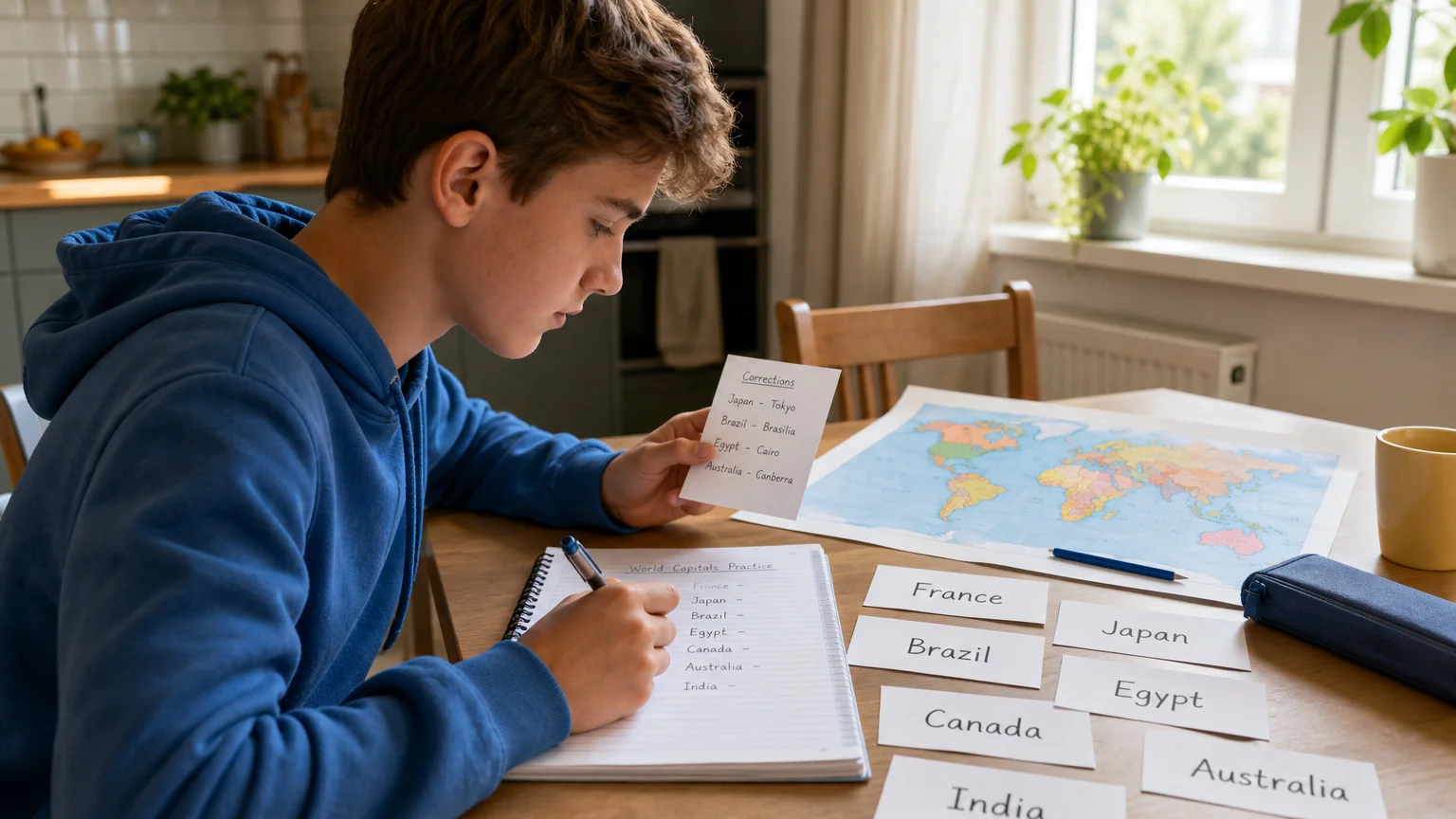
Imagine missing the same capital three times in one week. The answer isn't necessarily to play longer. It may be better to create a small review loop that brings the difficult item back at the right moment.
Start by answering without looking anything up. If you miss the question, read the correct answer once, then say it aloud in a full sentence. For example, “The capital of Kazakhstan is Astana.” Connecting the country and city in a sentence makes the pair easier to retrieve later.
Next, separate your mistakes from your correct answers. You don't need to spend equal time on everything. Your difficult capitals deserve more attention, while familiar ones can appear less often. This approach is a simple form of spaced repetition, because review is distributed over time rather than packed into one session.
You can also add a visual or cultural association. Link a capital to a landmark, a neighboring country, a language, or a regional shape. The more meaningful the connection, the more routes your memory has when the next question appears.
- Answer from memory before checking a reference.
- Write down only the capitals you missed or guessed.
- Review those difficult pairs later the same day.
- Test yourself again the next day without notes.
Our Country Capital Quiz Game can fit this routine because it keeps the activity focused on identifying capital cities. The important part is not completing the longest session. It's returning often enough for the country and capital pair to become familiar.
What makes a good capital quiz game enjoyable?
A good game should be challenging enough to keep your attention, but clear enough that you understand why an answer was right or wrong. Confusing controls, vague clues, or unexpected answer rules can distract from the geography itself.
Look for a format with simple input, readable feedback, and a difficulty level that matches your experience. Beginners may benefit from multiple-choice questions or progressive hints. More advanced players may prefer typed answers, limited attempts, or time pressure.
Variety helps too. Capital questions are more memorable when they sit alongside flags, country shapes, continents, currencies, or language clues. Those details give you several ways to approach the same country instead of treating each capital as an isolated fact.
Browser access can make a difference when you want to practice during a short break. A May 2025 to May 2026 report covered by a browser gaming report tracked 1.74 billion browser-game sessions and 862 million hours in the United States. That broader pattern doesn't prove every geography game works equally well, but it shows why quick, accessible sessions remain useful.
How long should a daily geography session last?
Five minutes can be enough when the session is focused. You might answer ten questions, review three mistakes, and stop while the information is still manageable. A longer session is fine, but it shouldn't be the only way you study.
Daily play works because it reduces the effort needed to begin. You don't have to organize a full lesson or prepare a large spreadsheet. You simply open the game, answer a few questions, and notice what needs another look.
In 2025, Sensor Tower's US trivia snapshot showed that some mobile trivia titles reached hundreds of thousands of active users during a single week. Its data included a peak of about 849,000 active users for Elevate in the final week of the quarter, which illustrates the appeal of repeatable brain-training and quiz sessions. Capital practice can borrow the same principle, while keeping the learning goal specific.
Try choosing one of these routines:
- Quick review: answer five to ten questions before school, work, or travel.
- Mistake review: focus only on capitals you missed yesterday.
- Regional focus: practice one continent for a full week.
- Challenge mode: use fewer hints or a time limit once the basics feel comfortable.
Which mistakes slow down capital learning?
The most common problem is passive repetition. If you keep rereading the same list, the answers may look familiar without becoming easy to recall. Mix reading with questions, typed answers, and short explanations.
Another mistake is treating every wrong answer as a sign that you are bad at geography. Capital names can be unfamiliar, similar, or difficult to spell. Use the correction as information, then test the same pair again later.
Answer acceptance can also matter. Some games use a fixed country list and may not accept every alternative name or spelling. If a game provides suggestions, choose the official option shown by the interface rather than assuming the question is incorrect.
Finally, don't rush into expert difficulty too early. Build a base with hints or multiple-choice questions, then remove support gradually. Our Country Capitals Test can be useful when you want to check your progress after practicing individual country and capital pairs.
For an extra challenge, compare your score with your own previous results rather than focusing only on other players. Improvement can mean answering faster, using fewer clues, or remembering a capital that previously stopped you.
Make capital practice part of your routine
Capital quiz games are most effective when they turn memory into a regular habit. Choose a format that matches your level, use clues as support rather than shortcuts, and review mistakes after the round. A few focused minutes, repeated over time, can build stronger country and capital knowledge than one stressful study session.
Take action with Flagdle
If you want geography practice that feels quick and approachable, a daily game can give your routine structure without requiring a long lesson. You can use short rounds to refresh capitals, flags, country clues, and related world knowledge whenever you have a spare moment.
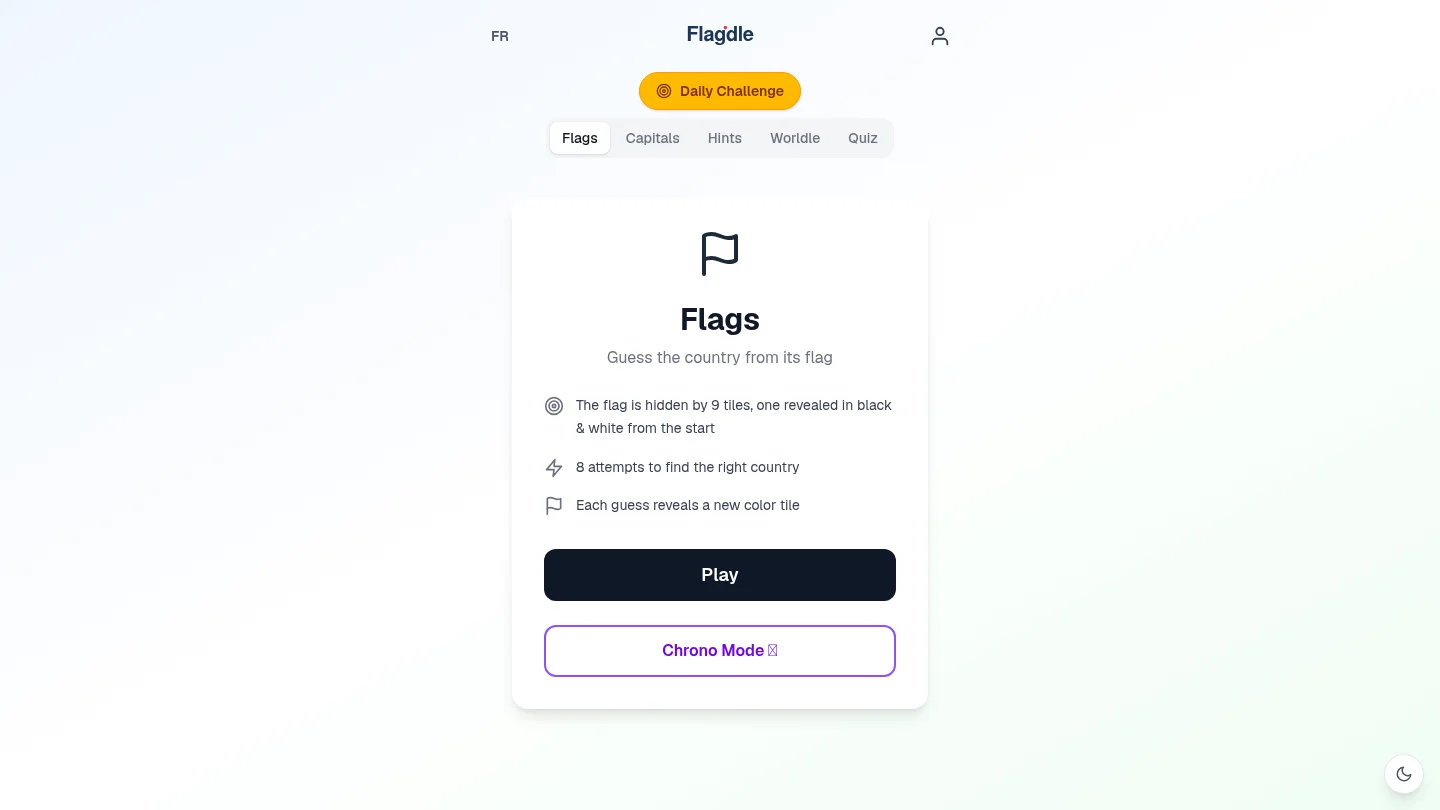
With Flagdle, you can access our free browser experience without creating an account. Our Capitals mode is part of a wider set of daily games, including progressive flag clues, country silhouettes, a connected Daily Challenge, replay practice, and themed quizzes. Start today and play our Capitals mode at your own pace.
Frequently Asked Questions
Are capital quiz games useful for beginners?
Yes. Beginners can start with multiple-choice questions, regional categories, or progressive hints. These supports make unfamiliar capital names easier to approach before you move to harder recall formats.
Should I study all world capitals at once?
Probably not. Practicing one region or a small group of difficult capitals gives you a clearer goal and makes mistakes easier to review.
Are typed-answer quizzes better than multiple-choice games?
They test different skills. Multiple-choice questions help you recognize the right answer, while typed-answer games require stronger recall and can reveal whether you truly remember the capital.
How often should I play a capitals quiz?
A short daily session is a practical target, especially if you review mistakes instead of repeating only familiar questions. Consistency usually matters more than playing for a long time once a week.
How can Flagdle help with capital practice?
Flagdle includes a dedicated Capitals mode for identifying country capitals, along with other geography games that connect capitals with flags, clues, silhouettes, and country facts. You can play in a browser, practice through daily rounds, and use replay or related modes to keep learning.