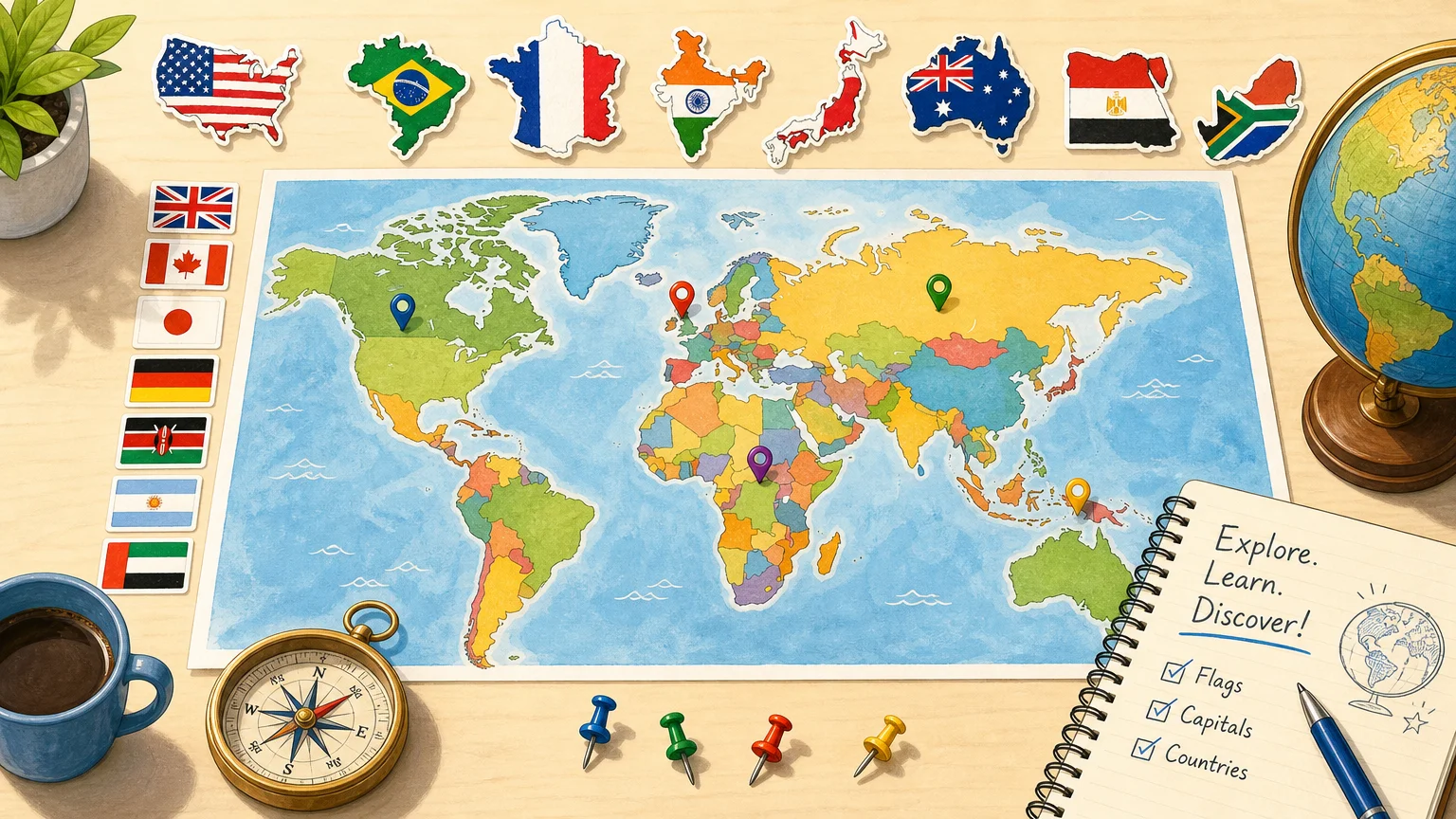
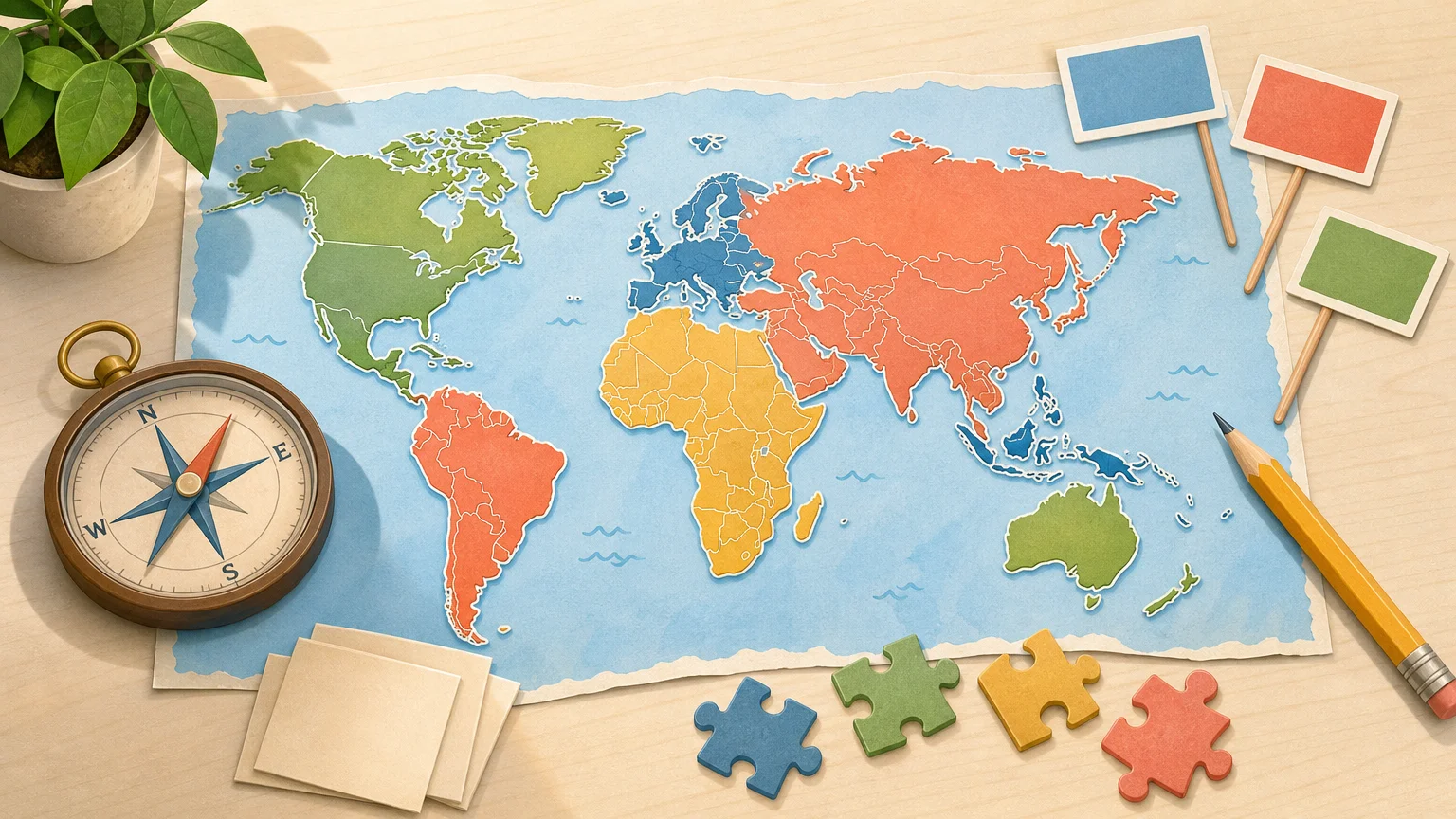

Can a game help you remember more than a worksheet? Yes, when it asks you to retrieve information, interpret a map, and use clues instead of simply reading answers. If you want a quick starting point, our guide to the best geography games for learning can help you compare formats before choosing one.
A case study published in 2014 placed 11 to 12 year old pupils in an eight week geography game using QR codes and Google Earth. The researchers described improvement in geography knowledge, language learning, and reading skills after the activity, as explained in the case study. The lesson is clear: play becomes educational when the game requires thinking, feedback, and meaningful geographic context.
What makes a geography game genuinely educational?
Not every quiz with a map is equally useful. A strong educational geography game connects a clear learning goal with an action you must perform. You might locate a country, identify a capital, compare land areas, recognise a flag, or infer a place from several clues.
The most useful games also give feedback quickly. You should know whether your answer is correct, why it was incorrect, or what clue can help you improve. This turns each mistake into another learning opportunity rather than a simple loss.
- Map skills: You identify locations, borders, regions, distances, and directions.
- Country recognition: You connect names with flags, silhouettes, capitals, languages, or neighboring countries.
- Active recall: You retrieve an answer from memory instead of only recognising it in a list.
- Progressive support: You receive clues gradually, so the challenge remains manageable.
- Useful feedback: You can understand mistakes and try again with better reasoning.
A game can be entertaining without teaching much. The educational value comes from the relationship between the question, the feedback, and the next attempt.
Why do retrieval and context matter more than memorization?
Imagine you read a list of capital cities once. You may recognise the names later, but recognition is not the same as recall. A game that asks you to produce the answer makes your memory work harder.
That effort is especially useful when the question changes format. You might first see a country name, then a flag, then a capital clue, and later a map silhouette. These different representations help you connect several facts to the same place.
Context adds another layer. Instead of learning that Canberra is the capital of Australia in isolation, you might connect Australia with its shape, location, neighboring seas, flag, language, and population. The result is a more useful mental map.
This does not mean every game creates measurable learning gains. Age, prior knowledge, feedback quality, and practice frequency all matter. It does mean that a game with varied questions and meaningful clues gives you more ways to build understanding than passive scrolling.
Which game mechanics keep geography practice meaningful?
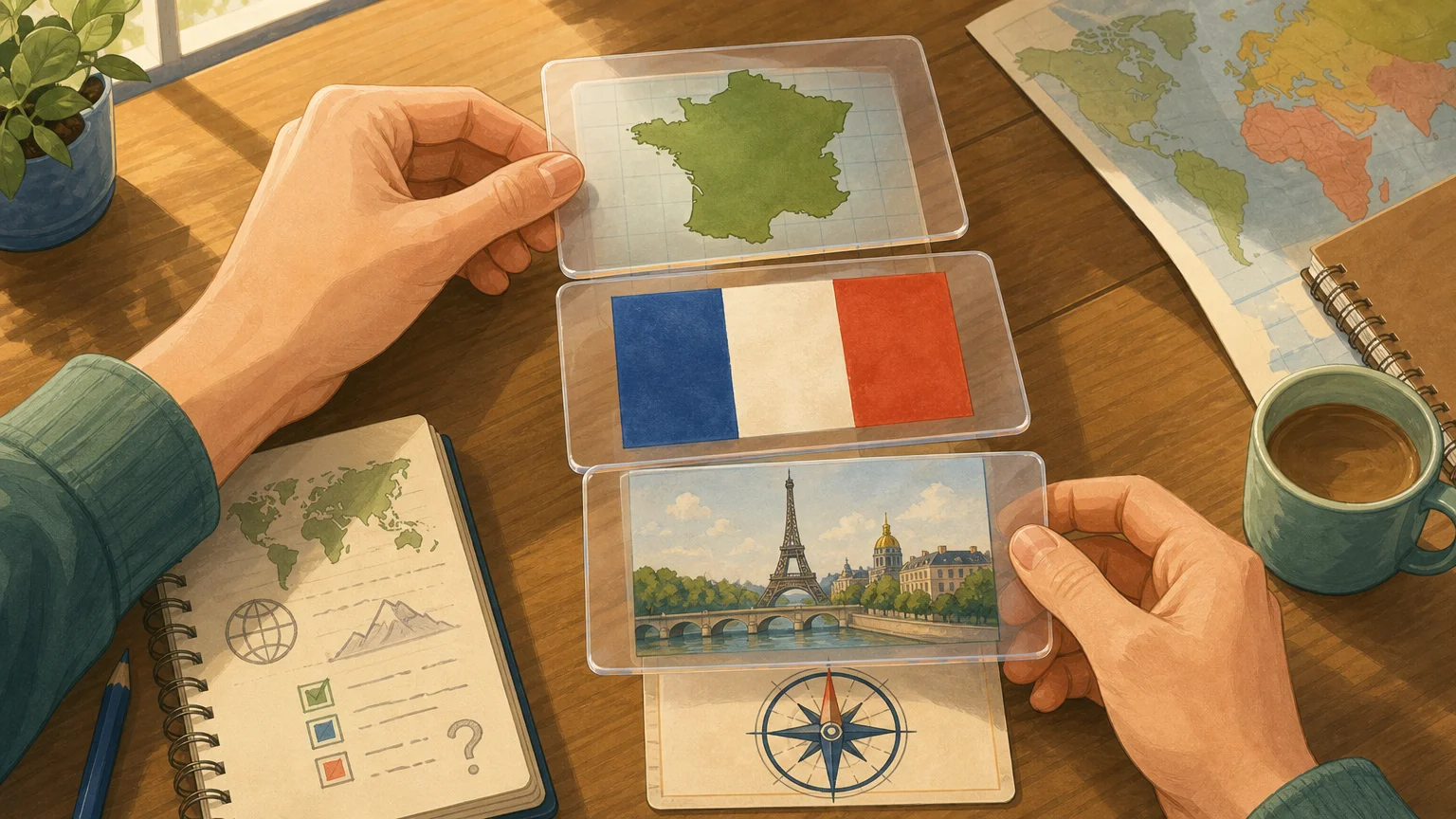
The strongest practice usually combines several types of challenge instead of repeating one question format. A flag question builds visual recognition. A capital question strengthens factual recall. A silhouette question develops spatial awareness. A distance or direction clue encourages reasoning.
Our Daily Challenge follows this layered approach by connecting nine country focused mini games around one mystery country. You may encounter a flag, shape, coat of arms, capital, neighboring flag, population, currency, language, or land area. Each answer can help you reason through the next one.
That structure reflects the idea behind world geography education through play. Learning feels more coherent when facts are connected rather than presented as unrelated questions.
Progressive clues are also useful for beginners. If you receive a continent clue, a first letter, or a population range, you still need to think. The support reduces frustration without removing the learning task.
Scoring can add motivation, but it should not be the only purpose. A leaderboard may encourage repetition, while replay helps you focus on weak areas. The most helpful games make improvement visible without making speed more important than understanding.
How can you use a geography game in a five minute class routine?
Picture the first five minutes of a geography lesson. Instead of opening with a long worksheet, you display one country challenge and ask students to explain their reasoning. The activity becomes a short warm up that activates prior knowledge.
A 2019 article in the Review of International Geographical Education Online described an educational geography game as an enriching tool for learning environments and environmental education. You can read the 2019 review for its discussion of game based geography learning.
To use a game well in class, keep the routine simple:
- Choose one clear target, such as capitals, continents, or country locations.
- Give students time to think before revealing another clue.
- Ask one or two students to explain how they reached an answer.
- Correct the misconception, not just the score.
- End with one short recap question.
You can also divide students into pairs. One student answers while the other explains the clue, then they switch roles. This creates discussion and makes geographic vocabulary part of the activity.
For younger learners, use flags, colors, shapes, and simple map locations. For older students, add borders, demographic comparisons, physical geography, historical context, or questions about regional relationships.
How should you choose a game for home study?
Before choosing among online geography games, decide what you want to improve. A learner preparing for a test may need capitals and country locations. A traveler may prefer flags, neighboring countries, and regional recognition. A curious player may want a wider mix of geography, history, and general knowledge.
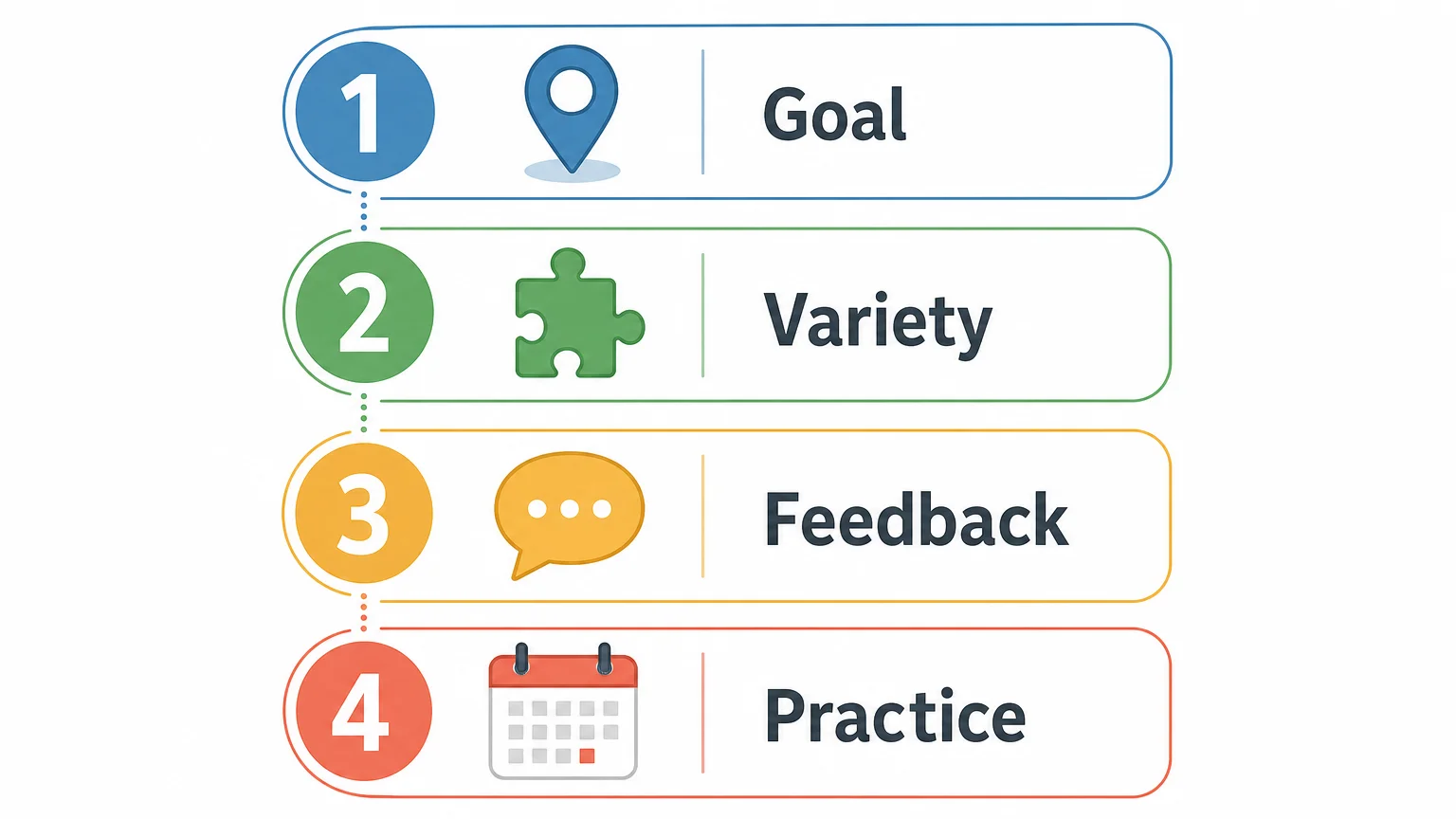
- Check the learning target: Make sure the game covers the facts or skills you need.
- Look for varied mechanics: Combine maps, flags, capitals, clues, and factual questions.
- Prefer useful feedback: Choose a game that shows progress or explains mistakes.
- Consider session length: Short activities are easier to repeat consistently.
- Review access needs: Browser access, language options, and device compatibility can matter.
For a map focused activity, our Mapdle geography game provides a focused way to practise country identification from geographic information. For broader practice, use a platform that lets you move between different question types rather than repeating the same format every time.
Accessibility also includes the amount of friction. A game that requires a long setup may be less useful for a five minute routine. Simple navigation, clear instructions, and a readable interface help you spend more time learning.
Can a daily browser game support independent learning?
Yes, if you use it as a repeatable practice habit rather than a one time test. A short daily challenge can help you revisit country facts regularly, especially when each session uses a slightly different route to the answer.
A university thesis on location based learning connects play with meaningful, situated learning because the learner interacts with geographic context rather than memorising disconnected facts. Its discussion of university research helps explain why location, movement, and problem solving can make learning feel more active.
Our free browser game is designed for this low commitment pattern. You can practise flags, capitals, progressive country clues, silhouettes, and themed quizzes across 195 UN recognised countries. The Daily Challenge uses the same country for every player worldwide, which makes score comparison possible without requiring an account.
You can also replay a random flag after the daily puzzle. That matters because improvement often needs more attempts than one daily question allows. Repetition is more useful when you vary the clue type and pay attention to why an answer was difficult.
The game runs as a responsive web app and can be added to your device home screen through your browser. Player statistics are stored locally, so clearing browser data, changing browsers, or using private browsing may remove saved progress.
What does a good learning routine look like?
Start with one goal for the week. You might focus on African capitals, European flags, country silhouettes, or the location of island nations. A narrow goal gives your practice direction without limiting future exploration.
Play for five to ten minutes, then record one mistake or one new connection. For example, you could note that a capital belongs to a different country than you first expected, or that two flags share a similar design.
At the end of the week, return to the same topic without looking at your notes first. This creates spaced practice and shows whether the information has become easier to retrieve.
For families, take turns explaining clues. For independent learners, say your reasoning aloud or write a short explanation after a difficult question. These small actions turn guessing into deliberate practice.
Choose play that makes geography stick
The right geography learning game does more than ask for country names. It helps you retrieve information, interpret maps, connect several clues, learn from mistakes, and return for another attempt. Whether you are studying for school, preparing for travel, or building general knowledge, choose a format that matches your goal and supports regular practice.
Make Geography Part of Your Daily Routine
If you want a simple way to practise world geography without a long setup, a short browser session can fit before class, during a study break, or at the end of the day. The key is to return often and use different clues to strengthen the same knowledge.

Our free browser game brings together daily challenges, flags, capitals, country clues, silhouettes, and themed quizzes. No account is required, and the game supports English and French across 195 UN recognised countries. Start our daily geography games and build your world knowledge one challenge at a time.
Frequently Asked Questions
What is an educational geography game?
It is a game that teaches geographic knowledge through questions, maps, clues, visual recognition, or problem solving. The best formats combine entertainment with feedback and repeated opportunities to retrieve information.
Can geography games help with school revision?
Yes, they can support revision of countries, capitals, flags, continents, borders, and map locations. Use them alongside lessons and notes, especially when you need quick practice before a test.
Are browser geography games useful for teachers?
They can work well as short classroom warm ups, recap activities, or pair exercises. Choose one clear learning target and ask students to explain their reasoning, not only provide an answer.
What should beginners practise first?
Start with continent locations, major countries, common flags, and familiar capitals. Progressive clues can then help you move toward smaller countries, regional distinctions, and less familiar map shapes.
Does Flagdle require an account or app download?
No account is required, and the game runs directly in a browser. You can add it to your device home screen through the browser, but it is not a native app store download.