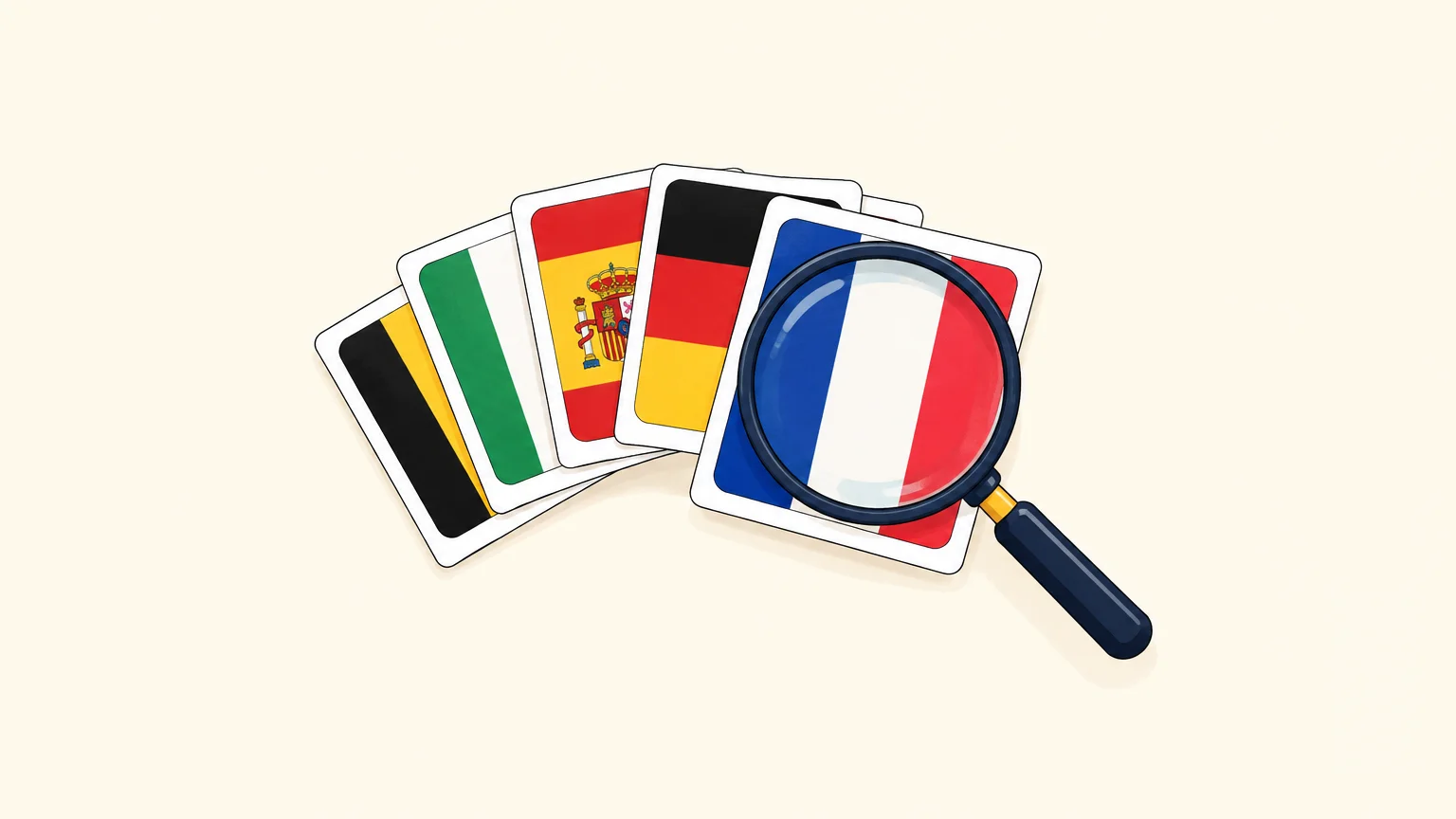

Can you tell Slovakia’s flag from Slovenia’s, or Luxembourg’s from the Netherlands’? Similar colors and stripes make a European flag test more challenging than it first appears. If you want to practise country flags beyond Europe too, our European flags quiz is a related starting point.
Before you start, check what the quiz means by “Europe.” Some quizzes focus on European Union member countries, while others include a broader set of countries across the continent. The question style matters as well: choosing from options is different from recalling a country name without prompts. Knowing the scope and format helps you choose a test that fits your goal, whether you’re learning for class or checking what you already know.
What does a European flag test actually cover?
First, look at the quiz’s definition of Europe. The European Union is a political group, not a synonym for the continent, so an EU flag activity and a Europe-wide national flag quiz might include different countries. The European Commission’s flag learning materials include an activity featuring the flags of the EU’s 27 countries.
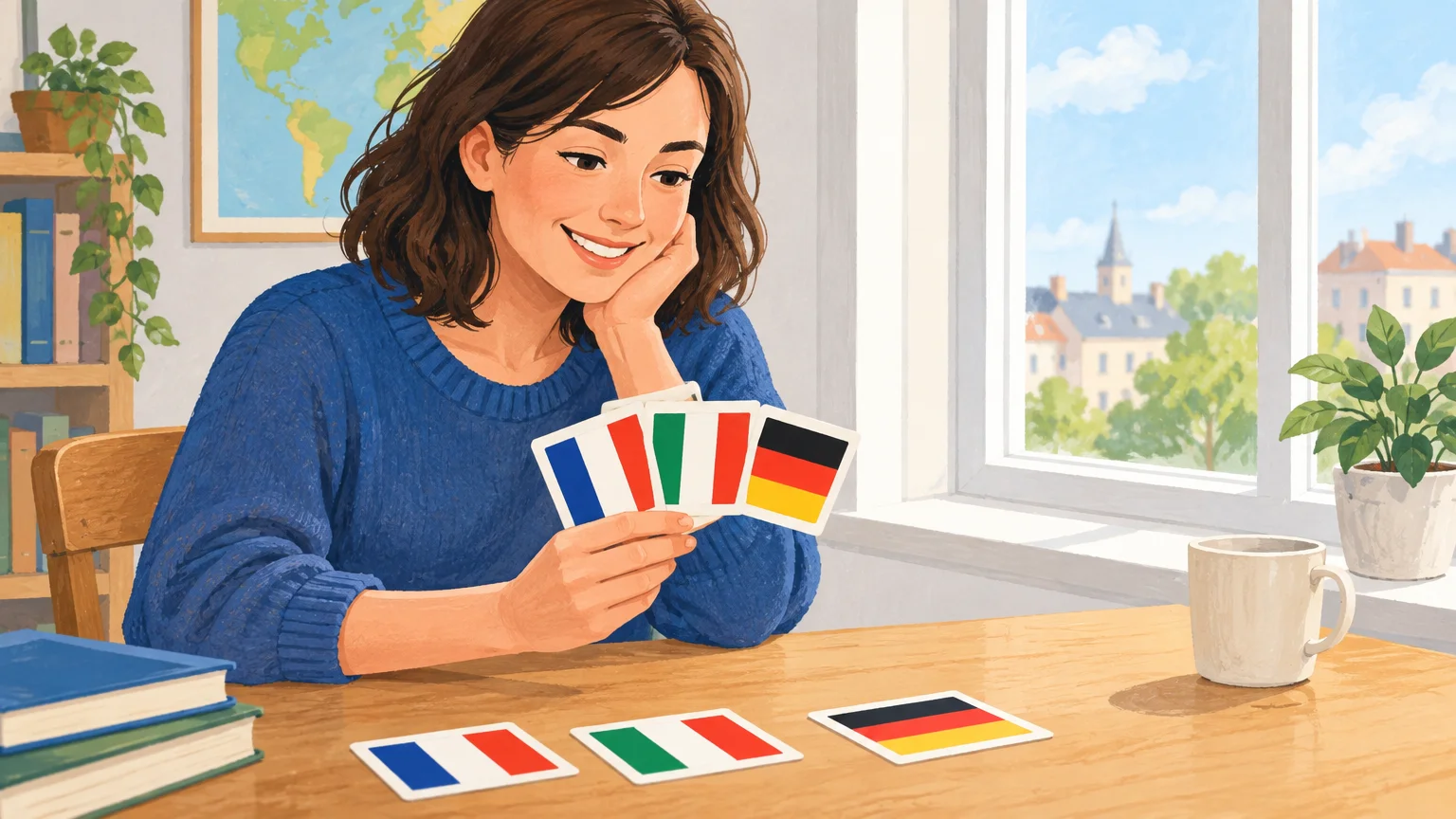
A broader quiz may include European countries that aren’t EU members. Some also make choices about transcontinental countries, partially recognized states, or territories. There isn’t one universal list behind every “Europe flags” quiz, so check the country count or list before treating a score as a complete measure.
Also separate national flags from the blue flag with a circle of yellow stars, which represents the European Union. Recognizing that symbol is a useful piece of European knowledge, but it doesn’t tell you whether you can identify each country’s flag.
Which quiz format should you choose?
Imagine seeing a flag and four possible country names. That’s a multiple-choice quiz: it tests recognition, but options give you clues and let you eliminate wrong answers. A matching activity asks you to pair flags and names, while an open-answer test requires you to retrieve the country name yourself.
For focused practice, start with one format and then try another. Use multiple choice to notice unfamiliar flags, then cover the answer list and name each flag from memory. If a quiz reveals more of a flag after a wrong guess, pause before each retry and use the new detail to narrow your answer.
To explore more European country flag material, you can also try our quiz on European country flags. For practice that extends beyond a Europe-only set, our Flags mode reveals a partially hidden country flag as you make guesses; it covers countries worldwide rather than only Europe.
How can you recognize similar European flags?
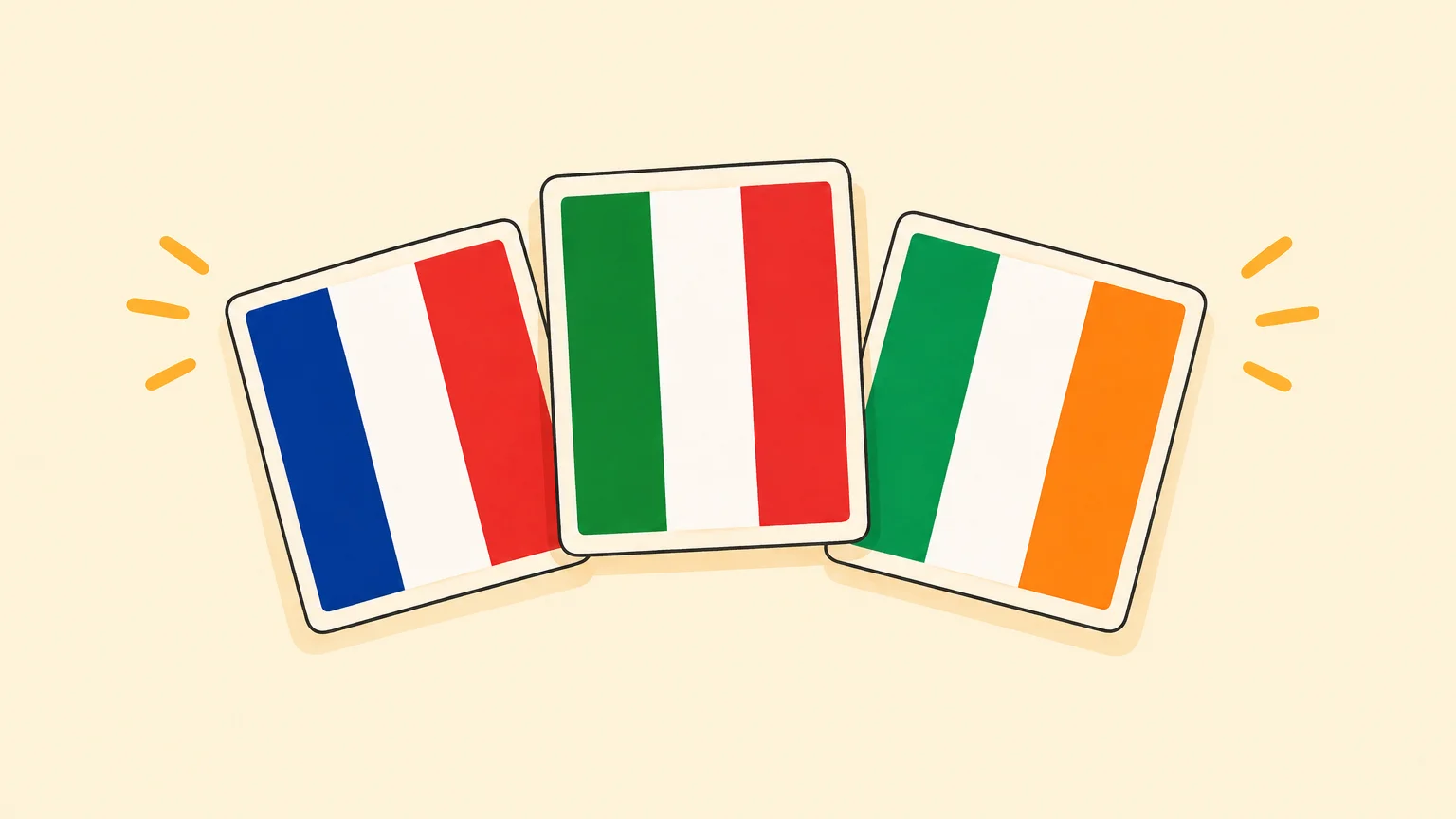
Start with the flag layout: count the stripes, note whether they run vertically or horizontally, and check the order of the colors. For example, France and Italy both use three vertical bands, but the color sequence differs. Luxembourg and the Netherlands both use horizontal red, white, and blue stripes, so pay attention to the shade of blue.
Next, look for symbols and emblems. A shield, star, crescent, or other central design can separate a flag from a similar color pattern. Don’t rely on color alone: shapes and placement often provide the clue you need.
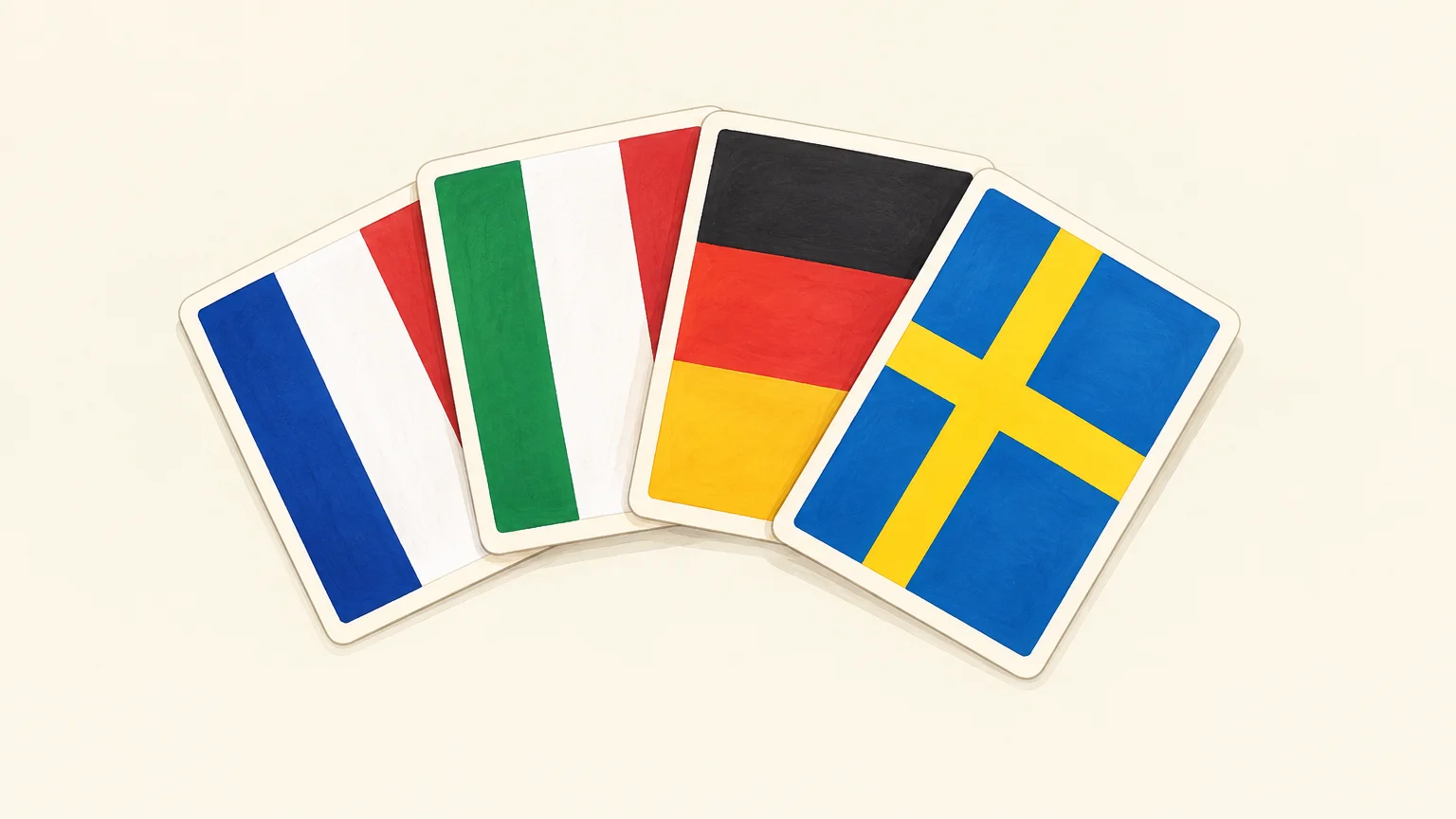
Then compare flags that share a regional style. Several Slavic countries use combinations of white, blue, and red, while Nordic flags often share a cross layout. The cross’s color, background, and proportions help distinguish one national flag from another. A useful habit is to describe the design briefly in your head before choosing an answer.
How should you practise for a better score?
Use short rounds and make each mistake specific. If you confuse two flags, note the detail you missed, such as stripe order, a coat of arms, or a small difference in color. Review those pairs again later rather than repeatedly guessing through the full set.
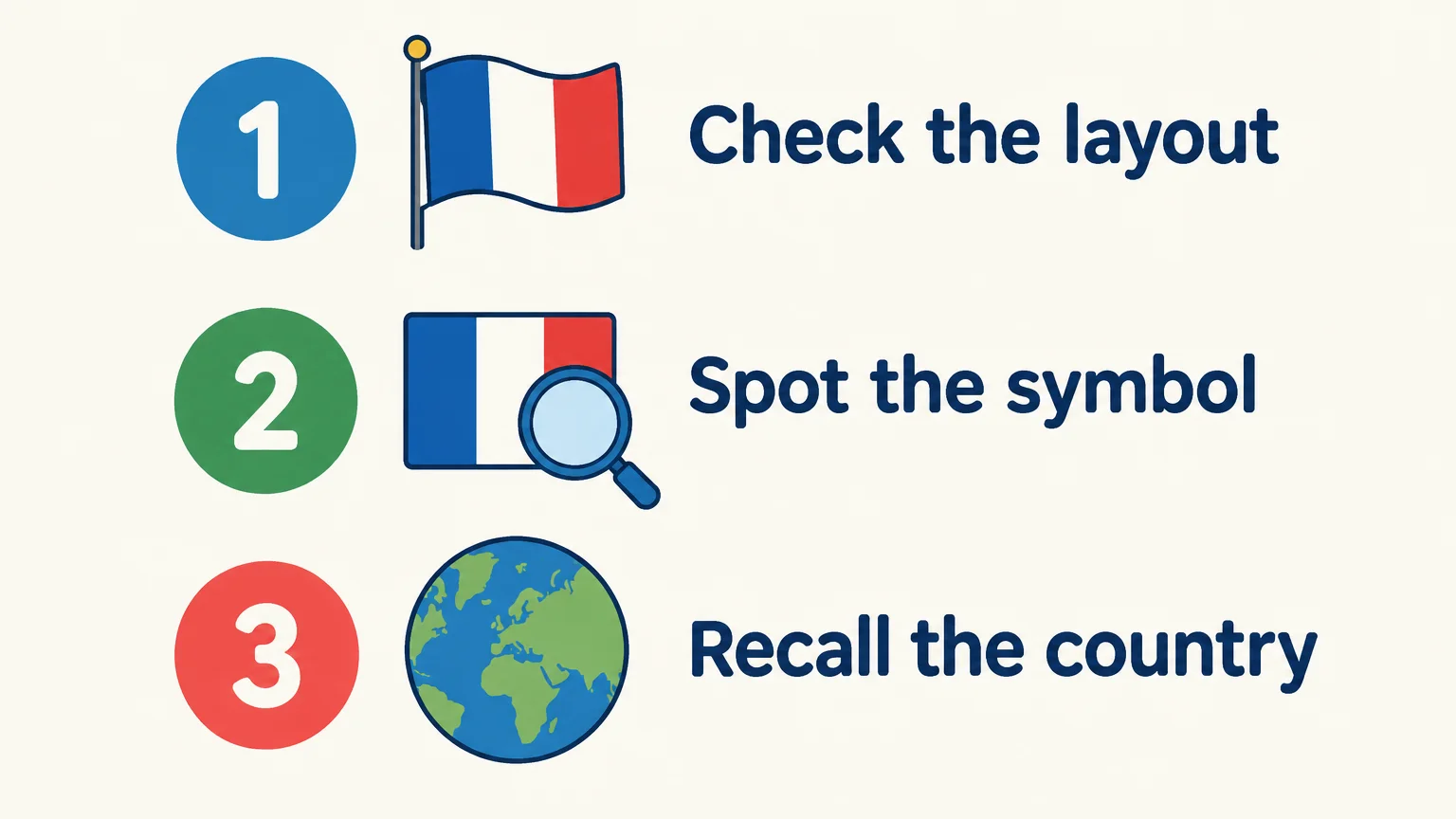
Try this three-step method for each question:
Describe the layout and main colors before looking at the options.
Check for a distinctive symbol, shield, or cross.
Name the country from memory, then confirm your answer.
If you’re choosing a practice tool, check its country coverage, whether it offers hints or reveals, and whether you must type answers or pick from a list. A reveal mechanic can make repeated attempts more instructive, while open recall gives you fewer prompts. The most useful format is the one that helps you notice and correct what you don’t yet remember.
What does a quiz score tell you?
A score tells you how many answers you got right in that particular test. It doesn’t automatically show whether you can name the same flags without options, or whether the quiz covered every country you wanted to practise.
Check the question count, answer format, and country list before comparing scores across quizzes. A short multiple-choice quiz and a longer open-answer test don’t measure knowledge in exactly the same way. If you retake the same quiz, wait a little or shuffle the order so you practise retrieval rather than memorizing a sequence.
It’s also worth separating the European Union’s flag from national flags when reviewing results. In the European Commission’s 2024 Standard Eurobarometer 101 data annex, 83% of EU respondents said they had heard of the EU flag. That figure concerns awareness of the EU symbol, not recognition of national flags in a quiz, so it shouldn’t be read as a score benchmark for country-flag knowledge.
Make each flag practice round count
A useful European flags test starts with a clear country list and a format that matches your goal. Compare layouts and symbols, answer from memory where you can, and revisit the specific flags you mix up. Treat your score as a snapshot of that quiz, not a universal ranking, and check whether the set covers EU members or a wider selection of European countries.
Put your flag knowledge to the test
If you enjoy identifying European flags, practising across a wider country set can help you keep building recognition beyond one region. A short browser-based round is an easy way to test what you remember and learn from each guess.

Our Flags mode gradually reveals a hidden country flag as you submit guesses, and you can replay with random flags after the daily puzzle. It covers 195 UN-recognised countries, not just Europe, and is free to play in your browser without an account. Try European flags and see which designs you recognize.
Frequently Asked Questions
How many flags are in a European flag quiz?
There’s no single standard count because quizzes define Europe differently. Check the quiz’s country list to see whether it focuses on EU members or a wider set of countries.
Is the European Union flag a national flag?
No, it represents the European Union rather than an individual country. A national flag quiz may include it as a separate question, but it isn’t a substitute for learning country flags.
What is the best way to learn similar flags?
Compare their layouts, color order, shades, and symbols. Then practise recalling the country name without looking at answer options.
Do online European flags tests usually use multiple choice?
Some do, while others use matching, typed answers, or progressive reveals. Check the format before you begin, since each one gives you a different level of prompting.
Can I practise European flags with Flagdle?
Yes, our Flags mode lets you identify country flags through progressive reveals. Its coverage is worldwide across 195 UN-recognised countries, rather than limited to Europe.