
Could you tell two similar-looking flags apart at a glance? A European flags quiz is a practical way to test your recognition, but the name alone doesn’t tell you which countries are included or how you’ll answer. Those details matter when you’re studying for class, brushing up on geography, or simply testing yourself.
Start with the quiz’s scope, then choose a format that helps you remember rather than guess. The European Union’s flag matching activity focuses on the flags of its member countries, a defined group within the wider set of European countries. If you want a broader challenge, check the quiz’s own country list before you begin.
Start with the quiz’s definition of Europe
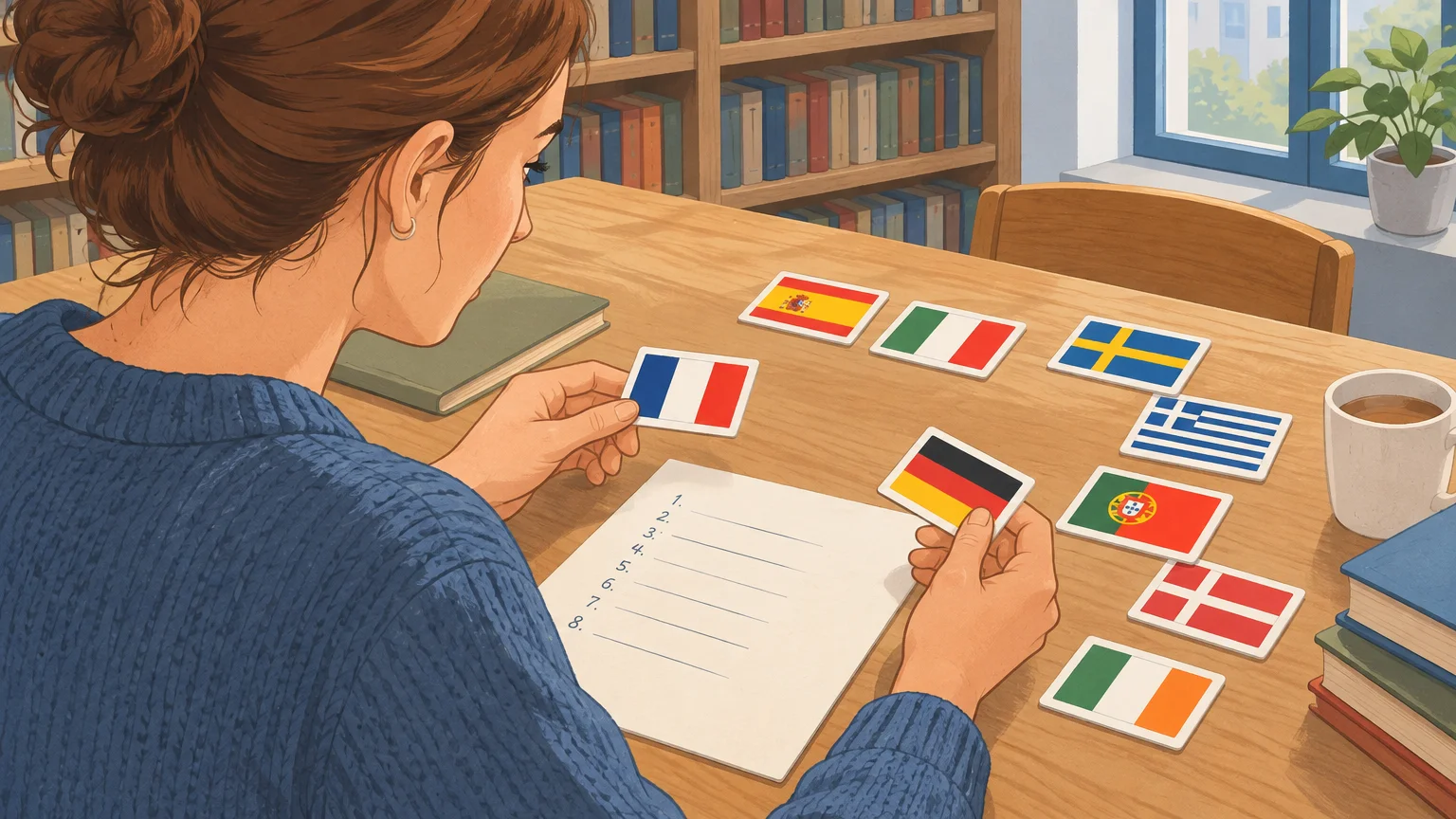
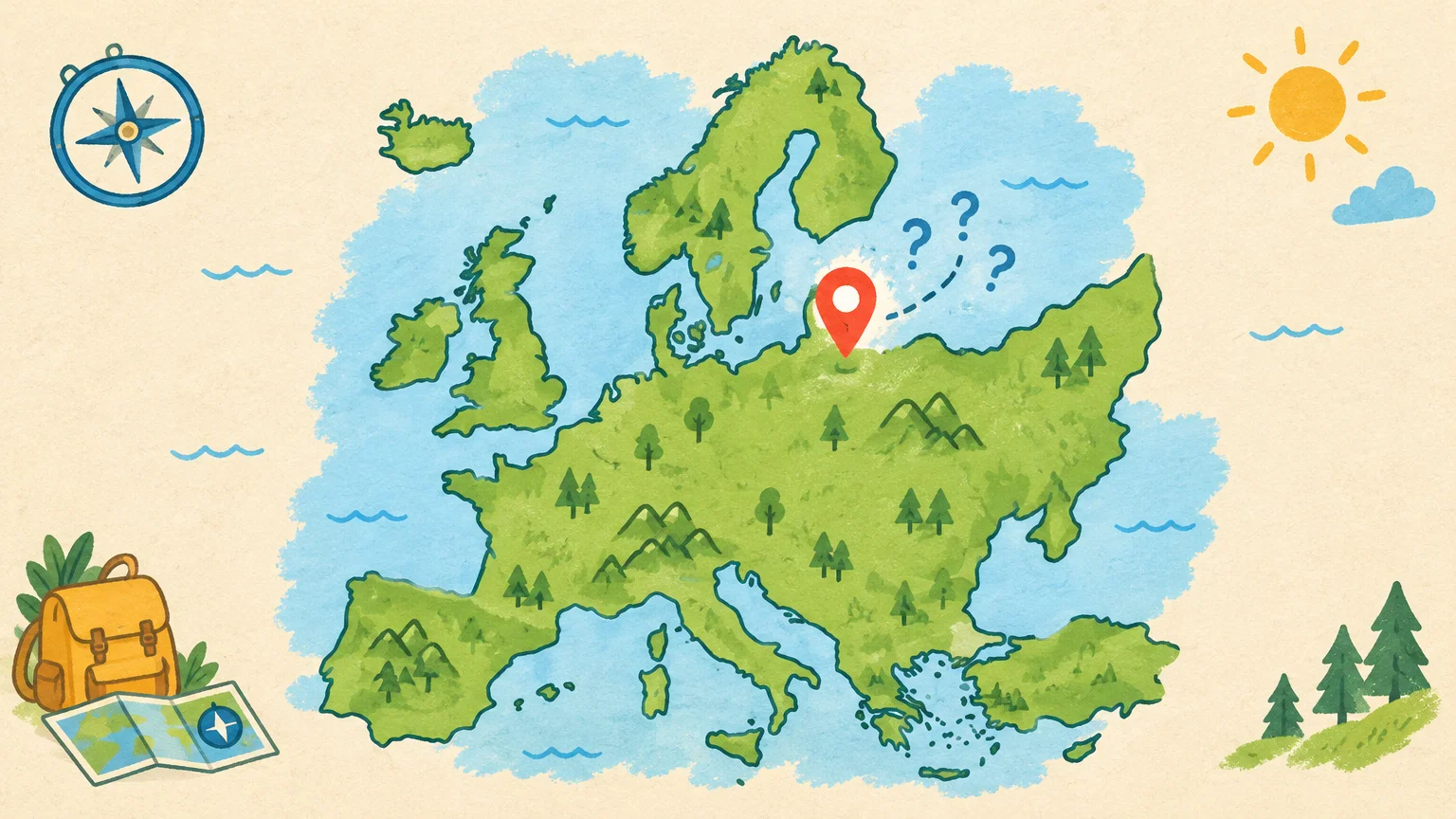
Imagine you finish a quiz and wonder why some familiar European countries weren’t included. The answer may be the quiz’s scope: some focus on European Union members, while others include a wider selection of countries or territories associated with Europe.
Before you play, look for a stated country count or list. Check whether the quiz includes countries outside the EU, transcontinental countries, or territories. A clear scope makes your score more meaningful because you know what the quiz asked you to recognize.
For classroom practice, an EU-only activity can suit a lesson about the Union. For broader geography revision, choose a European country flags quiz that explains its wider list. Don’t assume two quizzes cover the same flags just because both use “Europe” in their titles.
Separate the EU from Europe
A classroom worksheet about the EU may show national flags alongside the EU flag, but they represent different things. The EU’s flag memory game explains the EU flag as a symbol of the member countries together. A quiz asking you to name European countries by their national flags is testing a different kind of knowledge.
That distinction helps you pick the right exercise. If you’re learning about EU membership, practise identifying its member countries’ flags. If you’re preparing for a general geography test, check whether the activity includes European countries beyond the EU too.
Quiz lists can also differ on countries that span more than one region and on territories. Eurostat’s 2026 regional publication, for example, organizes regional data using the NUTS 2024 classification. That’s a regional statistical system, not a universal checklist for European national flags, so use each quiz’s own stated scope.
Pick a format that matches your goal
Do you want to learn names, test quick recall, or practise locating countries? A multiple-choice quiz gives you answer options, which can make it easier to begin. A matching activity asks you to pair flags and country names. A map quiz adds a location task, while a timed quiz puts more emphasis on speed.
Choose based on what you want to improve. If you often recognize a flag but can’t name its country, try a format that asks for the name without showing options. If you know the names but mix up locations, choose a map-based exercise. When you need time to study unfamiliar designs, an untimed format lets you pause and compare before answering.
Some games also add clues or reveal parts of a hidden flag as you guess. These mechanics make a wrong answer informative: you can use the newly visible details to reconsider your next guess. For more ways to practise, explore our European geography games, which cover flags alongside other geography activities.
Learn look-alike flags with a simple routine
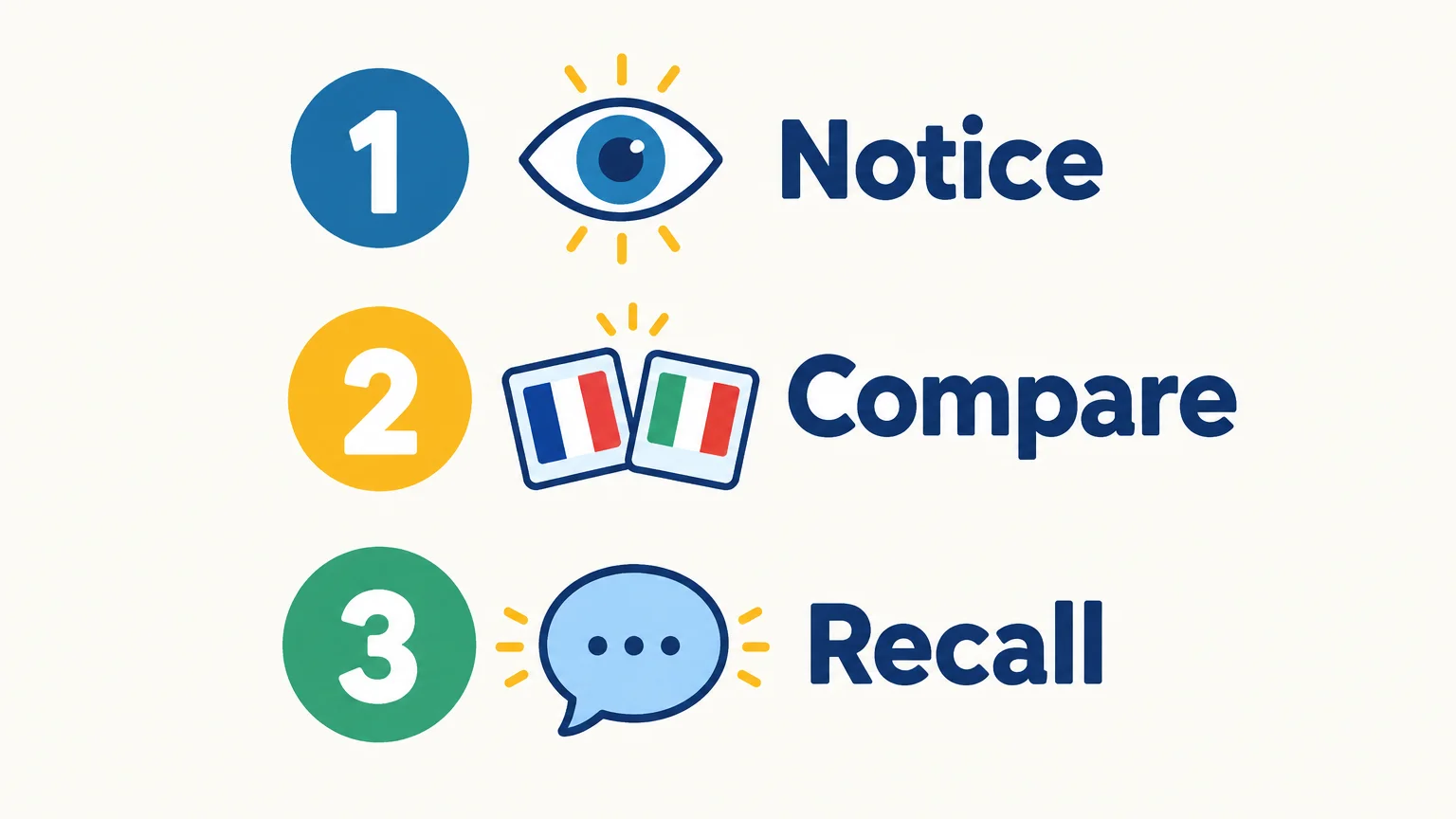
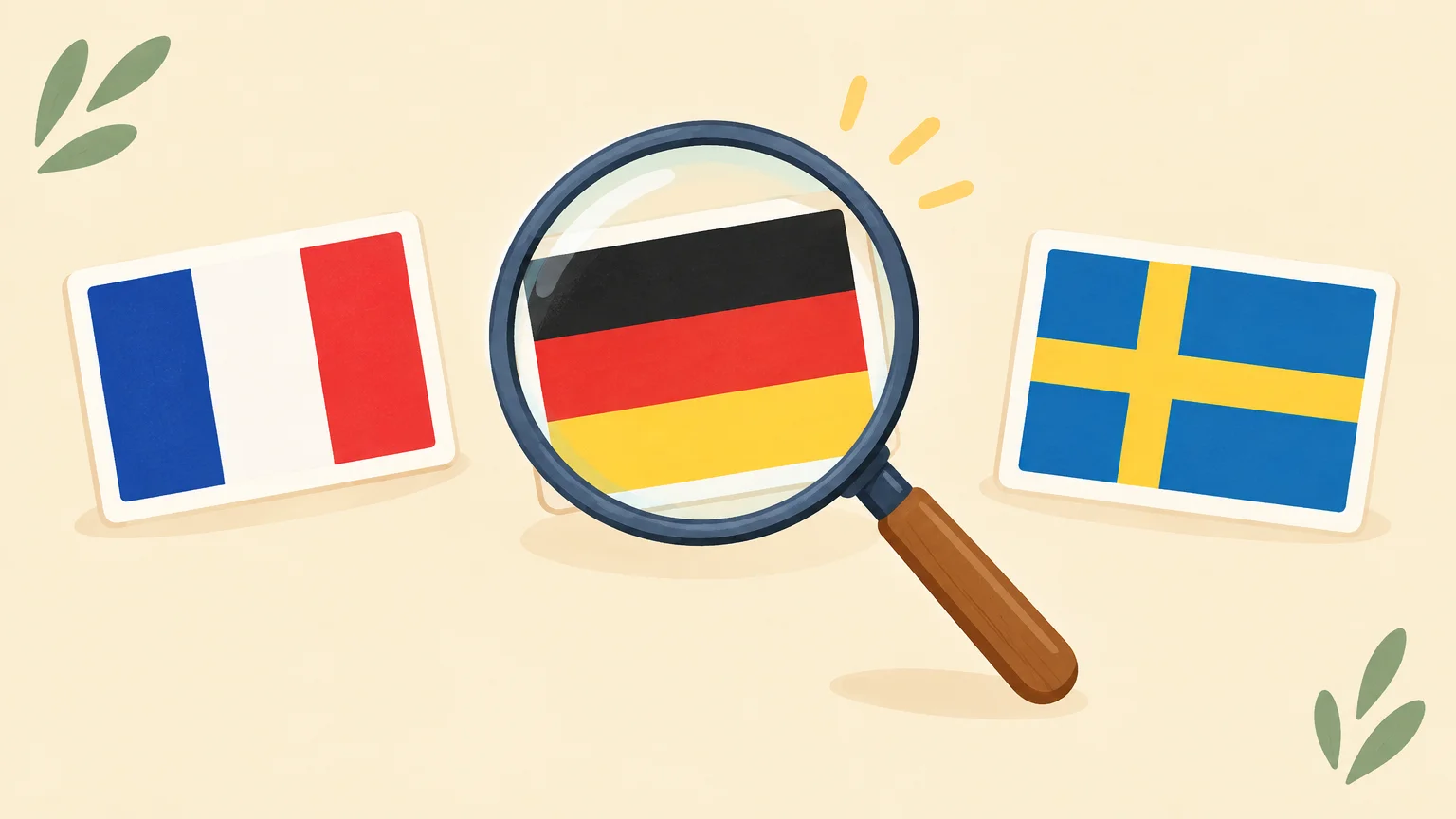
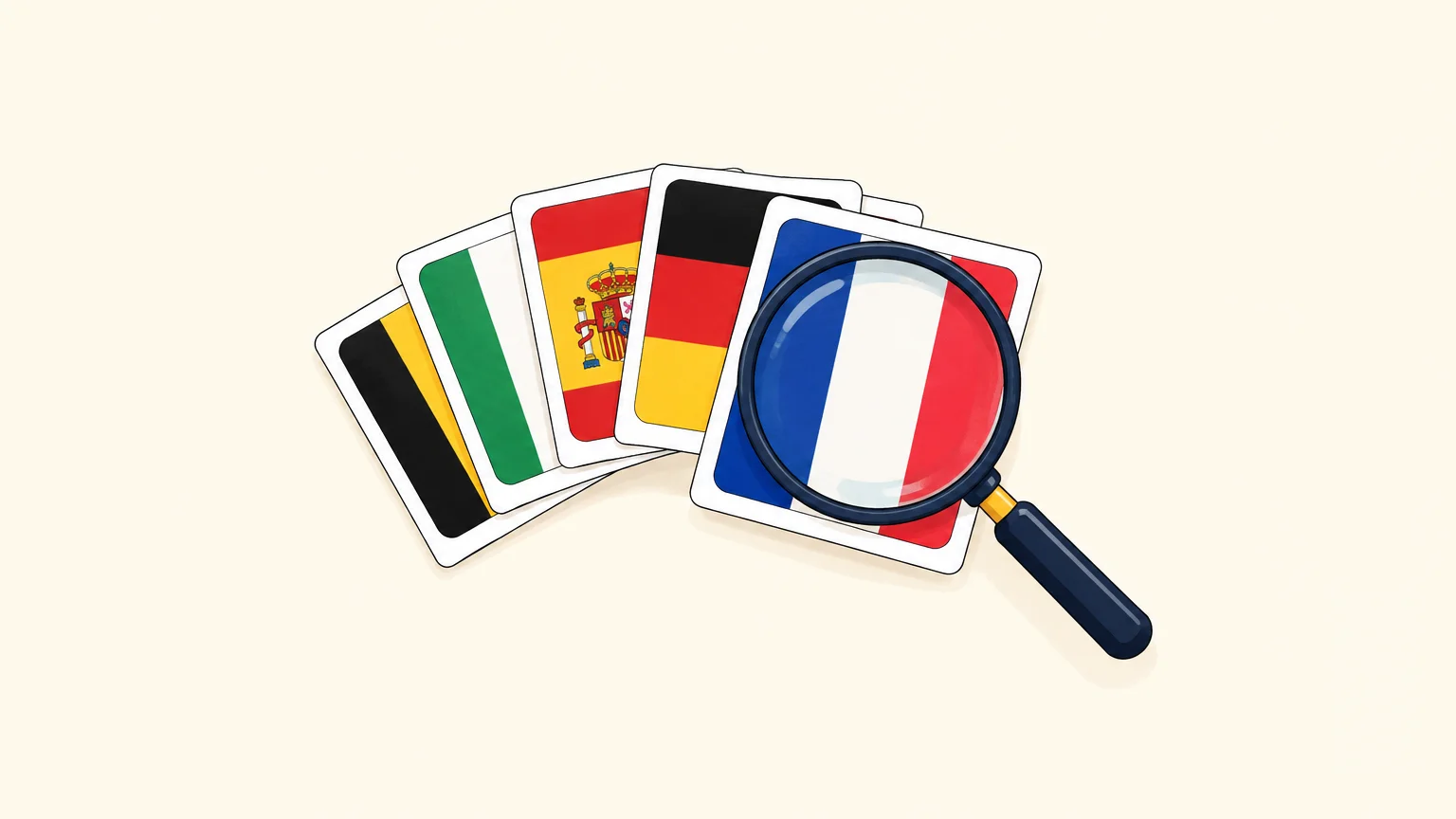
When two flags seem easy to confuse, slow the task down and compare their features in order. First, notice the number and direction of the color bands. Next, look for a coat of arms, stars, or another central symbol. Finally, name the country from memory before checking the answer.
- Notice the layout. Identify horizontal or vertical bands, a cross, or a distinct field of color.
- Compare the details. Check which colors appear, their order, and whether the flag includes a symbol.
- Recall before checking. Say or write the country name, then review the flag again after revealing the answer.
For instance, the flags of Russia, Slovakia, and Slovenia share a white, blue, and red horizontal color arrangement. Looking for an emblem and its placement helps you compare them more carefully than relying on the colors alone.
Keep a short list of flags you missed and revisit it later. Repeated attempts at recalling a name before checking the answer turn a quick game into a more deliberate study exercise.
Use Flagdle for broader country-flag practice
If you want practice beyond a Europe-only list, our browser-based Flags mode covers countries worldwide and progressively reveals a hidden flag after incorrect guesses. It’s free to play without an account, so you can use it for short sessions or repeat practice.
Flagdle’s coverage is broader than European countries alone, so treat it as a way to build general flag-recognition skills, not as a dedicated Europe-only quiz. For a reference that pairs flags with capitals, see our European capitals and flags page.
Make your next quiz count
Choose a quiz with a clearly stated country list and a format that matches what you want to practise. When a flag catches you out, compare its layout and symbols, recall the country name, and revisit it later. A little focused practice makes a European flag quiz more useful than guessing your way through it.
Ready to practise flag recognition?
Once you’ve checked whether a quiz covers EU members or a broader European list, you can use wider flag practice to build recognition across more countries. Our browser-based Flags mode offers a progressive reveal, so each guess gives you another chance to study the flag.

Open European flags to practise. Flagdle covers 195 UN-recognised countries, runs in your browser, and is free to play without an account. It also supports English and French, making it easy to fit a short geography session into your day.
Frequently Asked Questions
Are European flags the same as EU flags?
No. EU flags quizzes focus on the flags of EU member countries, while European country quizzes may use a wider list. Check the activity’s stated scope.
What should I look for in a European flag quiz?
Check which countries and territories it includes, then look at how you answer. Options, matching, map questions, and timed recall test different skills.
How can I learn flags that look similar?
Compare the colors, their order, and any symbols or coats of arms. Try to recall the country name before you reveal the answer, then revisit flags you missed.
Is a timed quiz useful for learning?
It can be useful for testing quick recognition once you know the flags. For learning unfamiliar designs, start untimed so you have room to compare details.
Can I use Flagdle to practise European flags?
Our Flags mode supports broader country-flag practice, using progressive flag reveals after incorrect guesses. It’s free in your browser without an account, but it isn’t a dedicated Europe-only quiz.