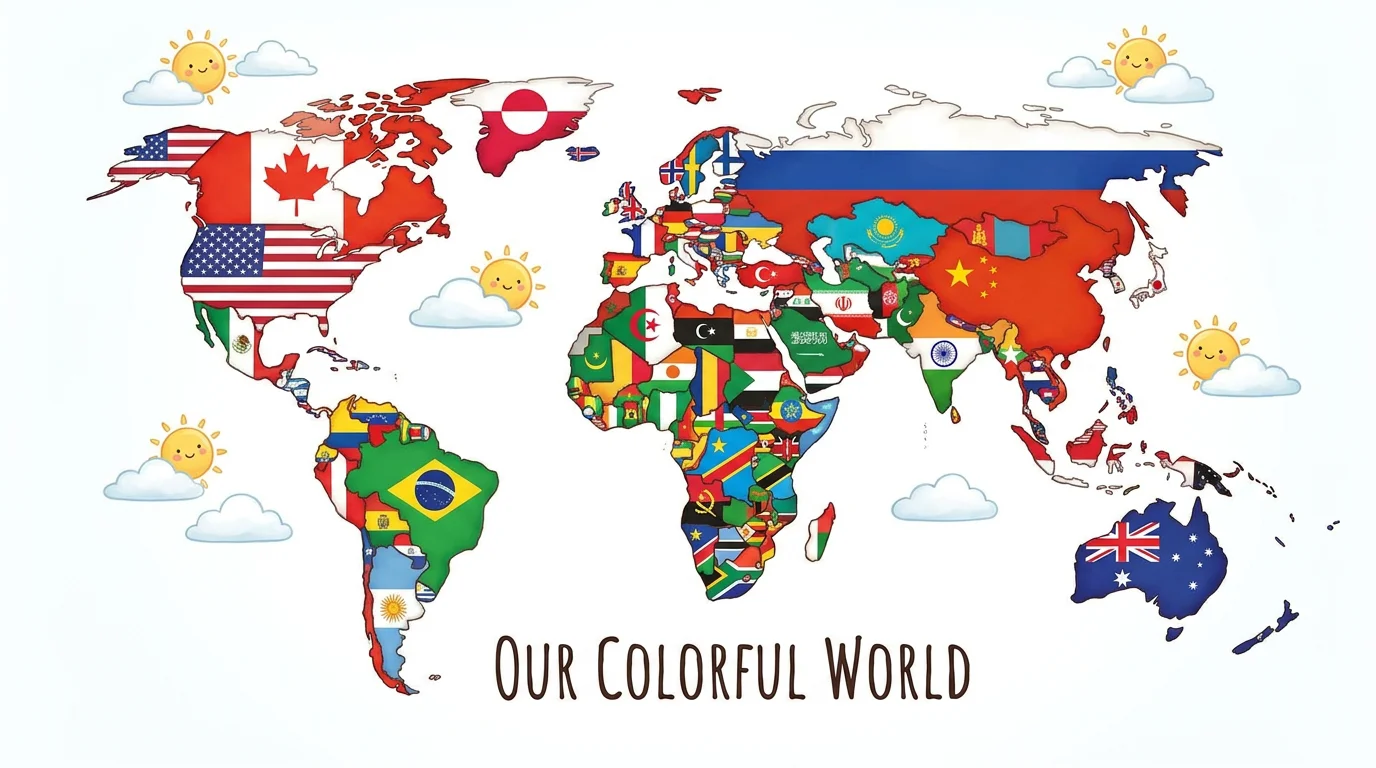

You're scrolling, you're bored, and you want something that's actually fun and makes you smarter. That's exactly where a flag game comes in. Whether you're a casual trivia fan or a geography nerd aiming to nail all 195 countries, guessing flags is one of those oddly addictive hobbies that sticks with you. If you've never tried one, our ultimate flag quiz guide is a great place to start.
Flag games have exploded in popularity alongside the daily puzzle craze (think Wordle, but with geography). They're free, they're quick, and they tap into something deeper than entertainment. According to cognitive science, the act of recalling information (like matching a flag to a country) strengthens your memory far more than passively reading a textbook ever will. Let's break down everything you need to know about playing, choosing, and winning at flag games in 2026.
What Exactly Is a Flag Game and Why Should You Care?
At its core, a flag game is a quiz that shows you a country's flag and asks you to identify it. Simple concept, surprisingly deep rabbit hole. Some games give you multiple choice options. Others make you type the country name. And a few (the really good ones) reveal the flag progressively, tile by tile, so you're working with partial information.
Why should you care? Because active retrieval, emotional engagement, and spaced repetition are the three most powerful drivers of long-term knowledge retention, and game-based learning activates all three simultaneously. That's not just marketing speak. A meta-analysis of 22 experimental studies found that gamified learning improves academic performance with an effect size of 0.782. In plain English? Playing quiz games makes stuff stick in your brain way better than flashcards or rote memorization.
How Flag Games Actually Help You Learn Geography
Ever wonder why you can remember a random flag from a game you played two weeks ago but can't recall what you studied last night? That's the testing effect at work. When learners must retrieve information to answer a quiz question or win a challenge, the act of retrieval itself strengthens the memory trace; this is one of the most robust findings in cognitive science.
Flag games are basically retrieval practice disguised as fun. Each round forces you to pull a country name from memory based on visual clues (colors, symbols, patterns). Over time, this builds a mental library that's genuinely hard to forget. You start recognizing the crescent on Turkey's flag, the maple leaf on Canada's, or the intricate coat of arms on Belize's, all without "studying" in the traditional sense.
The growth of the game-based learning market reflects the convergence of research evidence, institutional adoption, and technological capability, with market data from 2025 and 2026 showing that game-based learning has moved well beyond early adoption into mainstream deployment. So no, you're not just goofing off. You're riding a genuine educational wave.
Choosing the Right Flag Game for Your Skill Level
Not all flag games are created equal. Some are perfect for beginners who can barely tell the French flag from the Italian one. Others are designed for hardcore vexillology fans who know the difference between Chad's and Romania's flags (spoiler: it's subtle). Here's how to think about what fits you.
Beginners should look for games with multiple choice answers and forgiving time limits. You want enough scaffolding to learn without getting discouraged. Games that show you the correct answer after a wrong guess are especially helpful for building your knowledge base.
Intermediate players will enjoy timed challenges and progressive difficulty. This is where features like progressive flag reveals shine. Instead of seeing the whole flag at once, tiles gradually uncover it. You're essentially solving a visual puzzle while testing your geography knowledge. We built our countries flag quiz around exactly this concept.
Advanced players want speed runs, streak challenges, and obscure flags. Think: can you identify Comoros, Eswatini, or Kiribati under time pressure? That's where our chrono flags challenge really pushes your limits.
What Makes a Flag Game Addictive (in the Best Way)
The best flag games share a few key ingredients that keep you coming back day after day. Understanding these helps you pick a game that won't get stale after a week.
Daily challenges are huge. A new puzzle every day creates a habit loop. You check in, play your round, compare with friends, and come back tomorrow. It's the same mechanic that made Wordle a global phenomenon, and it works brilliantly for geography trivia too.
Progressive difficulty keeps things interesting. The best flag games don't just throw random flags at you. They start easy (USA, UK, Japan) and gradually introduce trickier ones (Mauritania, Tajikistan, Palau). This ladder of difficulty matches how your brain naturally learns.
Social competition adds fuel. When everyone gets the same daily puzzle, you can compare scores. Who got it in fewer guesses? Who was fastest? Competitive challenges and timed sprints require learners to actively recall information rather than passively receive it, and the social element multiplies the motivation.
Progressive Reveal: The Feature That Changes Everything
Here's where things get interesting. Most flag games show you the entire flag and ask you to name the country. That works fine, but it's a one-dimensional challenge. Progressive reveal flips the script entirely.
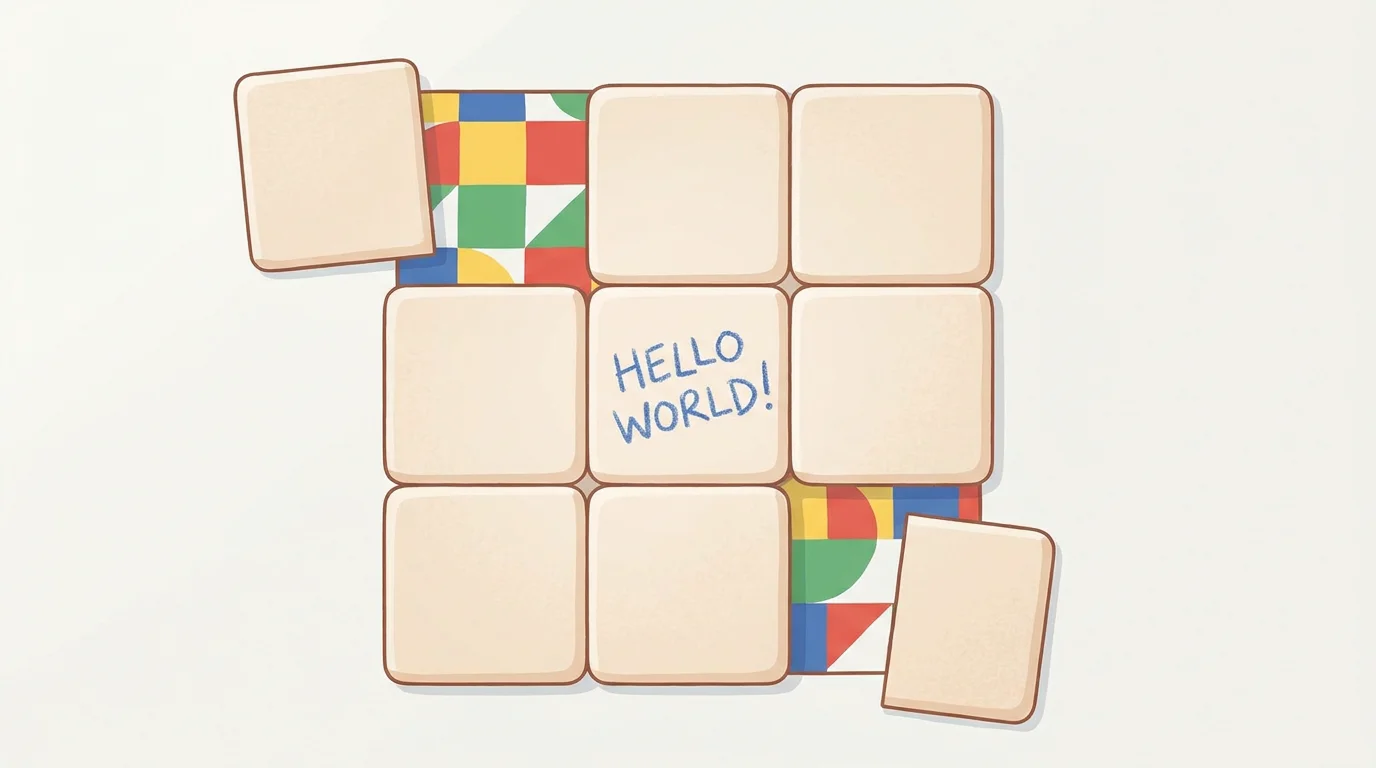
Imagine the flag is hidden behind nine tiles. Each wrong guess removes a tile, revealing more of the design. Suddenly you're not just recognizing flags; you're analyzing partial visual information, making educated guesses based on color combinations, and refining your hypothesis with each new piece of data. It's closer to how scientists think than how students typically study.
This is exactly how we designed our daily challenge at Flagdle. You get a flag masked by 9 tiles, and each attempt reveals a new section. With only 3 guesses to work with, every choice matters. It's a completely different experience from a standard multiple choice quiz, and it's way more satisfying when you nail it. Try our Worldle flag game to see what we mean.
Flag Games vs. Traditional Geography Study: What the Data Says
Let's settle this once and for all. Is playing a flag game actually a good use of your time compared to, say, reading an atlas or studying flashcards?
The evidence strongly favors game-based approaches. According to Mordor Intelligence's February 2026 market report, game-based learning is among the fastest-growing segments of the broader education technology market. Institutions aren't jumping on this trend for fun; they're doing it because the outcomes are measurable.
| Criterion | Traditional Study | Standard Flag Quiz | Flagdle (Progressive Reveal) |
|---|---|---|---|
| Active recall | Low | High | Very high |
| Engagement | Low | Moderate | High (daily habit) |
| Spaced repetition | Manual tracking | Varies | Built-in (daily puzzle) |
| Difficulty progression | Self-directed | Random or linear | Adaptive (tile reveal) |
| Cost | Free (textbooks vary) | Free or freemium | Free |
| Social element | None | Leaderboards | Same daily challenge for all |
Research on retrieval practice consistently shows that the method of learning matters as much as the time spent learning. Translation: 5 minutes of actively guessing flags beats 30 minutes of passively scrolling through a flag chart.
Tips to Actually Get Better at Flag Games
Ready to go from "I know like 20 flags" to "I can name almost any country by its flag"? Here are some concrete strategies that work.
Learn by region. Don't try to memorize all 195 flags at once. Start with one continent. European flags tend to be tricolor patterns. African flags often feature green, yellow, and red (Pan-African colors). Middle Eastern flags frequently incorporate Arabic script or crescents. Grouping by region gives your brain useful categories.
Focus on unique features. Nepal is the only non-rectangular flag. Switzerland and Vatican City are squares. Japan's flag is elegantly simple. These outliers are easy wins that build confidence. From there, work on flags with distinctive symbols: Canada's maple leaf, Lebanon's cedar, Mozambique's AK-47.
Play daily. Consistency beats cramming. A single daily puzzle (like the one on our flag challenge mode) keeps knowledge fresh through spaced repetition. You'll be amazed how quickly flags stick when you play every day for just a few weeks.
Use wrong answers as learning moments. Mixed up Indonesia and Monaco? (They're almost identical.) Now you'll remember that Indonesia's red stripe is on top. Every mistake is a memory anchor.
The Future of Flag Games: Where Things Are Heading
Flag games aren't standing still. The broader edtech space is evolving fast, and geography games are riding the same wave. Growth is driven by increasing institutional recognition of the performance benefits of game mechanics, combined with the maturation of platforms that make game-based learning easy to deploy at scale.
We're seeing more games add layers beyond simple flag recognition: capital cities, currencies, GDP comparisons, neighboring countries, official languages. It's geography trivia that goes deeper than just "name that flag." At Flagdle, our daily challenge already includes mini-games covering country shapes, coats of arms, capitals, neighbors, currencies, GDP, languages, and land area. It's a full geography workout in under five minutes.
The daily puzzle format shows no sign of fading either. If anything, the habit-forming design that Wordle pioneered continues to shape how people engage with trivia and learning games. The key difference with flag games is that you walk away from each session knowing something new about the world, and that's a pretty great return on a few minutes of your day.
Whether you're a student brushing up for a geography exam, a trivia night regular, or just someone who enjoys a quick daily challenge, flag games offer a genuinely fun path to becoming more worldly. The science backs it up, the format is addictive, and the best part? It's completely free. With Flagdle's progressive reveal mechanic and daily challenges covering 195 countries, you've got everything you need to go from casual player to flag expert. Ready to test yourself? Head over to our daily flag quiz and see how many you can get right.
Frequently Asked Questions
How many country flags are there in the world?
There are 195 internationally recognized countries, each with its own flag. Most flag quiz games, including Flagdle, cover all 195 to give you the full challenge. Some games also include territories and dependencies, pushing the count above 200.
Can playing a flag game actually improve my geography knowledge?
Absolutely. Research shows that quiz-based learning activates active recall, which is far more effective for long-term retention than passive study methods. Playing just a few minutes daily builds durable knowledge of countries, capitals, and global geography.
What's the best free flag game to play in 2026?
The best option depends on what you're looking for. If you want a daily challenge with a progressive reveal mechanic (where the flag is uncovered tile by tile), Flagdle offers exactly that, completely free. You get a new flag every day plus bonus mini-games covering capitals, currencies, and more.