
How do you want to learn geography: through one focused daily challenge or a broad library of quizzes? That question explains the main difference between Flagdle vs World Geography Games. If you want a quick routine with connected country clues, our Flagdle vs Flaggle guide helps clarify where Flagdle fits among daily flag games.
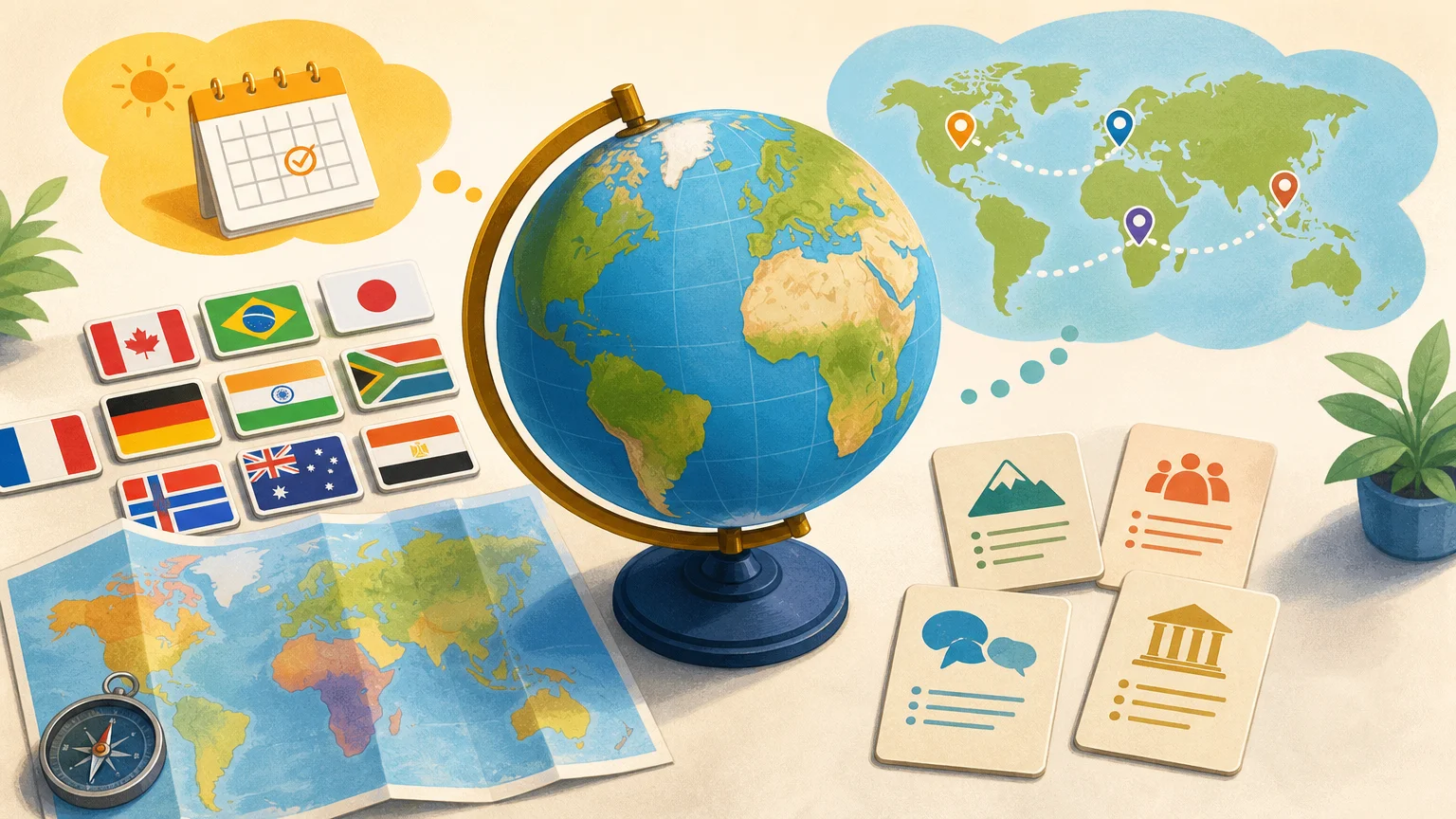
Flagdle centers on country recognition through flags, capitals, silhouettes, facts, and linked mini-games. World Geography Games takes a wider quiz-library approach, covering countries, capitals, flags, regions, bodies of water, mountains, cities, and other geography topics. Both can support learning, but they suit different habits, attention spans, and study goals.
Flagdle vs World Geography Games at a glance
Short answer: choose Flagdle when you want a consistent daily challenge with a clear scoring loop. Choose World Geography Games when you want to browse many geography subjects and move between map-based activities.
| Criterion | Flagdle | World Geography Games |
|---|---|---|
| Core format | A connected Daily Challenge plus standalone country games | A broad collection of topic-based geography quizzes |
| Identification mechanics | Flags, capitals, clues, silhouettes, facts, and multiple-choice quizzes | Flags, maps, regions, countries, physical geography, and location questions |
| Hint system | Progressive reveals, factual clues, continent guidance, distance, and direction | Quiz answers and map-based interaction, depending on the selected game |
| Daily and replay play | Daily puzzles, random replay practice, and shared daily challenges | Many separate quizzes, with daily challenge features not clearly established in the reviewed materials |
| Coverage | 195 UN-recognised countries, with French and English support | Countries, territories, regions, capitals, flags, and physical geography topics |
| Social features | Daily, weekly, and monthly leaderboards, plus emoji result sharing | Social scoring features are not clearly established in the reviewed materials |
| Access | Free browser play without an account, with home-screen installation | Browser-based quizzes designed for learners and general players |
Flagdle

Best for: players who want a short, repeatable geography habit built around country recognition and daily progress.
Flagdle combines several ways to identify the same country. Its main Daily Challenge connects nine country-focused mini-games. You may work through a flag, shape, coat of arms, capital, neighboring flag, population, currency, language, or land-area question.
This connected structure creates a useful learning loop. An answer from one round can help with the next round, so you are not solving nine unrelated questions. You gradually build a more complete picture of one country.
The standalone modes offer a simpler entry point. Flags progressively reveals a hidden flag. Capitals uses continent and first-letter clues. Hints provides factual information such as continent, population, and language. Worldle uses a country silhouette with distance, direction, and continent guidance. Themed quizzes add geography, history, sport, and literature questions.
Flagdle also supports a clear daily routine. The same daily country is used worldwide, and the Daily Challenge contributes to daily, weekly, and monthly leaderboards. You can share an emoji recap without revealing the answer, then switch to random replay practice after completing the daily puzzle.
The product is designed for short sessions. That makes it practical for a five-minute classroom activity, a quick study break, travel preparation, or a daily general-knowledge habit. It covers 195 UN-recognised countries and supports English and French.
Pros:
- One Daily Challenge links nine related country questions.
- Progressive clues support deduction instead of random guessing.
- Separate modes cover flags, capitals, hints, silhouettes, and themed quizzes.
- Replay practice lets you continue after the daily puzzle.
- Leaderboards and result sharing support friendly comparison.
- Browser access requires no account, subscription, or stated fee.
Cons:
- The connected Daily Challenge may feel more structured than a casual browse through unrelated quizzes.
- Player statistics are stored locally, so clearing browser data or changing browsers can remove them.
- It is a browser app with home-screen installation, not a native app-store download.
World Geography Games

Best for: learners who want to explore many geography subjects, from world flags and countries to regions, cities, mountains, and bodies of water.
World Geography Games works more like a large educational quiz library. Instead of centering every activity on one daily country, it lets you choose a topic and practise through a dedicated game.
Its range is the main attraction. Available subject areas include country maps, capitals, flags, continents, oceans, latitude and longitude, regions, lakes, islands, rivers, mountain ranges, deserts, volcanoes, cities, and other physical geography themes.
The flag collection is also broader than a simple country flag quiz. The reviewed materials describe world flags, regional flags, territory flags, historical flags, and other specialized categories. That can be useful when you want to move beyond the most familiar national symbols.
This format suits open-ended exploration. You can choose a topic for a lesson, focus on one region, practise a specific group of countries, or move between physical and political geography. Teachers and tutors may appreciate that flexibility when they need a quiz connected to a particular class topic.
The trade-off is that the experience can feel less unified. Each quiz may teach a useful topic, but the platform does not present the same connected nine-round journey as Flagdle. Daily sharing, leaderboards, and replay statistics are also not clearly established in the reviewed materials.
Pros:
- Wide topic coverage supports broad geography exploration.
- Map quizzes can reinforce country locations and regional knowledge.
- Specialist quizzes cover territories, historical flags, physical features, and regions.
- The library can support classroom activities, tutoring, and independent practice.
- Players can choose a topic instead of following one fixed challenge structure.
Cons:
- The large number of topics may feel less focused for a short daily routine.
- Daily challenge and leaderboard features are not clearly established in the reviewed materials.
- Its broad library may require more choice before you begin a specific learning session.
How the gameplay changes what you learn
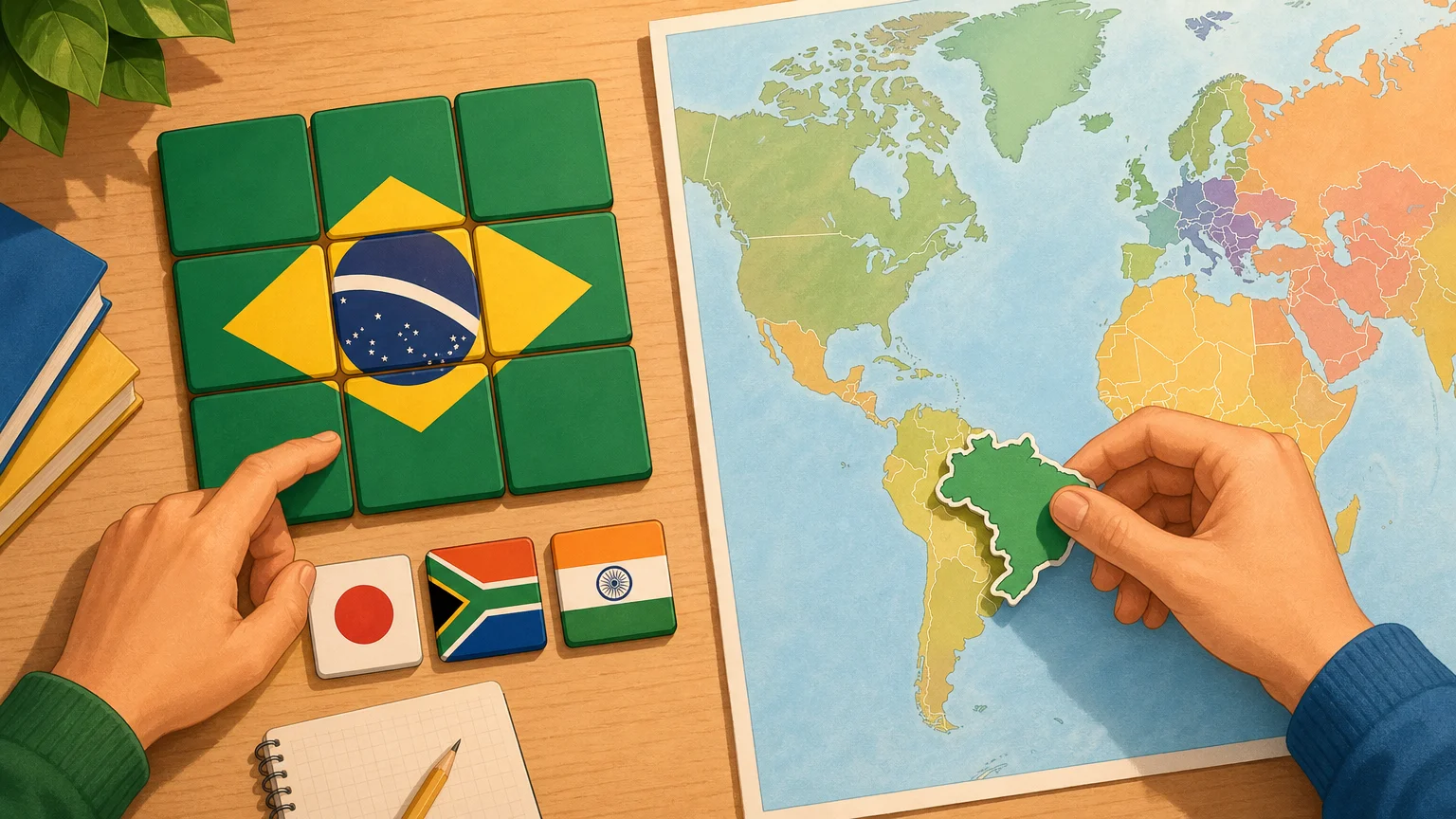
Imagine that you have five minutes before class, work, or a trip. Flagdle gives you a compact sequence with a visible beginning, middle, and end. World Geography Games gives you a menu of subjects, so you can choose the exact area you want to practise.
Flagdle is strongest when you learn through repeated country recognition. A partially hidden flag asks you to notice colors, patterns, and symbols. A capital round reinforces place names. A silhouette round adds shape recognition. A fact-based clue connects the country to language, population, or continent.
This approach supports active recall. You must retrieve an answer rather than simply read a fact. Progressive assistance also keeps the task approachable when your first guess is wrong.
World Geography Games is stronger for topic breadth. A map quiz can help you connect names to locations. A regions quiz can introduce areas that are less familiar. A physical geography game can shift attention from political borders to rivers, mountains, islands, or oceans.
The practical distinction is simple. Flagdle builds depth around a country through several angles. World Geography Games builds breadth across many geography subjects. Neither approach is automatically better, but Flagdle is easier to turn into a consistent daily routine.
Daily play, replay, and score comparison
Daily play matters because a small recurring activity is easier to maintain than an occasional study session. Flagdle makes this habit explicit with a shared country, daily refresh, result recap, and leaderboard structure.
Every player receives the same daily country worldwide. That creates a common reference point for friends, classmates, and communities. You can compare your performance without comparing different puzzles.
Flagdle also separates the daily experience from additional practice. After the daily flag, you can use replay mode for a random flag. This is useful when you want to keep studying without waiting for the next daily reset.
World Geography Games supports repetition through its many individual quizzes. You can return to a topic and practise again, but the reviewed materials do not establish the same shared daily challenge system. If streaks, rankings, and spoiler-free sharing motivate you, Flagdle has the clearer structure.
For classroom use, both formats can work differently. Flagdle is convenient when everyone should complete the same short activity. World Geography Games is more flexible when the teacher wants separate groups to study countries, flags, regions, or physical features.
Access, language, and learning flexibility
Both options are browser-based, which keeps the starting barrier low. You do not need to treat either one like a traditional software installation.
Flagdle requires no account and has no stated fee, subscription, or paid plan. Its responsive web app can also be added to a device home screen. English and French support make it useful for bilingual practice, although its country-name system accepts recognised official names from its own country list.
Flagdle's local statistics model has a practical limitation. Clearing browser storage, switching browsers, or using private browsing can reset locally stored progress. That does not prevent play, but it matters if you rely on personal statistics.
World Geography Games is aimed at a broad international audience, including students, teachers, tutors, adults, and geography enthusiasts. Its materials describe multiple language versions and a wide range of educational topics. However, the exact experience can vary by individual quiz and language version.
If you want online geography games that feel like a planned daily exercise, Flagdle is more direct. If you prefer selecting a new subject whenever you open the site, World Geography Games offers more exploratory flexibility.
Which option should you choose?
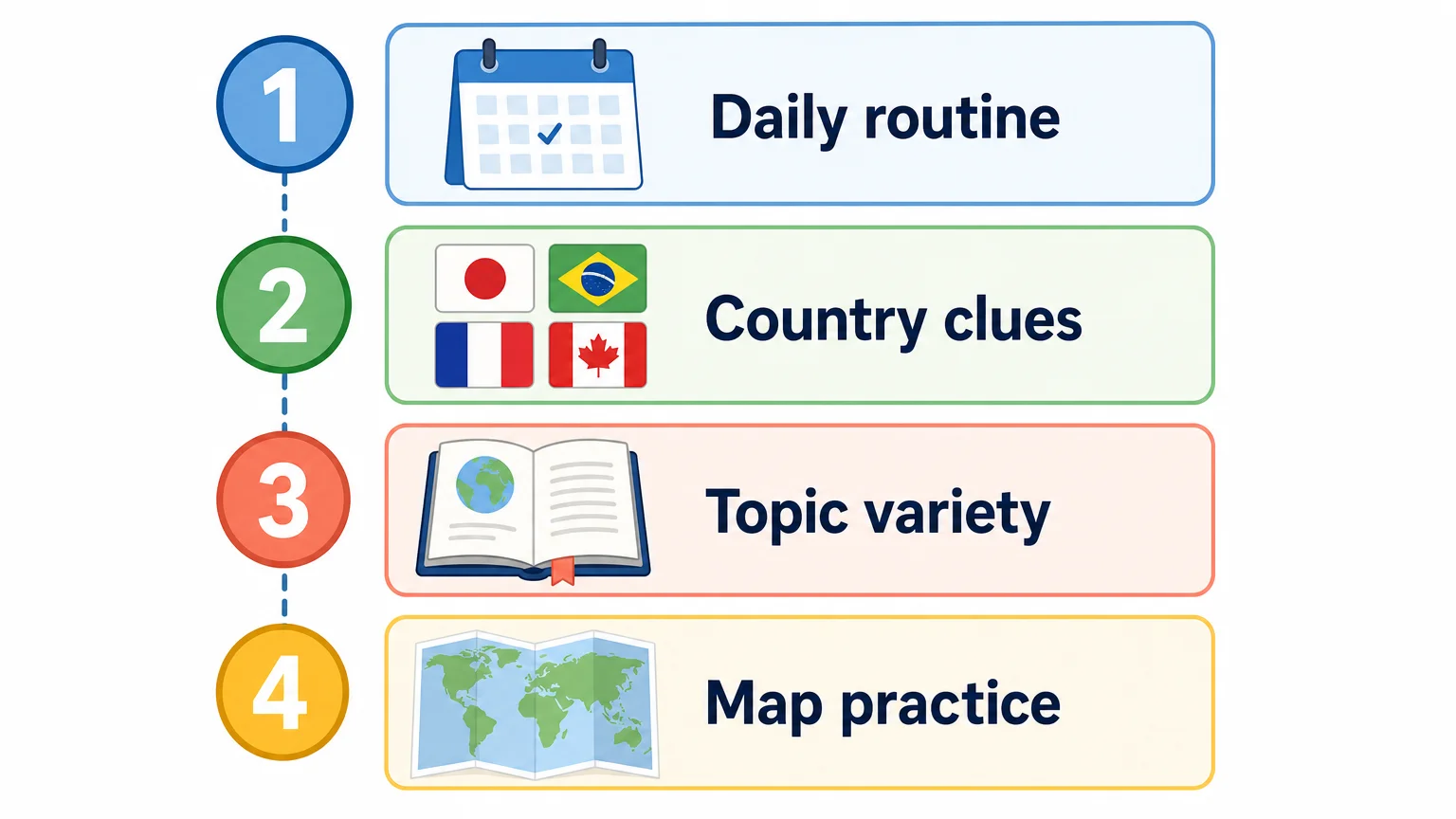
Choose Flagdle if your priority is a reliable daily habit. Its connected Daily Challenge, progressive clues, replay mode, bilingual support, and leaderboards give you a clear reason to return.
Choose World Geography Games if your priority is variety. It is a better match when you want to practise a specific region, explore physical geography, review many flag categories, or select a quiz for a lesson.
For students preparing for geography or general-knowledge exams, Flagdle can help with repeated recognition of flags, capitals, silhouettes, and country facts. For teachers planning different activities across a unit, World Geography Games can provide a wider topic pool.
For travelers, the choice depends on your preparation style. Flagdle is useful when you want quick recognition practice for countries and capitals. World Geography Games is useful when you want to study a destination's region, surrounding countries, map position, or physical features.
You can also combine the two approaches. Use a focused daily game to build consistency, then use broader map and topic quizzes when you need deeper regional practice. Our guide to flag games versus map games explains why the type of visual clue changes the way you think.
What makes Flagdle the better focused choice?
Flagdle's advantage is not simply that it contains several game modes. The stronger point is how those modes connect country knowledge into a short session.
You begin with a clue, make a country guess, and then use the result to improve your next answer. That pattern makes the game feel like a small geography lesson rather than a collection of disconnected questions.
The format also supports different confidence levels. You can start with a flag if you know national symbols well. You can use factual hints if you prefer general knowledge. You can switch to capitals or silhouettes when you want a different type of recall.
That flexibility is valuable for families, teachers, travelers, and curious players. You can keep the session light, or use the same modes for more deliberate practice. The game remains accessible because it does not require an account, paid plan, or lengthy setup.
For a broader overview of online geography games, you can compare daily puzzles, map practice, and quiz formats by the type of knowledge they reinforce.
Final recommendation
Flagdle is the better fit when you want a focused, repeatable country-learning routine with progressive assistance and score comparison. World Geography Games is the better fit when you want a broad geography library with many subject areas and map-based options.
The deciding question is your preferred learning rhythm. If you want one shared challenge that takes only a few minutes, choose Flagdle. If you want to browse by region, feature, flag category, or physical geography topic, choose World Geography Games. You can also explore our best geography games selection for more ideas across different learning styles.
Conclusion
Flagdle vs World Geography Games comes down to focus versus breadth. Flagdle gives you a structured daily path through country knowledge, while World Geography Games gives you a wider collection of geography subjects. For a consistent five-minute habit, Flagdle is the more practical choice. For open-ended exploration and topic-specific practice, World Geography Games remains a useful complement.
Build Your Daily Geography Habit
If you want to turn country recognition into a simple daily routine, Flagdle gives you several browser-based ways to practise. You can start with flags, then explore capitals, hints, silhouettes, and themed quizzes.
Play without an account or subscription, compare shared Daily Challenge scores, and continue with random practice when you finish. Play Flagdle's daily flag game and make geography part of your routine.
Frequently Asked Questions
Is Flagdle better than World Geography Games?
Flagdle is better for a focused daily routine, connected country clues, and score comparison. World Geography Games is better for broad topic exploration and map-based practice.
Which game is better for learning country flags?
Flagdle offers progressive flag reveals and related country modes. World Geography Games offers a wider range of flag quizzes, including regional and specialized categories.
Can you use Flagdle for classroom geography practice?
Yes, its short Daily Challenge can work as a quick classroom activity. Teachers can also use the standalone modes for additional practice.
Does Flagdle require an account or paid subscription?
No account or subscription is required to play Flagdle. It runs in the browser, and you can add it to a device home screen if you want quicker access.
Which option is better for travel preparation?
Flagdle is useful for practising country and capital recognition in short sessions. World Geography Games can complement that practice with regional maps, locations, and physical geography topics.