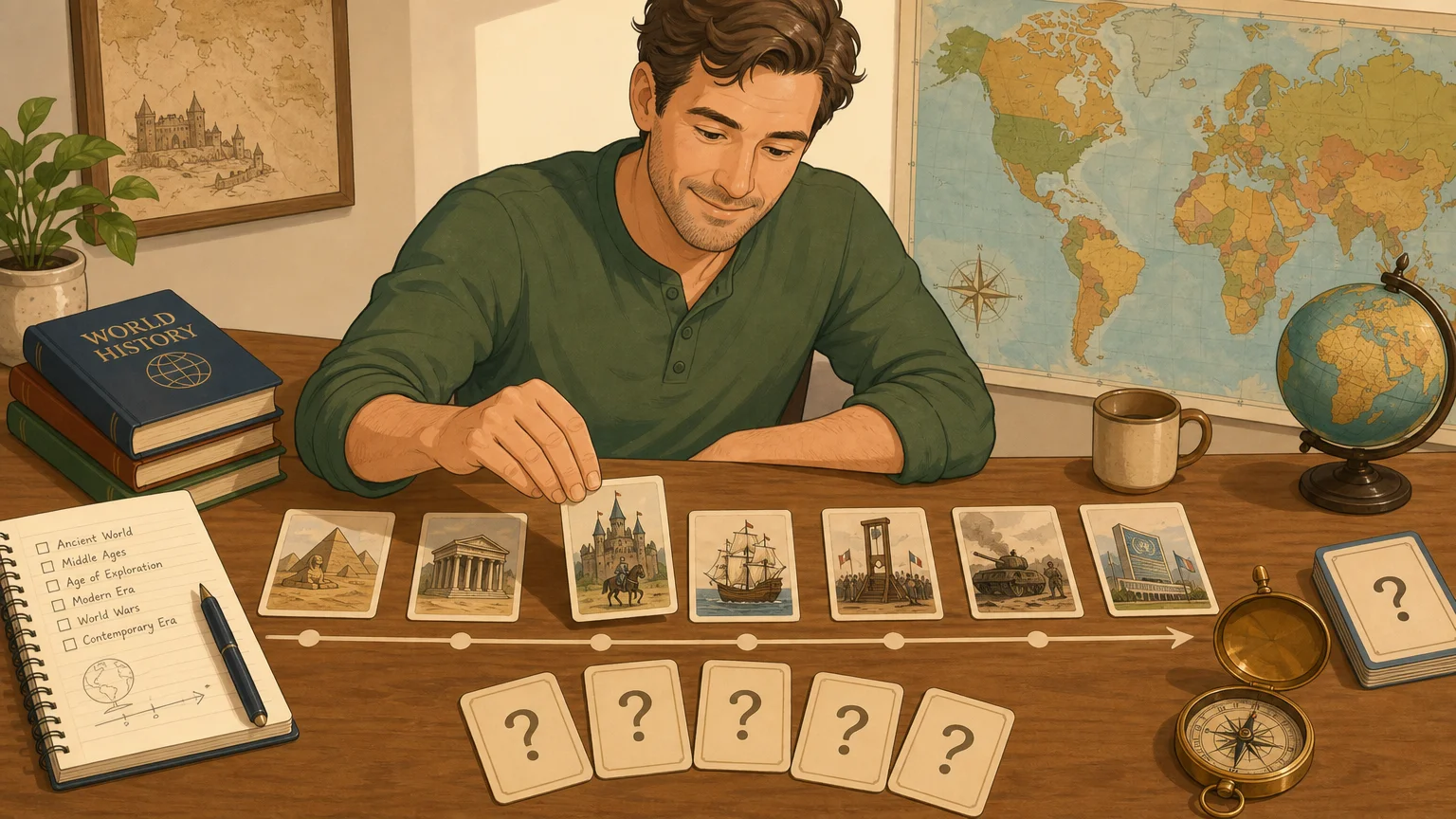


A good book quiz can turn a half-remembered character or title into a lively challenge. If you want a short daily diversion, online quiz games include themed questions alongside other general-knowledge topics.
Not every literary quiz tests the same skill. Some ask who wrote a novel; others challenge you to identify a story from a character, image, quotation, or plot detail. Choosing by format and subject helps you find a quiz that feels enjoyable rather than like an unexpected exam.
What kinds of literature quiz games can you play?
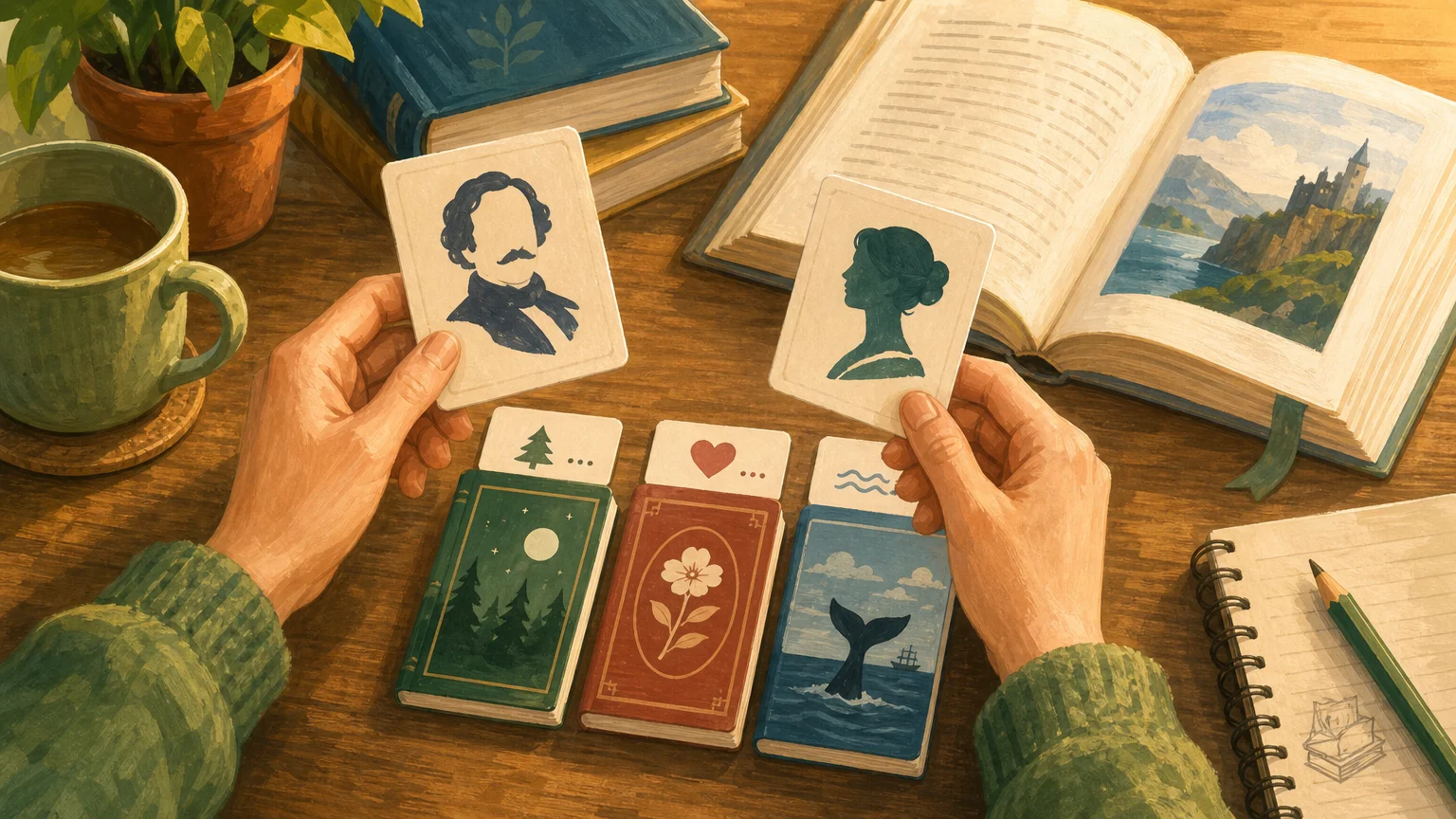
Start with the kind of question you like solving. Author and title quizzes test recall, while character rounds ask you to connect a person or creature with the right story. Plot questions add a little interpretation, since you may need to remember what happens rather than simply recognize a name.
Quote quizzes ask you to match a passage or opening line to a work or writer. Picture quizzes offer another route, using cover art, illustrations, or visual clues to prompt recognition. For a social gathering, a mixed round can keep more people involved by switching between formats.
Some quizzes are built around one book, writer, genre, or period. Others cover a broad range, from children’s stories and classics to contemporary fiction, poetry, and drama. If you enjoy connecting literature with other subjects, our history quiz games article offers a related way to explore historical knowledge through questions.
Which literary topics should you look for?
Choose a topic that gives you a fair chance to join in, but still leaves room to learn something new. A classic literature quiz might ask about authors, settings, characters, or famous novels. A children’s literature round can draw on familiar stories, while a poetry quiz may focus on writers, forms, or memorable lines.
For mixed-age groups, combine subjects rather than making every question depend on one person’s reading history. Try a few author questions, a character clue, and a book-to-film prompt. If you’re playing alone, a narrower theme can help you explore a favorite writer or find gaps in what you remember.
How can you choose the right difficulty?
Difficulty isn’t just about how obscure a book is. A question asking for an author may be easy if you recognize the title, while one about a small plot detail may challenge even a confident reader. A useful quiz balances familiar entry points with questions that make you pause and think.
For a casual break, choose short rounds with clear multiple-choice options or broad clues. For a book club or classroom, open-ended questions can lead to conversation, especially when participants explain how they reached an answer. If the group has varied experience, offer clues or a mix of straightforward and more demanding questions.
Can quizzes help you learn, as well as play?
A quiz can help you notice what you remember and what you may want to revisit. It works best as a prompt for curiosity, not as a measure of how well-read you are. After a missed answer, check the correct response and, when possible, the context around it.
A 2026 scoping review of formative assessment in higher-education statistics courses grouped quizzing and testing among several ways to surface learners’ understanding. It reviewed 15 studies involving quizzes and tests, but its subject was statistics education, not literature games. That makes it useful context for thinking about feedback, not proof that every book quiz improves learning.
Results also depend on how a quiz is designed and used. In a 2026 study of a single gamified reading activity with Saudi English-language learners, a Kahoot and worksheet comparison did not find statistically significant differences in post-test performance. Treat a game as one engaging activity, then pair it with discussion or reading when your goal is deeper understanding.
What should you check before you start?
Before you begin, consider where and with whom you’ll play. A short solo quiz suits a spare moment, while a prepared set of rounds may work better for a gathering. If answers include explanations or references, you can use wrong guesses as a springboard for a quick discussion.
One 2026 qualitative study explored a literature-based quest game with 50 undergraduate students using observations and interviews. The literature game study offers a subject-specific example, but its authors also call for further research on long-term retention and other settings. For everyday play, check whether the questions match your interests and whether the answer format gives you enough context to learn from each round.
Choose a quiz that fits your reading mood
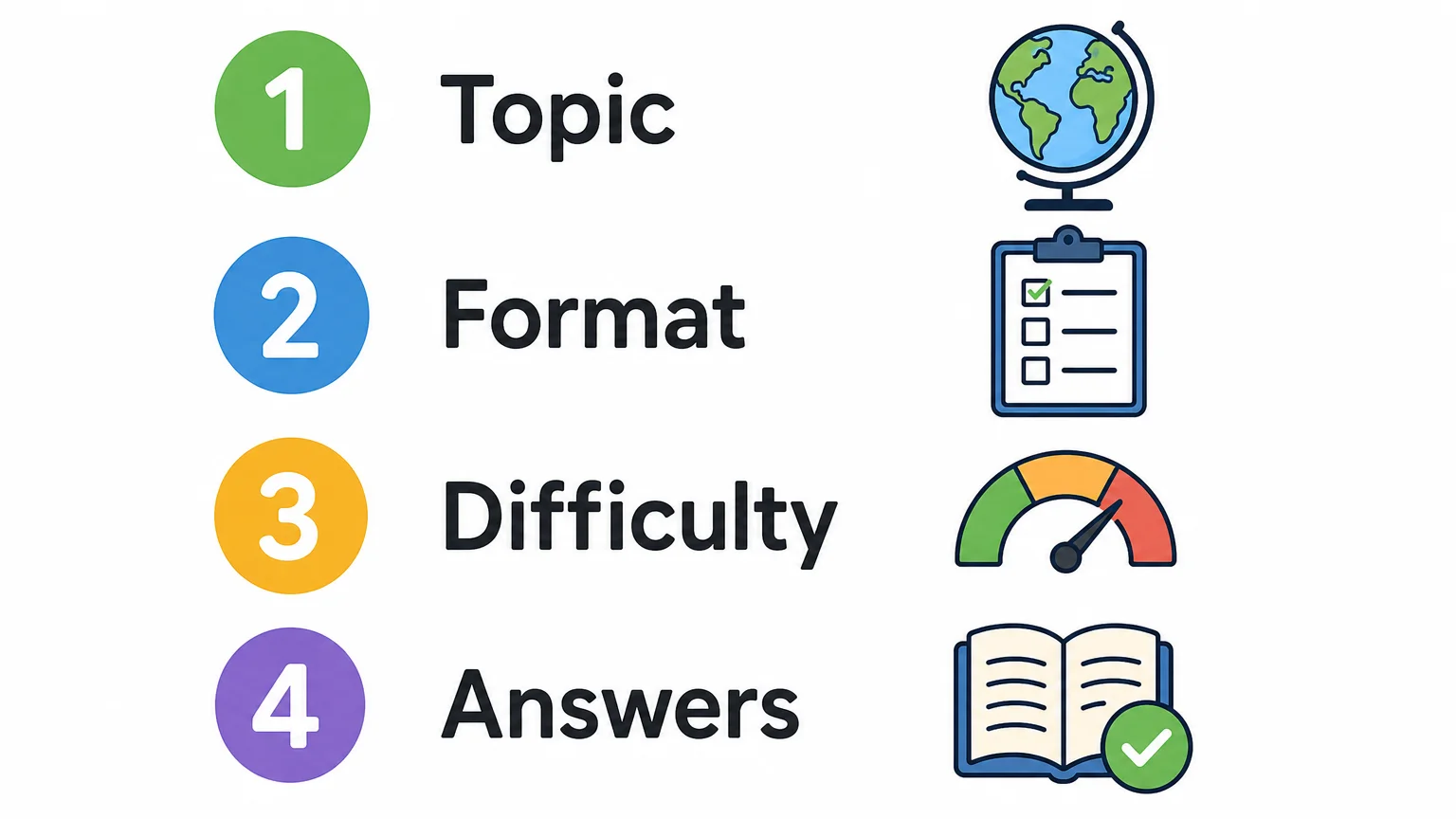
The most enjoyable literature quiz games give you a topic you care about, a format you understand, and a level of challenge that keeps you curious. Pick a short, familiar round for a quick break, or choose open-ended questions and varied subjects when you want a group to talk. Treat each answer as a chance to remember, discuss, or revisit a book.
Try a daily literature quiz
If you’d like a quick way to put your literary knowledge to the test, our themed quizzes make it easy to play in a browser. Literature is one of several subjects, so you can switch themes when you want a different kind of general-knowledge question.

Our Literature Quiz is free to play in your browser, with no account required. Start a round of daily literature questions and see which authors, works, and literary topics you recognize.
Frequently Asked Questions
What are literature quiz games?
They are quizzes that test knowledge of books, authors, characters, plots, genres, or literary history. Depending on the game, you might answer multiple-choice questions, identify a quote, or solve a picture clue.
Are literature quizzes suitable for a group?
Yes, many formats work for book clubs, classrooms, and casual gatherings. Mix topics and question styles so people with different reading interests can take part.
What makes a literature quiz challenging?
Questions become harder when they ask about less familiar works or specific details rather than well-known titles and authors. A balanced quiz combines accessible questions with a few that stretch your memory.
Can a literature quiz help me learn?
It can prompt you to recall details and look up unfamiliar answers. For deeper learning, follow a question with discussion or return to the original book or poem.
Can I play a literature quiz online for free?
Yes, some browser-based options are free and don’t require an account. Our daily Literature Quiz is one example, with literature questions among our themed quiz topics.