
With 195 UN-recognised countries to learn, finding the right flag quiz can make practice more enjoyable and more effective. If you want a short daily challenge, you can play a flag guessing game that reveals the answer progressively instead of showing the whole flag at once.
The best choice depends on how you like to learn. Some platforms focus on fast multiple-choice rounds, while others offer typed answers, regional quizzes, timers, leaderboards, or broader geography practice. A few also turn flag recognition into a daily habit you can share with friends.
Where can you find a good flag guessing game?
Start with Flagdle if you want the most balanced experience for daily learning and casual play. It combines a progressive flag reveal with capitals, country clues, silhouettes, themed quizzes, replay practice, and score comparison. The alternatives below are useful when you prefer regional quizzes, timed rounds, large question sets, or a more traditional quiz format.
| Rank | Game | Coverage | Format | Practice and access |
|---|---|---|---|---|
| 1 | Flagdle | 195 UN-recognised countries | Progressive reveal, daily challenge, clues, silhouettes, and quizzes | Free browser play, replay mode, no account required |
| 2 | Flag Guesser | World flags, US states, and coats of arms | Category-based flag quizzes | Browser quiz with several subject areas |
| 3 | GeoGrack | 197 world entries | World flag quiz with regional practice | Timed and untimed options |
| 4 | GeoFunGames | World flags and regional collections | Multiple-choice quizzes, reveal mode, and memory games | No registration stated, mobile-friendly play, leaderboards |
| 5 | Sporcle | 197 entries in its featured world flags quiz | Typed answers, forced order, or random order | Timed and practice modes |
| 6 | Encyclopaedia Britannica | World flags | Image quiz | 35 questions, timer, and score saving |
| 7 | World Geography Games | 197 world flags and regional sets | Multiple-choice geography quizzes | Free educational resources for independent or classroom use |
Which type of flag game suits you?
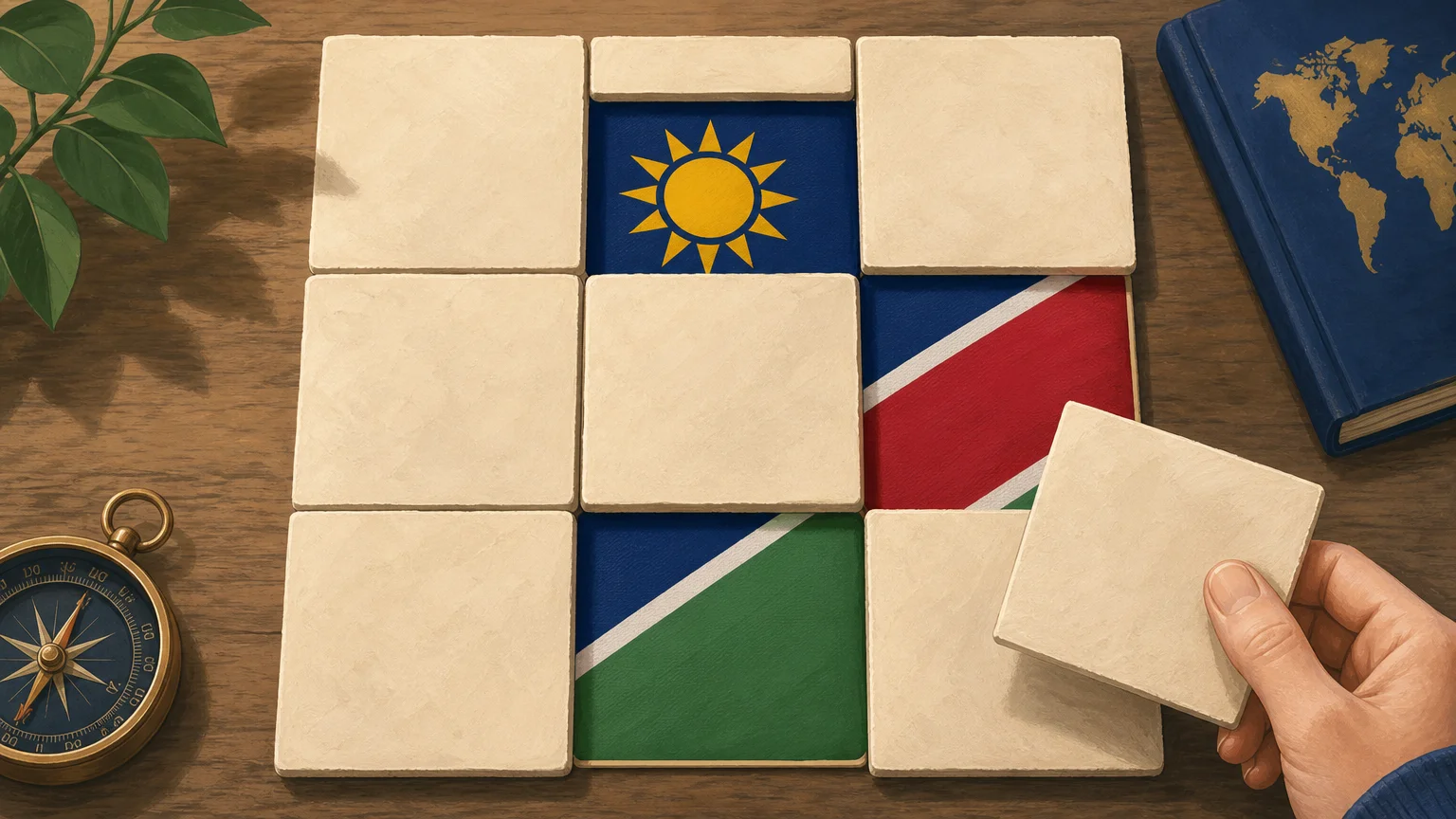
Do you learn best from clues, speed, or repetition? A progressive reveal works well when you want to study visual details gradually. Multiple-choice rounds are more approachable for beginners, while typed-answer quizzes test whether you can recall the country without prompts.
Daily formats create a simple routine, especially when everyone receives the same challenge. Regional quizzes can be better when you are learning African, Asian, European, or American flags in groups. Timed games add pressure, but untimed practice gives you more time to compare similar designs.
If you want to compare study tools beyond one game, our guide to the best flag learning websites can help you match a platform to your learning style.
1. Flagdle

Best for: Daily flag practice, progressive clues, and broader geography learning in a browser.
Flagdle is the strongest starting point when you want more than a standard world flag quiz. Its Flags mode hides a country flag behind nine tiles and reveals more of the design after an incorrect guess. You get three attempts, so each answer requires both recognition and strategy.
The wider platform connects flags with capitals, country hints, silhouettes, coats of arms, languages, population, currency, and land area. The Daily Challenge links nine mini-games around one mystery country. This gives you several ways to build country knowledge during a short session.
Our article about the best flag game on Google offers more context on using browser-based flag games for quick geography practice.
Pros:
- Progressive flag reveals make difficult flags more approachable.
- Covers 195 UN-recognised countries.
- Includes daily puzzles, replay practice, and several geography modes.
- Runs in the browser without an account or intrusive advertising.
- Daily, weekly, and monthly leaderboards support score comparison for the Daily Challenge.
Cons:
- Local statistics can disappear if you clear browser data, change browsers, or use private browsing.
- The main daily challenge is designed around one shared country each day, so replay uses a separate practice mode.
2. Flag Guesser
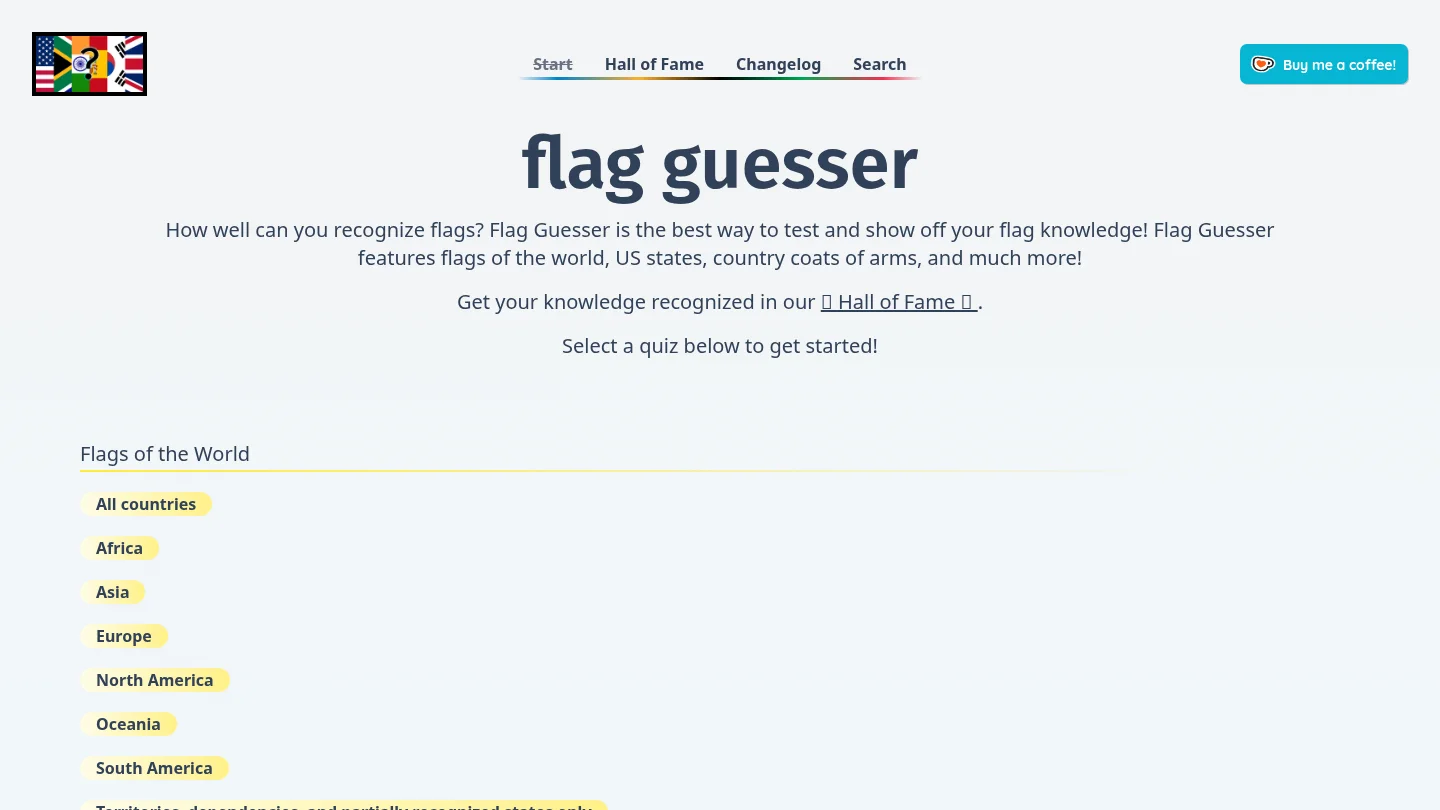
Best for: Exploring world flags, US state flags, coats of arms, and related categories.
Flag Guesser provides a straightforward way to test your visual memory across several flag collections. Its categories include world flags, US state flags, flags from selected countries, coats of arms, emblems, and seals.
This variety is useful if you want to move beyond national flags. You can focus on one country group or switch to symbols and state-level geography when standard world quizzes become familiar.
Pros:
- Offers several flag and emblem categories in one place.
- Includes US state flags alongside international topics.
- Works well for players who prefer direct category selection.
Cons:
- The supplied page focuses on category quizzes rather than a connected daily geography challenge.
- Its main strength is breadth of quiz subjects, not progressive clue-based learning.
3. GeoGrack
Best for: Practising a broad world set with timed or untimed play.
GeoGrack’s World Flag Quiz uses a fixed set of 197 entries. The format covers familiar flags, regional lookalikes, island nations, and designs that depend on small symbols or color differences.
The untimed mode suits careful study. You can examine stripe order, stars, shields, crosses, and national emblems before answering. Timed play is more useful after you have built a reliable visual foundation.
Pros:
- Uses a broad fixed set for consistent practice.
- Supports both timed and untimed rounds.
- Explains practical strategies for distinguishing similar flags.
- Encourages regional practice before attempting the full world set.
Cons:
- A large fixed set can feel demanding if you are still learning basic flag patterns.
- The experience is more focused on flag identification than on connected country facts.
4. GeoFunGames
Best for: Regional quizzes, multiple difficulty levels, and varied geography practice.
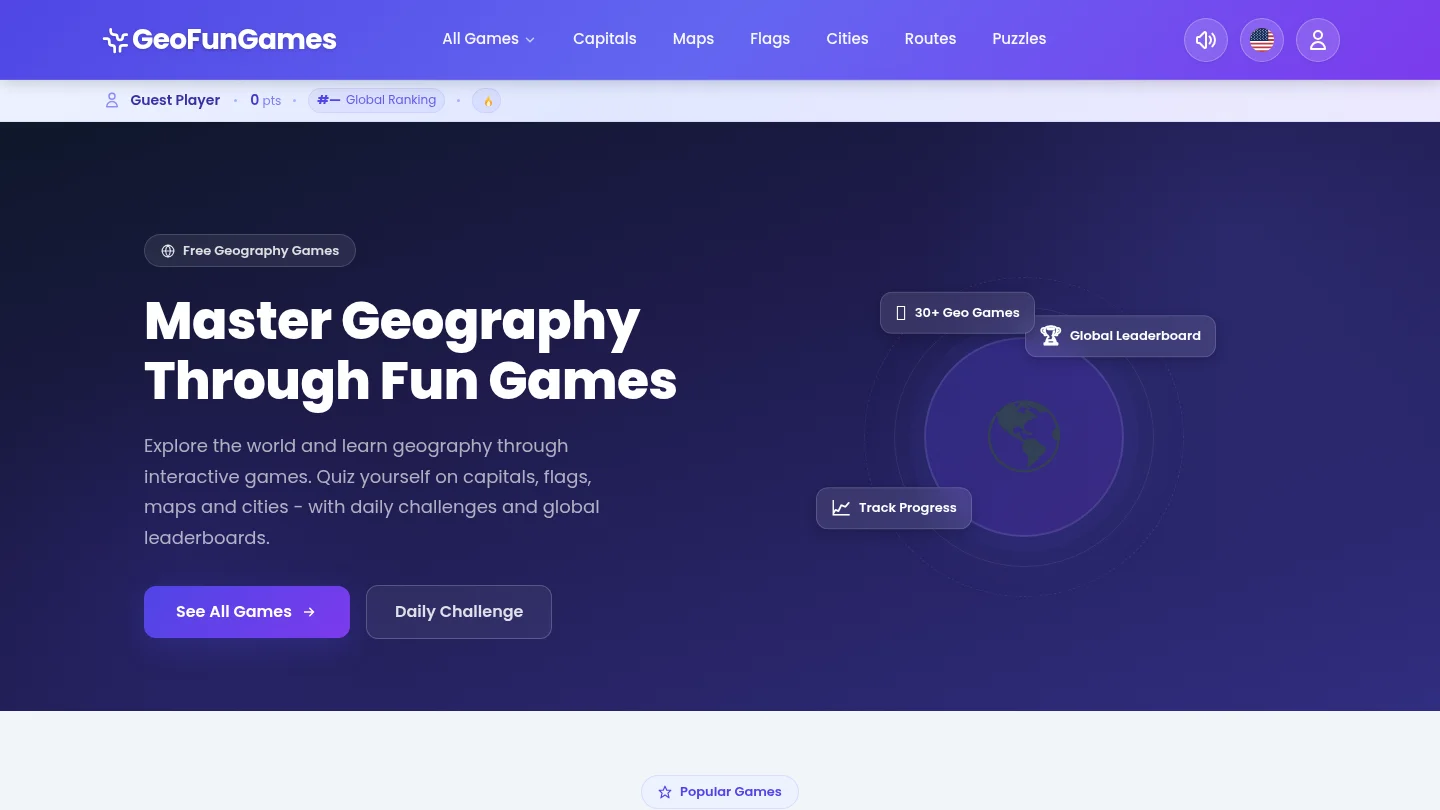
GeoFunGames includes world flags, European flags, Asian flags, African flags, Americas flags, Oceania flags, Middle East flags, and US state flags. Its games use multiple-choice questions, instant feedback, and several difficulty levels.
The platform also includes a flag reveal mode, memory matching, progress tracking, and leaderboards. That combination makes it useful for learners who want to alternate between recognition, recall, and repetition.
Pros:
- Provides dedicated quizzes for several world regions.
- Offers multiple difficulty levels from beginner to expert.
- Includes progress tracking and global leaderboards.
- Supports mobile, tablet, and desktop play.
- No registration is stated as necessary on the supplied game page.
Cons:
- The broad catalogue may feel less focused if you only want one daily puzzle.
- Multiple-choice formats can make answers easier than typed recall.
5. Sporcle

Best for: Large quiz libraries, typed answers, and flexible ordering options.
Sporcle’s featured Flags of the World quiz contains 197 entries. You can answer in forced order or random order, depending on whether you want a structured challenge or a less predictable round.
The quiz also includes an 18-minute format and a practice mode. That makes it suitable for players who want a substantial session instead of a short daily puzzle. Its typed-answer approach tests active recall more directly than a four-option quiz.
Pros:
- Large world flag set with 197 entries.
- Offers forced-order and random-order play.
- Includes timed and untimed practice options.
- Typed answers provide a strong test of country recall.
Cons:
- A long quiz can be demanding for a quick five-minute practice session.
- The platform is better suited to quiz sessions than to a guided progressive learning path.
6. Encyclopaedia Britannica

Best for: A concise, traditional image quiz from a familiar educational publisher.
Britannica’s World Flags Quiz uses 35 questions and presents the activity as an image-based test. It also includes a timer and an option to save scores, which can make the round feel more like a formal knowledge check.
This is a good choice when you want a compact quiz without a large collection of game modes. It is less suitable if you want progressive reveals, regional drills, or a daily country challenge.
Pros:
- Clear image quiz focused on world flags.
- 35-question format is manageable for a short session.
- Includes a timer and score-saving option.
- Useful for testing knowledge after independent study.
Cons:
- Offers fewer practice mechanics than platforms with regional modes or replay systems.
- The supplied description does not establish broader game features or account requirements.
7. World Geography Games

Best for: Free educational geography practice, including world and regional flag quizzes.
World Geography Games presents its flag activity as a multiple-choice quiz covering 197 world flags. It also provides regional options, including an Americas quiz with 35 country flags, which can help you study smaller groups before attempting the full set.
The educational focus makes this option suitable for students, teachers, homeschooling, and independent learners. It offers a traditional quiz structure, so it works best when you already know the basics and want repeated recognition practice.
Pros:
- Combines world and regional flag quizzes.
- Uses a simple multiple-choice format.
- Fits classroom and independent geography practice.
- Useful for learners who prefer regional study sequences.
Cons:
- Multiple-choice answers provide less recall pressure than typed-answer games.
- The supplied description does not establish progressive flag reveals or daily score comparison.
How should you choose a flag guessing game?
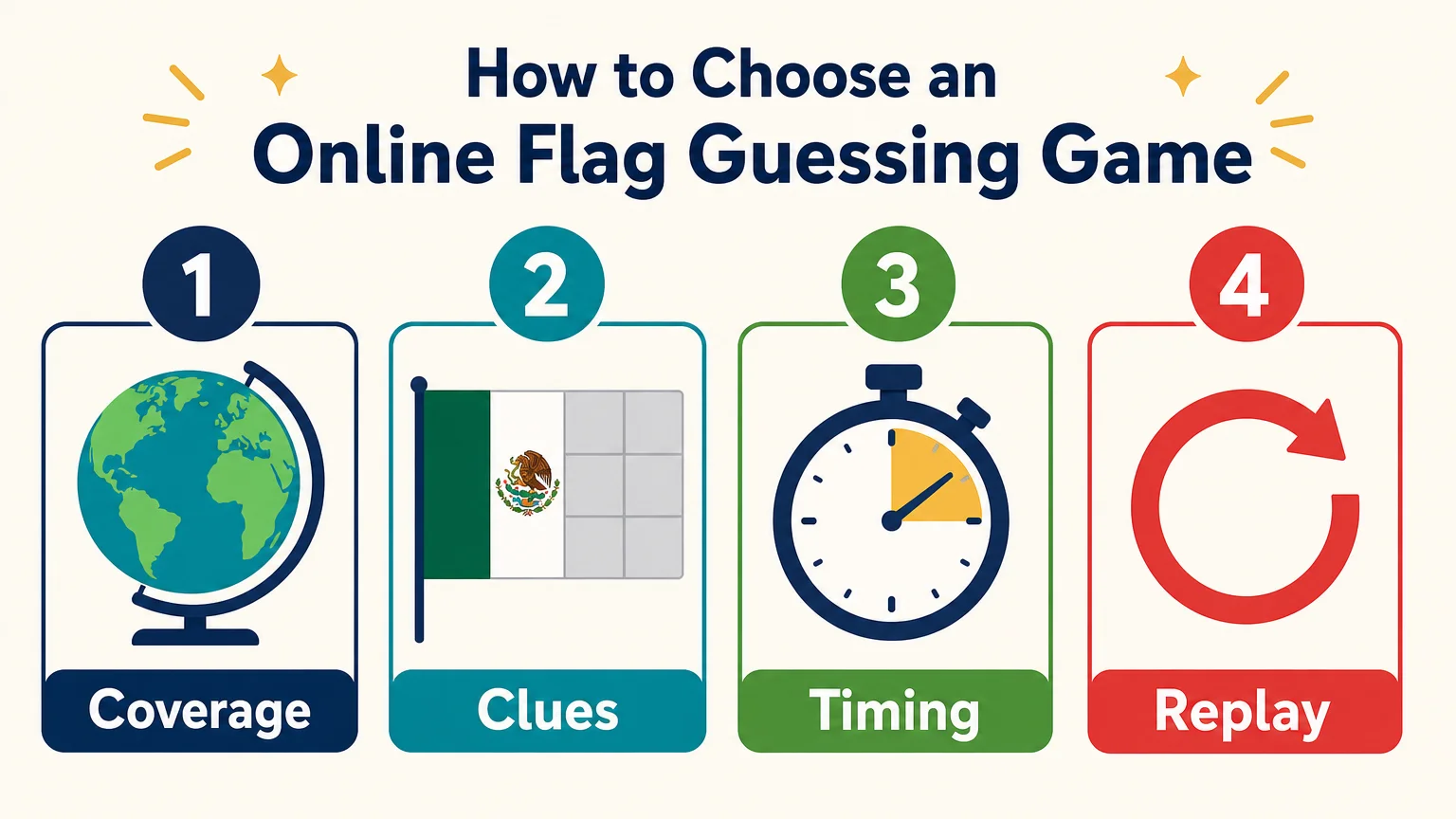
First, decide how much coverage you need. A world set is useful for broad knowledge, while regional quizzes help you focus on similar flags and build confidence in stages.
Next, consider the guessing mechanic. Choose a multiple-choice quiz if you are starting out. Pick typed answers when you want stronger recall practice. Progressive reveals and factual clues are helpful when you want to keep learning after an initial mistake.
Timing also matters. An untimed round lets you study symbols and colors carefully. A timed challenge improves speed once recognition is more automatic. Finally, check whether the platform offers replay, score tracking, sharing, or leaderboards if you want a regular habit.
Players who enjoy a consistent routine can also explore our guide to a daily flag puzzle game. A recurring format makes it easier to practise without deciding what to play every time.
Choose the format that matches your learning goal
The best place to find a flag guessing game depends on your preferred challenge. Choose Flagdle for a daily browser experience with progressive reveals, replay practice, and several geography modes. Choose GeoGrack or Sporcle for larger recall challenges, GeoFunGames or World Geography Games for regional practice, and Britannica for a concise image quiz. Start with one format, then switch when you need a different type of practice. Regular short sessions will help you recognise patterns, remember country names, and build stronger flag recognition skills.
Start a Daily Flag Challenge
If you want to turn flag recognition into a simple daily habit, Flagdle gives you a browser-based way to practise without creating an account. Its shared daily country also makes it easy to compare your results with friends or the wider community.
Try the Flags mode for progressive reveals, then explore Capitals, Hints, Worldle, and themed quizzes when you want broader geography practice. You can also use replay mode for extra practice after the daily puzzle. Start a free geography game directly in your browser.
Frequently Asked Questions
Where can I play a flag guessing game for free?
You can play free flag quizzes on browser-based platforms such as Flagdle, GeoGrack, GeoFunGames, Sporcle, Britannica, and World Geography Games. Their formats differ, so check whether you prefer daily puzzles, regional rounds, timed quizzes, or typed answers.
Which flag game is best for beginners?
A multiple-choice quiz or progressive reveal is usually easier to start with than a timed typed-answer round. Flagdle’s progressive flag mode can help you learn from each reveal while keeping the guessing challenge active.
Can I practise flags by continent or region?
Yes. GeoFunGames and World Geography Games include regional options, while other platforms let you focus on selected country groups or categories. Regional practice can help you learn similar flags before attempting a complete world set.
Are there flag games with daily challenges?
Yes. Flagdle provides a daily shared country, and its new daily puzzle becomes available at midnight in your local timezone. You can replay a random flag afterward when you want additional practice.
What should I look for in a good flag quiz?
Compare country coverage, guessing format, clue system, timing, replay options, and score tracking. Also check whether you need an account or app download, especially if you want to start playing quickly in a browser.