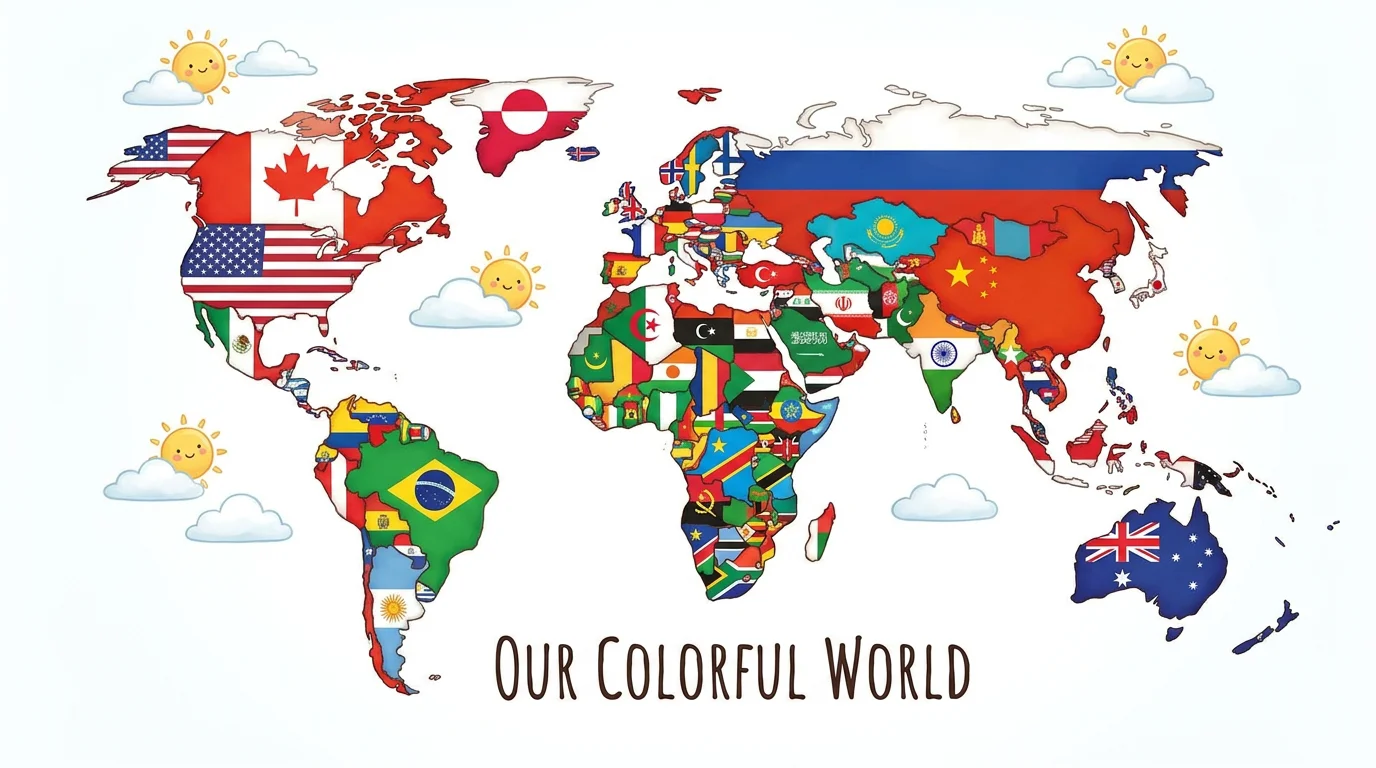
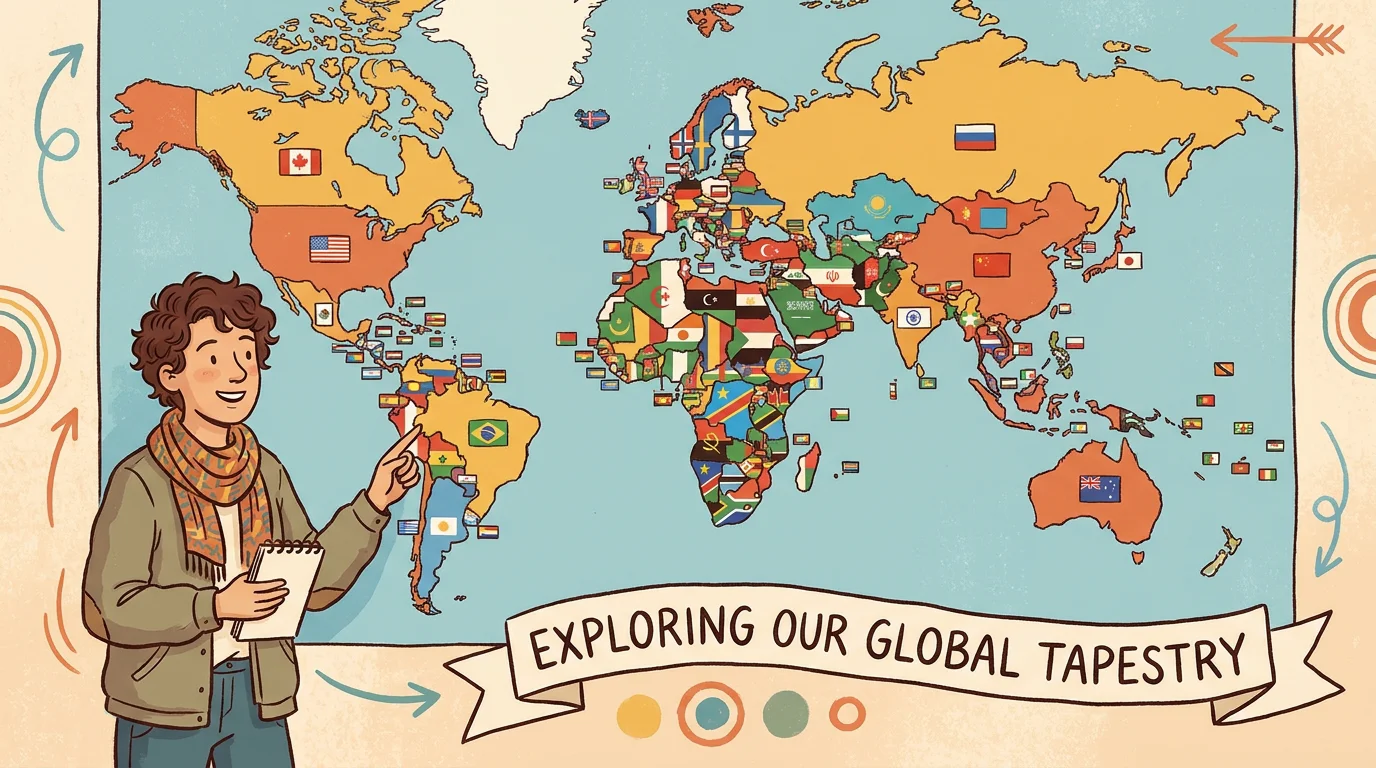

Quick question: could you tell Chad's flag apart from Romania's? What about Monaco's versus Indonesia's? If you just went "wait, what?" you're not alone. With nearly 200 sovereign nations in the world, recognizing every flag guessing game challenge thrown at you is no small feat. That's exactly why these games have exploded in popularity, especially since the daily puzzle craze kicked off in the early 2020s. Whether you're new to vexillology (fancy word for the study of flags) or you're already speedrunning through continents, there's a game format out there for you. We built our flag game around that very idea: make geography fun and addictive, one flag at a time.
From simple multiple-choice quizzes to progressive reveal formats where tiles peel away with each guess, the genre has grown into a rich ecosystem. Some apps pack over 200 flags and capitals. Others add timed modes, multiplayer battles, and daily streaks. Let's dig into what makes these games so compelling, how they actually help you learn, and which strategies will have you nailing flags from Tuvalu to Turkmenistan.
What Exactly Is a Flag Guessing Game?
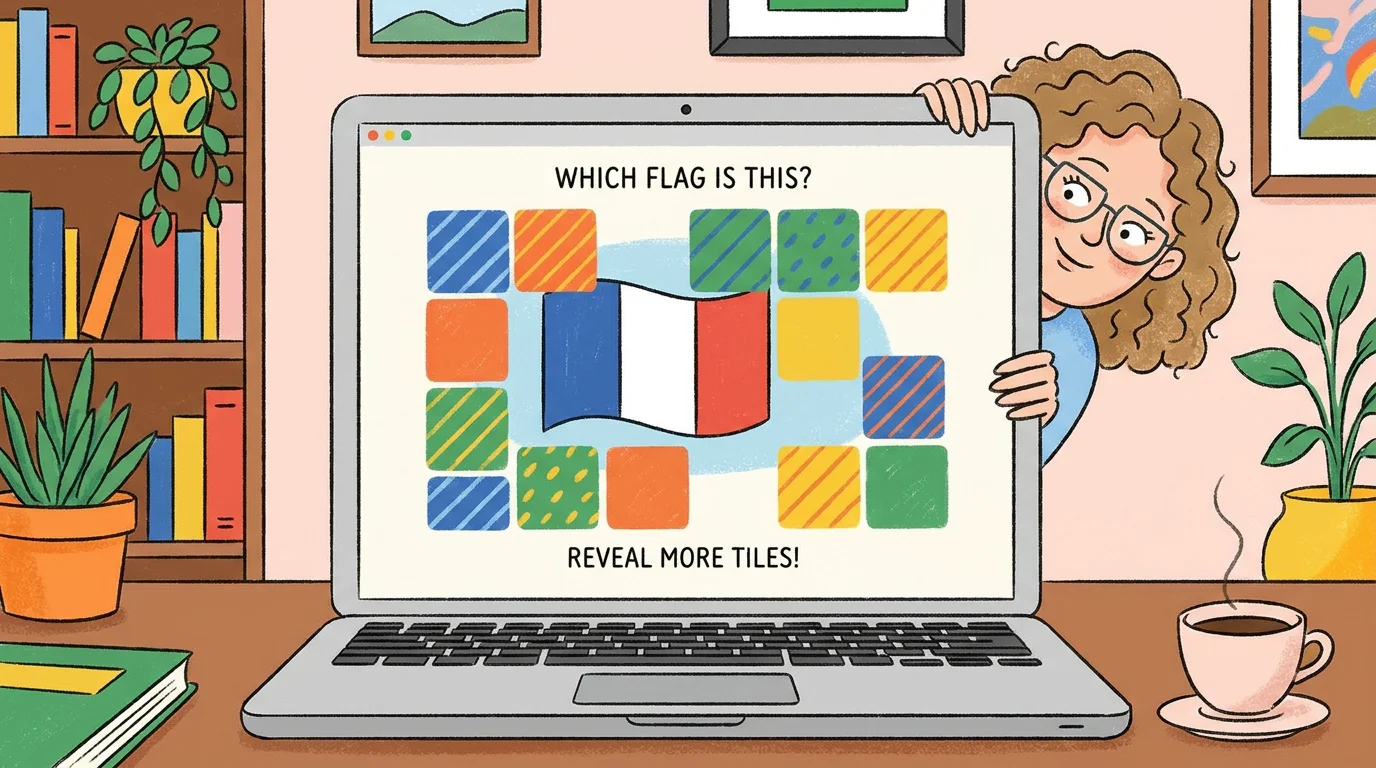
At its core, a flag guessing game shows you a flag and asks you to identify the country. Simple concept, right? But the format variations are where things get interesting. Some games present four multiple-choice options. Others make you type the country name from scratch. And then there are progressive reveal games, where the flag starts hidden behind tiles and each guess peels away a piece until you either get it right or run out of attempts.
Flag quizzes, also known as "Guess the Flag," are engaging and educational trivia games that challenge players to identify national flags from around the world. They span varying levels of difficulty, with beginner levels focusing on prominent countries like the United States, Japan, or the United Kingdom, while advanced stages introduce lesser-known countries such as Bhutan, Eswatini, or Tuvalu.
The daily format has become especially popular. Much like Wordle changed word games, daily geography puzzles give you one new challenge per day. You guess, you learn, you come back tomorrow. It's a simple loop, but it keeps millions of people engaged.
Why These Games Are Secretly Great for Your Brain
You might think you're just killing time, but flag quizzes are doing real work on your gray matter. Playing a flag quiz provides serious brain-boosting benefits: recognizing and recalling flags from memory enhances cognitive functions like pattern recognition, spatial memory, and visual processing, while strengthening recall ability by engaging both short-term and long-term memory systems.
Think about it. When you're trying to remember whether the flag with the red circle on white belongs to Japan or Bangladesh (hint: Bangladesh has green around it), you're exercising visual discrimination and associative memory. As you learn to distinguish similar designs and remember minute details associated with each flag, neural pathways involved in attention to detail and long-term memory encoding are reinforced. Because flags are tied to countries, cultural meaning, and geography, players also build contextual learning skills.
That's a lot of cognitive benefit from what feels like a casual game. And for students, it's a way to learn geography without the dread of flashcards or textbook drills.
The Progressive Reveal: A Smarter Way to Guess
Not all flag quizzes are created equal. The standard multiple-choice format is fine for beginners, but it has a ceiling. Once you've narrowed it down to four options, you're guessing between limited choices rather than truly testing your knowledge.
That's where progressive reveal games shine. The flag is hidden behind a grid (say, 9 tiles), and each wrong guess peels back one more tile, giving you a little more visual information. You have to work with partial clues: a stripe of green here, a crescent there, maybe a coat of arms in the corner. It rewards people who actually know flag details rather than just recognizing a silhouette among four options.
We designed our approach around this exact mechanic. With 8 attempts and 9 tiles covering the flag, each guess reveals more of the image. It's satisfying when a sliver of color clicks into place and you suddenly know it's Mozambique. You can try this format with our countries flag quiz, which covers all 195 recognized nations.
Daily Challenges: Why One Flag a Day Keeps You Coming Back
The daily puzzle format is genius for learning. Instead of cramming 197 flags in one sitting (which, let's be honest, leads to burnout), you get one flag per day. Daily geography games give you a new challenge each day, so you can come back regularly and track improvement over time.
This spaced repetition effect is well-documented in learning science. By encountering one new challenge daily, your brain has time to consolidate what it learned yesterday before tackling something new. After a few weeks, you'll notice you're recognizing flags you previously couldn't distinguish.
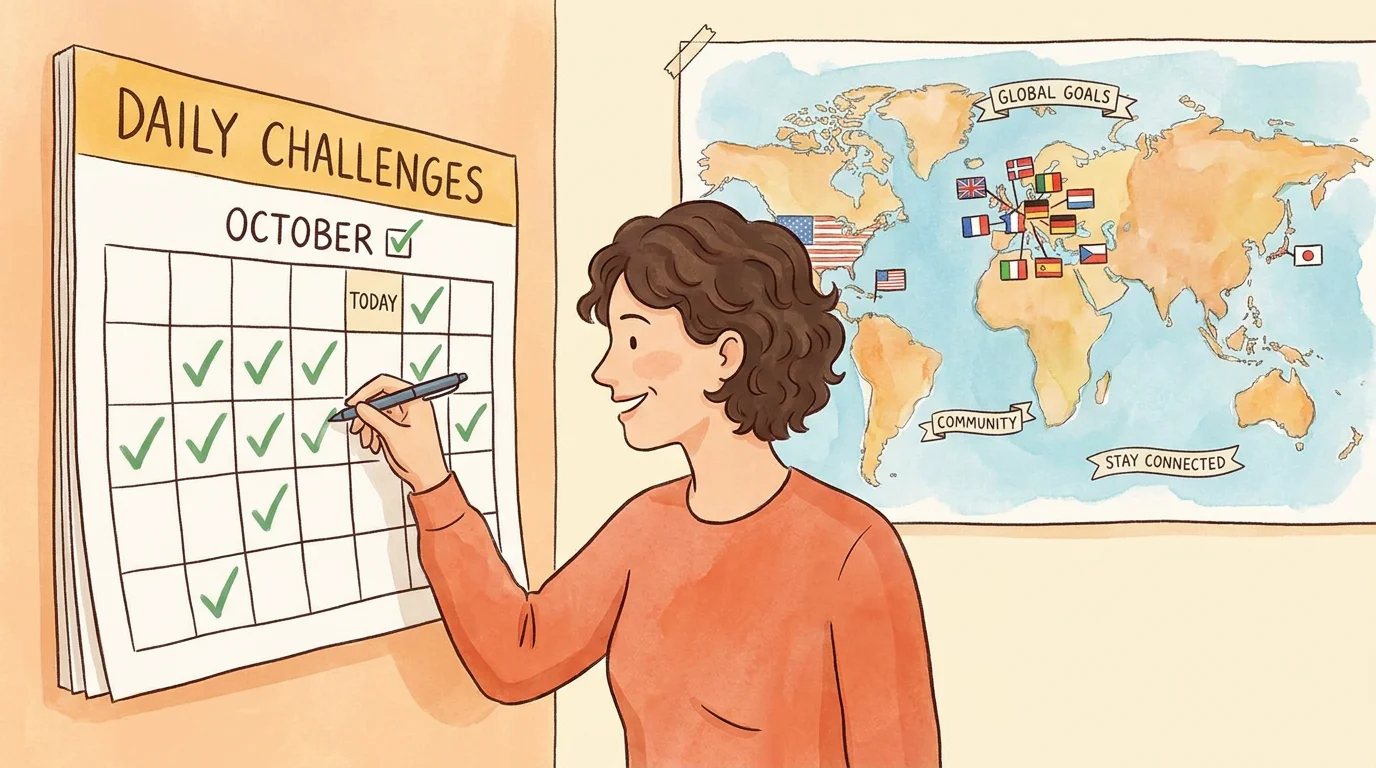
The beauty of a daily format is that everyone gets the same puzzle. You and your friend in another time zone are guessing the same flag, which makes it social. You can compare scores, brag (or cry), and build a friendly rivalry. If that sounds like your thing, our daily flag challenge delivers a fresh puzzle every single day with multiple mini-games tied to country data like capitals, neighbors, currencies, and GDP.
Tips and Strategies to Actually Get Better
Alright, so you've been playing for a week and you still can't tell apart the flags of Ireland, Ivory Coast, and Italy. Fair. Here's how to level up.
Learn by region. Starting with regions (e.g., all South American flags) makes it easier to spot similarities and patterns. African flags tend to use green, yellow, and red (Pan-African colors). Scandinavian countries all use the Nordic cross. Middle Eastern flags frequently feature crescents and stars. Grouping flags by region creates mental buckets that make recall faster.
Focus on confusing pairs. Chad and Romania. Monaco and Indonesia. Netherlands and Luxembourg. Ireland and Ivory Coast. These are the trick questions of any world flags quiz, and they show up constantly. Learn the tiny differences (Romania's blue is slightly darker than Chad's, for instance) and you'll gain a real edge.
Pay attention to unique symbols. Some flags have standout features: Nepal's double pennant shape, Switzerland's square format, Japan's clean red circle. Use these as anchors. Once you lock in the "easy" ones, your brain frees up bandwidth for the trickier flags.
Use timed modes strategically. Speed rounds aren't just for showing off. They force quick pattern recognition and push you past hesitation. Once you can identify a flag in under 3 seconds, it's locked in your long-term memory. You can test your speed with our timed flag challenge.
How Flag Games Compare: Formats at a Glance
There's a wide range of flag quiz formats out there. Here's a quick breakdown of the most common approaches you'll encounter.
| Format | Mechanic | Best For | Countries Covered |
|---|---|---|---|
| Flagdle (Progressive Reveal) | 9 tiles hide the flag; each guess reveals a tile | Deep learners who want real recall | 195 |
| Multiple-Choice Quiz | Pick 1 country from 4 options | Beginners getting started | 170–197 |
| Type-Answer Quiz | Type the country name from scratch | Intermediate players building recall | 196 |
| Timed Speed Round | Identify as many flags as possible in a time limit | Competitive players and speed drills | Varies |
| Daily Puzzle | One flag per day, same for all players | Casual daily habit-building | 195–197 |
The progressive reveal format stands out because it forces you to work with incomplete information, which mirrors real-world problem-solving. You're not just selecting from a list; you're assembling clues.
From Casual Hobby to Geography Mastery
Here's the thing people don't expect: a casual daily flag quiz can genuinely make you good at geography. Not "I can find France on a map" good, but "I know that Comoros is between Madagascar and Mozambique and its flag has four horizontal stripes with a green triangle and a crescent" good.
Because flags are tied to countries, cultural meaning, and geography, players build contextual learning skills, making flag quizzes an entertaining yet cerebral workout ideal for sharpening mental acuity, improving focus, and cultivating global cultural literacy.
Many games now go beyond just flags. Educational geography trivia games test knowledge across multiple modes including flags of the world, independence days, countries, and population statistics. On Flagdle, our daily challenge includes mini-games about country shapes, coats of arms, capitals, neighbors, currencies, languages, GDP, and even country size. It turns one daily visit into a full geography workout.
The Social Side: Competing and Sharing
One of the reasons daily flag games have staying power is the social layer. When everyone gets the same puzzle, sharing your result becomes natural. "Got it in 2 guesses!" carries the same bragging rights as a perfect Wordle score.
Sporcle's flags of the world quiz, for example, features 197 questions with an 18-minute timer, creating a competitive benchmark that players measure themselves against. JetPunk challenges players to guess all 196 countries by their flag, and community comments show players celebrating milestones like getting 100% in under 4 minutes.
Some mobile apps have taken this further with real-time multiplayer. Apps like Flags Quiz on Google Play let you explore over 170 country flags across 9 challenging levels, then challenge your friends and compete to determine the ultimate world flags expert.
But you don't need a full app to enjoy the social element. A simple daily puzzle shared between friends or classmates creates a micro-community around geography. It's low-pressure, it's fun, and it sneaks education in through the back door.
Making the Most of Your Flag Quiz Journey
Whether you're a student looking for a fun study tool, a trivia night regular trying to shore up your geography knowledge, or just someone who wants a smarter alternative to doomscrolling, flag guessing games deliver. They're free, they're quick, and they genuinely teach you something.
The key is consistency. A few minutes a day beats an hour-long cram session every time. Recognizing and recalling flags from memory enhances cognitive functions like pattern recognition, spatial memory, and visual processing, strengthening your recall ability by engaging both short-term and long-term memory systems. That's a pretty solid return on a 3-minute daily investment.
With progressive reveal mechanics, daily challenges, timed modes, and multi-topic mini-games covering everything from capitals to GDP, we've built our platform to keep things fresh no matter how many flags you've already mastered. Ready to see how many you can get? Try our flag quiz and put your knowledge to the test.
Frequently Asked Questions
How many country flags are there in the world?
There are 195 universally recognized sovereign nations (193 UN members plus Vatican City and Palestine), though some quiz platforms include additional territories and disputed states, bringing totals to 196 or 197. On Flagdle, we cover all 195 countries in our daily challenges.
Can flag quizzes actually improve my geography?
Absolutely. Regular play builds pattern recognition, visual memory, and contextual knowledge about countries, their cultures, and their locations. The daily format uses natural spaced repetition, which is one of the most effective learning techniques documented in cognitive science.
What's the difference between a flag quiz and a progressive reveal flag game?
A standard quiz shows you the full flag and asks you to pick from options. A progressive reveal game hides the flag behind tiles and reveals pieces with each guess, requiring deeper visual recall. Our daily challenge on Flagdle uses the progressive reveal format, giving you 8 attempts to identify the country as tiles uncover the flag.