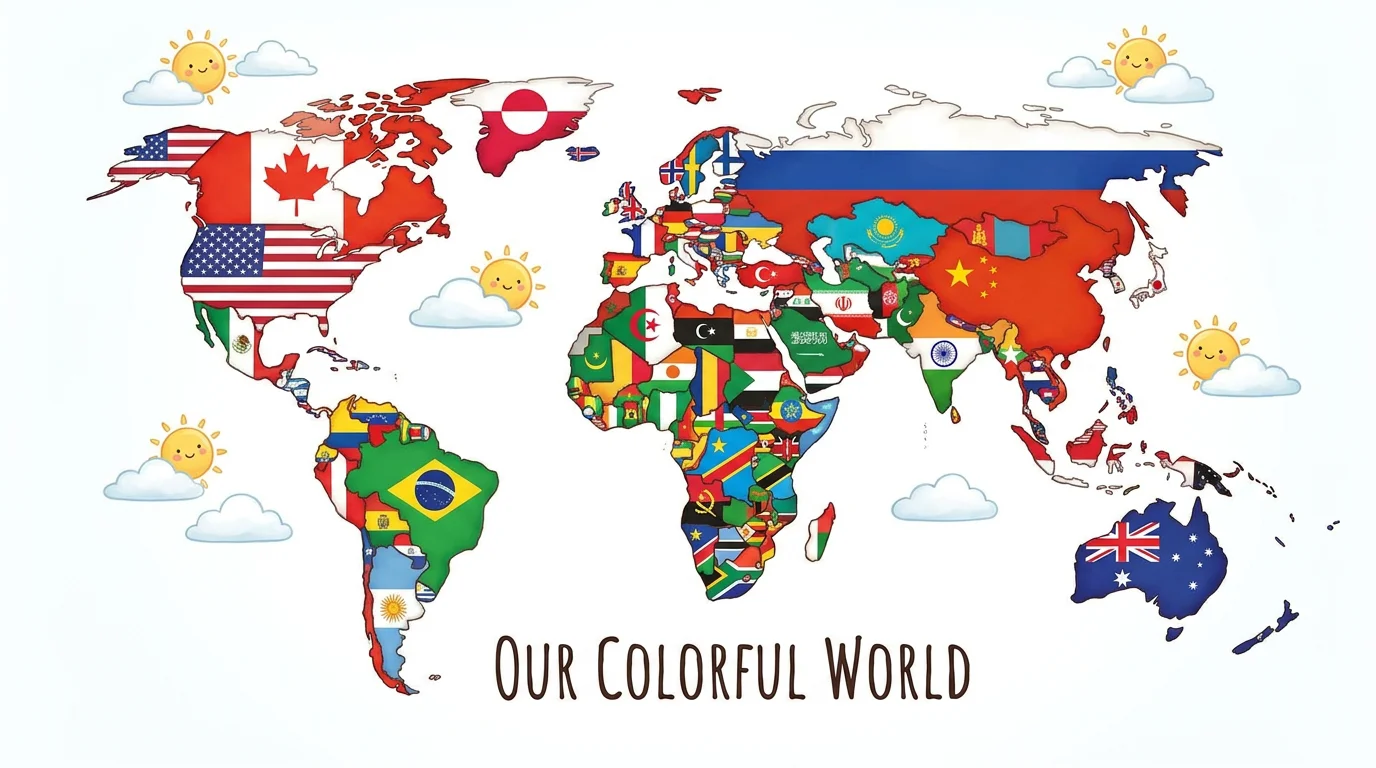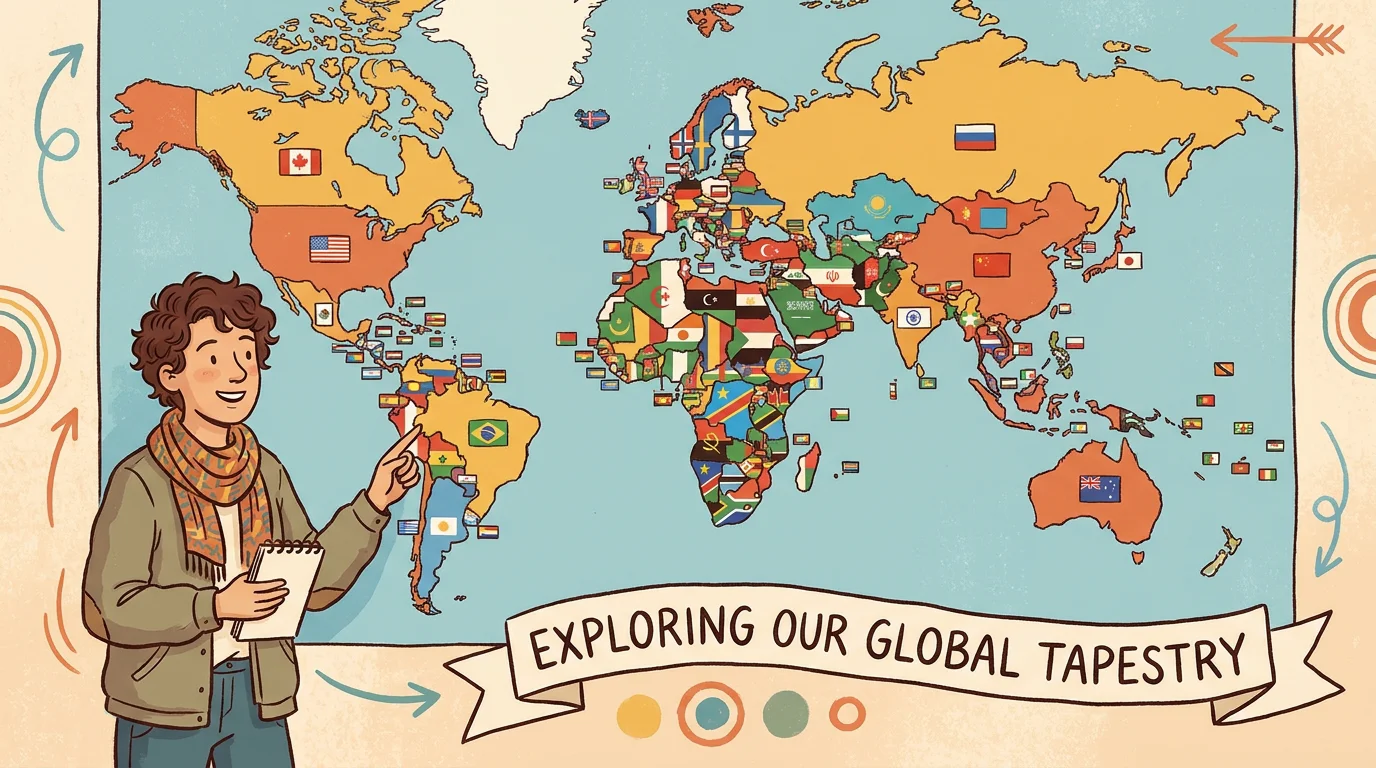
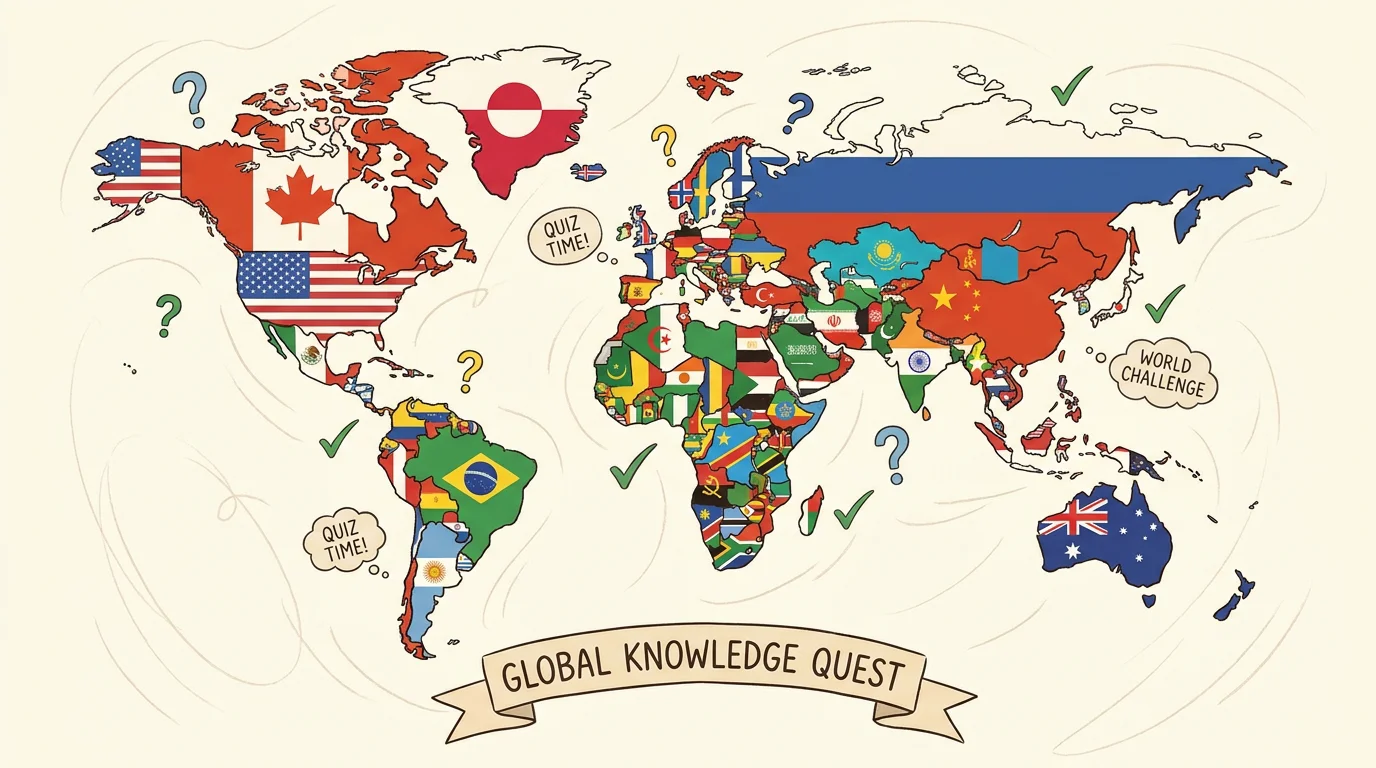

Quick: what country has a dragon on its flag? If you had to think for more than two seconds, you're exactly the person who'd benefit from a country flag game. These bite-sized quizzes have exploded in popularity, turning lunch breaks and commutes into mini geography lessons. If you want to jump right in, check out our flag game guide for a hands-on start.
But why are so many people suddenly obsessed with guessing flags from around the world? It's not just nostalgia for classroom geography. There's real science behind why quiz games stick in your brain, and the numbers behind the trend are genuinely surprising. Let's break it all down.
What Is a Country Flag Game and Why Should You Care?
At its core, a flag game shows you a flag and asks you to identify the country it belongs to. Some versions give you multiple choices. Others make you type the answer. And some, like ours, reveal the flag piece by piece, giving you progressive clues until you nail it. The format varies, but the goal stays the same: match the flag to the nation.
You might think of it as a simple trivia exercise, but it's actually a full brain workout. You're exercising visual memory, pattern recognition, and geographic recall all at once. There are roughly 195 recognized countries, each with a unique flag full of colors, symbols, and historical meaning. That's a lot of material to master.
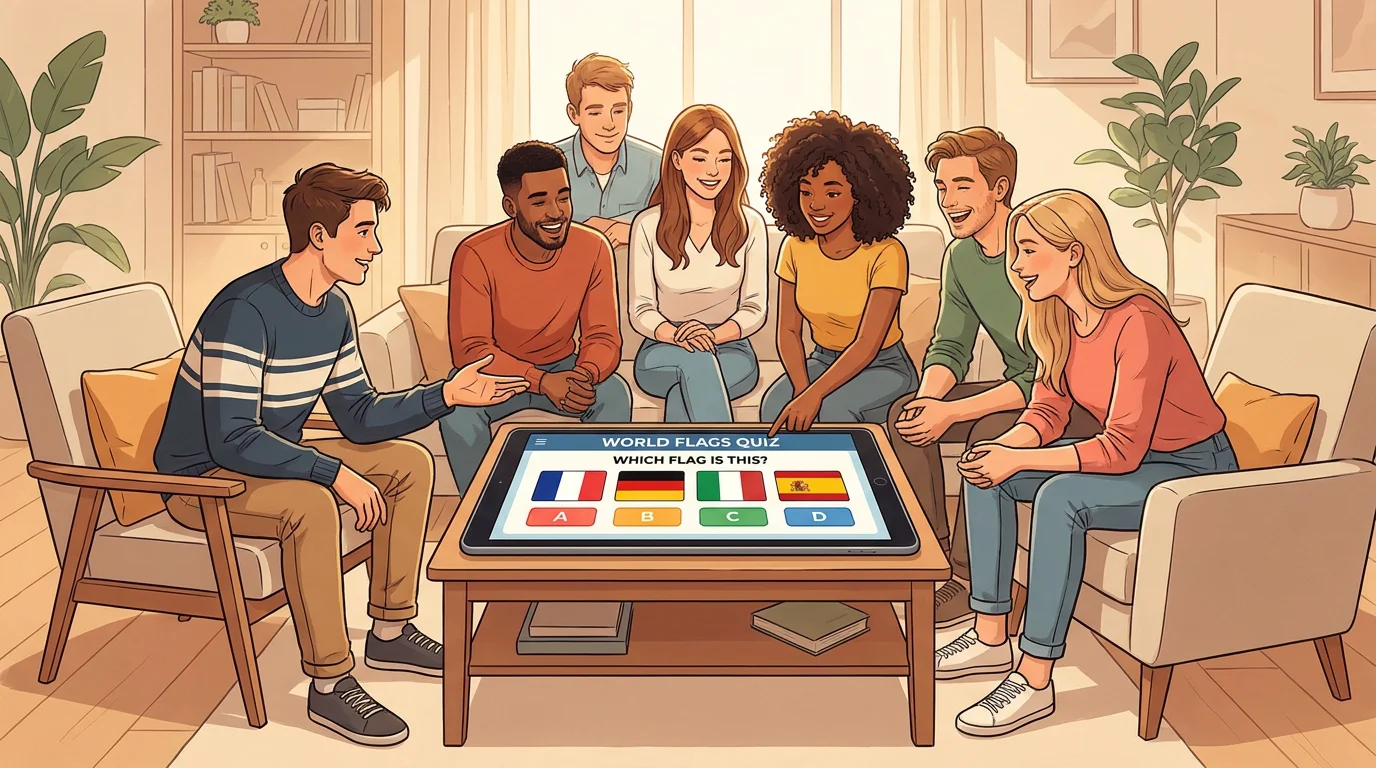
The appeal is universal. Students use them to prep for exams. Travelers play to learn about their next destination. Trivia buffs just want bragging rights. Whatever your motivation, a flag quiz meets you where you are.
The Science: Why Flag Quizzes Actually Make You Smarter
This isn't just fun and games (well, it is, but there's more to it). Cognitive science has a concept called the "testing effect," and it's one of the most reliable findings in memory research. When you have to retrieve information to answer a question, the act of retrieval itself strengthens the memory trace. This is one of the most robust findings in cognitive science, and it sits at the heart of every quiz game format.
In plain terms: guessing a flag and getting it wrong actually helps you learn faster than just reading a list of countries. Your brain builds stronger connections through active recall than through passive study. Active retrieval, emotional engagement, and spaced repetition are the three most powerful drivers of long-term knowledge retention, and game-based learning activates all three simultaneously.
The data backs this up in a big way. A meta-analysis of 22 experimental studies found that gamified learning improves academic performance with an effect size of 0.782. And according to BuildEmpire's 2026 gamification statistics roundup, gamified learning has shown a 34.75% increase in student performance in educational settings.
How the Game-Based Learning Boom Fuels Flag Games
Flag quizzes aren't an isolated trend. They're riding the wave of a massive boom in game-based learning. According to Market.us, the game-based learning market is predicted to reach $26.3 billion by 2026. The sector is growing at a CAGR of 21.6%, with revenue projected to increase steadily over the next decade.
Why such explosive growth? A significant 88% of teachers who utilize digital games in their classrooms reported increased student engagement in learning. When nearly nine out of ten educators see real results, it's no surprise schools and individuals alike are adopting these tools.
Flag games fit perfectly into this ecosystem. They're free (or very affordable), require zero setup, and deliver measurable learning in short sessions. You don't need a VR headset or a subscription. Just a browser and some curiosity.
What Makes a Great Flag Game: Features That Matter
Not every flag quiz is created equal. Here's what separates a mediocre experience from one that actually keeps you coming back.
- Progressive difficulty: The best games start with well-known flags (think France, Japan, Brazil) and gradually introduce trickier ones (Comoros, Eswatini, Palau).
- Hint systems: Whether it's revealing part of the flag or offering geographic clues, hints keep frustration low while still challenging you.
- Daily challenges: A fresh puzzle every day creates a habit loop. You come back because there's always something new.
- Comprehensive coverage: Aim for 195+ countries. Anything less feels incomplete.
- Multiple game modes: Timed sprints, infinite play, themed quizzes (by continent, by color, by symbol) all add variety.
If you want to test yourself under pressure, try our timed flag challenge. It's a great way to see how many flags you can identify before the clock runs out.
Comparing Popular Flag Quiz Platforms in 2026
There are quite a few options out there. Here's how some of the most visible platforms stack up.
| Platform | Countries Covered | Daily Challenge | Progressive Hints | Price |
|---|---|---|---|---|
| Flagdle | 195 | Yes | Yes (9-tile reveal) | Free |
| Sporcle World Flags | 197 | No | No | Free (ads) |
| World Geography Games | 197 + territories | No | No | Free |
| Britannica World Flags Quiz | Varies | No | No | Free |
What stands out? We're the only platform that combines a daily challenge with a progressive reveal mechanic. Each time you guess, a tile flips to reveal more of the hidden flag. It's the sweet spot between too easy and impossibly hard. Plus, our geography quiz modes let you go beyond just flags and test your knowledge of capitals, currencies, and more.
Tips to Get Better at Guessing Flags
Ready to go from "Is that Indonesia or Monaco?" to identifying flags on sight? Here are practical strategies that actually work.
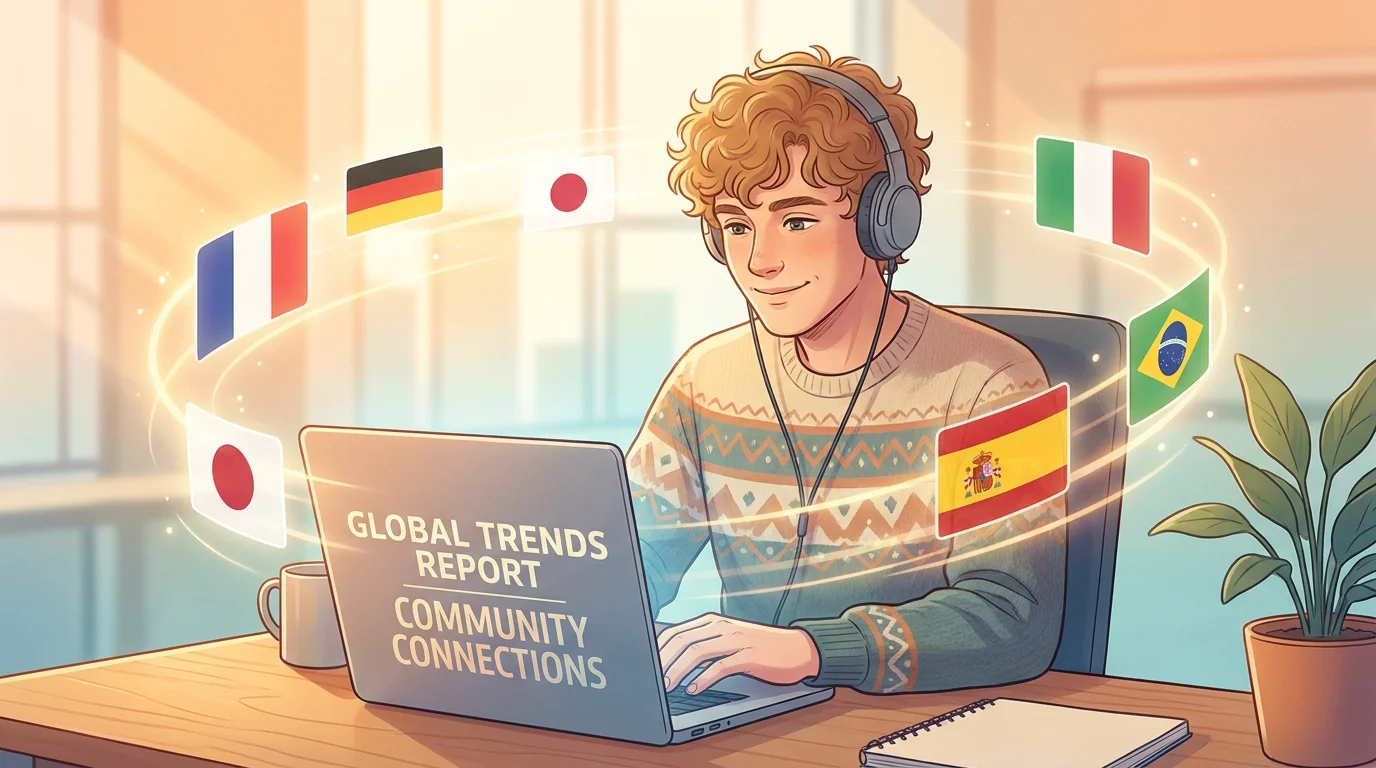
Group flags by color patterns. Many African flags use green, yellow, and red (pan-African colors). Scandinavian flags share the offset cross design. Middle Eastern flags often feature green, white, black, and red. Sorting by visual family helps you narrow down regions fast.
Focus on unique elements. Nepal is the only non-rectangular flag. Cambodia has Angkor Wat on it. Mozambique's flag features an AK-47. These distinctive details are impossible to forget once you learn them.
Play daily. Spaced repetition is one of the strongest learning tools out there. Playing a quick round every day does more for long-term retention than a marathon study session once a month. The flag guessing game is built around this principle.
Start with continents you know, then expand. If you've got European flags down, move to South America. Then Asia. Then Oceania. Building from a base of confidence keeps you motivated.
Flag Games for the Classroom: A Teacher's Secret Weapon
If you're an educator, flag quizzes are one of the easiest ways to gamify your geography lessons. You don't need fancy software or a training session to get started.
According to ClassPoint's 2026 EdTech trends report, gamification is a proven way to get students wanting to learn, and in 2026, game mechanics are baked into everyday learning with solid results. One study found that adding challenges and rewards boosted homework completion from 18.5% to 56.25%.
Flag games are especially useful because they're visual, quick, and competitive in a healthy way. You can run a five-minute flag quiz at the start of class to warm up brains, or assign daily challenges as low-stakes homework. The countries flag quiz we offer works well for this: it's free, requires no account, and covers all 195 countries.
Beyond Flags: Expanding Your Geography Game
Once you've got flags locked down, the natural next step is branching out. Capitals, country shapes, currencies, languages, neighboring countries, GDP rankings: geography is a massive playground.
That's actually one of the things we had in mind when building Flagdle. The daily challenge doesn't stop at flags. It includes mini games tied to coat of arms, capital cities, borders, and more. It's a full geography workout wrapped in a simple, addictive format.
The growth of the game-based learning market reflects the convergence of research evidence, institutional adoption, and technological capability, and market data from 2025 and 2026 shows that game-based learning has moved well beyond early adoption into mainstream deployment. Flag games are a perfect entry point into that world.
Whether you're a student, a trivia night regular, or just someone who wants to be the person who actually knows what the flag of Bhutan looks like, games about country flags are one of the most rewarding (and free) ways to level up your world knowledge. The research is clear: play beats study when it comes to retention. And with the game-based learning market projected to surpass $26 billion in 2026, you're in very good company.
We built Flagdle around exactly this idea: a daily flag challenge that's free, progressive, and genuinely educational. Try our daily flag challenge and see how many countries you can identify today.
Frequently Asked Questions
How many country flags are there in the world?
There are 195 recognized sovereign nations, each with its own flag. Some quizzes also include territories and dependencies, which can push the total past 250. Flagdle covers all 195 countries, so you won't miss any of the major ones.
Can playing a flag quiz really help me learn geography?
Yes. Active recall through quiz formats is one of the most effective learning strategies according to cognitive science research. Playing regularly beats passive study for long-term retention, especially when a game uses spaced repetition and progressive hints.
What's the hardest country flag to identify?
Flags that look nearly identical trip up most players. Indonesia and Monaco, Chad and Romania, and Ireland and Ivory Coast are classic stumbling blocks. Flags from smaller Pacific island nations (like Tuvalu or Nauru) also tend to be tough because they're less commonly seen.