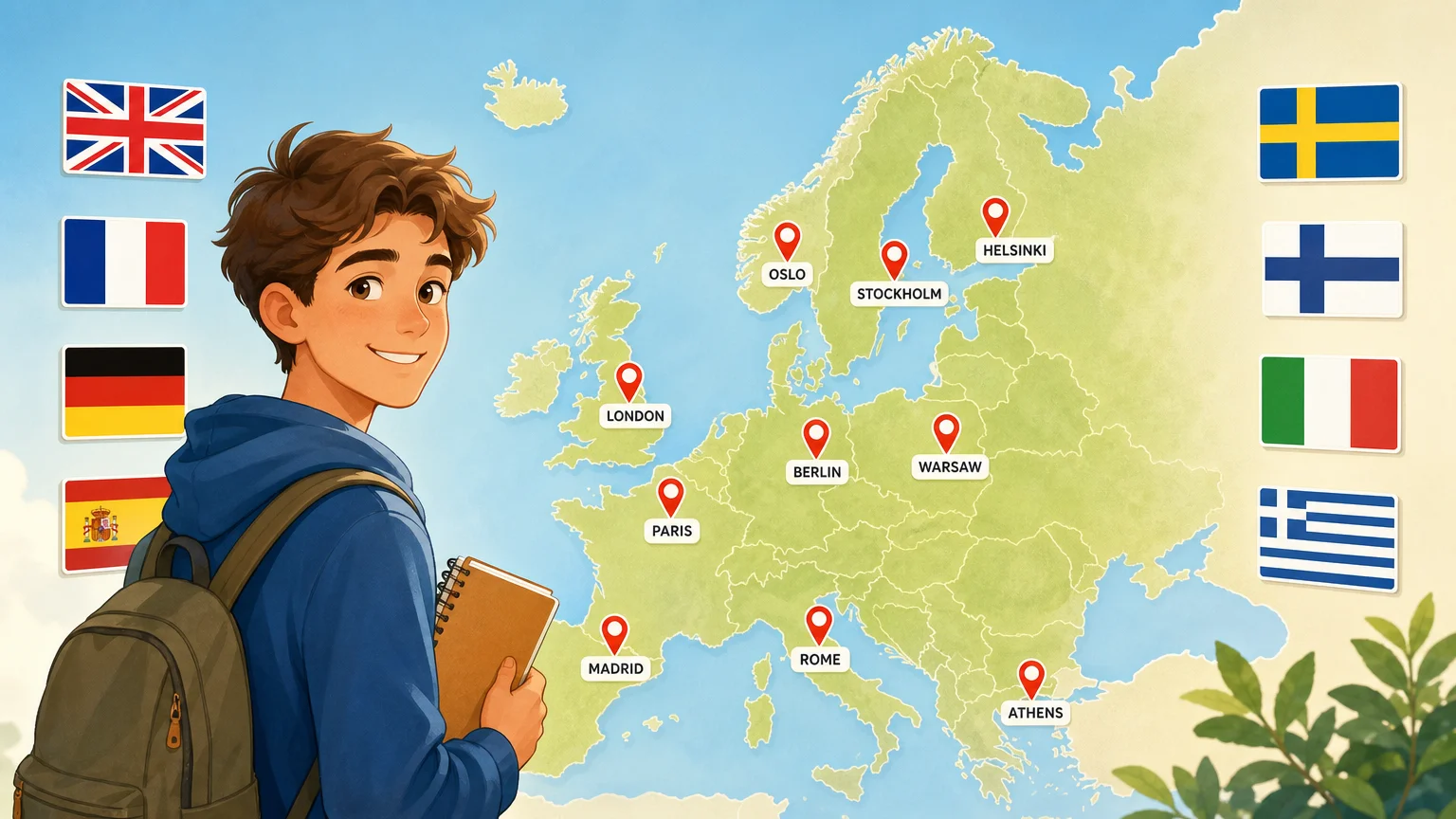
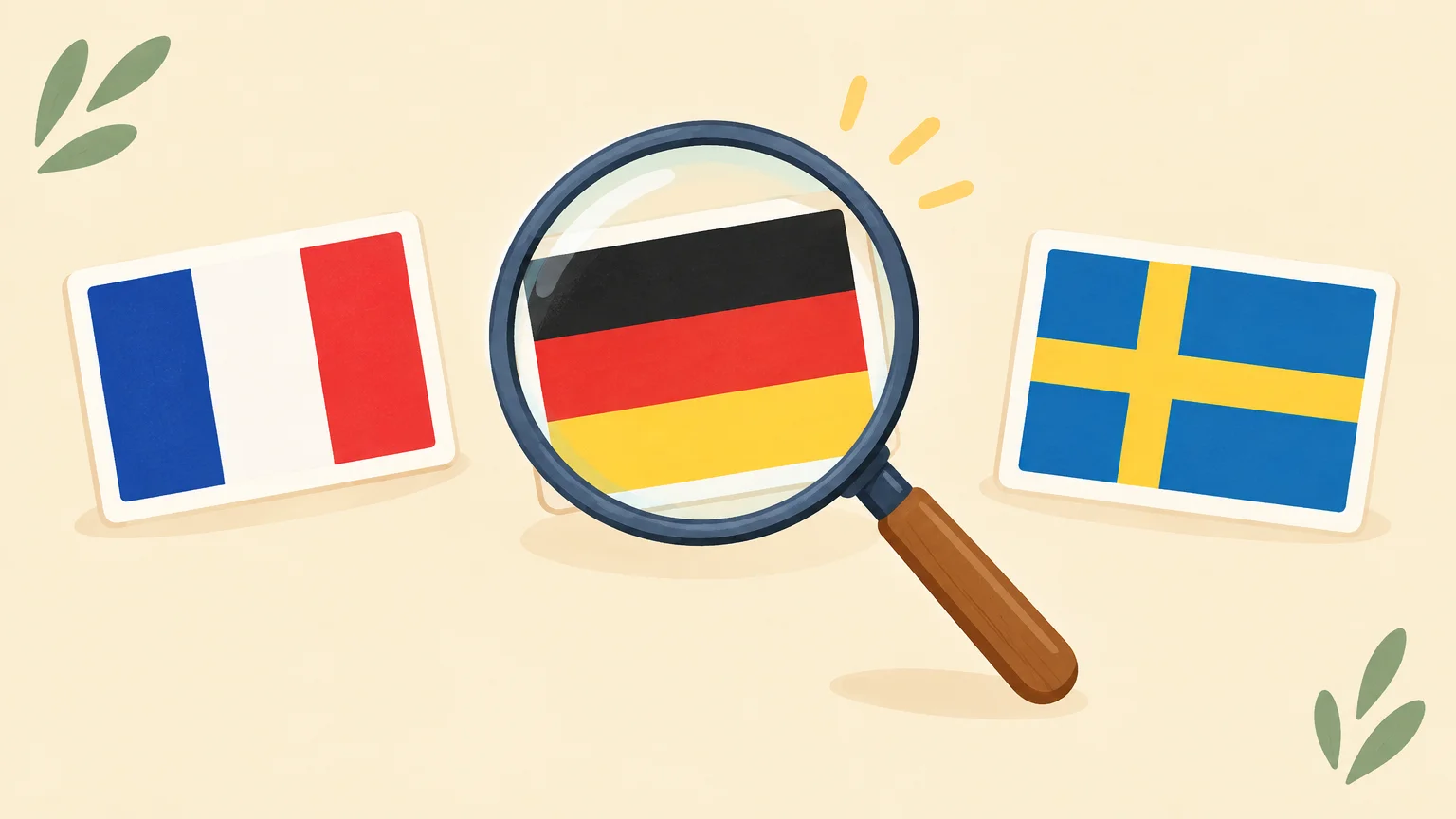

A European flags quiz turns map knowledge into a visual challenge: you see a design and name the country before a clue or answer gives it away. If you want a quick flag-and-capital reference alongside practice, our European capitals and flags page connects each country with those two key facts. Start by noticing colors, bands, crosses, and emblems instead of guessing from one detail.
One catch: “Europe” doesn’t always mean the same quiz set. A round might focus on EU member countries, use a broader definition of European countries, or include territories and constituent countries. Check the rules, and note whether questions ask for national flags, regional flags, or institutional symbols. That makes your score easier to interpret.
What does a European flags quiz include?
Start by checking the quiz’s scope. Some quizzes use national flags of sovereign countries; others add dependent territories or constituent countries. An EU-focused quiz is a different test from one covering a broader set of places associated with Europe.
If the instructions don’t explain what’s included, treat your score as practice rather than a complete measure of European flag knowledge. Pay attention to whether territories have their own entries and whether the quiz includes symbols used by institutions. Those details explain why two quizzes with similar names may test different sets.
How do you tell a country flag from Europe’s shared flag?
A blue field with a circle of 12 gold stars is not the national flag of one country. The EU’s official flag guide explains that the emblem represents the EU and, more broadly, European unity. Its 12 stars don’t indicate the number of EU member countries.
Keep that distinction in mind when a quiz shows the blue-and-gold design. It may be asking about an institutional symbol rather than a country. Look at the wording of the question before choosing a national flag as your answer.
How can you recognize flags through visual patterns?
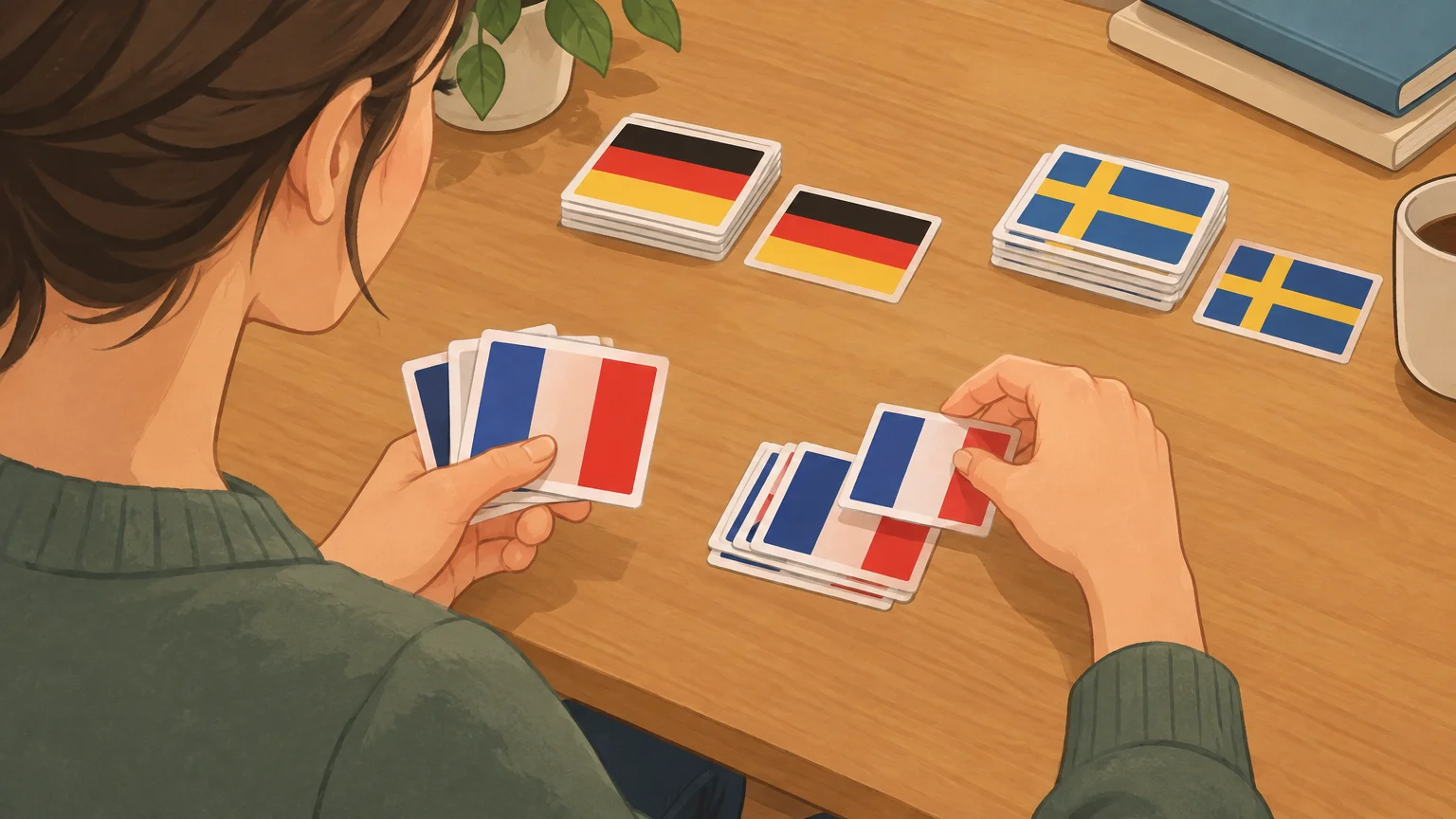
Look for the broad design first, then narrow your guess. Is the flag divided into horizontal or vertical bands? Does it have a cross, a central emblem, or a coat of arms near the hoist? Grouping flags this way helps you recall a design instead of relying on a vague memory of its colors.
For example, Russia, Slovakia, and Slovenia share a white, blue, and red stripe order, but the latter two also feature a coat of arms. Nordic cross flags share a broad motif, so color and placement help distinguish them. For a different kind of clue, the official design specification for the European emblem sets the 12 gold stars at equal intervals, upright, in a circle. Notice the arrangement, not just the star count.
What practice routine builds reliable recall?
Try a short routine that moves from observation to memory. If you look up every answer immediately, you’ll recognize the flags on the page without testing whether you can recall them later.
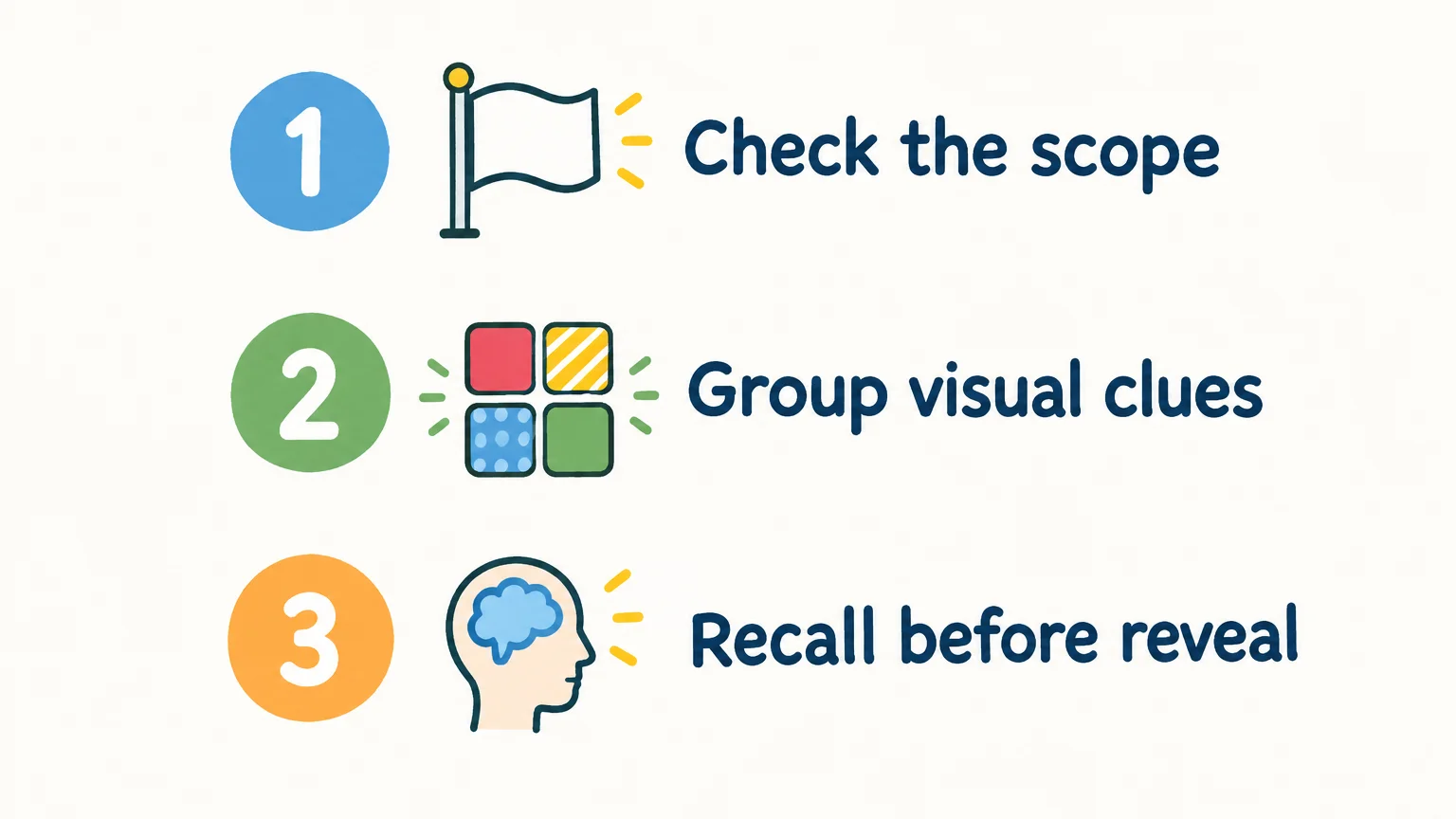
- Check the scope. Note whether the quiz covers countries, territories, or both.
- Group the designs. Sort examples by stripes, crosses, colors, or emblems.
- Recall before revealing. Name the flag from memory before checking choices or clues.
- Review misses. Write down the feature you confused, then test yourself again later.
For progressive practice, our Flags mode reveals more of a hidden flag after an incorrect guess, and replay provides additional random-flag practice after daily play. It covers flags from around the world, not a Europe-only set. Our flags of the world quiz article also shares ways to practise and learn beyond one region.
How should you choose the quiz format?
Choose a format that matches what you want to practise. An untimed study mode gives you room to inspect details, while a recall test asks you to retrieve the country name without help. Multiple-choice options can be useful early on, but try naming the flag before looking at the answers.
Check whether the answer key separates country flags from institutional and regional symbols. The Council of Europe selected the blue-and-gold design in 1955, and European institutions later adopted the same flag. That history is a useful reminder that a shared European emblem isn’t the flag of a single country. For practice beyond Europe, our countries flag quiz article focuses on testing your knowledge of flags worldwide.
Make every flag easier to remember
Good practice starts with clear scope: check what the quiz includes, separate national flags from shared symbols, and learn designs by their colors, layout, and emblems. Then test yourself without clues and revisit the flags you mix up. This simple routine makes European flag recognition more accurate and helps you understand what your score actually measures.
Put your flag knowledge to the test
Once you know whether a quiz includes only national flags or also territories and institutional symbols, each round becomes more useful. If visual recall is your weak point, short, repeated practice gives you a chance to review the designs you missed.

Open European flags to start region-focused practice. Our browser-based Flags mode progressively reveals a hidden country flag as you guess, and replay offers random flag practice after daily play. The game covers countries worldwide, so it’s broader than a Europe-only set. You can play for free in your browser without creating an account.
Frequently Asked Questions
Is the European flag the same as a country’s flag?
No. The blue flag with gold stars is a shared European emblem, not the national flag of one country. Check whether a question asks for a country flag or an institutional symbol.
Does every European flags quiz cover the same places?
No. Some quizzes focus on EU member countries, while others use a broader European scope or include territories. Check the quiz instructions before comparing scores.
How can you tell similar European flags apart?
Look beyond shared colors and compare stripe order, emblems, and symbol placement. For example, Russia, Slovakia, and Slovenia share a white, blue, and red stripe order, but the latter two have coats of arms.
What’s a simple way to memorize European country flags?
Group flags by patterns such as stripes, crosses, and emblems, then try naming each one before checking the answer. Review the designs you missed after a short break.
Can Flagdle help you practise European flags?
Our Flags mode offers progressive flag identification and random replay, but it covers countries worldwide rather than providing a Europe-only set. You can play in your browser without an account.