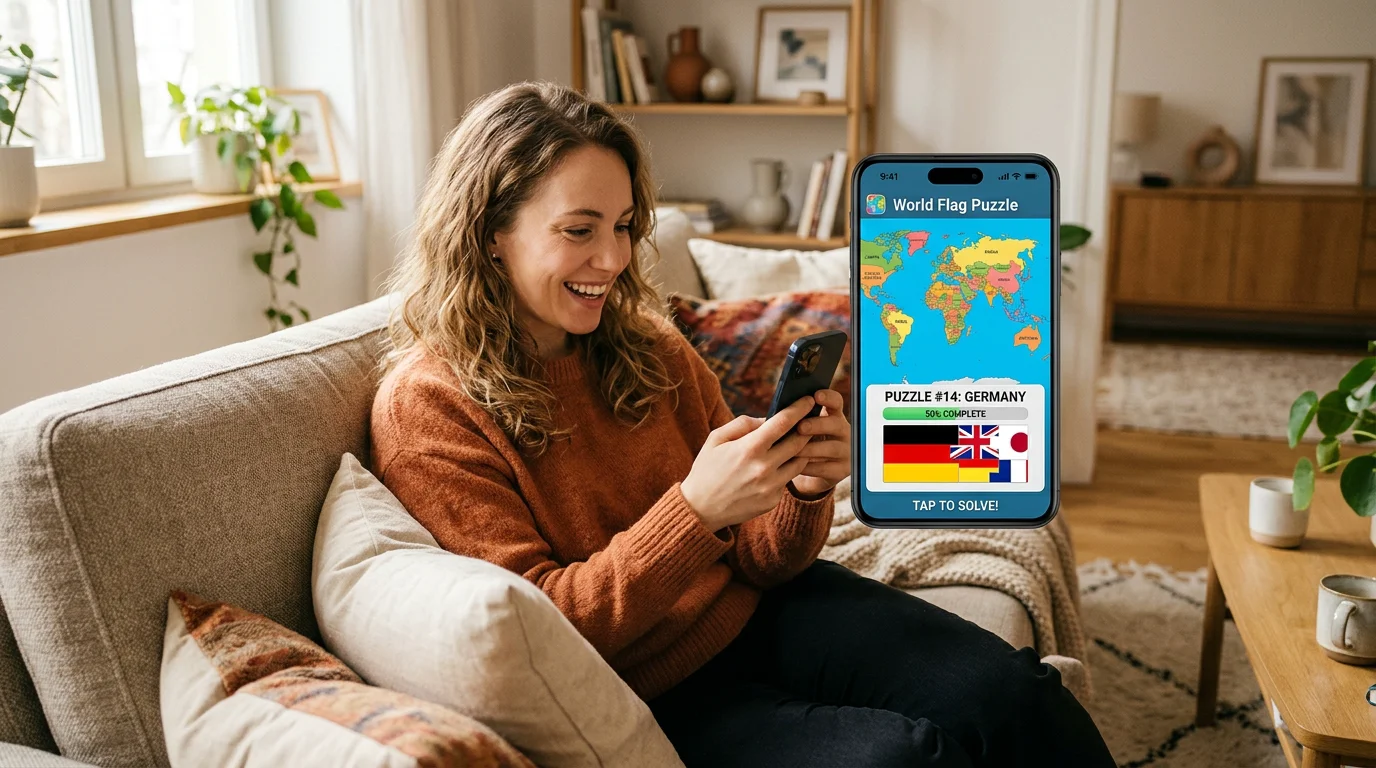
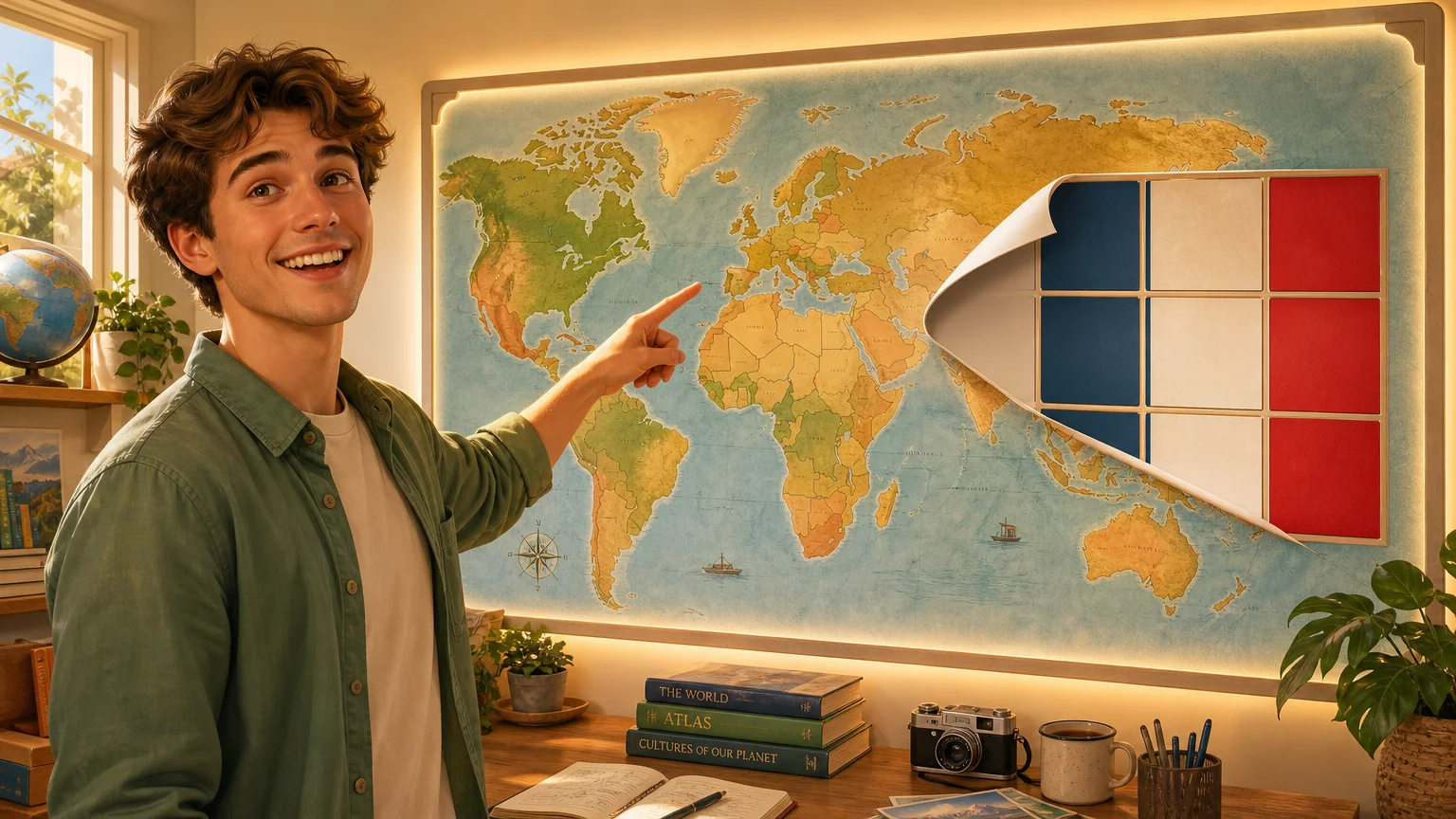

Picture this: a masked flag, three guesses, and players all over the planet chasing the same answer at the same time. That's the whole appeal of a good geography game where you guess the country from a single clue. If you enjoy maps with a competitive edge, Mapdle: The Map Guessing Game shows just how fast a daily ritual can hook you. Millions of people now open their morning with one country to identify.
These bite-sized puzzles took off after Wordle, and the numbers back it up. The global mobile puzzle market, the category these games live in, was valued at about $6.1 billion in 2025, and analysts expect it to keep climbing through 2033. Geography spin-offs grabbed a big slice of that wave, and they're not slowing down.
Why a country-guessing puzzle is so hard to put down
If you've ever typed "geography game guess the country" into a search bar, you already know the itch. One puzzle, once a day, same answer for everyone. That scarcity is the secret. You can't binge fifty rounds, so each attempt feels like it matters.
The format borrows Wordle's loop: guess, get feedback, guess smarter. Every wrong answer teaches you something, whether it's a distance arrow, a warmer color, or a revealed flag tile. That tiny hit of progress keeps you coming back. Want the full breakdown of the mechanics? Our guide on How to Play the Country-Guessing Game walks through it step by step.
How the game actually works
The core idea is simple. You get a clue, you type a country, and the game tells you how close you got. From there, the details change depending on which version you're playing.
- Masked flags: a flag hidden behind tiles that peel away with each try.
- Country silhouettes: just the outline, no labels, no scale.
- Proximity hints: a globe that runs hot or cold as you guess.
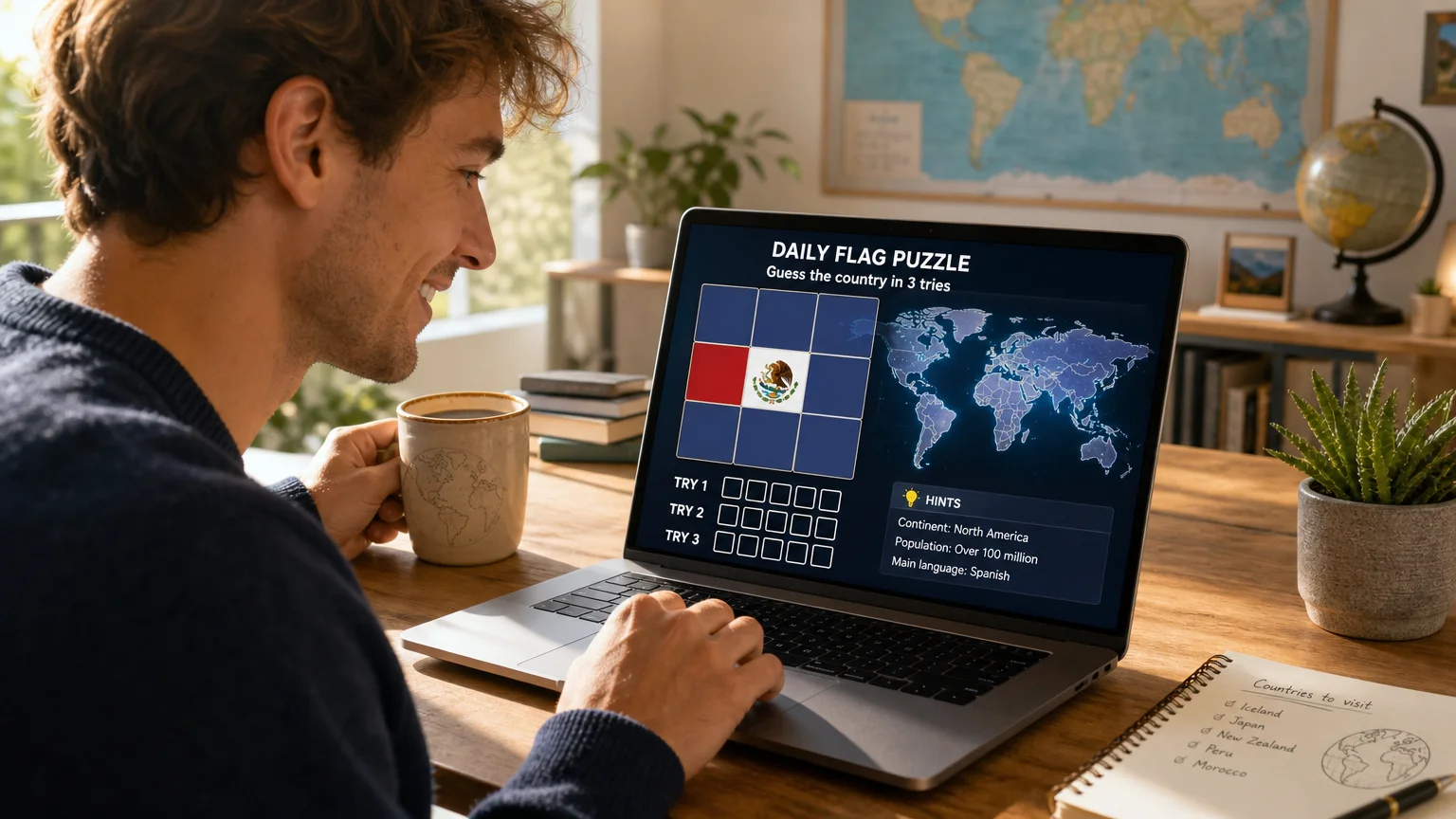
- Progressive clues: continent, population, or language nudges.
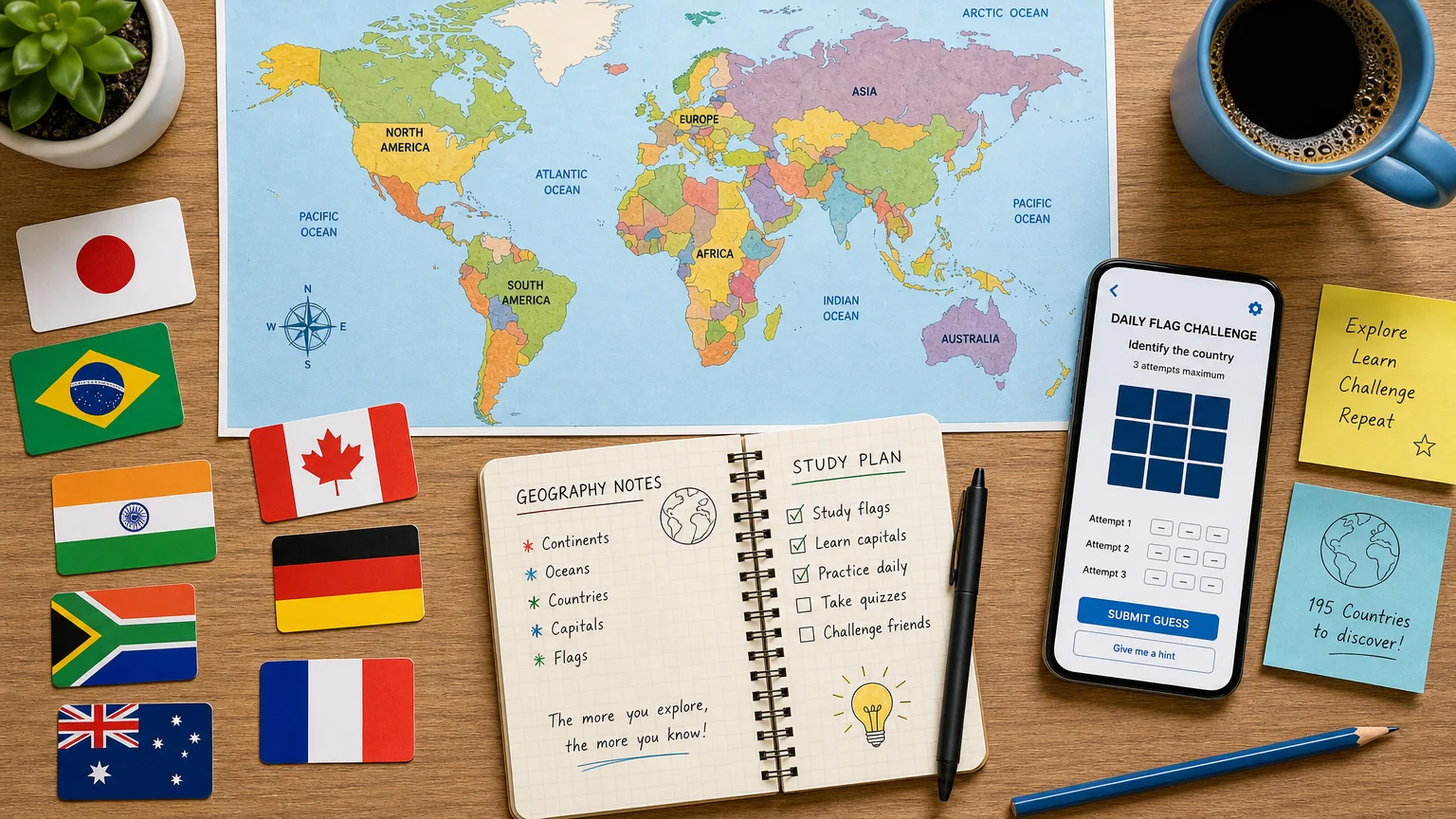
Our own spin uses a masked flag split into nine tiles, and you get three tries to nail it. The flag of the day is the same for everyone worldwide, which makes score comparisons fair and fun.
The main flavors, compared
Not every country-guessing puzzle plays the same way. Some hand you a shape, some a globe, some a flag. Here's how the popular formats stack up, with our approach included so you can see the differences at a glance.
| Format | What you guess from | Attempts | Coverage |
|---|---|---|---|
| Flagdle (ours) | Masked flag (9 tiles), plus capitals, silhouette and clue modes | 3 tries | 195 UN countries |
| Silhouette game | Country outline with distance and direction | 6 tries | Countries and territories |
| Proximity game | Globe with hot/cold color hints | Unlimited | Countries worldwide |
The silhouette format has a long track record. One of the best-known versions reportedly reached a million users back in early 2022, after pulling 10,000 players within ten days of launch. That proved a huge appetite for map-based daily puzzles, and the genre has splintered into dozens of styles since.
A sneaky-good way to learn geography
Here's the part that surprises people. You sit down for a two-minute puzzle and walk away actually remembering flags and capitals. Repetition does the heavy lifting, and it doesn't feel like homework.
That's why teachers love these games as a five-minute classroom warm-up, and why the audience is genuinely massive. One proximity-based version alone is played by nearly 200,000 people each day. When a puzzle sticks like that, the learning sticks too. If you want to build the habit, playing Guess the Country Daily is an easy on-ramp.
Tips to guess the country faster
Good players aren't just lucky. They use their guesses like a detective narrows down suspects. A few habits go a long way.
- Start broad. Your first guess should test a whole region, not a hunch.
- Read every clue. A distance arrow or a warmer color eliminates half the map.
- Learn distinctive shapes. Boot-shaped Italy or island chains are instant giveaways.
- Don't forget the small ones. Tiny countries are the most overlooked answers.
- Play regularly. Familiarity with the map beats any single trick.
If you want a structured way to drill flags, capitals, and locations together, our roundup of Country Games: Learn Flags, Capitals and Geography Fast pulls the modes into one place.
Turning it into a daily habit
The magic of these puzzles is the streak. A new challenge drops at midnight in your local time zone, and beating yesterday's score becomes a small daily win. Share your grid, compare with friends, and suddenly a solo game turns social.
That's the loop that keeps the genre thriving in 2026. Short sessions, real learning, and a leaderboard that gives you a reason to return tomorrow. No account, no downloads, just a browser tab and a couple of minutes.
The bottom line
A geography game where you guess the country is one of the rare free habits that entertains and educates at the same time. Pick a format that fits your brain, silhouettes, flags, or proximity hints, and play it daily. The scores climb, the map sticks in your memory, and two minutes a day quietly turns you into the person who actually knows where everything is.
Take action with Flagdle
Ready to stop reading about it and start guessing? If you want a quick, fair, everyone-plays-the-same-puzzle challenge, we built exactly that. One flag, nine tiles, three tries, and the whole world chasing the same answer as you.
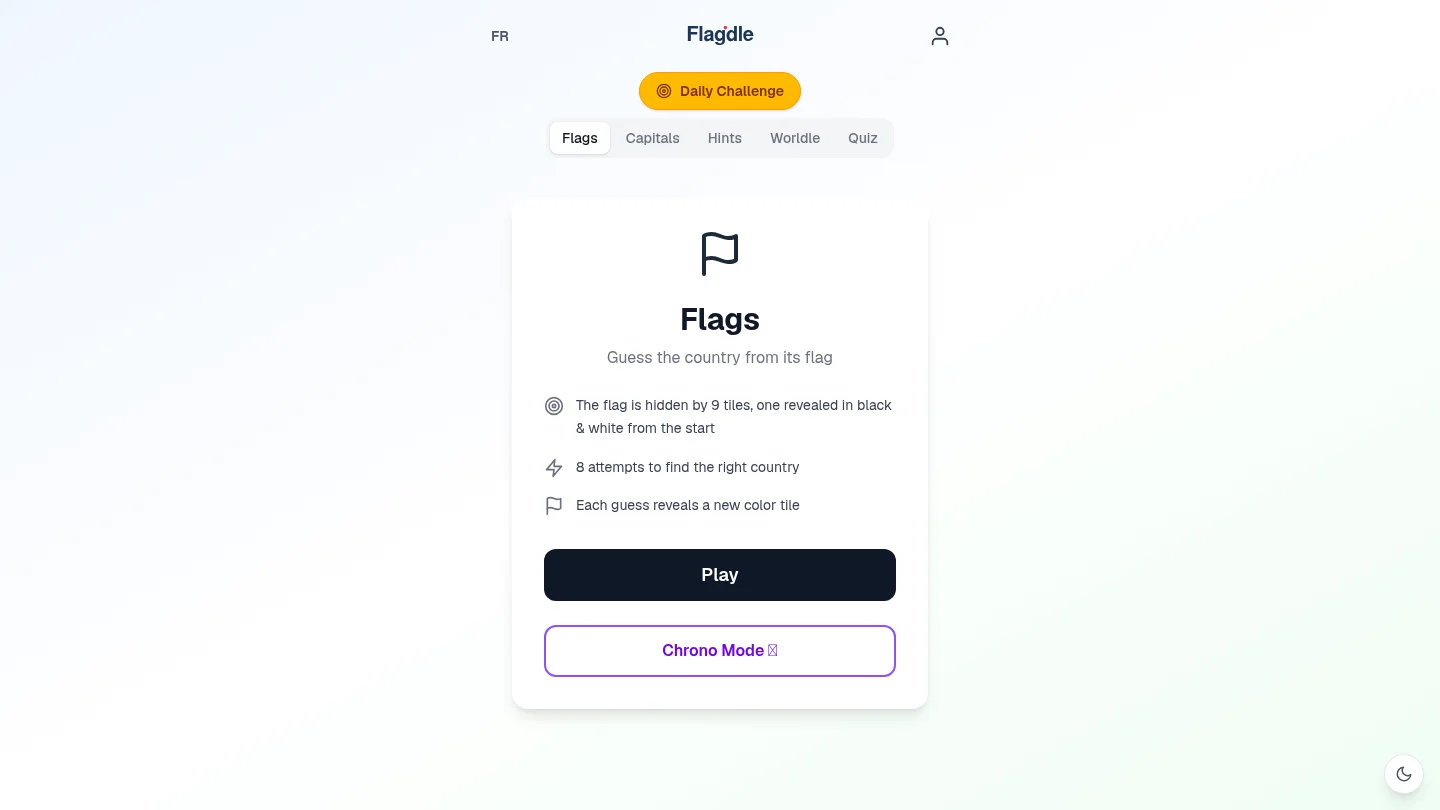
Jump into our free daily flag guessing game and test yourself across the 195 UN countries. There are extra modes for capitals, progressive clues, silhouettes, and a daily challenge that feeds the leaderboard. It's free, needs no account, and your stats stay on your device. Come back tomorrow for a fresh flag and beat your streak.
Frequently Asked Questions
Is a country-guessing geography game free to play?
Most of the popular ones are completely free in your browser. Our version, for example, is free with no account and no intrusive ads. You just open the page and start guessing.
How many tries do I usually get?
It depends on the format. Silhouette games often give six attempts, proximity globes allow unlimited guesses, and our masked-flag mode gives you three tries. Fewer attempts make each guess feel higher stakes.
Can these games actually help me learn geography?
Yes, and that's the whole point. Daily repetition drills flags, capitals, and locations into memory without feeling like study. Teachers often use them as a quick five-minute classroom warm-up.
Why does everyone get the same puzzle each day?
The single daily answer is a deliberate design choice borrowed from Wordle. It creates scarcity, so the puzzle feels special, and it lets you compare scores fairly with friends around the world.
Do I need to download an app to play?
No. These games run entirely in your web browser on desktop or phone. You can add a shortcut to your home screen if you want faster access, but no installation is required.