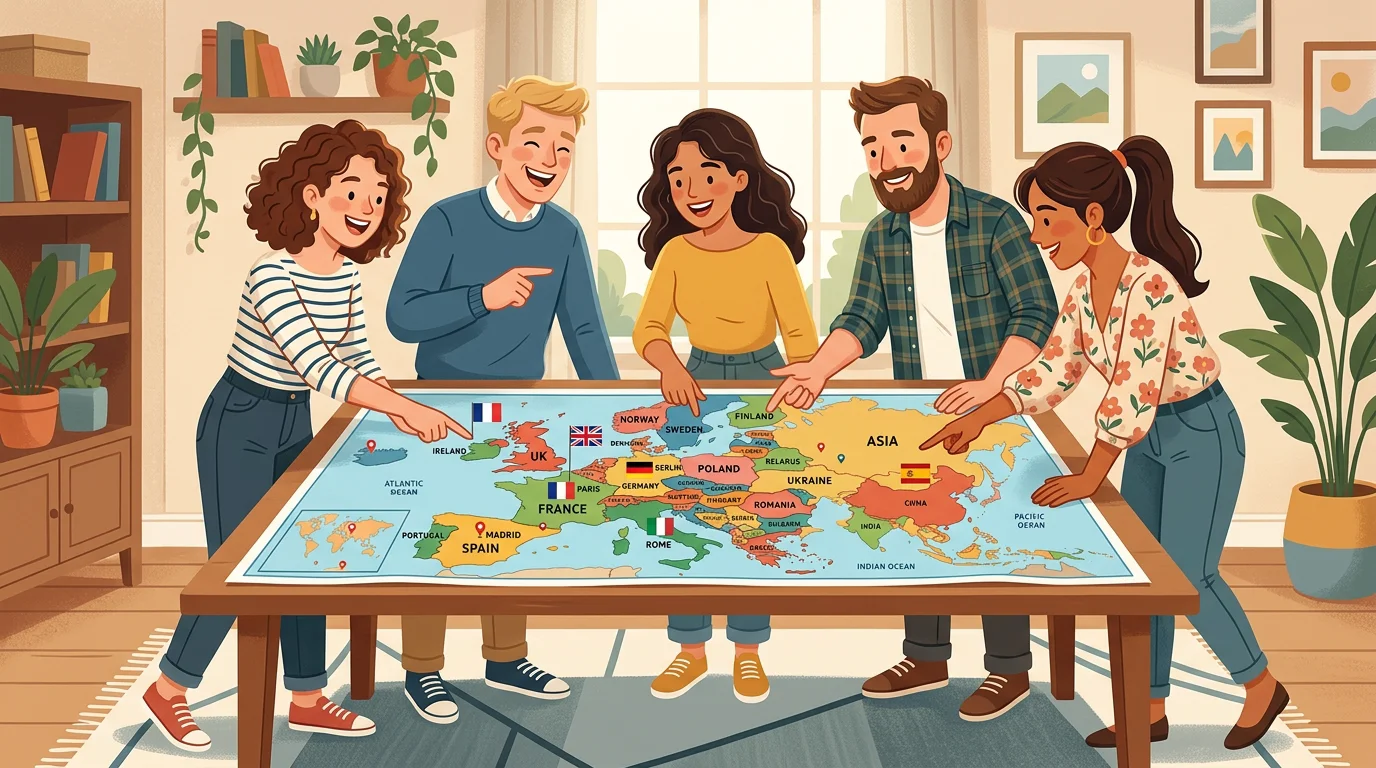
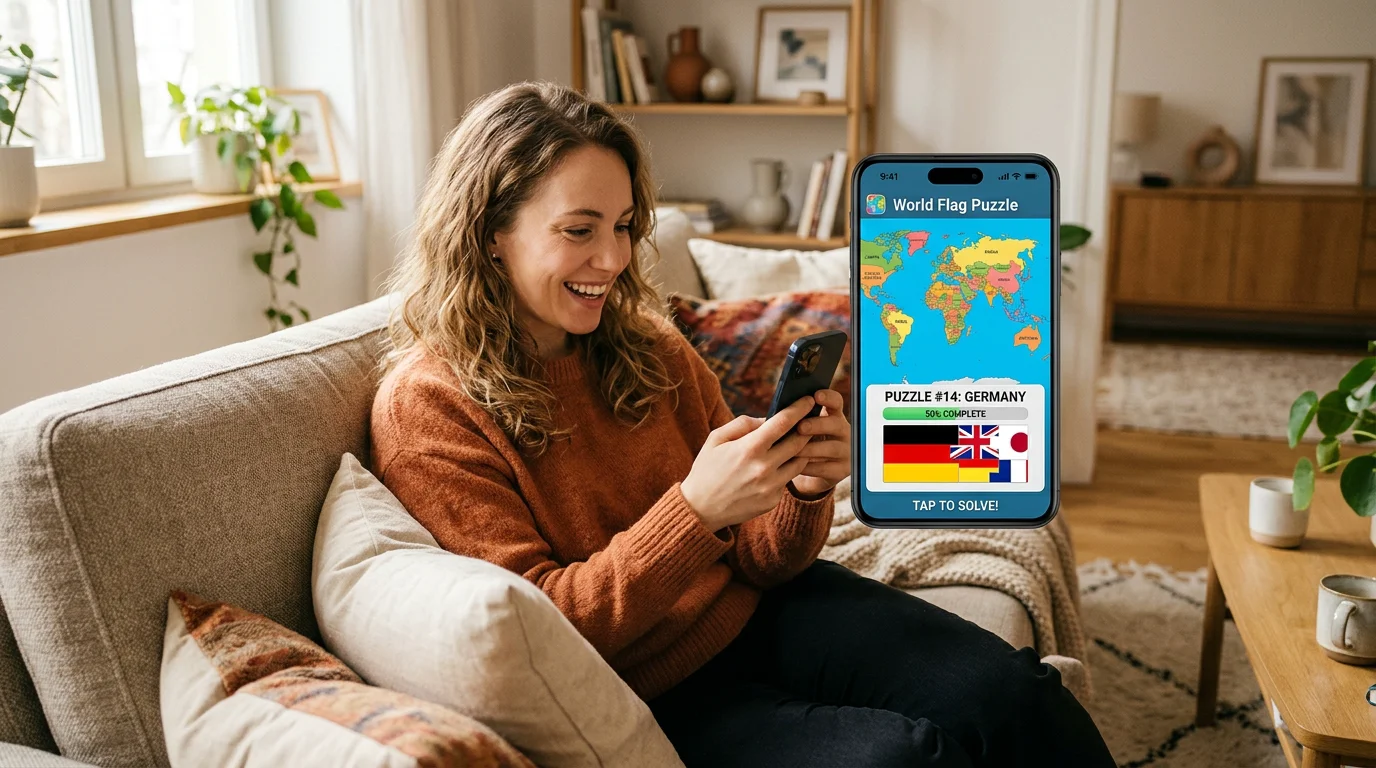

Ever stared at a half-covered flag and felt weirdly determined to name the country before your third guess runs out? You're not alone. A single Wordle spin-off proved just how contagious that itch is, and the appeal of a game where you guess the country is easy to understand. If you want a structured way to start, our guide to guessing a country walks through flags, shapes, and capitals in one place.
These puzzles blew up because they're short, shareable, and secretly educational. One geography spin-off of Wordle reportedly hit one million users not long after launch, proving people love testing their world knowledge in bite-sized daily doses. Below, we'll break down how these country identification games work, the main formats, and how to actually get good at them.
Why a country-guessing game hooks you so fast
The formula is simple on purpose. You get one puzzle a day, a handful of guesses, and instant feedback. That scarcity is the whole trick: play once, share your colored squares, and come back tomorrow. The same geography puzzle that reached a million players started with just 10,000 curious testers in its first week and a half, then snowballed through group chats.
There's a learning payoff too. Every wrong guess teaches you something, whether it's a distance clue, a direction arrow, or another slice of a hidden flag. You're basically studying world geography without noticing. That mix of low stakes and steady progress is why teachers use these as a five-minute classroom warm-up, and why travelers use them to prep for trips.
The main types of games where you guess a country
Not every country-guessing game plays the same way. The clue you start with completely changes the challenge. Here are the formats you'll bump into most:
- Flag-guessing games: a national flag sits behind tiles or blur, and each wrong answer reveals more of it.
- Silhouette games: you get a country's outline and use shape, distance, and direction to close in.
- Capital-city games: you're handed a capital and have to name the matching nation.
- Progressive-clue games: hints like continent, population, or language drip out until you crack it.
Flag formats are the easiest entry point because national flags are so visually distinct. If you want to train that skill specifically, our guess-the-country game guide covers how to read colors, symbols, and layouts fast. Shape-based play is a different muscle entirely, and our shape-guessing mode is built around recognizing outlines like Italy's boot or Chile's long ribbon.
Popularity varies wildly by format. One widely shared geography directory notes that a globe-based proximity game is played by nearly 200,000 people daily, showing there's a big appetite well beyond flags alone. The takeaway: pick the clue type that keeps you coming back.
How to win faster and guess the country in fewer tries
Want to stop burning all your guesses? Strategy matters more than raw memorization. A few habits that pay off immediately:
- Start broad. Your first guess should confirm the continent, not win the round. Distance and direction clues do the narrowing.
- Read the shape's quirks. Coastlines, island chains, and odd panhandles are dead giveaways for specific countries.
- Don't forget small nations. Tiny territories are easy to overlook and are exactly where people waste guesses.
- Use progressive hints wisely. Language or population clues can eliminate half the map in one move.
Consistency beats cramming. The daily-puzzle format exists precisely because spaced, repeated play locks in country names better than a single long study session. The broader daily-puzzle scene keeps expanding too; one 2026 industry roundup tracked strong year-over-year growth across these titles, with some grid games reporting 500k+ daily users. Regular reps are what turn a lucky guess into an instant recognition.
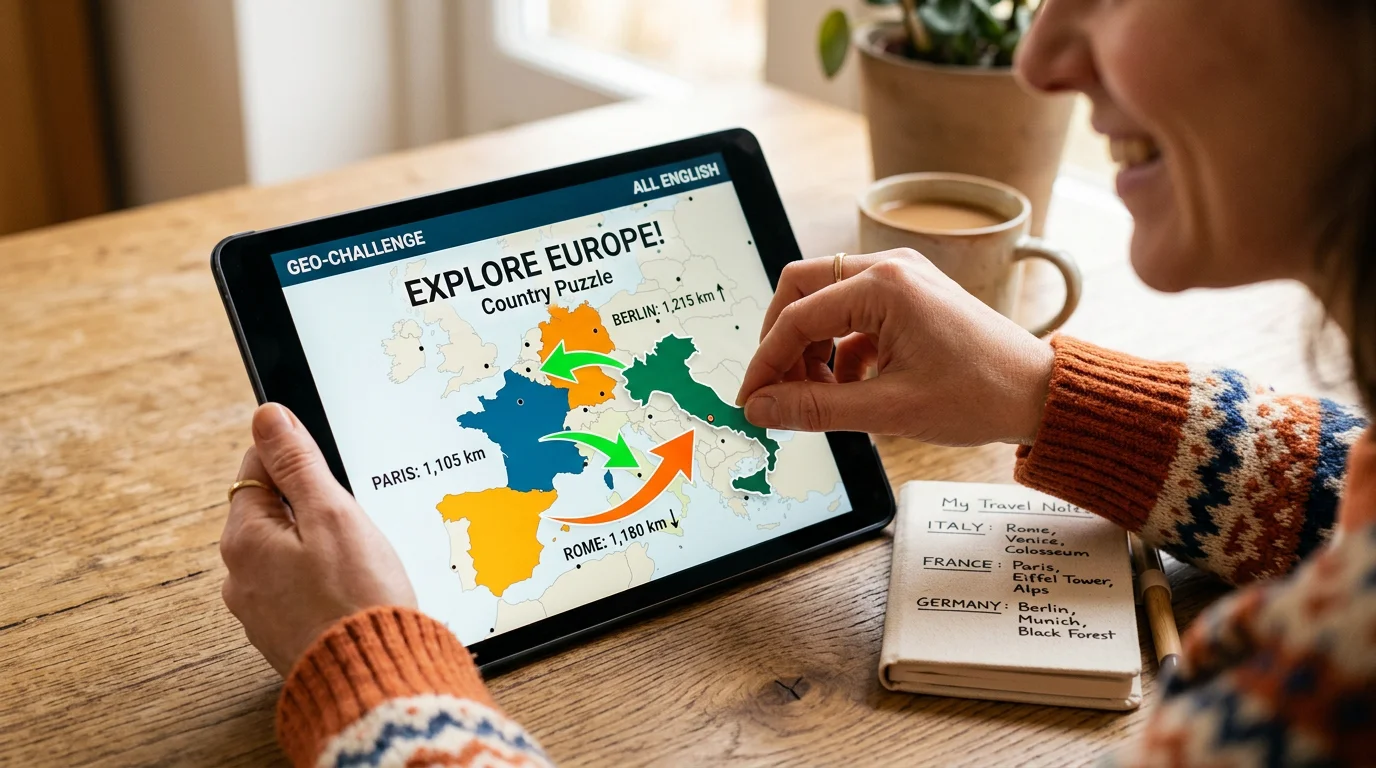
Comparing popular country-guessing formats
Different games trade off difficulty, clue style, and learning value. Here's how the common approaches stack up, including how we're set up at Flagdle:
| Game format | Main clue | Tries | Best for |
|---|---|---|---|
| Flagdle (ours) | Hidden flag (9 tiles) plus capitals, silhouette, and progressive-clue modes | 3 | Learning flags and capitals daily, comparing scores |
| Silhouette style | Country outline with distance and direction | 6 | Shape recognition |
| Globe proximity style | Hot/cold distance on a 3D globe | Unlimited | Relative location |
| Capital style | Capital city name | Varies | Capital-to-country recall |
The advantage of a multi-mode setup is you're not stuck with one clue type. Some days you want the quick flag hit; other days you want silhouettes or a full daily challenge. If you like the map-based angle, our map guessing game adds another way to explore a new country each day.
The bottom line before your next daily puzzle
A good game where you guess a country hits the sweet spot between quick fun and genuine learning. Start broad, lean on the clue that suits your brain, whether that's a flag, a shape, or a capital, and play a little every day rather than in one marathon. Do that, and those third-guess panics turn into first-guess wins surprisingly fast, while your mental map of the world quietly fills in.
Take action with Flagdle
Ready to stop reading about it and actually test yourself? If you want a daily habit that builds real geography skills without eating your afternoon, that's exactly what we set out to make.
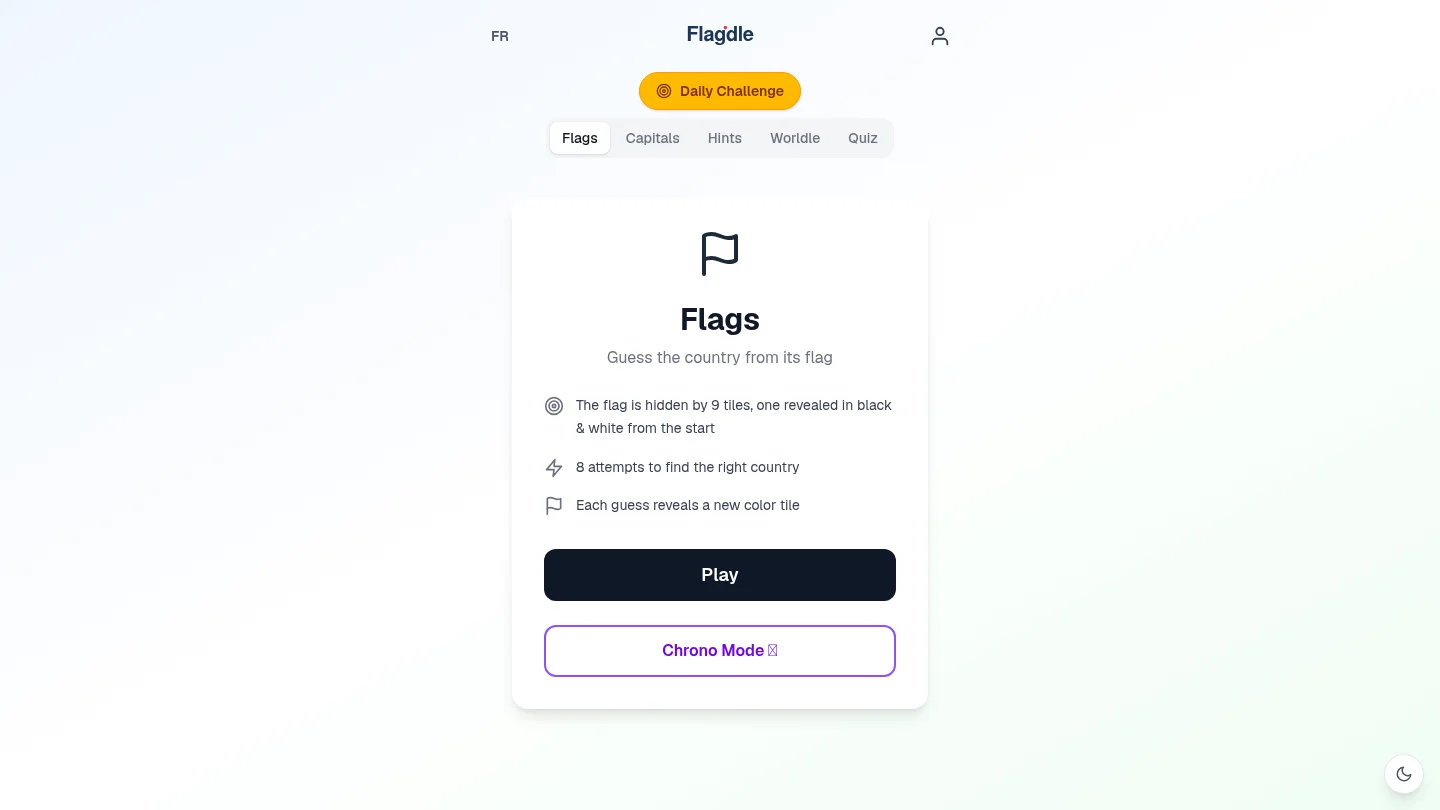
With our daily flag-guessing game, you identify the day's country from a flag masked by nine tiles in three tries, then branch into capitals, progressive clues, silhouettes, and a six-round daily challenge. It's free, needs no account, covers all 195 UN-recognized countries, and the same puzzle is shared worldwide so you can compare scores with friends on daily, weekly, and monthly leaderboards.
Frequently Asked Questions
What is a game where you guess the country called?
These are usually called country-guessing or geography puzzle games, often Wordle-style spin-offs. They ask you to identify a nation from a clue like a flag, an outline, or a capital. Most give you a limited number of tries per day.
Are these country-guessing games free to play?
Many of the most popular ones run free in your browser with no download. At Flagdle, everything is free with no account and no intrusive ads, and your stats stay stored locally on your device.
How many guesses do I usually get?
It depends on the format. Flag-based games often give three tries, while silhouette and globe games typically allow six or more. Fewer tries generally means a harder, snappier challenge.
Can these games actually help me learn geography?
Yes, that's a big part of the appeal. The daily format and instant feedback help you memorize flags, capitals, and country locations over time. Teachers often use them as a five-minute classroom routine.
What's the fastest way to improve at guessing countries?
Play daily and start each round with a broad guess to pin down the continent. Then use distance, direction, and progressive clues to narrow it down. Paying attention to distinctive shapes and small nations also cuts wasted guesses.