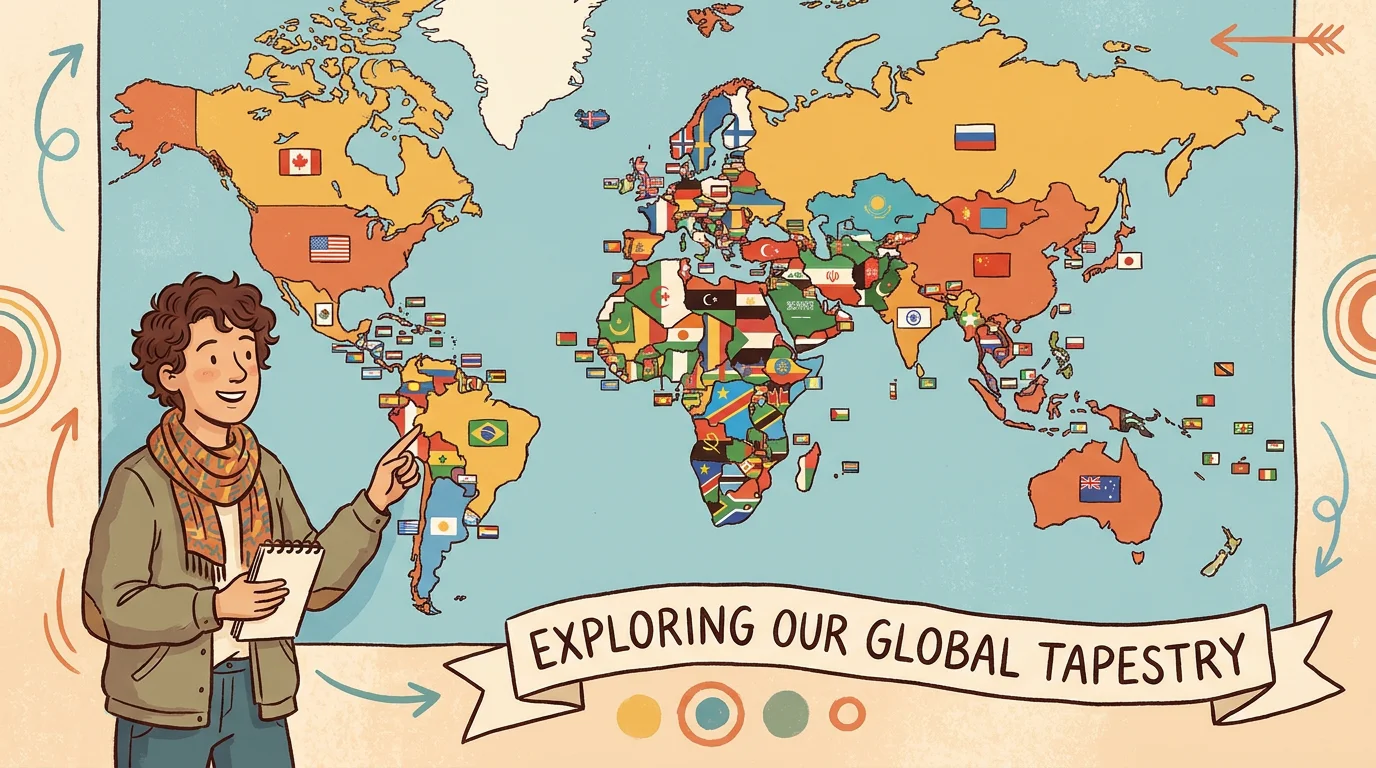

Recognising a country’s flag and locating it on a map are different skills. If you’re deciding between them, our flag games versus map games comparison offers a useful starting point. The best choice depends on what you want to remember, not on which quiz feels harder.
The question is a flags game better than a map quiz has no universal answer. Flag questions practise matching a visual design to a country; map questions practise identifying places and their positions. Both can prompt active recall, but only the task that matches your learning goal gives direct practice in that skill.
What does each game ask you to remember?
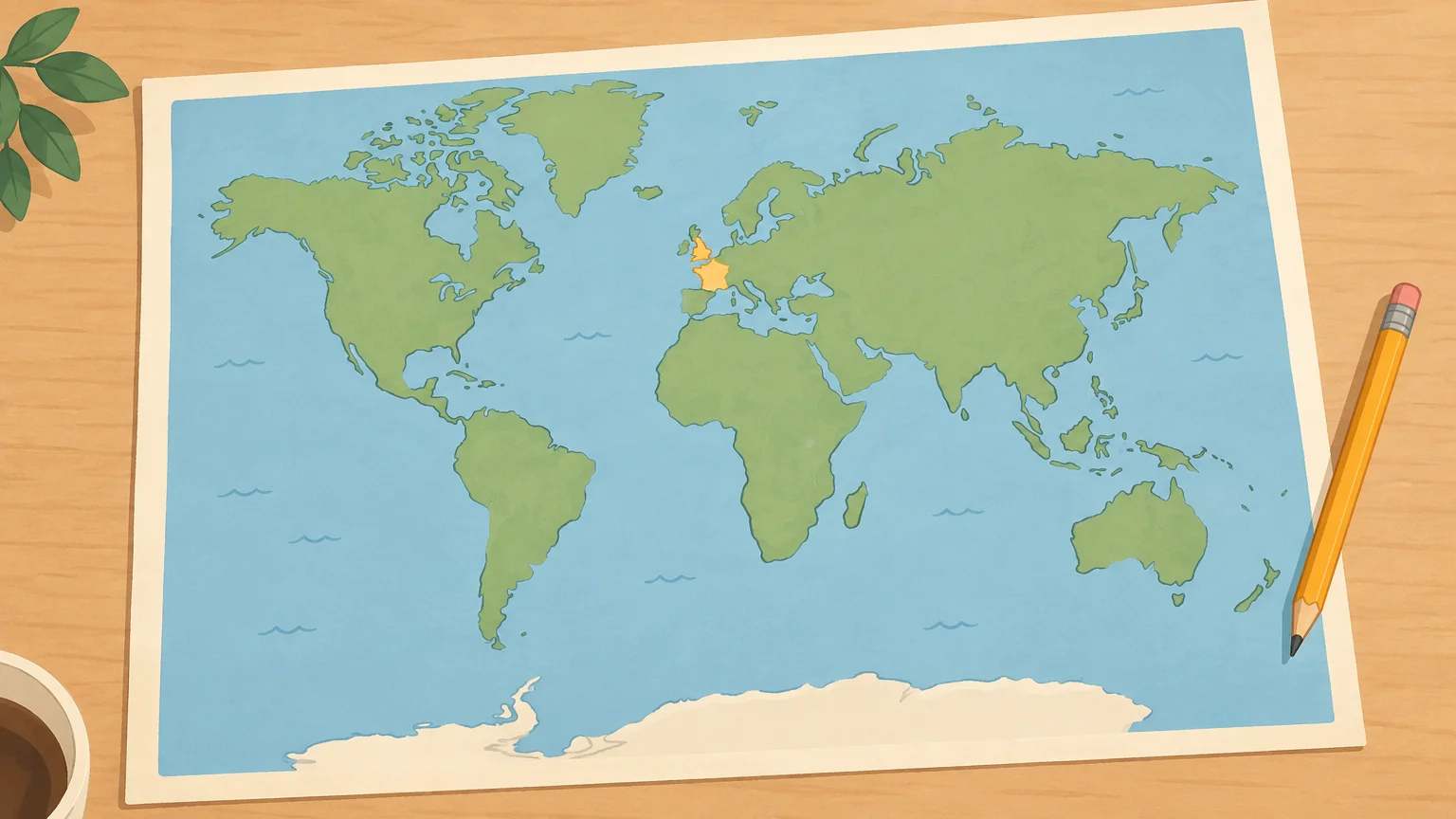
Picture two questions: one shows a flag and asks for the country; the other highlights a country on a blank map and asks you to name it. The first tests flag recognition and the association between a design and a country. The second tests location recall, including where a country sits relative to its neighbors and region.
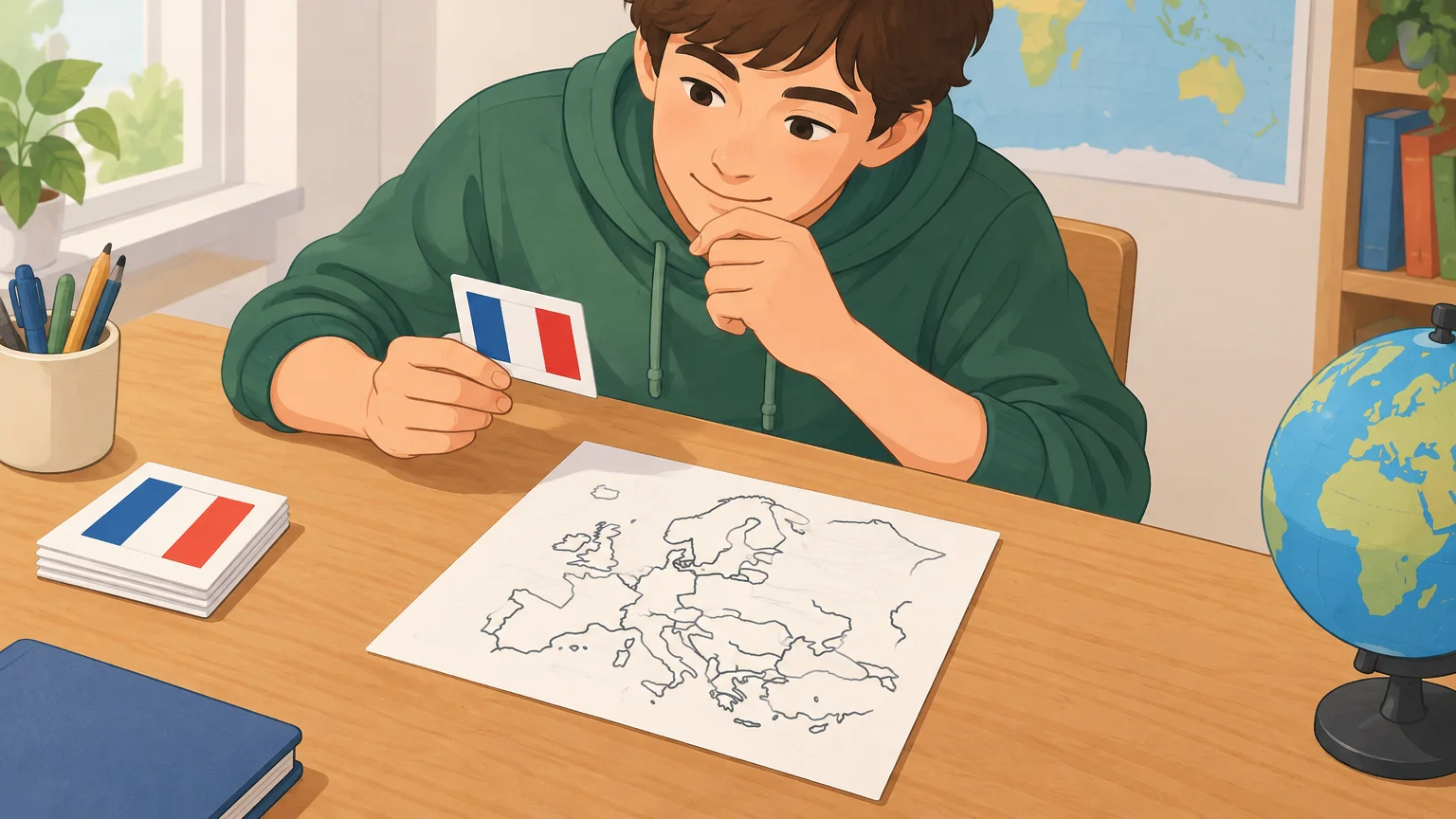
A flag game usually presents a flag as the clue. Depending on its design, you might identify colors, stripes, symbols, or a distinctive shape before recalling the country name. A map quiz instead asks you to connect a country name or place with a location, and some versions ask you to identify capitals, regions, or borders.
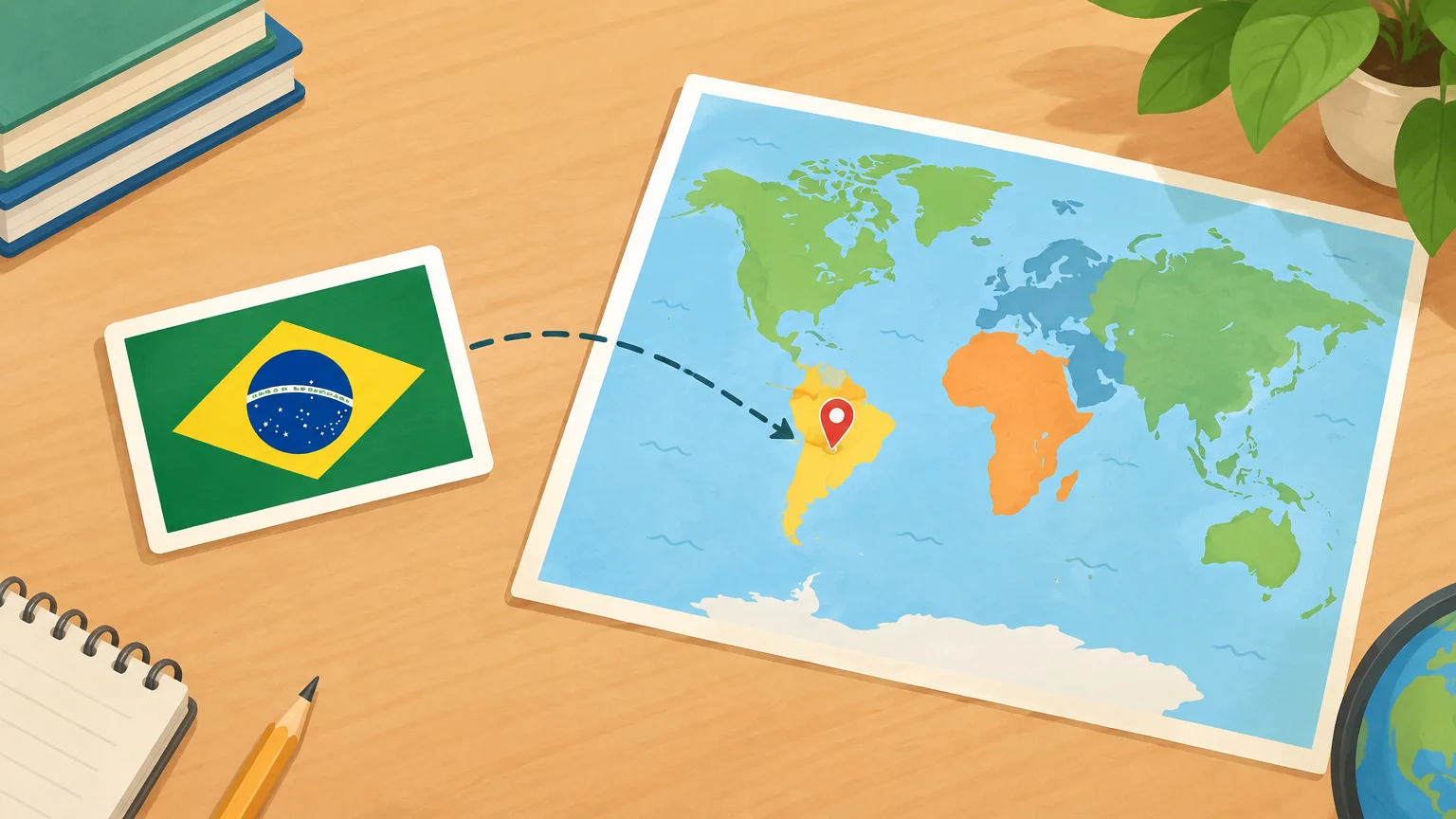
These formats can both involve visual recognition and recall, but they don’t practise identical knowledge. A learner who names flags quickly might still struggle to place those countries on a map. Someone who can point to countries may not recognize their flags.
The flag guessing game guide explores flag-focused practice. For a location-based task, a blank map quiz for world geography practice puts the emphasis on identifying countries in their geographic positions.
When is a flags game the better fit?
If your goal is to learn which flag belongs to which country, start with a flag game. It gives you repeated chances to inspect a flag, make a guess, and connect the design with the correct name. That makes it a direct match for flag identification, whether you’re studying for a quiz or simply want to recognize more flags.
Game mechanics shape the challenge. A multiple-choice question lets you select from visible answers, while a typed-answer format asks you to retrieve a name yourself. Progressive reveals give you more visual information after an incorrect guess. For example, our Flags mode gradually reveals a hidden flag, and replay mode provides random-flag practice after the daily puzzle.
To make the exercise more useful, say the country name when you see the flag and think about where it is located. That small extra step connects flag recognition to map knowledge without pretending that one question format teaches both skills equally.
When should you choose a map quiz?
Choose a map quiz when you need to find countries, regions, or physical features on a map. This is especially relevant if you’re preparing for a test that asks you to point out a country, distinguish neighboring countries, or recognize a region by its position.
The U.S. Institute of Education Sciences describes research into retrieval practice for visual-spatial information, including maps. One exercise prompts learners to mentally fill in missing map elements, a format that directly practises recalling spatial information. The project description discusses research in progress, so it does not establish that map quizzes outperform flag games.
A useful map quiz should match the material you need to learn. If you’re studying countries, practise with country outlines and names. If the goal is to learn capitals or regions, choose questions that ask you to identify those locations rather than relying on a general map challenge.
For another location-focused option, our country of the world map quiz article discusses country identification through a world map.
Does one format lead to better learning?
Imagine you’re reviewing both flags and country locations for an upcoming geography test. A strong score in one game tells you how well you answered that game’s questions; it doesn’t automatically show that you can answer a different kind of question.
Learning research supports active recall as a useful practice, but the subject of the questions matters. In its 2024 guidance, the Education Endowment Foundation emphasizes effortful recall, appropriate challenge, revisiting material after a delay, and feedback. Those principles can apply to either format; they don’t prove one format is always more effective.
Check what you can recall after you finish a round. Can you name the country when you see its flag tomorrow? Can you still locate it on a blank map? If one answer is uncertain, practise that specific skill again rather than assuming a high score in a different mode covers it.
How can you choose a geography game for your goal?
Before you begin, decide what you want to remember. Then choose a quiz that asks you to retrieve that information, not just recognize something related to it.
- Choose flags when you need to connect country names with flag designs.
- Choose maps when you need to locate countries or understand spatial relationships.
- Use both when you want to practise recognition and location as separate, complementary skills.
Keep practice focused. If you miss a question, look at the correct answer and identify what you overlooked. Return to challenging questions later, rather than repeating only the ones you already know.
For a broader routine, alternate between a flag round and a map round, then check what you can recall without clues. Our Daily Challenge connects nine country-focused mini-games, while standalone modes let you focus on flags, capitals, country clues, or silhouettes. That gives you ways to vary the question type while keeping the practice centered on geography.
Choose the format that matches your goal
A flags game is the direct choice for learning flag-to-country associations; a map quiz is the direct choice for learning locations and spatial relationships. Neither format replaces the other. If you want both skills, practise each one and check what you can recall after a delay.
Put your geography knowledge to the test
Whether you’re working on flag recognition or want to explore countries through different clues, short, focused rounds can make practice easy to fit into your day. Choose the skill you want to work on and build from there.

With our free browser game, you can practise flags, capitals, country clues, silhouettes, and themed quizzes without creating an account. Our Flags mode progressively reveals a hidden flag, and the Daily Challenge links nine mini-games around one mystery country. We cover 195 UN-recognised countries and support English and French. Play free geography games in your browser.
Frequently Asked Questions
Are flag games useful for learning geography?
Yes, they give you practice connecting flags with country names. Pair them with map questions if you also need to learn where those countries are.
What does a map quiz help you practise?
A map quiz asks you to identify places or geographic features by location. The exact skill depends on whether it focuses on countries, capitals, regions, or other map details.
Should beginners start with flags or maps?
Start with whichever subject you want to learn, and choose a quiz with clues or a difficulty level that feels manageable. Switch formats if your learning goal changes.
Can you use both formats to study?
Yes. Use flag questions to practise country and flag associations, then use map questions to practise locations. Treat them as separate skills and review any missed answers.
How does Flagdle support flag practice?
Our Flags mode gradually reveals a hidden country flag as you guess. You can also use replay mode for random-flag practice after the daily puzzle.