
A capital cities of the world game turns a dry list of names into a quick challenge you can actually enjoy. You might start with our Capital Quiz Games, then use clues, repetition, and visual associations to make unfamiliar answers easier to remember.
The right format depends on how you like to learn. Some players prefer multiple-choice questions, while others remember more when they type an answer, study a map, or identify a country through several connected clues. The strongest routine combines short play with active recall, instead of relying on passive reading alone.
What should you look for in a capital cities of the world game?
Start with the game’s coverage. A reliable quiz should explain whether it focuses on sovereign states, a broader country list, or territories and dependencies. Different lists can use different definitions, so transparent scope matters more than a large headline number.
Capital-city data also needs context. The UN demographic tables distinguish between a capital’s official city area and its wider urban agglomeration. That distinction is important because a quiz may use the official administrative capital, while a population clue may refer to a much larger metropolitan area.
Next, check how answers are revealed. A useful game gives you a fair chance to reason before showing the solution. Progressive clues, continent hints, first-letter prompts, silhouettes, and flag reveals all let you move from recognition to recall without making every mistake feel final.
Finally, look for replay value. A one-off quiz can be entertaining, but repeated practice is what helps difficult capitals become familiar. Daily puzzles, random rounds, score tracking, and short sessions make it easier to return without turning geography into a long study task.
Picture this: why capital quizzes are harder than lists
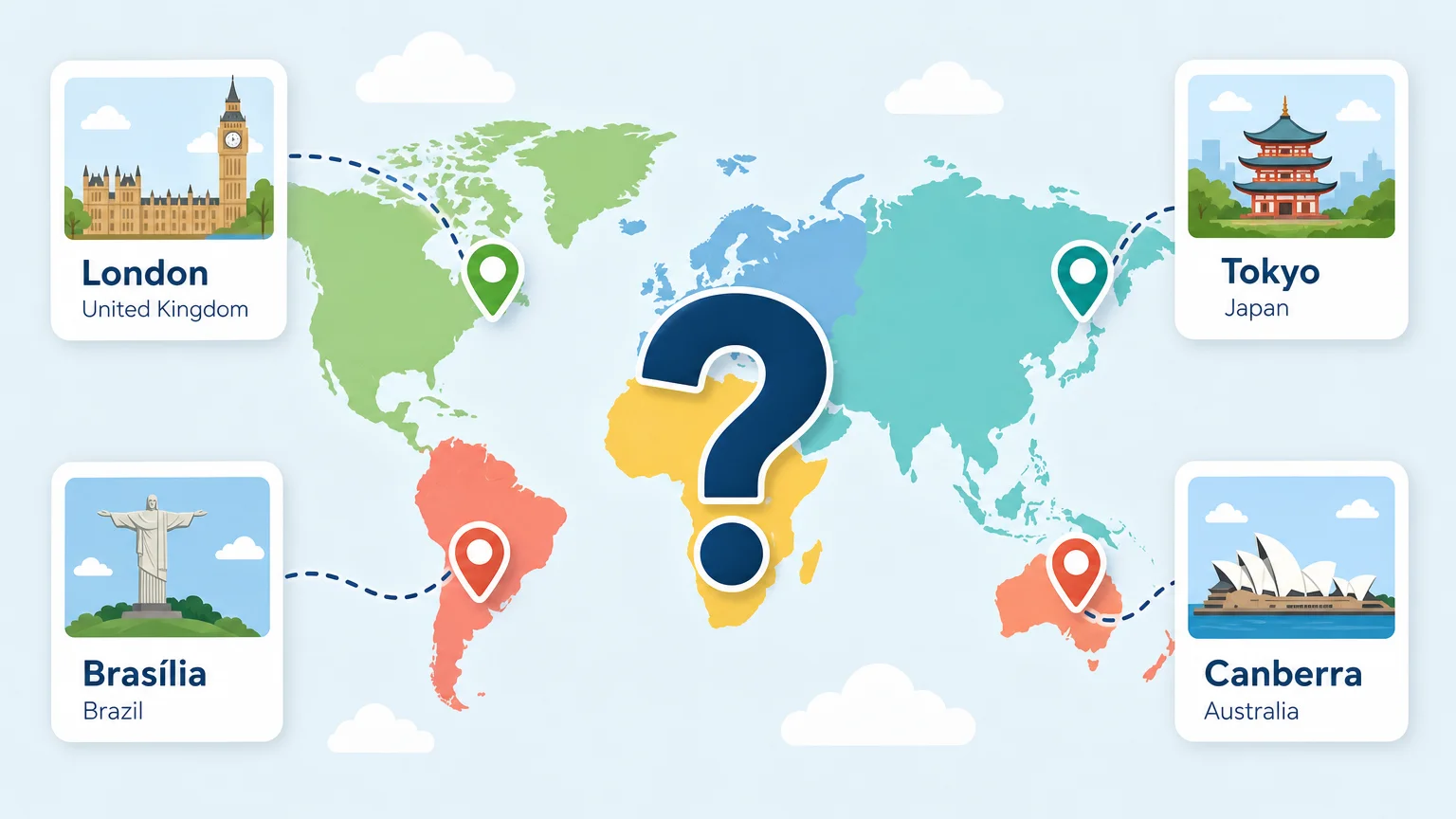
You may know that France has Paris and Japan has Tokyo, yet hesitate when a quiz asks for the capital of a smaller island nation. That isn’t unusual. Familiarity is uneven, and the same country can be easier or harder depending on whether you see its flag, shape, continent, language, or neighboring states first.
A good quiz uses that uneven familiarity to create a learning path. Easy answers build confidence, while less familiar capitals become memorable because you solve them through several connected hints. The aim isn’t simply to reveal the answer quickly. It’s to give your memory a structure for finding it next time.
Population clues can add another layer of difficulty. The United Nations’ world cities booklet uses a defined reference date and separates countries, areas, and geographic regions for statistical purposes. In practice, that means a population-based question should be treated as a clue, not as a universal definition of how important or well known a capital is.
This is also why you shouldn’t feel discouraged by mistakes. A wrong answer can reveal a useful contrast. You might confuse a country’s largest city with its capital, mix up two nearby countries, or remember the flag but not the city. Each error points to the kind of association you need to strengthen.
Which game modes help capital names stick?
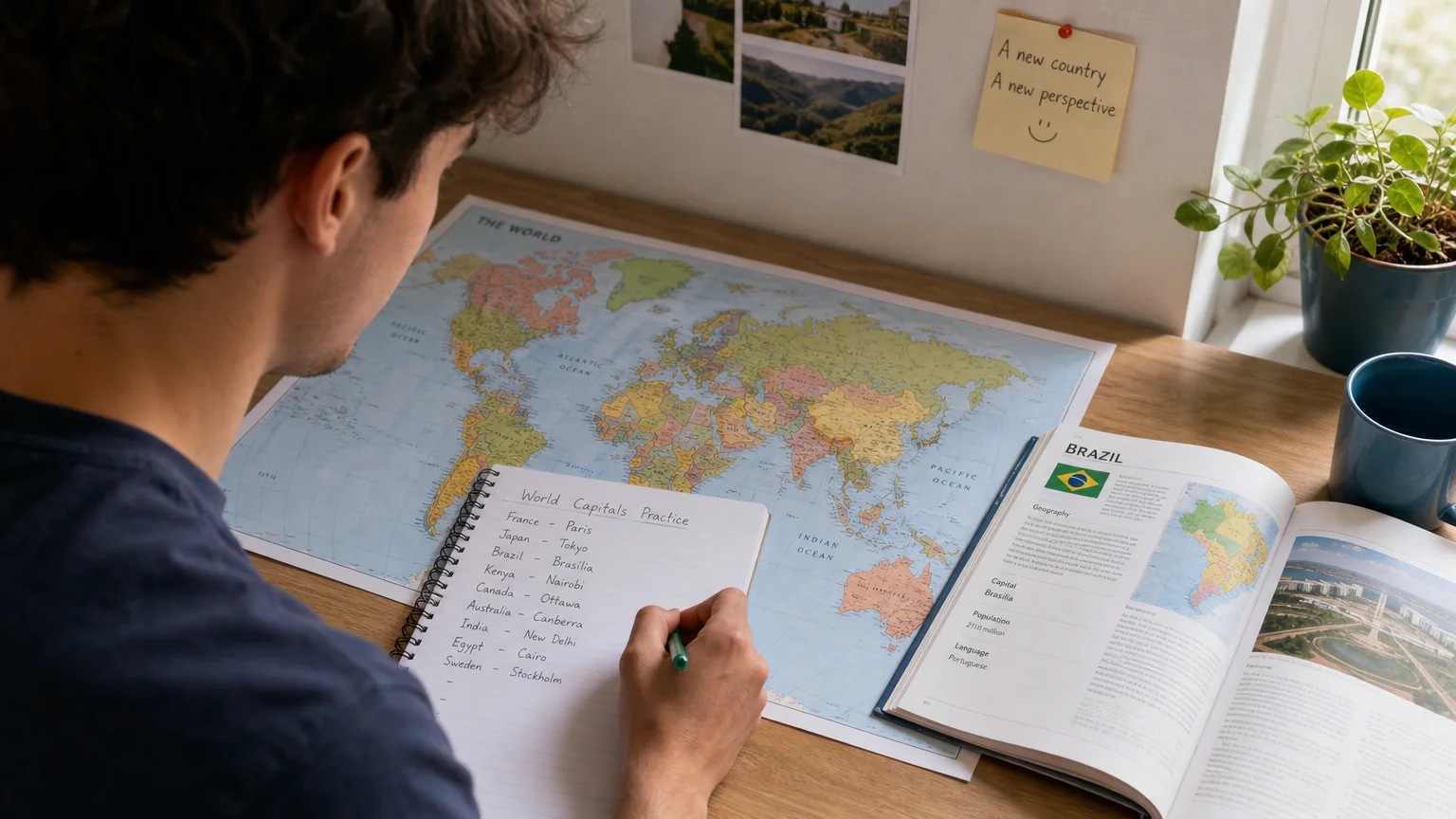
Different modes support different kinds of memory. A typed capital quiz makes you retrieve the answer without a prompt list. Multiple-choice questions are more forgiving and work well when you’re learning a new region. Map-based play adds location, which can help you connect a capital with its surroundings.
Flag clues are useful when you remember visual details better than spelling. Country silhouettes help you think spatially, while language and population clues add factual context. A multi-round format can be especially engaging because one mystery country appears through several angles rather than one isolated question.
If you want a more structured practice session, our Country Capitals Test approach focuses on active recall and gradual improvement. You don’t need to master every region at once. Choose a manageable group, review the answers you missed, and return to those capitals later.
The best mode is the one that makes you think before you look. If a game always gives you the answer immediately, it may feel smooth but create weaker recall. A small amount of effort is useful because it forces your brain to search for the connection.
How can you build a five-minute daily practice loop?
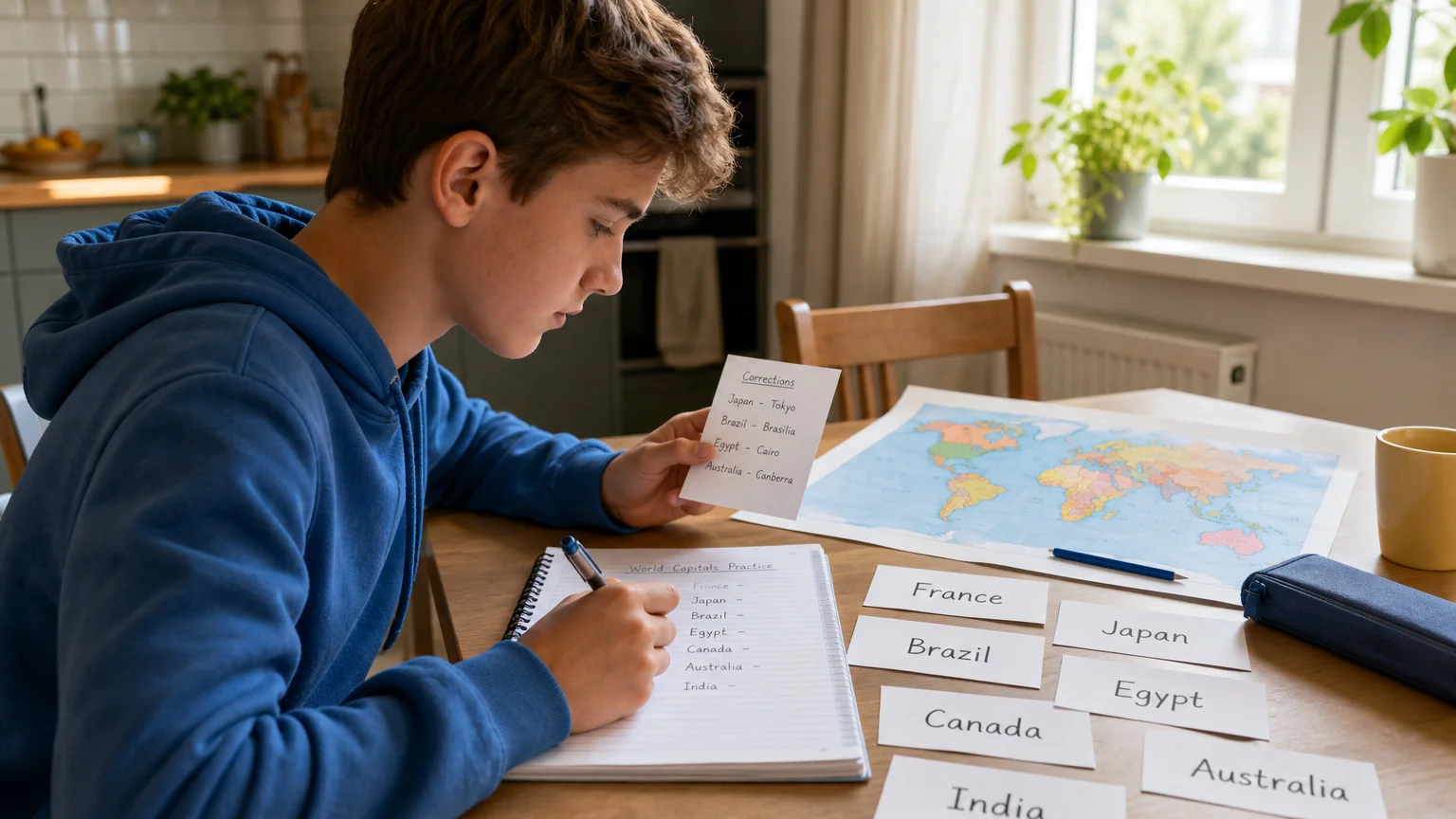
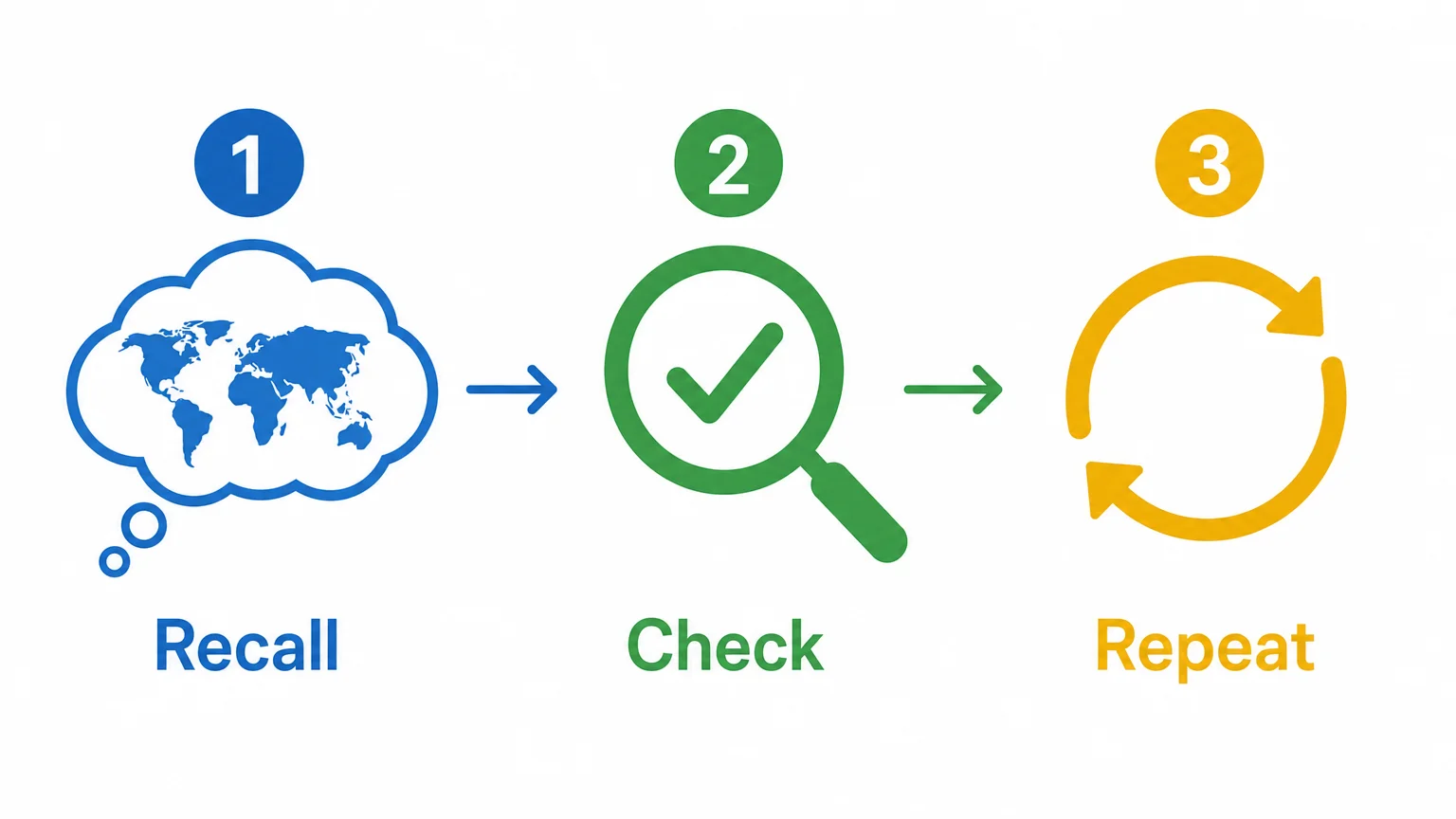
Five minutes is enough for a useful routine when you keep the sequence simple. Start with a quick recall round, review only the answers you missed, then finish with one short replay. This creates a clear beginning, correction stage, and repeat attempt.
- Recall first: Answer without checking a list or map. Give yourself a moment to search your memory.
- Review mistakes: Note the capital, country, and one extra clue, such as its continent or flag colors.
- Repeat later: Test the same difficult answers after a break, then mix them with new ones.
Keep the session short enough that you can repeat it tomorrow. A daily habit is easier to maintain when it feels like a small game, not another large assignment. You can also use a weekly session to revisit capitals that still feel unfamiliar.
Our guide to How to Practice Capitals Daily follows this same low-friction idea. Short rounds help you practise consistently, while replay gives you more opportunities to turn recognition into reliable recall.
Map quiz, mobile app, or browser game?
The format you choose should match your situation. A mobile app can be handy for offline study or flashcards. A map quiz is useful when you want to connect each capital with a physical location. A browser game works well when you want to start immediately without installing anything.
Also consider how much feedback you want. Some formats focus on speed and scores, while others give you clues that explain the answer path. If you’re studying for a class, a clue-based game may be more helpful than a timed challenge because it shows what to think about next.
Browser access can be especially convenient for a daily ritual. You can play from a laptop, tablet, or phone, then return later without carrying a workbook. Look for clear navigation, responsive design, and a practice option that doesn’t make you wait for the next daily round.
Our Country Capital Quiz Game perspective is simple: the format should make geography feel approachable while still asking you to remember. That balance keeps the experience useful for students, travelers, teachers, and curious players.
Privacy and access can matter too. Before choosing a platform, check whether it requires an account, stores progress locally, includes intrusive advertising, or limits replay. These details may not change the questions, but they can decide whether you keep using the game.
What should you do when a capital refuses to stick?
Use a stronger association instead of repeating the name in isolation. Connect the capital to the country’s flag, region, language, shape, nearby countries, or a personal travel interest. The more meaningful the connection, the easier it becomes to retrieve later.
You can also separate similar problems. If you confuse two capitals, write them as a contrast rather than studying them separately. For example, place each city beside its country, continent, flag pattern, and one distinctive fact. This gives your memory a clear boundary between the two answers.
Spelling deserves its own practice. Some capitals are easy to recognize but harder to type correctly. Use the answer suggestions when available, then try entering the name again without help. Over time, you’ll improve both geographic knowledge and confidence with unfamiliar names.
Most importantly, don’t turn every session into a test of perfection. A capital game works best when it shows progress over time. Missed answers are useful signals, and returning to them later is more productive than rushing through a long list once.
The takeaway
The right world capitals quiz should challenge your memory while giving you enough context to improve. Choose a format with clear coverage, progressive clues, replay practice, and short sessions. Then build a simple routine that connects each capital to its country, location, flag, and a memorable detail. That approach makes difficult answers easier to retrieve and keeps geography practice enjoyable.
Take action with Flagdle
If you want to turn capital practice into a quick daily habit, choose a format that gives you variety without making the first step complicated. Short browser sessions are easy to fit around school, travel planning, classroom activities, or simple curiosity.
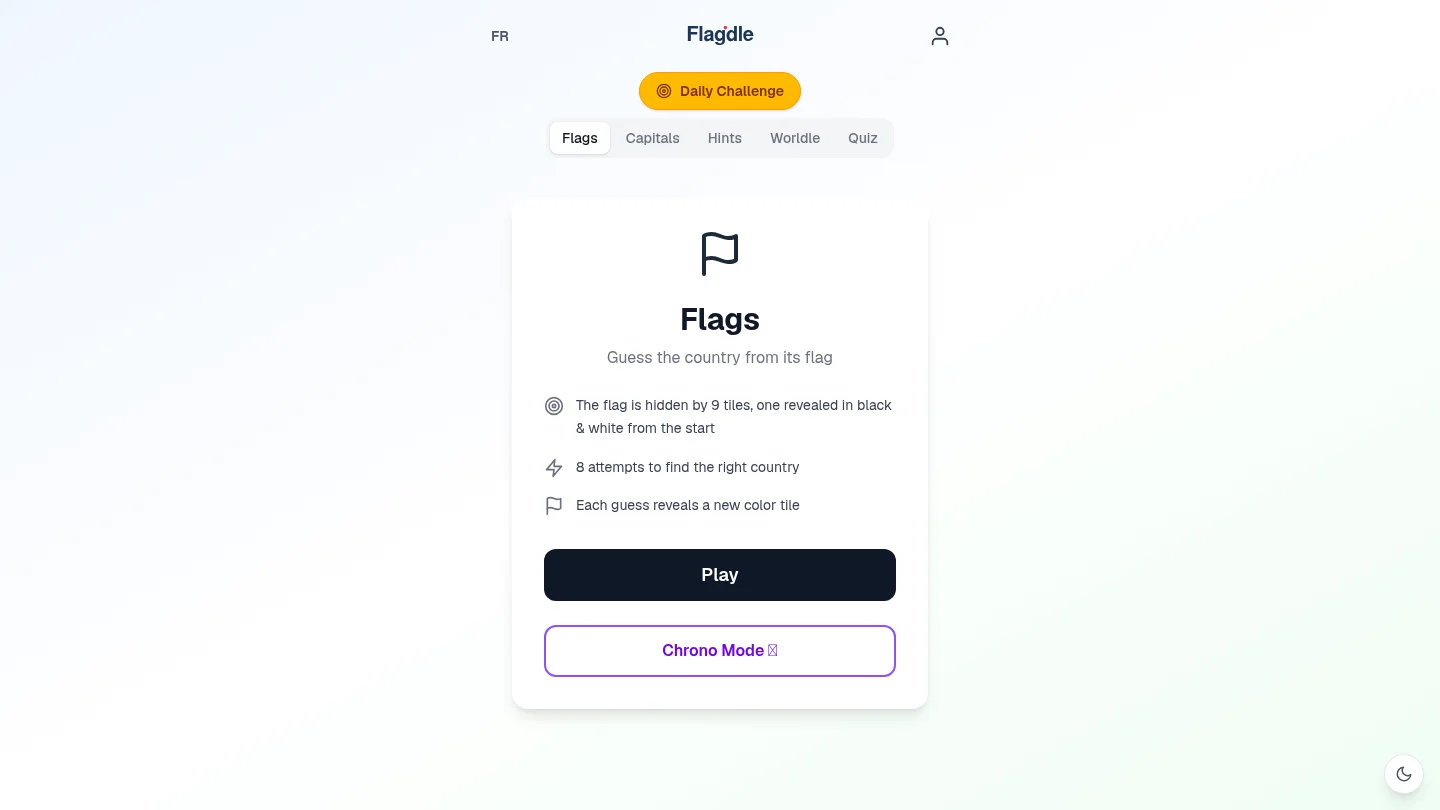
With our free Flagdle browser game, you can practise capitals alongside flags, clues, country silhouettes, daily challenges, and themed quizzes. You can play without an account, use replay practice, compare results through leaderboards, and return whenever you want a fresh geography challenge.
Frequently Asked Questions
What is the best way to learn world capitals?
Use active recall instead of only reading a list. Try to answer first, check the result, and revisit missed capitals after a short break.
Should I learn capitals by continent?
Yes, grouping capitals by continent can reduce the size of each practice session. It also helps you build location-based associations instead of memorizing unrelated names.
Are map quizzes useful for learning capitals?
They’re useful because they connect a city with its physical location. Combine map practice with typed answers if you also want to improve spelling and recall.
How often should I play a capital quiz?
A short daily session is usually easier to maintain than one long weekly session. Five minutes of focused practice can give you regular exposure without causing study fatigue.
Can I practise capitals without waiting for a new daily puzzle?
That depends on the game, so check whether it includes replay or random practice. Our geography game includes replay options, which lets you continue practising after the daily challenge.