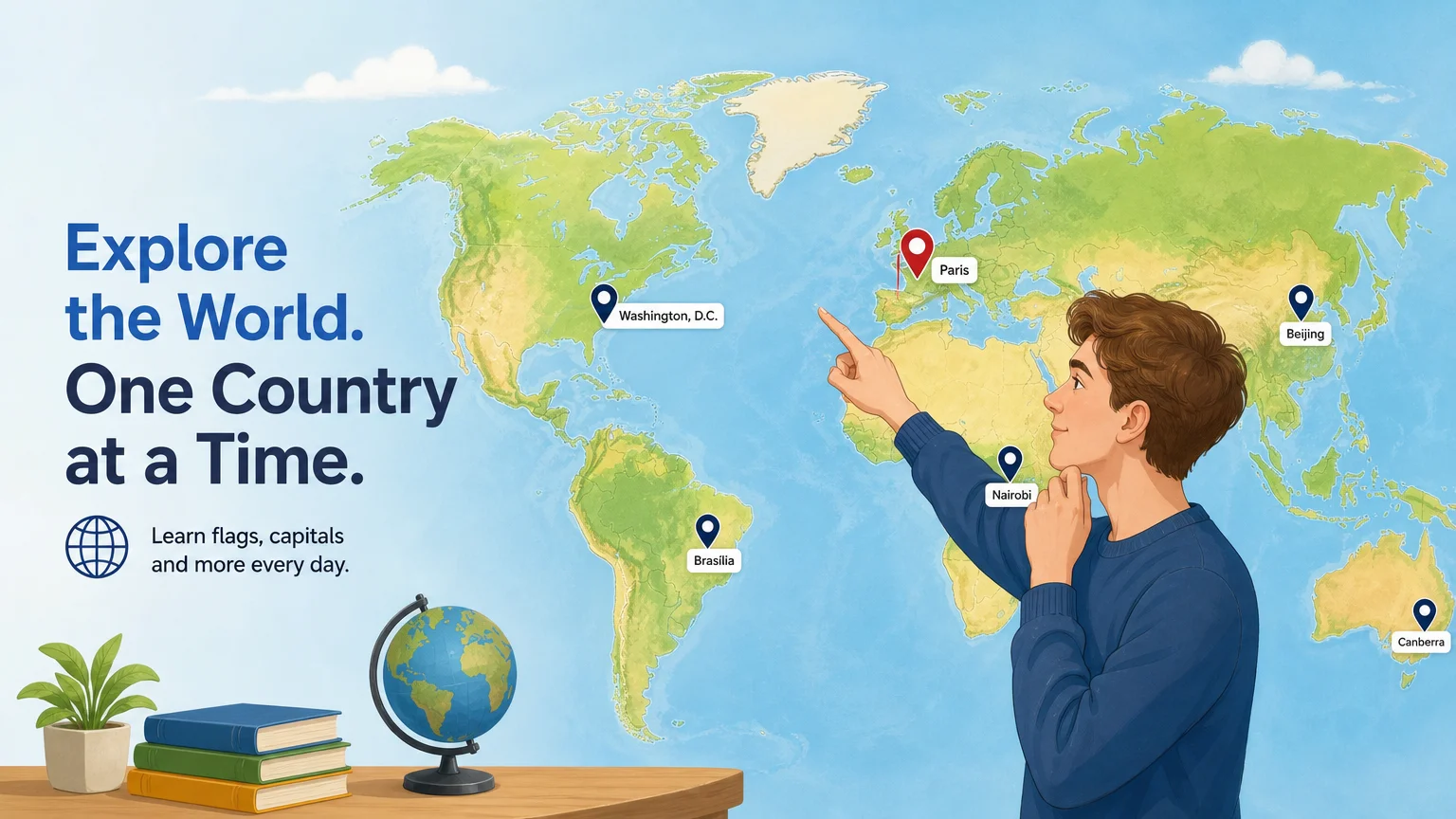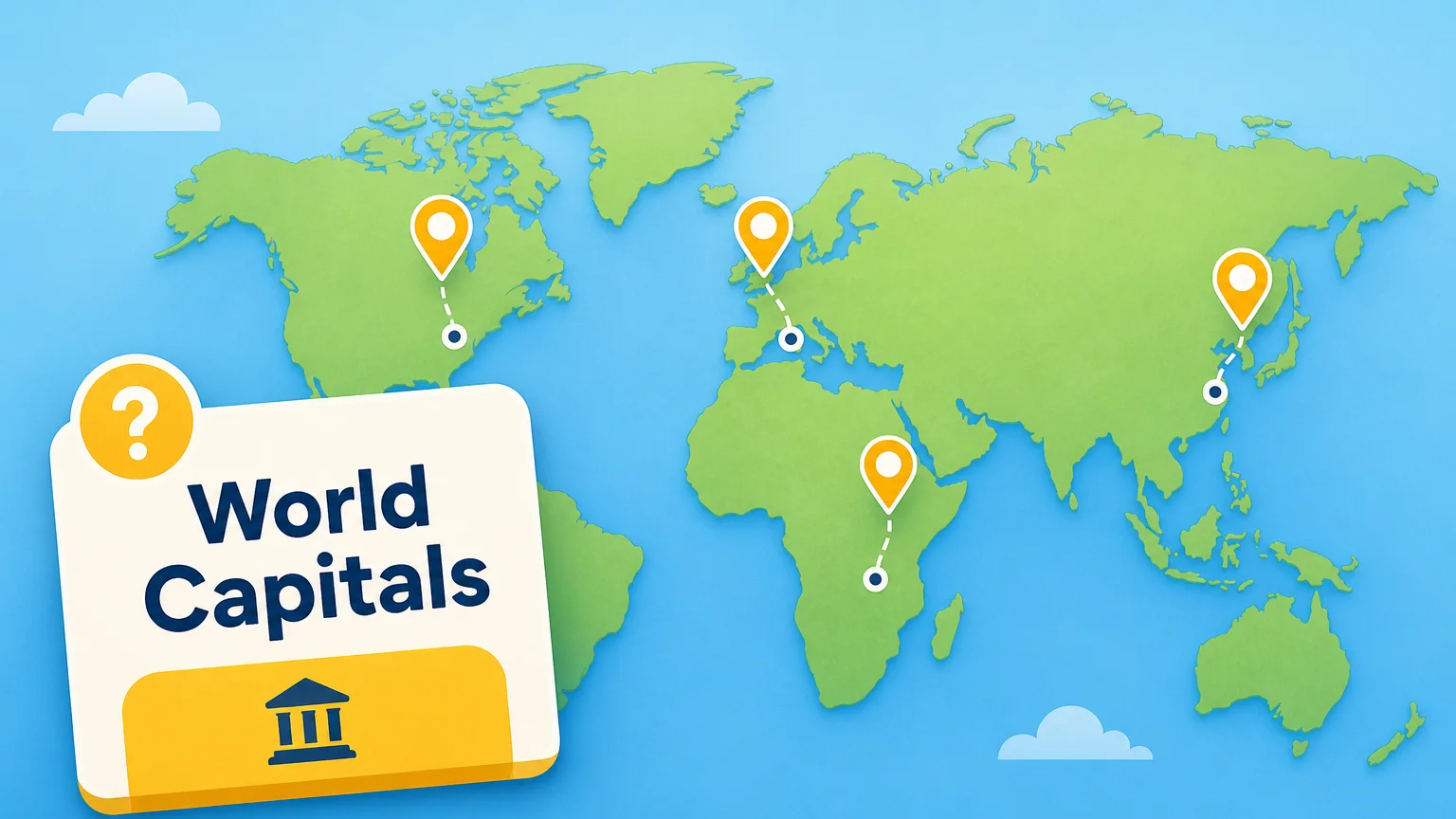
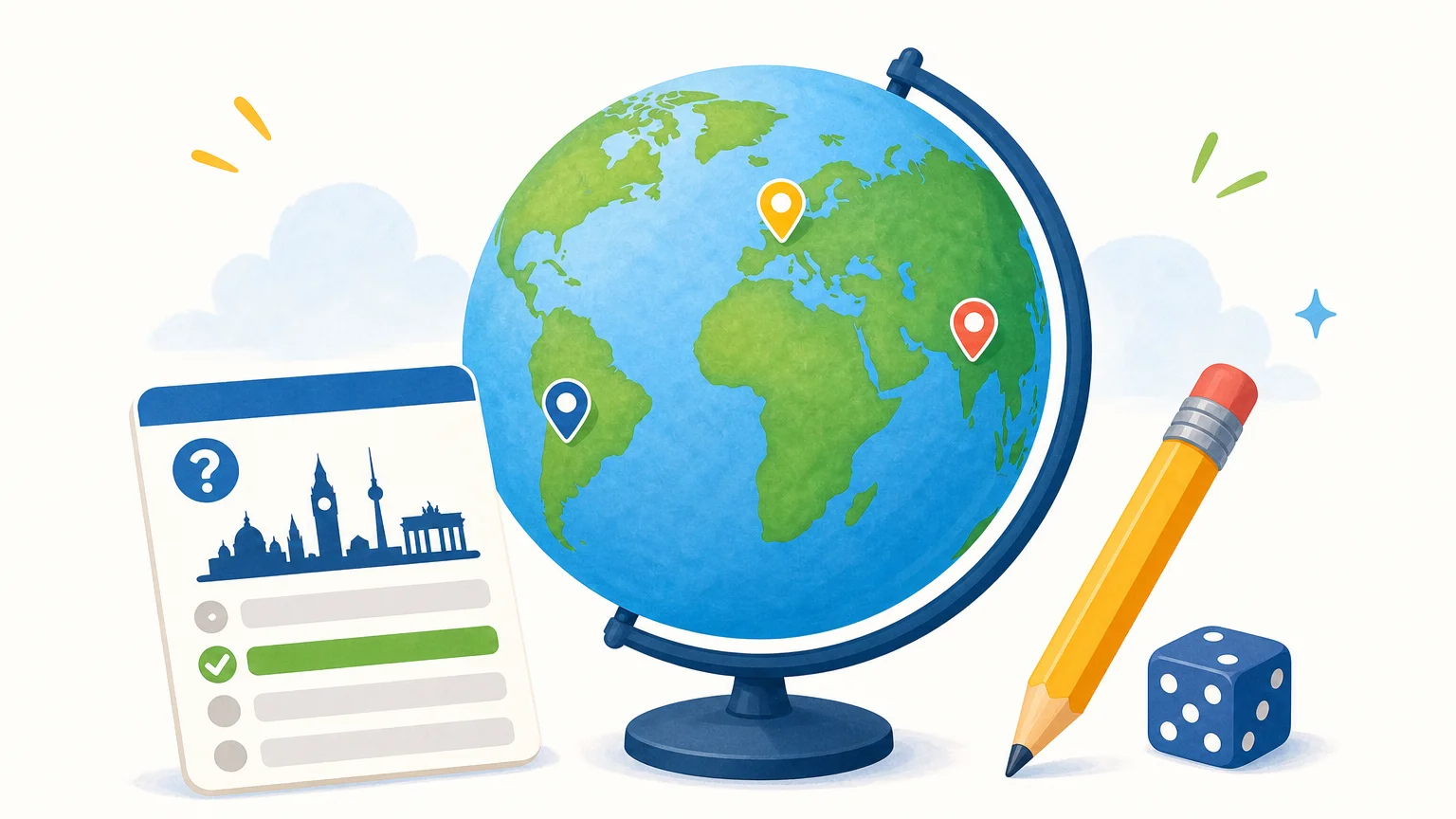

Want to make world geography easier to remember? Start with our capitals of the world quiz game, then use each answer as a chance to connect a country with its location, language, history, and neighboring regions. That approach makes capital practice feel less like memorising an isolated list.
A good capital cities quiz game should challenge your memory while giving you enough guidance to keep learning. You might practise one region at a time, answer multiple choice questions, identify a city from a country, or use progressive clues when a capital doesn’t come to mind immediately.
What should a capital cities quiz game teach?
The basic task seems simple: match a country with its capital. However, effective practice goes further than repeating pairs such as France and Paris. You also want to build capital city recognition, geographic orientation, spelling confidence, and awareness of less familiar countries.
Feedback is central to that process. When you miss an answer, the correction should be clear and easy to revisit. A useful quiz also avoids making every question feel identical. Multiple choice, spelling, map identification, clues, and timed rounds each test a slightly different part of your memory.
Difficulty matters too. Beginners may need familiar countries and regional sets first. More experienced players can mix continents, remove answer choices, or work against a time limit. The goal isn’t to make every round difficult. The goal is to create a challenge that encourages another attempt.
Which quiz format fits your learning goal?
Imagine you have five minutes before class, a trip, or a study session. A short multiple choice round may be the easiest starting point because you can begin immediately and see your result quickly. Regional quizzes are also useful when you’re focusing on Europe, Africa, Asia, the Americas, or Oceania.
Mobile apps often divide capital questions by continent, difficulty, and game format. For example, a 2026 app listing describes continent-based play, spelling questions, multiple choice rounds, timed challenges, and map identification. Those formats can suit learners who want several ways to revisit the same information.
For browser practice, you may prefer a lighter experience that starts without a download. If you want a focused session about countries and capitals, our capital cities game lets you practise through a simple guessing format. It’s especially helpful when you want repetition without opening a large study system.
- Multiple choice works well for quick recognition and beginners.
- Spelling rounds help you remember how unfamiliar capitals are written.
- Map questions connect a capital with its physical location.
- Timed games add pressure and improve fast recall.
- Clue-based rounds help you keep thinking when you don’t know the answer immediately.
Why do progressive clues make learning more memorable?
Consider a question about a capital you don’t know. If the answer appears instantly, you may recognise it once and forget it later. If you receive a continent clue, a first-letter clue, or a factual hint before seeing the answer, you have a better chance to retrieve related information.
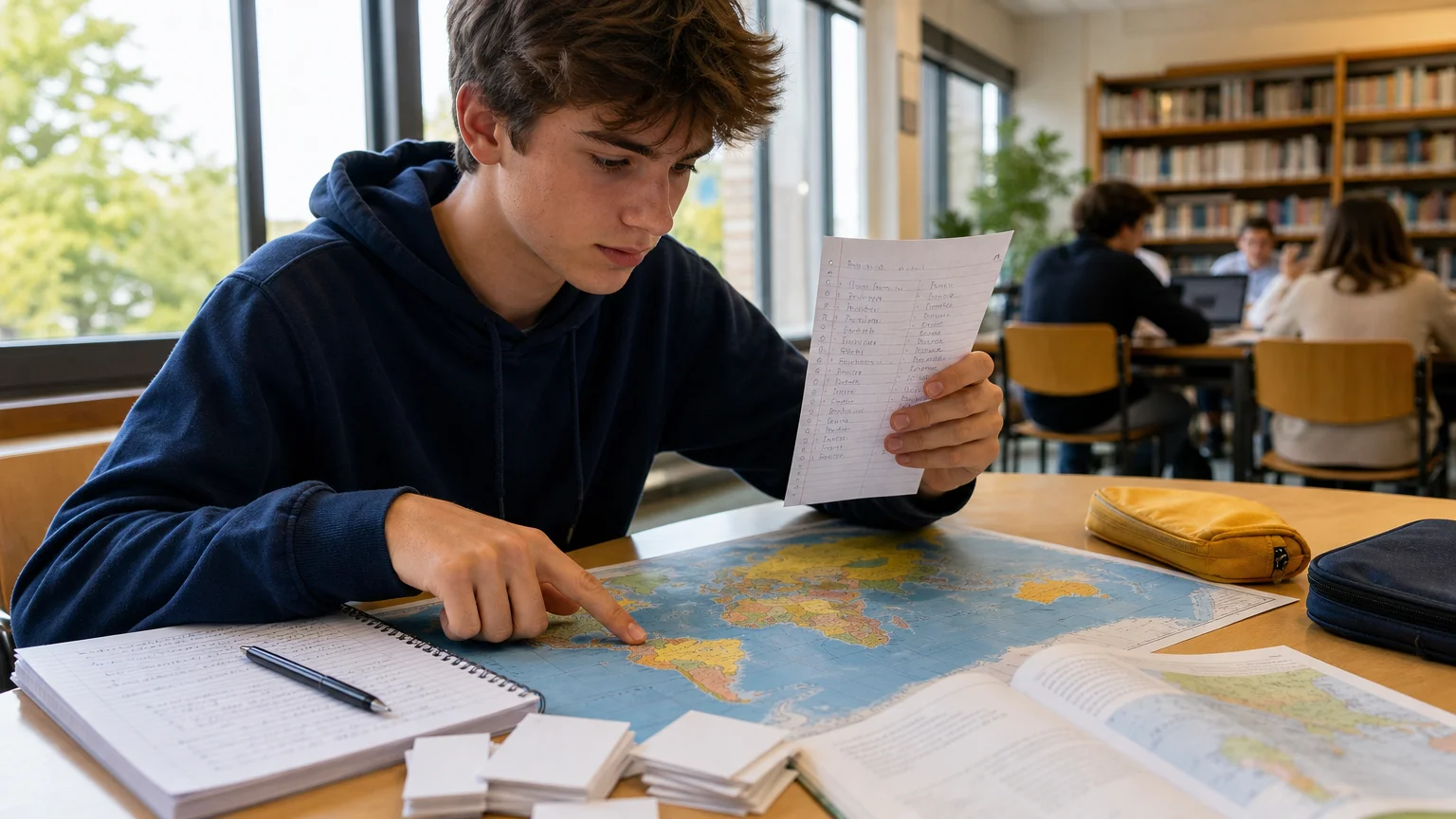
This is the value of progressive clues. They reduce frustration without removing the thinking step. You still try to retrieve the answer, but the game gives you a structured path when your first guess fails.
Our Daily Challenge uses this idea across nine linked mini-games about one mystery country. An answer from an earlier round can help you narrow down later questions, so the experience feels connected rather than like a random list of facts. You can explore that format through our capital quiz games.
Clues can also create useful associations. A capital becomes easier to remember when you connect it with a continent, a language, a population fact, a border, or a historical event. This turns memorisation into a small network of ideas.
How can you study capitals without cramming?
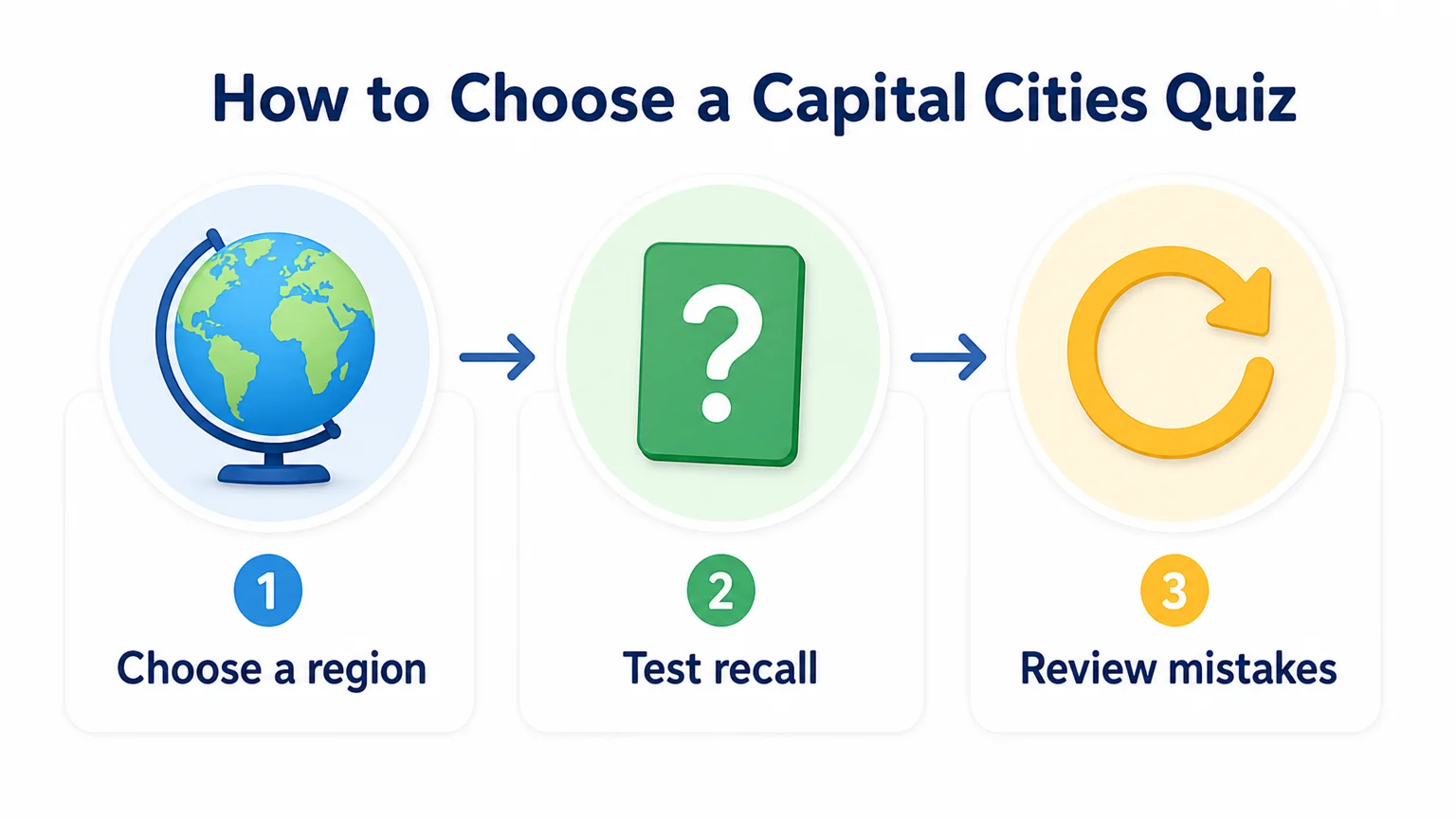
Start with a manageable group of countries. Choose one region or ten capitals that you regularly confuse. Play once without preparation, then write down the answers you missed. That first attempt gives you a practical list of what to review.
- Play a short round without looking at a reference list.
- Separate answers you knew from answers you guessed.
- Review the missed capitals with their countries and regions.
- Test yourself again later, preferably with a different question format.
- Mix old questions with new ones once the basic pairs feel familiar.
This routine uses spaced review rather than one long memorisation session. A few short attempts across several days can feel easier and more sustainable than studying every capital in one sitting.
You can also create useful contrasts. Put capitals you confuse together, such as neighboring countries or cities with similar names. Then add a visual cue, a map position, or a distinctive fact. The more meaningful the connection, the easier it becomes to retrieve the answer later.
Can a capital quiz work in a classroom?
Picture a teacher beginning a lesson with three questions on the board. Students answer individually, compare their choices, and explain how they reached a conclusion. The activity takes only a few minutes, but it creates a regular moment for geography practice.
A 2026 classroom games resource includes a capital cities quiz among short activities designed to work without student logins. You can see that format described in a classroom game resource, which presents quick browser activities for geography lessons and revision.
For classroom use, the best format is usually easy to explain and easy to restart. Students should know whether they’re identifying a capital, selecting a country on a map, or responding to a clue. Clear rules leave more time for discussion.
You can adapt the same activity for different levels. Younger learners may use answer choices and regional groups. Older students can explain why a capital is politically or geographically important, compare capitals across continents, or answer without visual prompts.
What should you look for in an online capitals quiz?
Begin with access. A good browser game should load quickly on a phone, tablet, or computer. You shouldn’t need a long setup process before answering the first question.
Next, check whether the quiz supports meaningful repetition. One browser example uses ten questions, four answer options, streaks, and locally saved scores, as described by one browser example. Features like these can make a short session easy to repeat, although they work best when you also review the answers you missed.
Look for variety rather than decoration. Useful features include regional selection, multiple difficulty levels, instant feedback, replay mode, clues, and a way to compare results over time. A leaderboard can add motivation, but it shouldn’t replace learning feedback.
Privacy and persistence are worth checking too. Some games save progress in your browser instead of on an account. That can be convenient, but clearing local browser data may remove your statistics. If your score history matters, check how the game stores it before you rely on it.
Where does Flagdle fit into capital practice?
Flagdle is designed for short, repeatable geography sessions. Our browser-based game combines a Capitals mode with flags, country clues, silhouettes, a Daily Challenge, and themed quizzes covering geography, history, sport, and literature.
The format works well when you want more context than a single country and capital pair. You can identify a country from progressive hints, connect a capital with other facts, and return to replay practice after completing the daily challenge. The same daily country also gives players a shared point of comparison.
Our practice capitals with a daily geography quiz approach is useful for students, travelers, teachers, and curious players. It keeps the session accessible while giving you several ways to build broader country knowledge.
You don’t need an account to begin. The game runs in your browser, supports English and French, and uses local browser storage for player statistics. That makes it easy to add a few minutes of capital practice to your regular routine.
Make capital learning an active habit
Capital cities quiz games are most useful when they make you retrieve, review, and reconnect information. Choose a format that matches your goal, start with manageable regions, and use mistakes as a guide for your next round. Short sessions with varied clues can build stronger recall than passive list reading alone.
Take action with Flagdle
If you want to turn geography practice into a simple daily habit, a short game can give you a clear starting point. You can practise independently, use a round as a classroom warm-up, or challenge friends to compare results.
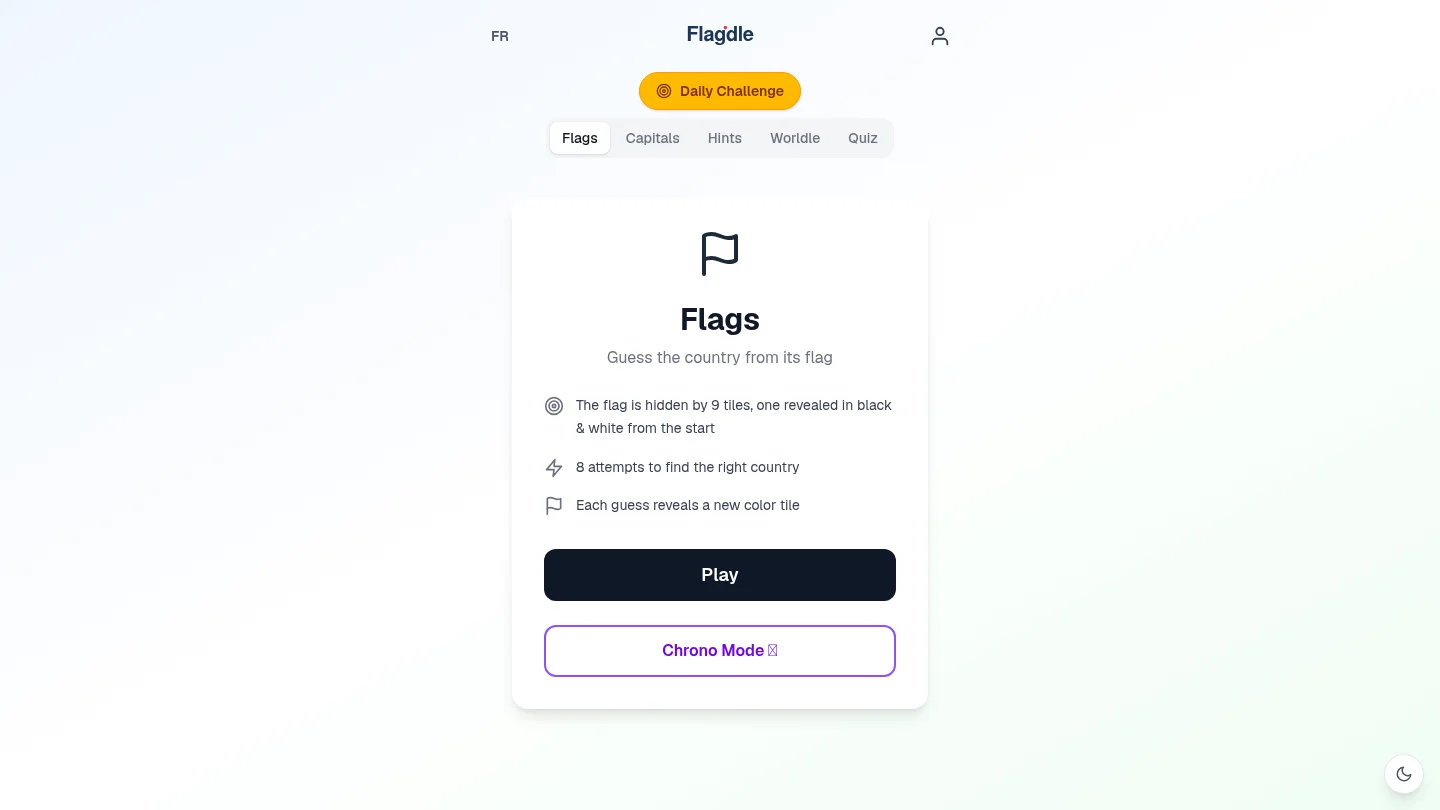
Flagdle is a free browser-based geography game with Capitals, Flags, Hints, Worldle, Daily Challenge, and themed quiz modes. Play our free geography game without an account, explore country knowledge through different mechanics, and return whenever you want another short challenge.
Frequently Asked Questions
What is a capital cities quiz game?
It’s an interactive game that asks you to match countries with their capital cities. Depending on the format, you may answer through multiple choice, spelling, maps, timed rounds, or progressive clues.
Are capital city quizzes useful for studying?
Yes, especially when you actively retrieve answers and review mistakes. Short repeated sessions can help you remember difficult country and capital pairs more confidently.
Should I study capitals by continent?
Studying by continent can reduce the number of new answers in each session and help you connect nearby countries. Once you feel comfortable, mix regions to test whether you can recall capitals without relying on location patterns.
Can I use a capital quiz in class?
Yes, a short quiz can work as a warm-up, review activity, or closing challenge. Choose a format with clear instructions and discuss difficult answers so the activity supports understanding, not just scoring.
What makes Flagdle different from a basic capitals quiz?
Flagdle combines capital practice with flags, clues, country silhouettes, a connected Daily Challenge, and themed quizzes. That gives you several ways to revisit geography instead of relying on one question format.