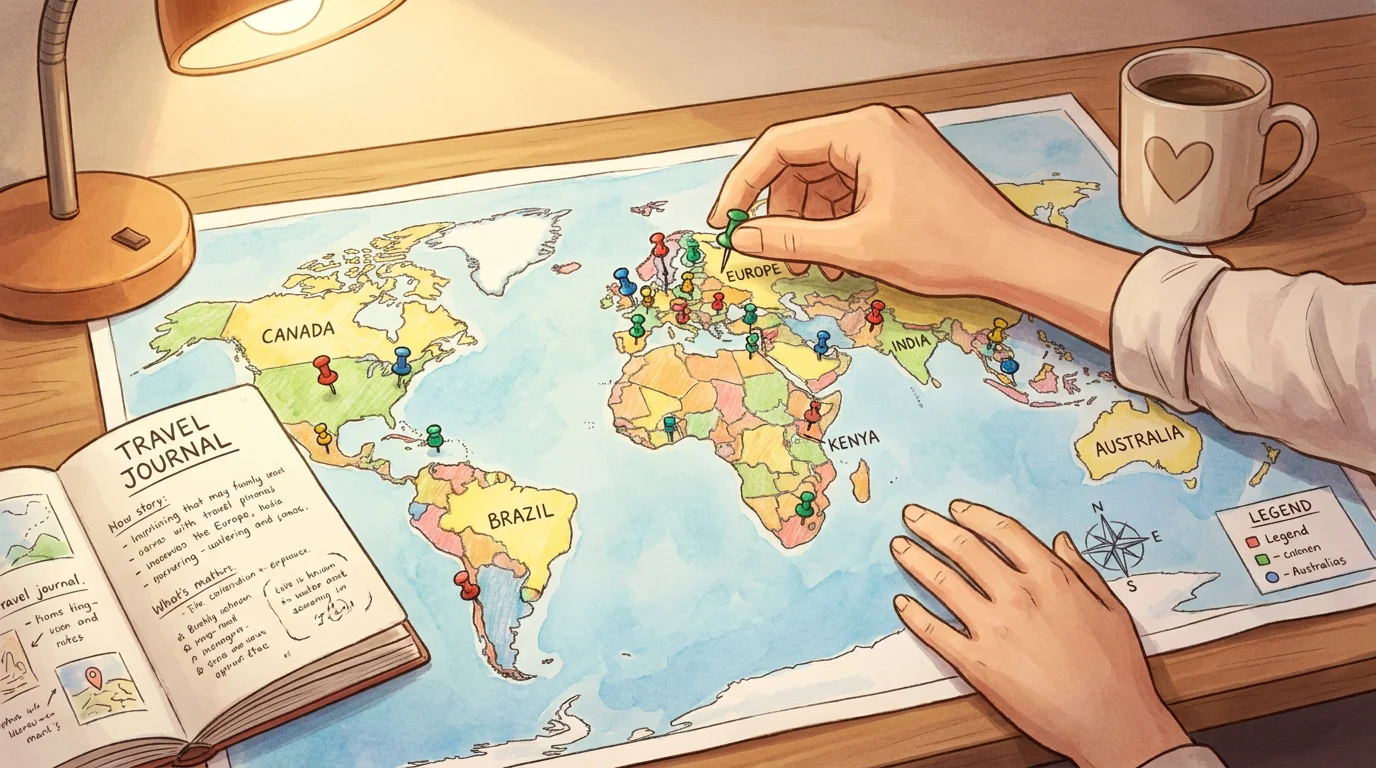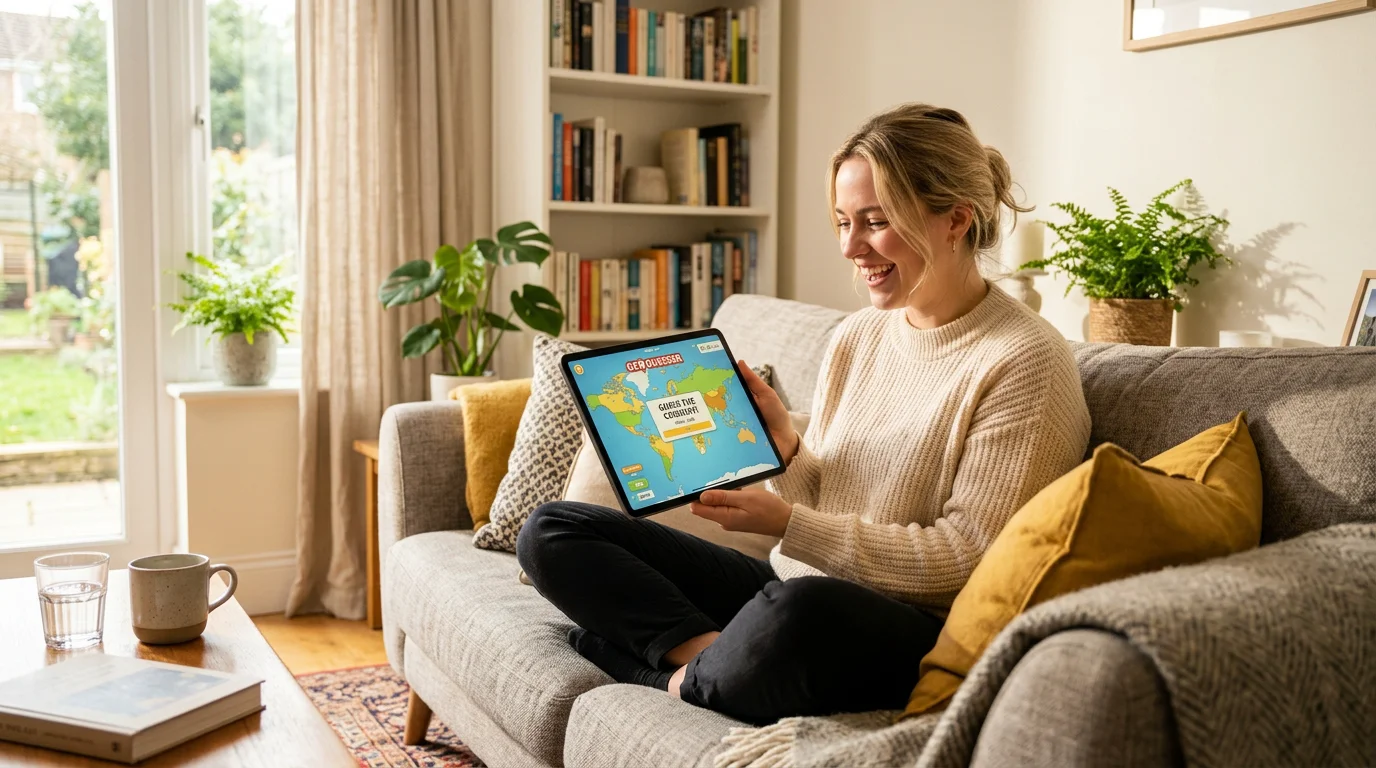
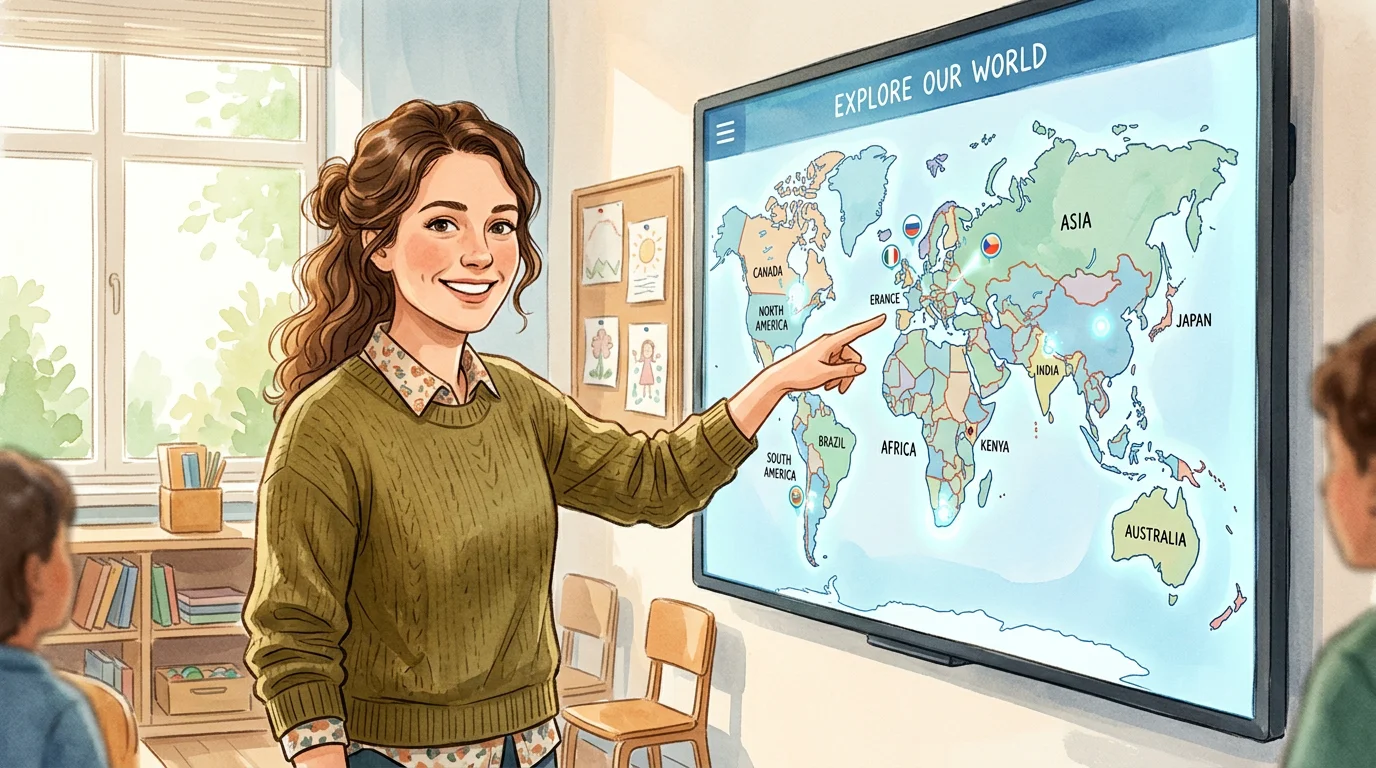

Two-thirds of young adults once failed to point out a major country making headlines every single night. That's not a knock on anyone's intelligence; it's a sign that most of us never learned geography in a way that actually sticks. The good news? A countries of the world map game flips that problem on its head, turning a blank map into a quick, addictive puzzle you'll want to solve again tomorrow. Curious where to start? Try our Mapdle map game for a taste of how playful this can get.
Geography knowledge gaps are well documented. In a 2016 survey by National Geographic and the Council on Foreign Relations, young adults answered poorly on questions requiring real geographic and cultural detail. The fix isn't more textbooks. It's turning practice into play so your brain stays engaged long enough to remember.
Why so many people can't place countries on a map
Let's be honest: knowing where things are has never felt urgent when a search bar can answer in seconds. But that convenience hides a real cost. When you can't picture the world, news, travel plans and even trivia nights get harder to follow.
The scale of the problem is striking. A widely cited 2006 literacy study found that two-thirds of Americans aged 18 to 24 couldn't find Iraq on a world map, and three-quarters couldn't locate Iran or Israel. Worse, most respondents didn't think knowing these locations mattered. That apathy, more than the gaps themselves, is what a good game quietly fixes: it makes you want to know.
What makes a countries of the world game map actually click
Here's the thing that separates a great geography game from a boring worksheet: interactivity. When you're handed a countries of the world game map and asked to point, guess or type, you're doing something, not just reading. That tiny act of effort is what turns a name on a page into a place you can picture.
The best formats mix things up so you never coast. You might guess a country from a masked flag, name its capital, or identify a nation from its silhouette using distance and direction as clues. If you like the classic "point on the map" style, our guess the country game walks you through how to play, win and learn faster.
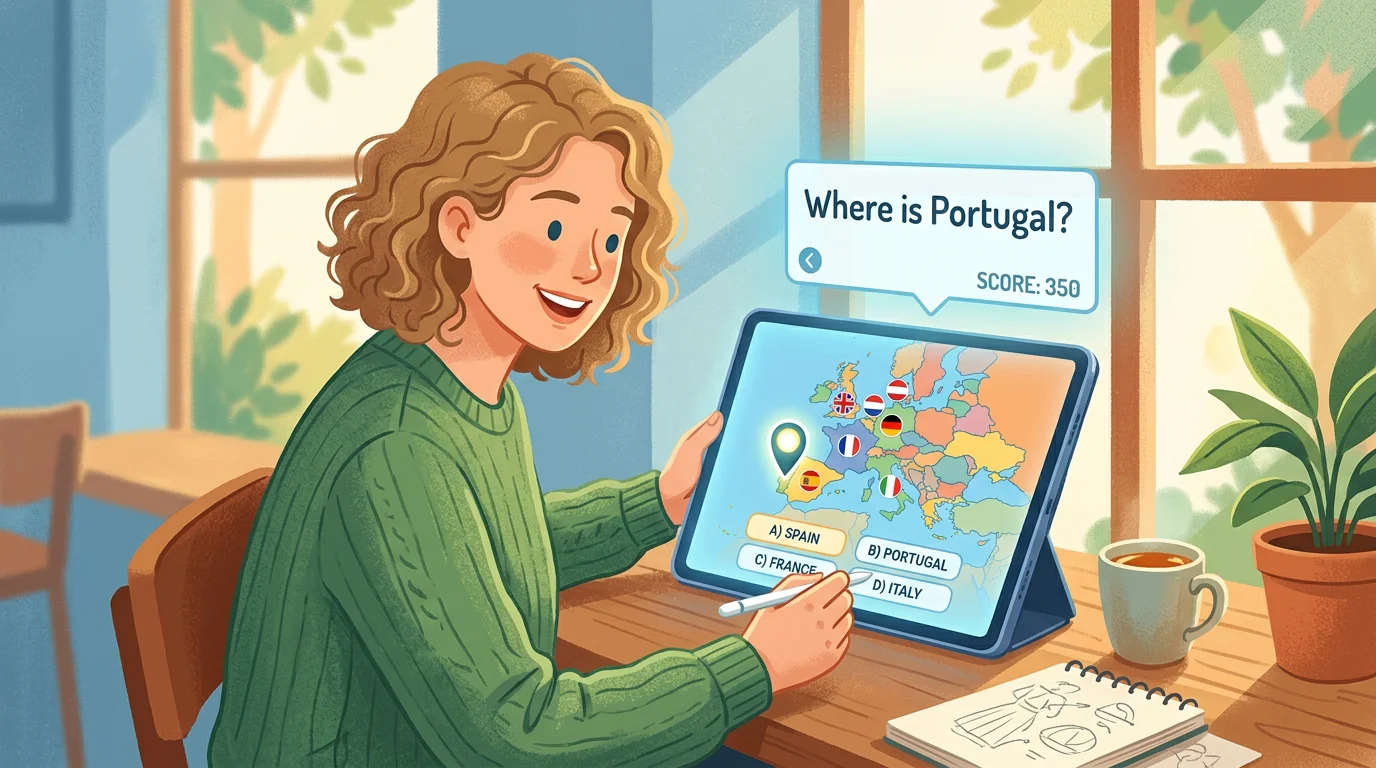
The science: why games beat rereading your atlas
You might assume the way to learn countries is to stare at a map until it sinks in. Cognitive science says otherwise. Pulling an answer out of your own head, called active recall, builds memory far more effectively than passive review.
Research from Purdue psychologist Jeffrey Karpicke, published in the journal Science, showed that practicing retrieval boosted learning more than elaborate study methods like concept mapping. A geography game delivers that mechanic automatically: a flag appears, you guess; a silhouette shows up, you name it. Every round is a mini test, and every test strengthens the memory.
This isn't a niche finding, either. A 2025 state-of-the-art review describes retrieval practice as a robust, well-backed strategy that professionals rely on for high-stakes exams. If it works for medical students, it can absolutely help you finally remember where Kyrgyzstan is.
Types of map games worth trying
Not every geography tool works the same way, and the right one depends on how you like to learn. Some focus on clicking locations, others on flags or capitals. Here's how the main styles compare so you can pick your entry point.
| Game style | Country coverage | Daily challenge | Free, no account |
|---|---|---|---|
| Our daily flag game (Flagdle) | 195 UN-recognized countries | Yes, same puzzle worldwide | Yes, stats stored locally |
| Classic map-click quizzes | Varies by region set | Rarely | Often, with ads |
| Flag or capital apps | Broad, often 200+ | Sometimes | Usually requires install |
Free alternatives exist and they're fine for casual practice, though many lock progress behind sign-ups or bury you in ads. We built things differently: a new flag of the day that's identical for every player worldwide, plus modes for capitals, progressive clues and silhouettes. Want the full landscape? Browse our roundup of countries games online to see what fits your routine.
How to build a daily geography habit that sticks
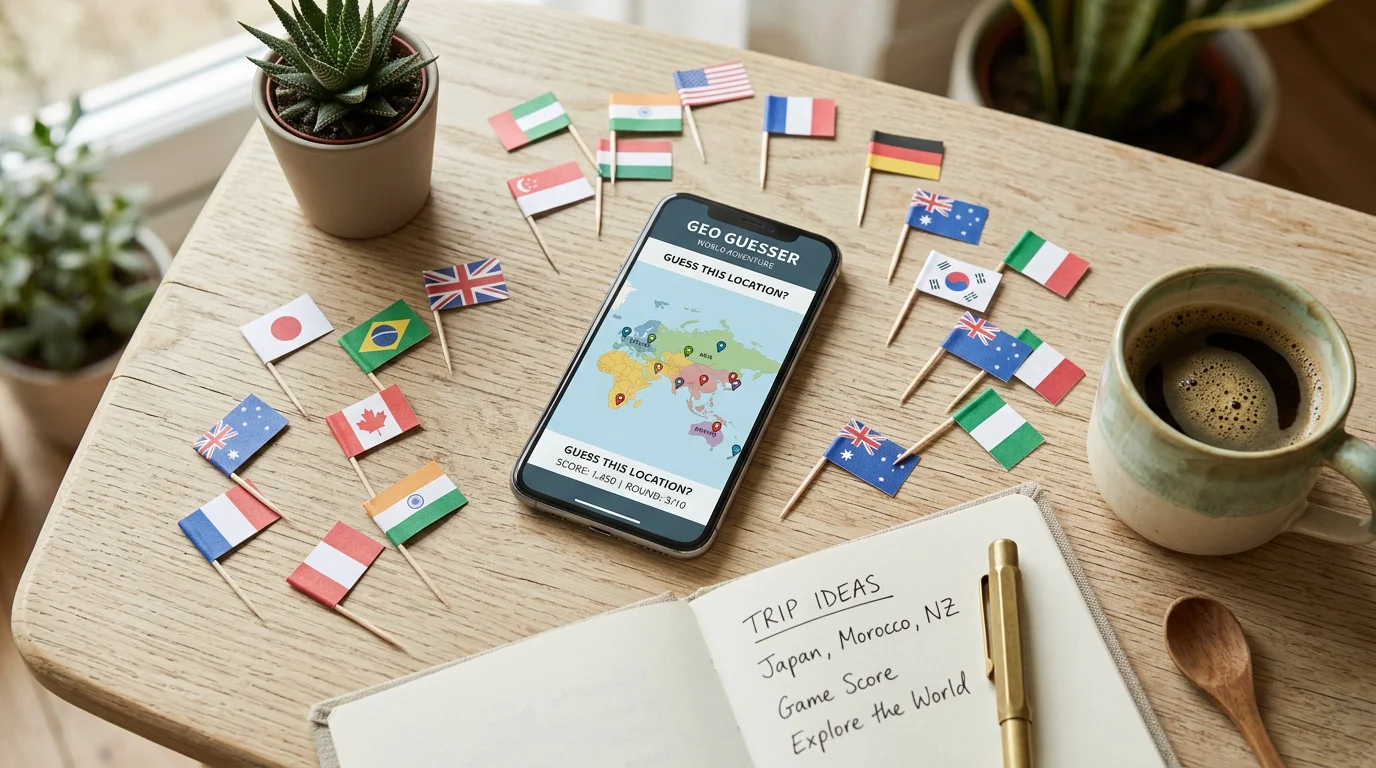
Imagine spending five minutes with your morning coffee guessing one country, then comparing your score with friends. That's the whole trick: small, repeatable, low-pressure. Consistency beats marathon cram sessions every time.
A few practical moves make it stick. Play one round a day rather than an hour once a week, because spacing your practice out helps memory far more than massing it together. Focus on the regions you keep missing instead of drilling what you already know. And treat wrong guesses as free information, since noticing what you don't know is half the value of any map quiz game.
If you teach or study, a shared daily puzzle doubles as a classroom ritual or a friendly rivalry. A leaderboard turns solo practice into a game you actually want to return to. Prefer a name-first approach? Our country guessing game is a relaxed way to layer geography into your day.
The bottom line on learning the map
Geography stops feeling like homework the moment you make it a game. A countries of the world map game works because it leans on how memory actually functions: short bursts of active recall, repeated daily, quietly moving 195 nations from "never heard of it" to "I've got this." You don't need a fancy plan or a full evening. You need a few curious minutes and the willingness to guess wrong before you guess right. Start small, keep it playful, and watch the world map slowly come into focus.
Take action with Flagdle
Ready to stop feeling lost when a country pops up in the news? You've seen why playful, daily practice beats passive study, and that's exactly what we've built for curious minds, students and travelers alike.
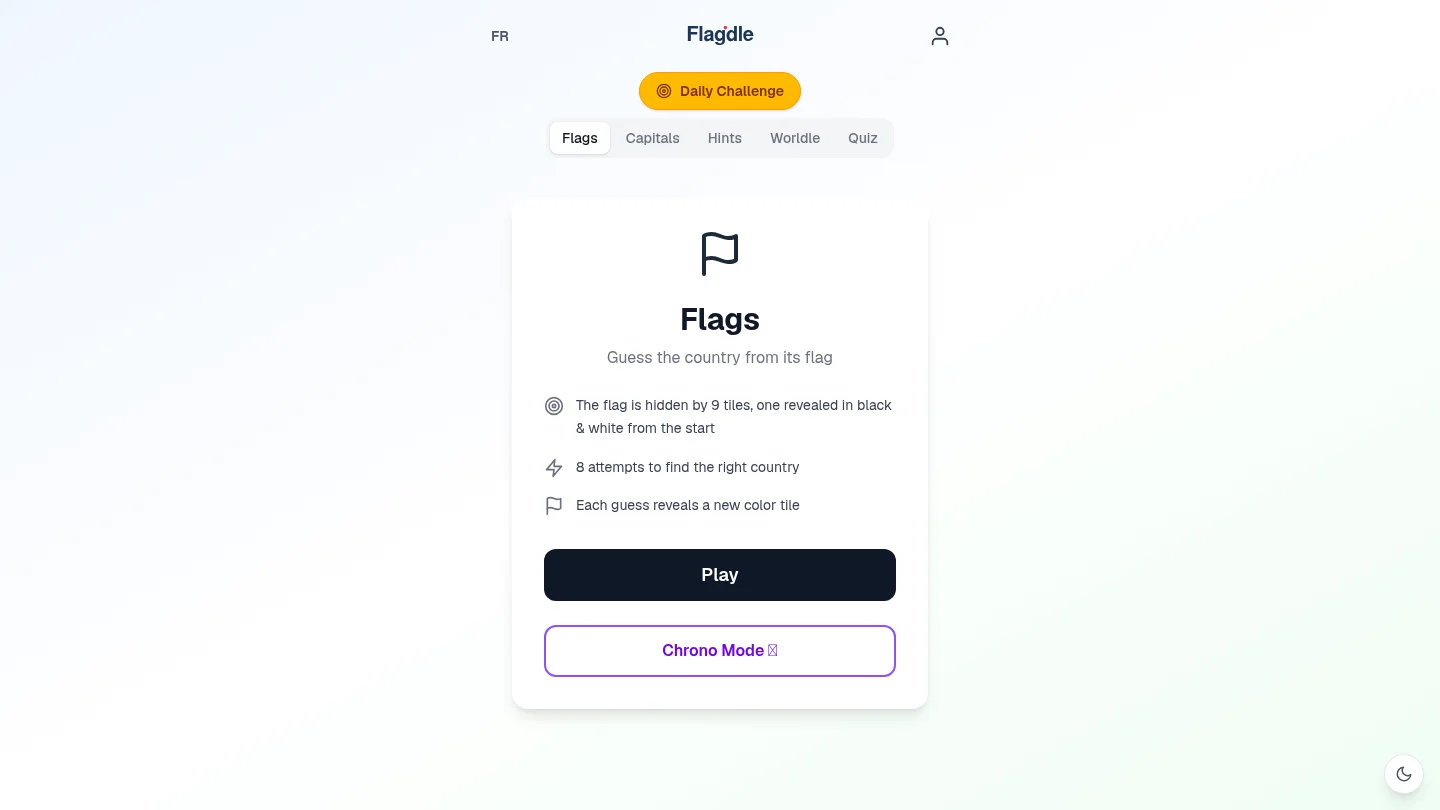
With our free daily flag guessing game, you identify a country from its masked flag in three tries, tackle capitals and silhouettes, and take on the Défi du jour, six mini-games that feed a daily, weekly and monthly leaderboard. It covers all 195 UN-recognized countries, needs no account, and skips the intrusive ads. Same puzzle for everyone, every day: play, compare with friends, and learn the world one flag at a time.
Frequently Asked Questions
How many countries should a good map game cover?
A solid game should include all 195 UN-recognized countries so you're learning the complete picture, not a shortlist. Some tools stretch to 200-plus by adding territories. Our daily flag game sticks to the 195 sovereign nations for consistency.
Do geography games really help you remember countries?
Yes, because they rely on active recall, which research shows builds stronger memory than rereading. Every time you guess a country, flag or capital, you reinforce that knowledge. Short daily rounds make the effect compound over weeks.
Are map guessing games free to play?
Many are free, though some hide progress behind accounts or run heavy ads. Our version is free, needs no sign-up, and stores your stats locally on your device. That means you can start playing in seconds.
How long should I play each day to see results?
Five minutes a day is plenty when you're consistent. Spacing short sessions out beats one long cram, since your brain retains more with gaps between practice. A single daily puzzle is an easy habit to keep.
What's the best game format for total beginners?
Start with a format that gives progressive clues, like continent, population or language hints, so you're guided rather than guessing blind. Flag and silhouette modes then add variety as you improve. Mixing formats keeps practice fresh and challenging.