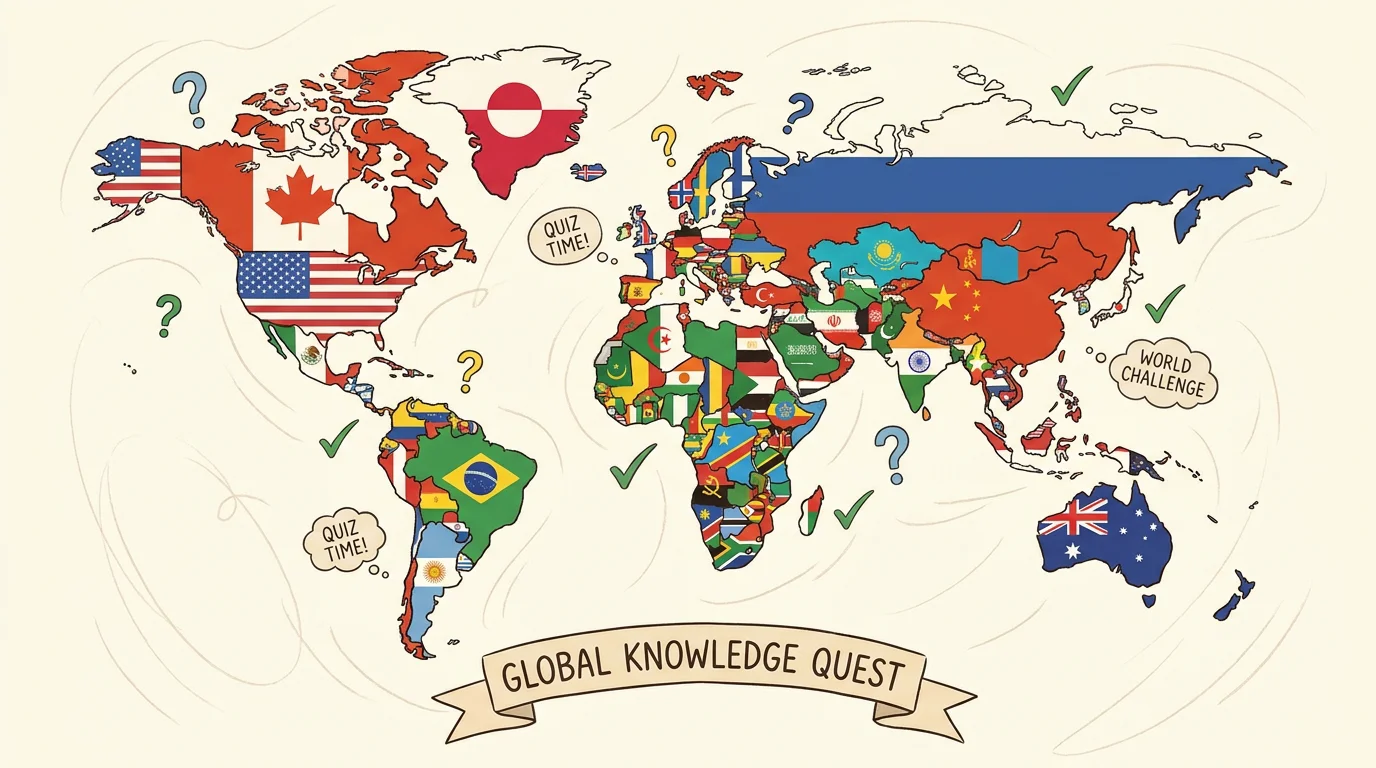
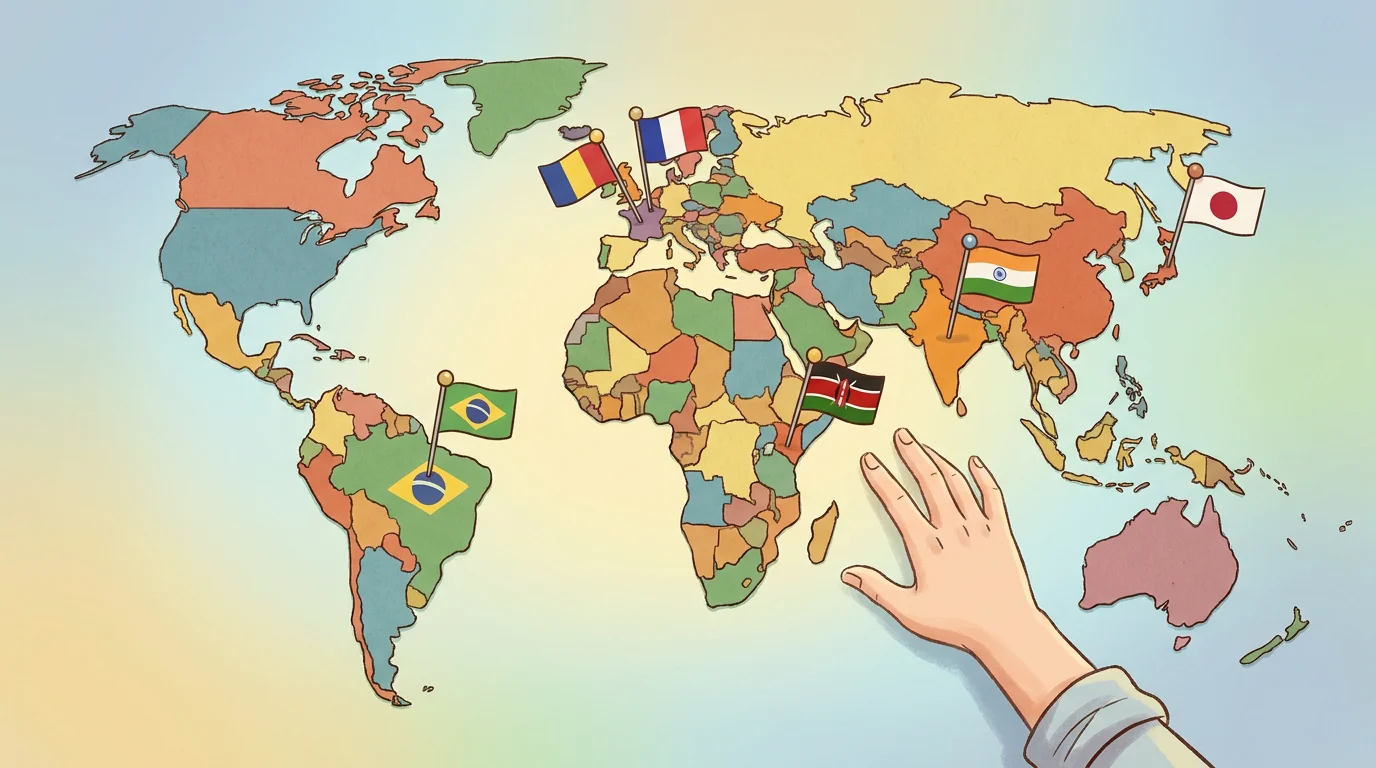

Here's a wild thought: there are 195 countries on our planet, and most of us can barely name 50 off the top of our heads. That's exactly why online games about countries have exploded in popularity. They turn what used to be boring textbook memorization into genuinely addictive challenges. Whether you're matching flags, pinpointing capitals, or placing nations on a blank map, these games are doing the heavy lifting so your brain doesn't have to grind through flashcards. If you love flags, you'll want to check out our country flag games online for a daily dose of geography fun.
And this isn't just a niche hobby anymore. By 2026, the game-based learning market is predicted to reach $26.3 billion, and geography quizzes are riding that wave hard. From students prepping for exams to trivia lovers killing time on the commute, millions of people now search for countries games online every month. Let's break down what's out there, why it works, and where to find the best experiences.
Why Online Country Games Are Booming Right Now
The growth isn't accidental. According to survey data, a significant 88% of teachers who use digital games in their classrooms reported increased student engagement, as noted by Market.us research. When you swap a static worksheet for an interactive map quiz, something clicks (literally). Students retain more, adults stay curious longer, and everyone has a better time doing it.
More than 410,000 educational institutions worldwide have incorporated educational games into their teaching frameworks, with approximately 38% of schools adopting gamified solutions as part of their formal curriculum. That's a massive shift from just a few years ago. Geography, in particular, benefits from the visual and interactive nature of game-based learning because it inherently involves maps, shapes, colors, and spatial reasoning.
The broader edtech space is supercharging all of this. The global online education market was estimated at $75.6 billion in 2025 and is expected to grow to about $91.8 billion in 2026, according to Custom Market Insights. Free geography games are a gateway into that ecosystem, giving players a zero-cost entry point into lifelong learning.
Types of Country Games You'll Actually Enjoy
Not all geography games are created equal. Here's a quick breakdown of the main categories so you can pick your poison.
Flag Identification Games
These test your ability to recognize national flags. Some show you the flag and ask you to name the country; others reveal the flag progressively, tile by tile, making it a real puzzle. We built our flag quiz games around exactly this concept, with a daily challenge that keeps you coming back. It's a simple format, but it gets surprisingly tricky once you move past the obvious ones like the US or Japan.
Map Placement Quizzes
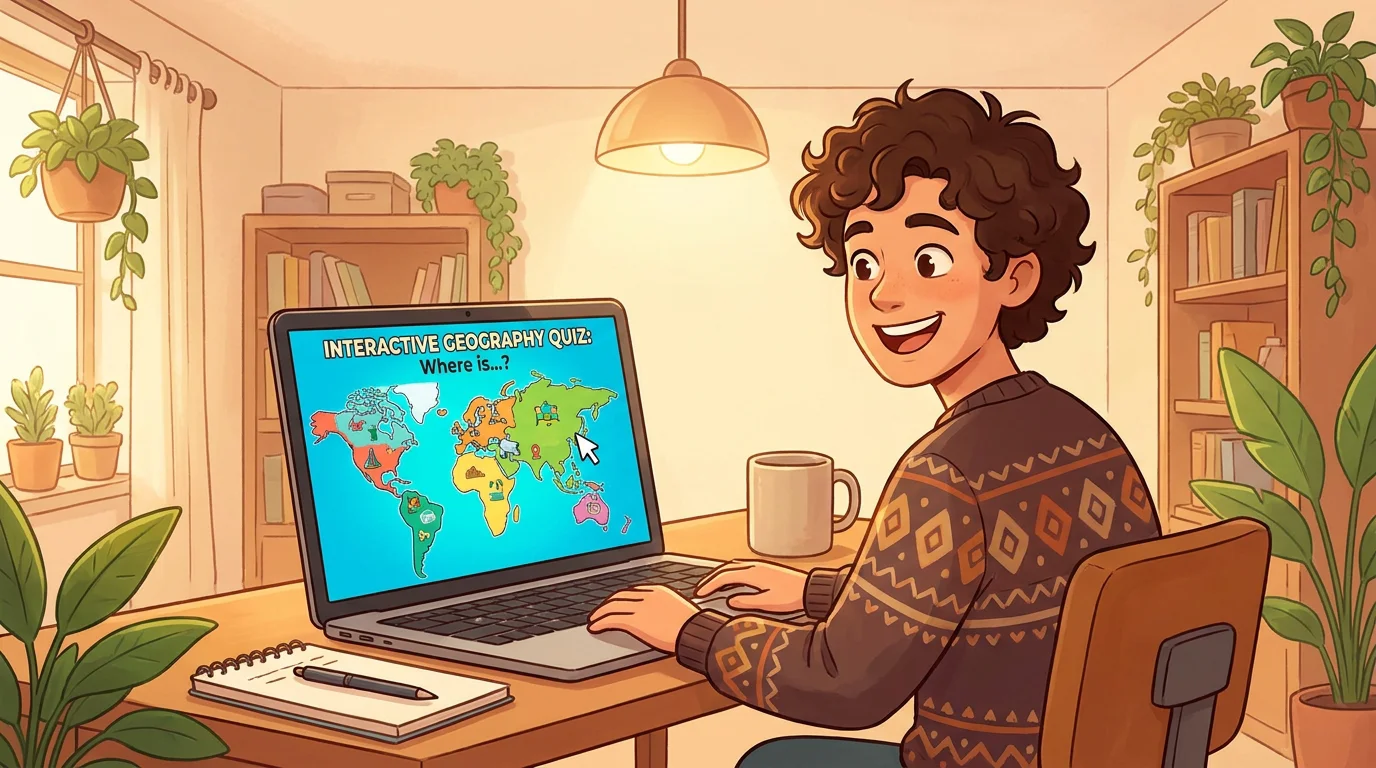
Can you actually point to Kyrgyzstan on a blank map? Map placement games challenge you to drag or click countries into their correct location. Platforms like Seterra (now part of GeoGuessr) offer over 400 customizable quizzes spanning every continent. It's humbling and educational in equal measure.
Capital and Trivia Quizzes
These go beyond location and test your knowledge of capitals, populations, currencies, languages, and even GDP. The World Geography Quiz Game app on Google Play, for example, packs over 6,000 questions across four difficulty levels. Our own daily challenge covers capitals, coats of arms, neighbors, and currencies, so you get a full geography workout every day.
GeoGuessr-Style Exploration
Dropped into a random Google Street View location, you guess where in the world you are. It's the most immersive format and has spawned a huge competitive community. If you prefer a simpler take, try our map guessing game for a clean, focused experience.
What Makes a Great Geography Game (and What Doesn't)
With so many options floating around, it helps to know what separates a genuinely educational game from a forgettable time-waster. Here are the key ingredients.
Progressive difficulty is essential. Games that throw all 195 countries at you from minute one are overwhelming. The best ones start with recognizable nations and gradually introduce obscure ones. A tile-by-tile reveal system (like what we use with our country flag guessing game) adds a puzzle element that keeps your brain working without frustrating you.
Instant feedback matters too. When you guess wrong, you should immediately see the correct answer and where that country sits on the map. This feedback loop is what turns casual play into actual learning. Without it, you're just clicking randomly.
Finally, replay value seals the deal. Daily challenges, leaderboards, timed modes, and varied question types all keep the experience fresh. A game you play once and forget isn't doing much for your geography knowledge.
The Science: Why Playing Actually Helps You Learn
It's not just anecdotal. The data backs up what gamers already feel intuitively. Research has indicated that game-based learning can improve retention rates and knowledge acquisition compared to traditional methods, according to IMARC Group's market analysis. When you're actively engaged (clicking, guessing, competing), your brain encodes information more deeply than when you're passively reading.
Geography is especially well suited for this. You're associating visual shapes with names, colors with nations, and spatial locations with facts. That multi-sensory input creates stronger memory pathways. It's why someone who's played flag games for a month can often outperform someone who studied a textbook for a semester.
The shift towards personalized learning and gamified education methodologies is significantly boosting demand, as educational games offer interactive and adaptive learning experiences that cater to individual student needs far more effectively than traditional methods. Whether you're a visual learner who thrives on map quizzes or someone who learns best through repetition in daily challenges, there's a format that fits.
Free vs. Paid: Where to Spend (and Where Not To)
One of the best things about online geography games is that most of them are completely free. You don't need a subscription or an app purchase to start learning. Here's how the landscape breaks down.
| Platform | Cost | Game Types | Daily Challenge | Flag Games |
|---|---|---|---|---|
| Flagdle (us) | Free | Flags, capitals, maps, trivia | Yes | Yes (progressive reveal) |
| Seterra | Free (with ads) | Map quizzes, flags, capitals | No | Yes |
| World Geography Quiz | Free (in-app purchases) | Trivia, maps, flags | No | Yes |
| Sheppard Software | Free | Map drag-and-drop, tutorials | No | No |
| GeoGuessr | Freemium (paid pro) | Street View exploration | Yes | No |
As you can see, paid options mostly add convenience features rather than core content. For pure geography learning, free tools get the job done beautifully. We keep everything on Flagdle free because we believe learning about the world shouldn't cost a thing.
Tips to Get the Most Out of Country Games
Just playing isn't enough if you want to genuinely level up your geography knowledge. Here are a few strategies that'll accelerate your learning.
Play daily. Consistency beats intensity. A five-minute daily quiz builds stronger long-term memory than a one-hour cramming session once a week. That's why daily challenge formats are so effective.
Mix your game types. Don't just stick to flag games or just map quizzes. Alternate between them. Seeing a country's flag, then placing it on a map, then recalling its capital creates reinforcing connections in your brain. Our all countries flag quiz is a great complement to map-based challenges.
Focus on your weak spots. Most people can breeze through Europe and North America. It's Africa, Central Asia, and the Pacific Islands that trip everyone up. Deliberately target those regions. Some apps (like World Geography Quiz) even have a "train your weaknesses" feature after each round.
Challenge friends. Competition adds motivation. Share your daily scores, set up informal tournaments, or just text a friend when you finally nail all the Caribbean flags. Social accountability keeps you coming back.
Who's Playing (and Why It Matters)
You might assume this is mainly a kid thing, but the audience is way broader than you'd expect. Students use these games for test prep, obviously. But travel enthusiasts use them to research destinations. Trivia buffs train for quiz nights. Retirees keep their minds sharp. And language learners use geography games as a gateway into understanding new cultures.
The increasing accessibility and affordability of digital devices, coupled with readily available high-speed internet, are expanding the reach of educational games to a wider audience, encompassing diverse age groups and geographical locations. In other words, anyone with a phone or a laptop can jump in. The barrier to entry is basically zero.
The K-12 educational game segment is poised to dominate the market during the 2025 to 2033 forecast period, according to Data Insights Market research, but the fastest-growing user segment is actually adults who play casually. That intersection of learning and entertainment (sometimes called "edutainment") is where country quizzes and flag games thrive.
What's Next for Geography Games
Virtual reality and augmented reality are becoming more prominent in game-based learning, with VR and AR projected to account for 30% of the game-based learning market by 2026. Imagine pointing your phone at a globe and seeing country facts pop up in real time, or taking a virtual walking tour through a capital city as part of a quiz. That's not science fiction; it's happening now.
AI personalization is the other big shift. Game-based learning platforms are increasingly integrating AI to provide personalized learning experiences, and by 2025, over 40% of game-based learning tools were expected to utilize AI to adapt content to individual learners' needs. This means future geography games will know exactly which countries you struggle with and serve up targeted challenges.
For now, the fundamentals are what matter: a clean interface, smart question design, and the right balance of challenge and fun. Online games about countries have come a long way from the simple click-on-a-map quizzes of the early web, and they're only getting better. Whether you're a casual player or a geography nerd, there's never been a better time to explore the world from your screen. If you want a free daily challenge that tests your flag knowledge with a clever progressive reveal system, try our daily flag challenge and see how many countries you can identify.
Frequently Asked Questions
What are the best free online games to learn countries?
There are several solid options depending on what you want to learn. For flags, Flagdle offers a free daily challenge where the flag is revealed tile by tile. Seterra covers map-based quizzes for every continent. Sheppard Software is great for younger learners with its drag-and-drop format.
Can playing geography games actually improve your knowledge?
Yes, and the research supports it. Game-based learning has been shown to improve retention compared to traditional study methods. The key is consistency; playing a short quiz every day is more effective than long, infrequent study sessions.
Are online country games suitable for kids?
Absolutely. Most geography game platforms are designed to be family-friendly, and many are used in classrooms worldwide. Games that start easy and build progressively (like our flag quiz, which reveals the flag piece by piece) are especially good for younger players who might get overwhelmed by too much information at once.