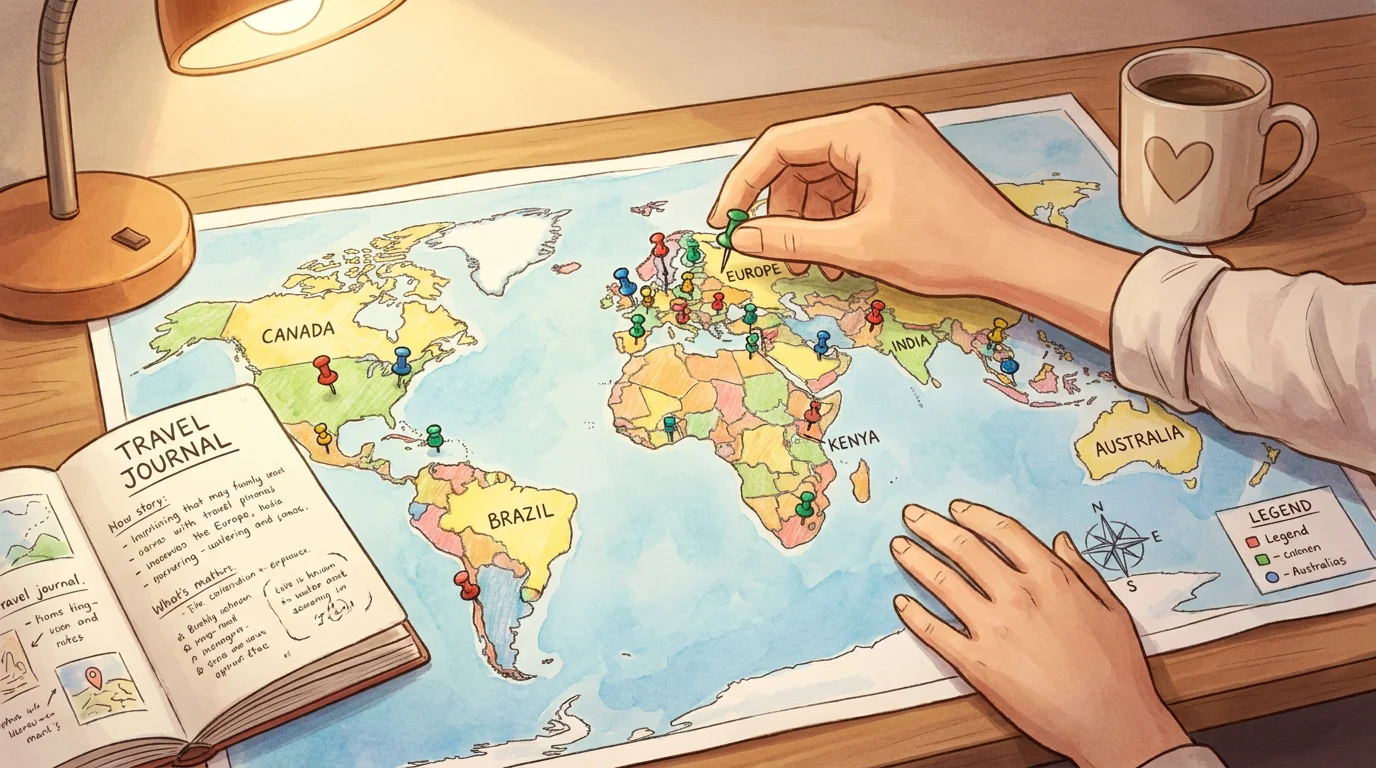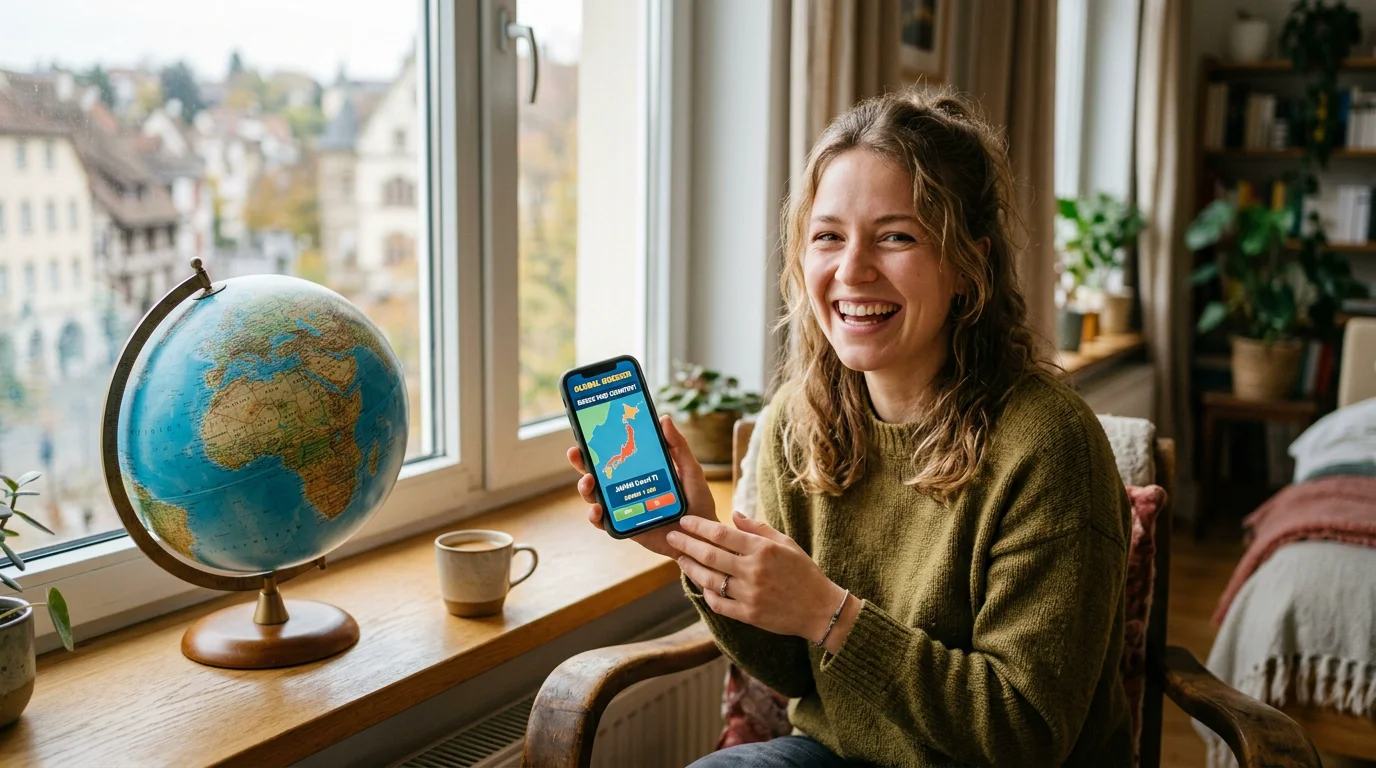
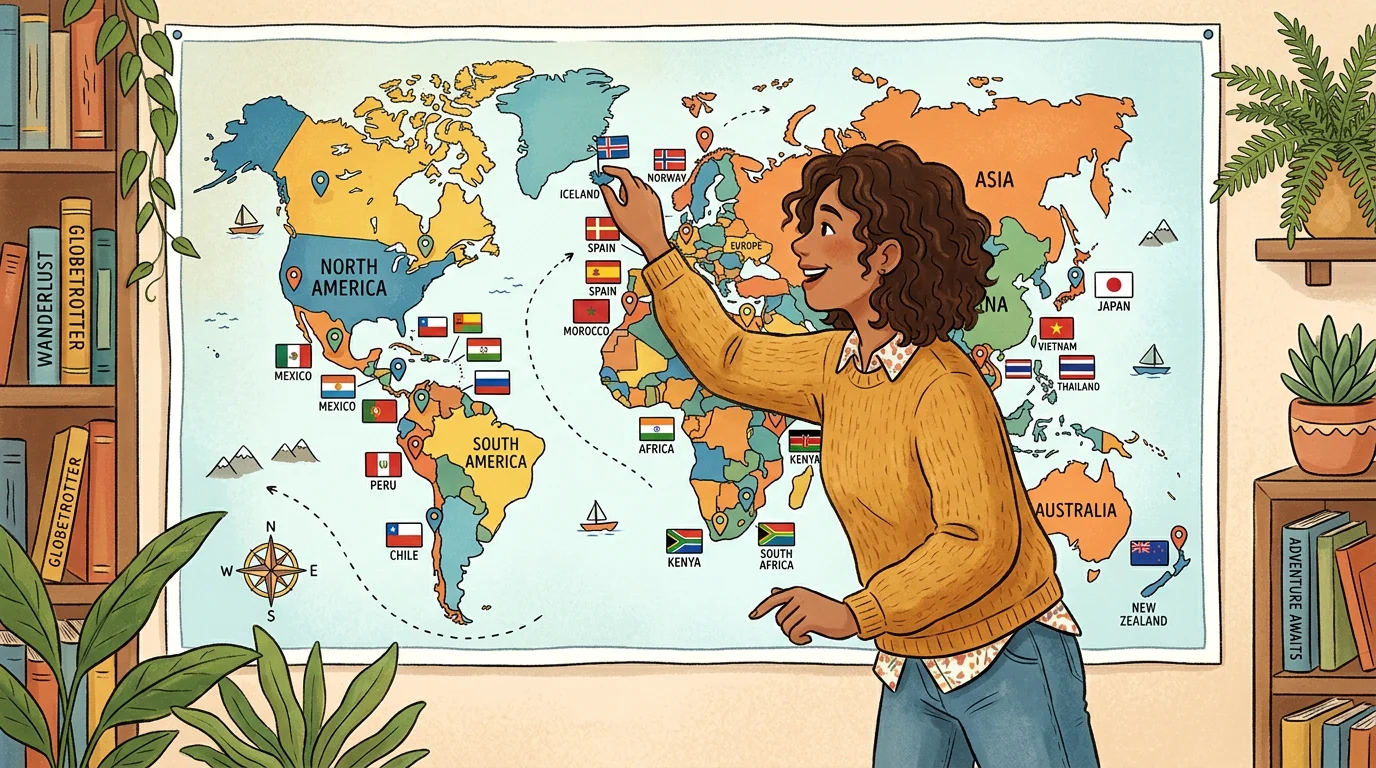

Ever tried naming all 195 countries and stalled somewhere around the Pacific islands? You're not alone, and that's exactly why games about different countries have exploded in popularity. They flip a boring memorization task into a quick daily win. Instead of staring at a static map, you guess, get instant feedback, and slowly build a mental atlas that actually holds. Our map guessing game Mapdle is one example of how a two-minute round can teach you more than a textbook page.
The momentum isn't just anecdotal. The game-based learning market was valued at USD 11.5 billion in 2022 and is predicted to reach USD 26.3 billion by 2026, growing at a 21.6% annual clip. That surge is powered by one simple truth: people learn faster when they're having fun, and geography is a perfect playground for it.
Why country games make geography actually stick
The secret sauce is a learning principle called active recall. When a flag or a silhouette pops up and you have to produce the answer, your brain works harder than it does while passively reading. That effort is what cements the memory. It's the same reason flashcards beat re-reading notes every single time.
There's data behind the vibe too. According to survey figures, 88% of teachers who use digital games in class report higher student engagement, and 80% say the games help them reach different learning styles. When you're engaged, you show up again tomorrow, and repetition over days is what builds real recall.
So when you play different country games, you're not just killing time. You're running short, spaced practice sessions that quietly train your memory. Add a bit of time pressure and the effect gets stronger, because your brain switches from lazy recognition to sharp, on-demand recall.
The main types of country games to try
Not all country games are built the same, and the format changes what you learn. Here's the quick lay of the land:
- Flag guessing games: identify a nation from its flag, sometimes revealed tile by tile. Great for visual memory.
- Capital city quizzes: match a capital to its country, or the reverse. Perfect for pairing names.
- Map location drills: click the right country on a blank map. Builds spatial awareness.
- Silhouette or shape challenges: guess a country from its outline, often with distance and direction hints.
- Progressive clue games: use hints like continent, population, or language to narrow down a mystery nation.
If you like mixing formats, our guide to world guessing games breaks down how each mode works and which one fits your goals. Beginners often start with flags and capitals, then graduate to shapes and clue-based rounds once the easy ones feel automatic.
The daily shared challenge: where it gets social
Here's the twist that keeps people coming back: the daily format. Instead of an endless quiz you play until you're bored, one puzzle drops each day, identical for everyone on the planet. You get a few tries, you're done, and you can compare your score with friends. That tiny bit of friendly competition is a surprisingly powerful hook.
This model works because it blends engagement with retention. Research summarized by gamification analysts notes that students who learn through game mechanics tend to outperform their peers, with better test scores and stronger retention over time. A shared daily puzzle stacks small wins across weeks, which is exactly how long-term memory gets built.
If comparing scores is your thing, our flag quiz games feed a daily, weekly, and monthly leaderboard so you can see how you stack up against the community. It turns solo studying into a low-key team sport.
Country games in the classroom and beyond
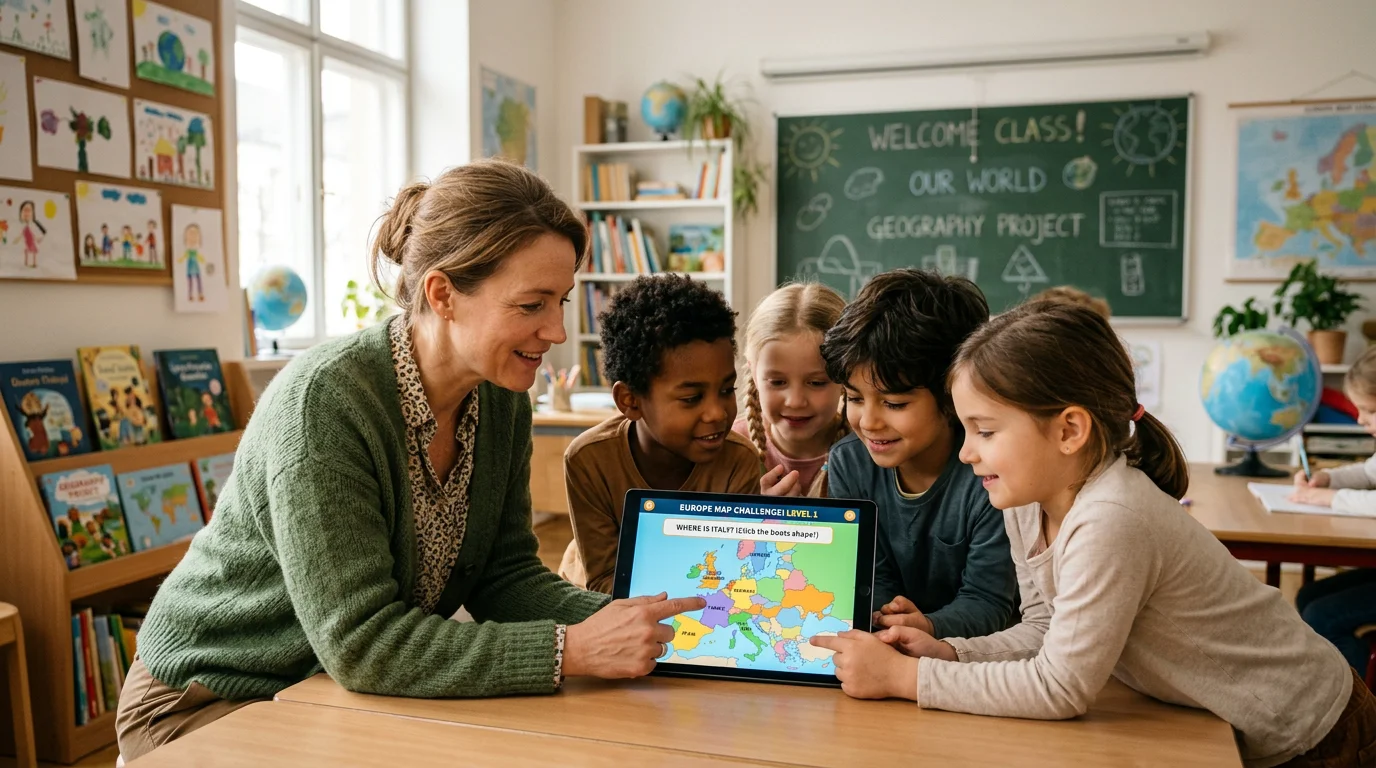
Teachers have quietly known this trick for years. A five-minute geography ritual at the start of class wakes students up and sneaks in real learning. Educational nonprofits have leaned into the format too. National Geographic's education team has highlighted free, interactive activities like GeoGames, hands-on online tools designed to make geography click for school-age learners.
But you don't need a classroom to benefit. Travelers use flag and capital games to prep for a trip. Trivia fans sharpen their general knowledge. Curious people just want to finally learn where Eswatini or Kiribati actually sit on the map. The beauty is that the same short game serves a student cramming for an exam and a traveler planning a route.
How the main formats compare
Wondering which type of country game matches your goal? This quick comparison lines up the popular formats by what they train and how fast you can play.
| Format | What you learn | Best for | Free daily play |
|---|---|---|---|
| Our Flagdle daily flag game | Flags, capitals, shapes, clues (all modes) | Building a full daily habit | Yes, 195 countries |
| Flag-only guessers | Visual flag recognition | Quick visual memory | Varies |
| Capital quizzes | City-to-country pairing | Name association | Varies |
| Map location drills | Where countries sit | Spatial awareness | Varies |
| Silhouette challenges | Country outlines | Shape recognition | Varies |
The formats that combine several modes give you the widest coverage. If you want to sharpen the skill of reading a flag, a capital, and a shape all at once, our walkthrough on how to guess the country shows how to layer these clues into a reliable method.
Building a five-minute daily routine that works
Consistency beats intensity here. A short, repeatable ritual will teach you more than one marathon session ever could. Try this:
- Pick a fixed moment: morning coffee, lunch break, or the bus ride home.
- Play one daily flag round and one capital round. Two minutes, tops.
- Note the ones you missed. Say them out loud, that reinforces recall.
- Once a week, run a silhouette or clue challenge to test the harder edges.
- Compare scores with a friend to keep the streak alive.
The trick is to keep the sessions tiny and frequent. Missing a country twice in one week is the signal to focus there. Over a couple of months, those five-minute rounds quietly add up to a mental map of the entire world.
The takeaway on learning the world through play
The appeal of different country games comes down to one thing: they make a daunting task feel like a game you want to play again tomorrow. Active recall does the heavy lifting, the daily format keeps you consistent, and the social scoreboard keeps it fun. Whether you're a student, a teacher, a traveler, or just curious, the smartest move is to pick one short format and play it every single day. Small, steady rounds are how the 195 countries stop being a blur and start being knowledge you actually own.
Take action with Flagdle
Ready to turn that five-minute habit into real geography knowledge? If you want a single place that bundles flags, capitals, silhouettes, and progressive clues into one daily ritual, we built exactly that. The same puzzle drops for everyone worldwide, so you can challenge friends and climb the leaderboard together.
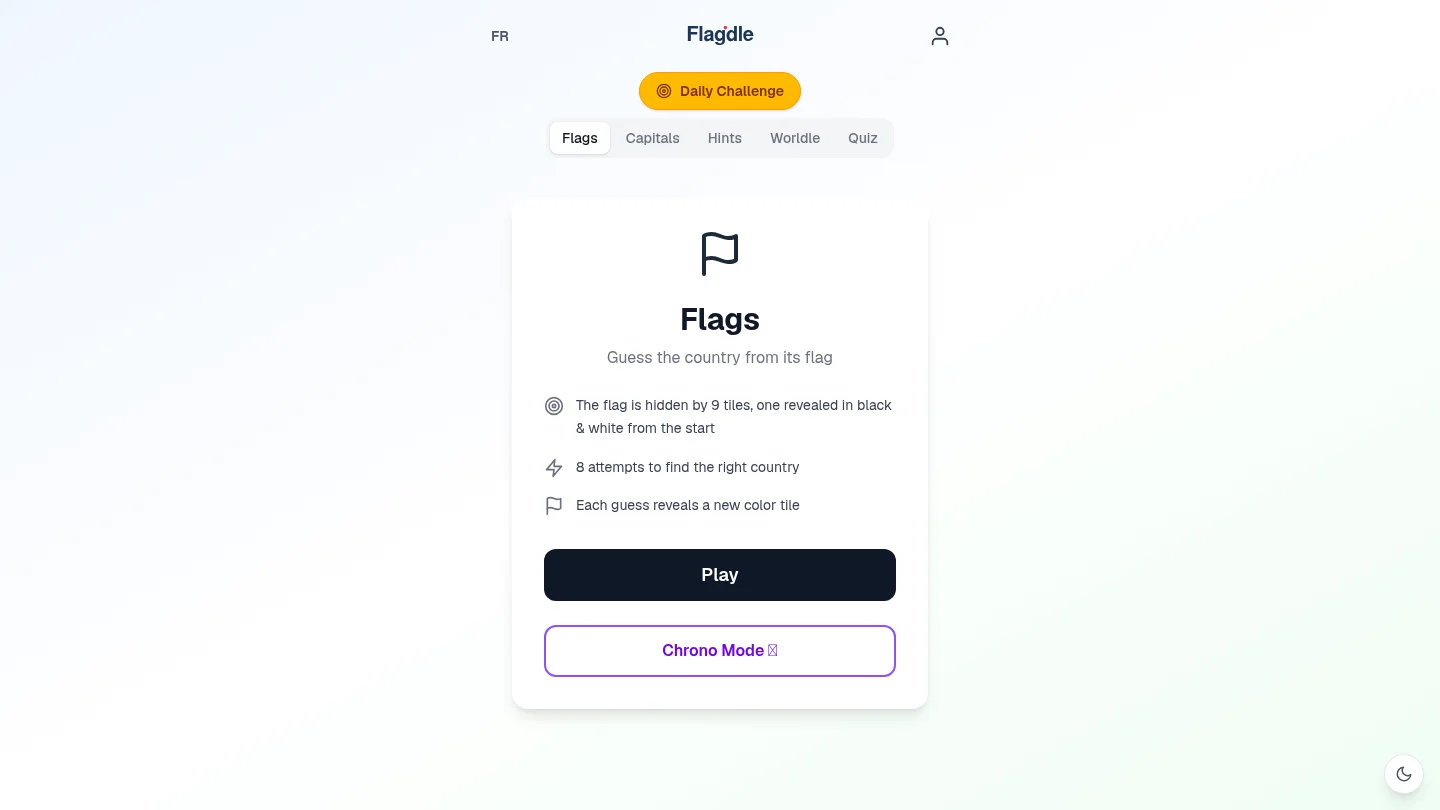
Give our daily flag guessing game a spin. You'll identify the country of the day from a flag masked by nine tiles in three tries, cover all 195 UN-recognized nations, and unlock extra modes like Capitals, Worldle silhouettes, and the six-game Daily Challenge. It's free, needs no account, and keeps your stats on your own device. One round a day is all it takes to start knowing the world.
Frequently Asked Questions
Are country games actually good for learning geography?
Yes, because they rely on active recall, which cements memory far better than passive reading. Playing short rounds daily builds spaced repetition into your routine. That combination is why so many teachers use them as a quick classroom warm-up.
What's the best type of country game for a total beginner?
Start with flag guessing and capital quizzes, since they build simple, high-frequency associations. Once those feel automatic, move on to map location drills and silhouette challenges. Our daily flag game lets you mix all these modes as your confidence grows.
How many countries should I aim to learn?
There are 195 countries recognized by the UN, so that's the full target. Don't rush it, though. Learning a handful of new ones each week through daily play is far more durable than cramming them all at once.
Are these country games free to play?
Many of the best options are completely free and run right in your browser. Some sites may ask for an account or show ads. Our version stays free with no account required and keeps your stats stored locally on your device.
How long should I play each day to see results?
Five minutes a day is plenty when you're consistent. A couple of quick rounds beats a rare marathon session for long-term retention. The key is showing up daily and reviewing the countries you missed.