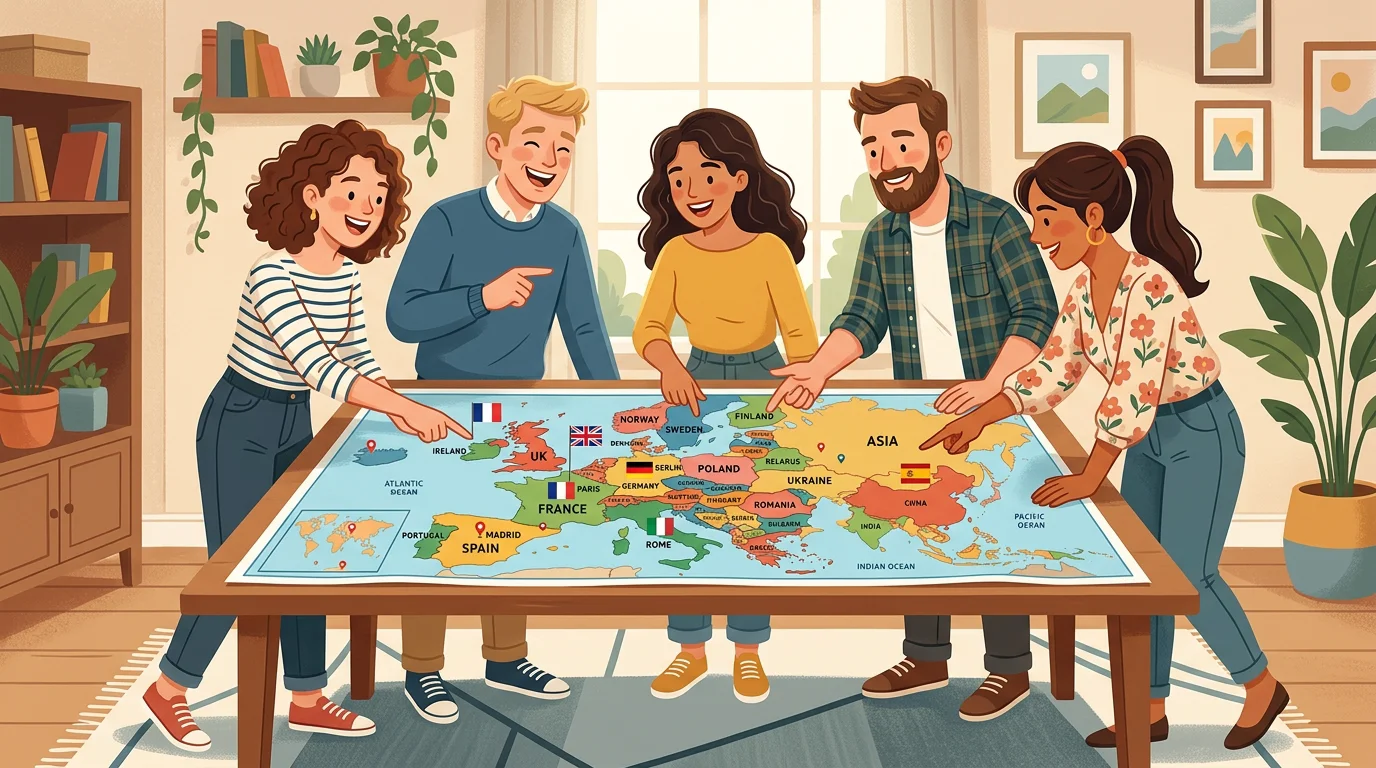

Here's a humbling fact: even sharp students freeze when a flag looks unfamiliar. In one university study, a widely known map scored 92% recognition while a smaller neighbor managed just 12%. That gap tells you everything about why learning to guess the country from a flag alone can feel like a coin flip when the design is unusual.
The good news? You don't need a photographic memory. You need a method. When you learn to combine a flag's palette with a capital city and a country's outline, your accuracy jumps. If you want a structured starting point, our guide to guessing a country by flag, shape and capital lays out the fundamentals. According to a Cartographica study, exposure and repetition are exactly what most learners lack.
Why guessing a country is trickier than it looks
Flags weren't designed to be easy quiz answers. Many share the same colors, similar stripes, and near-identical layouts. Red-white-blue tricolors alone cover dozens of nations, so a quick glance rarely settles it.
The research backs this up. In that same National University of Singapore study, only 19% of students correctly identified the Korean Unification Flag, and just 13% matched flags that contained embedded maps. The takeaway is simple: relying on a single visual cue leaves you guessing. That's why the smartest approach layers multiple hints instead of betting everything on one.
The clues that actually give a country away
Think of every country as leaving three fingerprints. Learn to read all three and the mystery usually solves itself.
- The flag: colors, ratio, stars, crescents, crosses, and central emblems narrow the field fast.
- The capital city: a capital is a near-unique identifier. Almost no two countries share one.
- The map silhouette: a coastline shape or a landlocked outline points you to a region instantly.
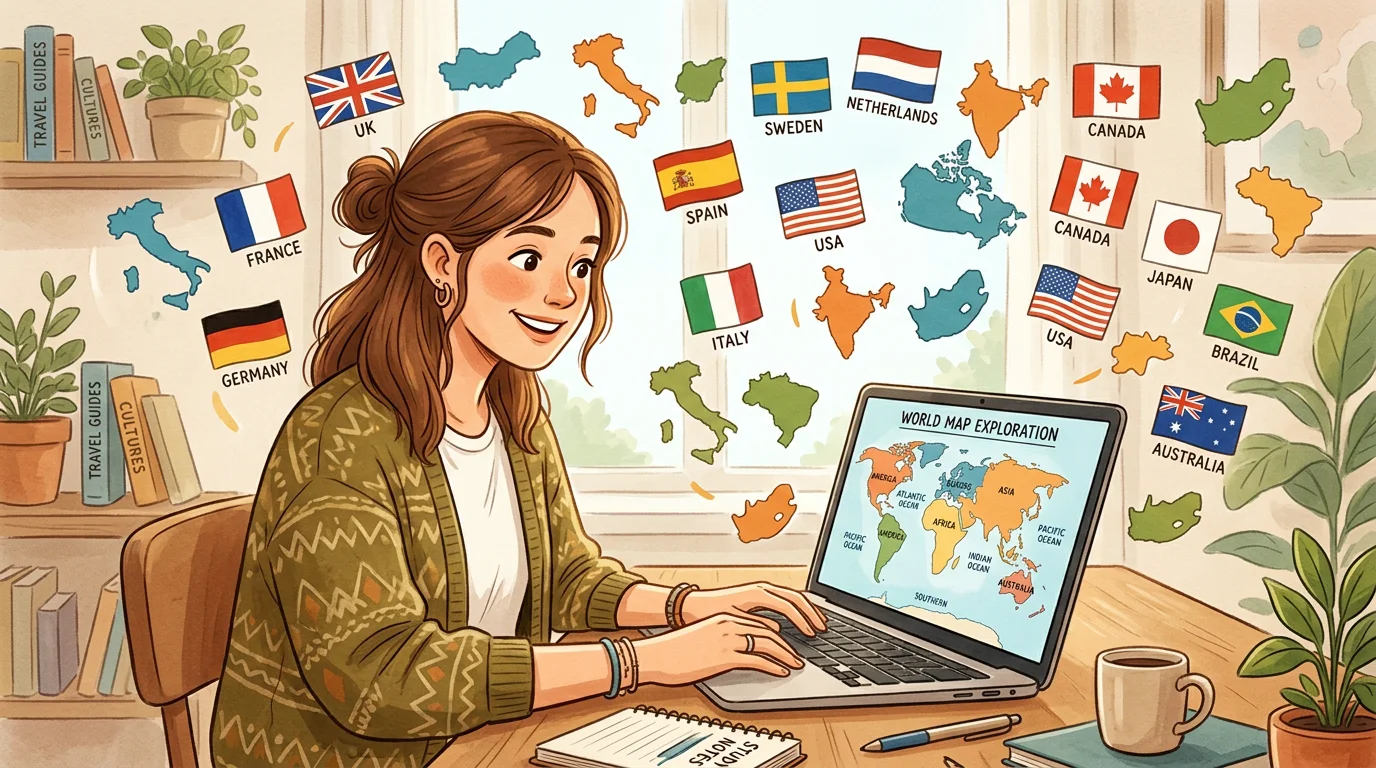
Pairing a flag with geography is powerful. As one geography game explains, linking each flag to a country's real location strengthens visual memory and spatial understanding at the same time. It's a dual-learning effect: you remember the flag better because you know where it sits on the map. If you want to practice reading these signals together, our walkthrough on finding a country breaks down each clue type step by step.
Smart tactics to guess the country faster
Speed comes from process of elimination, not raw memory. Start broad, then zoom in.
- Spot the continent first. Color families and design styles cluster by region. Nordic crosses point to Scandinavia; pan-African colors hint at sub-Saharan nations.
- Count the distinctive features. A single star, a coat of arms, or an unusual ratio slashes your options quickly.
- Use the capital as a tiebreaker. When two flags look alike, the capital almost always separates them.
- Check the silhouette last. A distinctive coastline confirms your best guess before you commit.
Practice style matters just as much as tactics. According to a geography quiz resource, spaced practice, meaning short sessions repeated over several days, makes recall much stronger than one long cramming session. So five focused minutes a day beats an hour once a week. Mixing continents and revisiting the flags you miss locks them in for good.
Which method should you lean on?
Different clues carry different weight depending on how obscure the country is. Here's how the main approaches stack up when you're trying to identify the country in question.
| Approach | Best for | Weak spot |
| Flag only | Iconic designs (Japan, Canada) | Similar tricolors trip you up |
| Capital only | Confirming near-identical flags | Requires strong city recall |
| Silhouette only | Distinctive coastlines | Small or blocky shapes confuse |
| Combined daily practice (our approach) | All 195 countries, long-term recall | Needs a short daily habit |
The pattern is clear. No single clue wins alone, but stacking them in a daily routine covers your blind spots. If you're curious how a game format ties these together, our breakdown of the guess the country game shows how progressive hints keep you learning even when you're stumped.
Turn guessing into a daily habit
Knowledge fades without repetition. The learners who consistently name countries at a glance aren't gifted; they simply practice a little, often. A quick daily challenge turns a chore into a streak you actually want to keep.
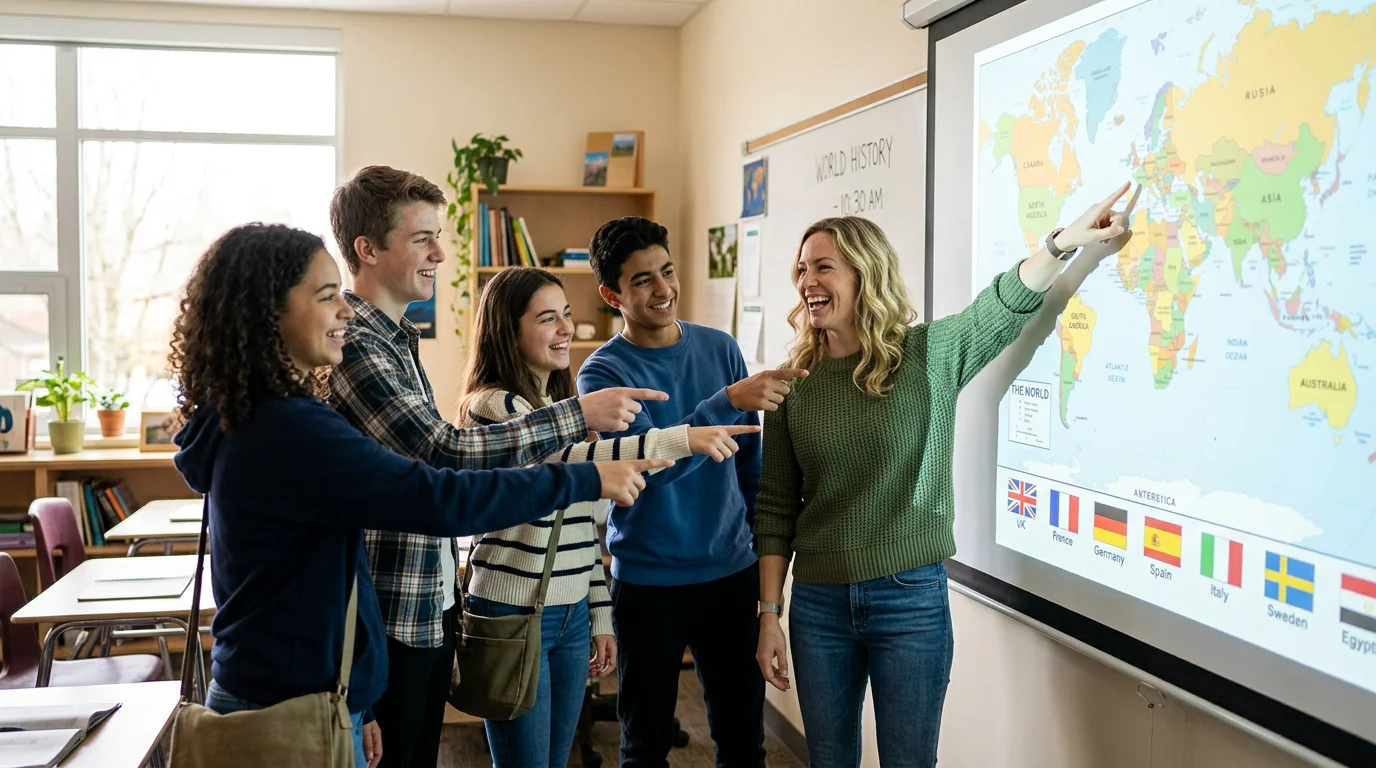
That's also where friendly competition helps. Comparing scores with friends or classmates adds just enough pressure to keep you coming back. Teachers love this too, since a five-minute geography warm-up doubles as an engaging classroom ritual. The trick is picking a format you'll return to tomorrow, and the day after that.
Putting it all together
Learning to guess the country isn't about brute-force memorization. It's about reading three fingerprints together: the flag, the capital, and the silhouette. Start with the continent, eliminate lookalikes with a capital, and confirm with the outline. Then do it again tomorrow. Short, spaced sessions beat marathon cramming every time, and a dash of friendly competition keeps the streak alive. Give your brain a little daily reps and, within a few weeks, flags that once looked identical will feel obvious at a glance.
Take action with Flagdle
Ready to stop guessing blindly and start recognizing countries on instinct? You've got the method; now you need a fun, low-pressure place to practice it every single day without it feeling like homework.
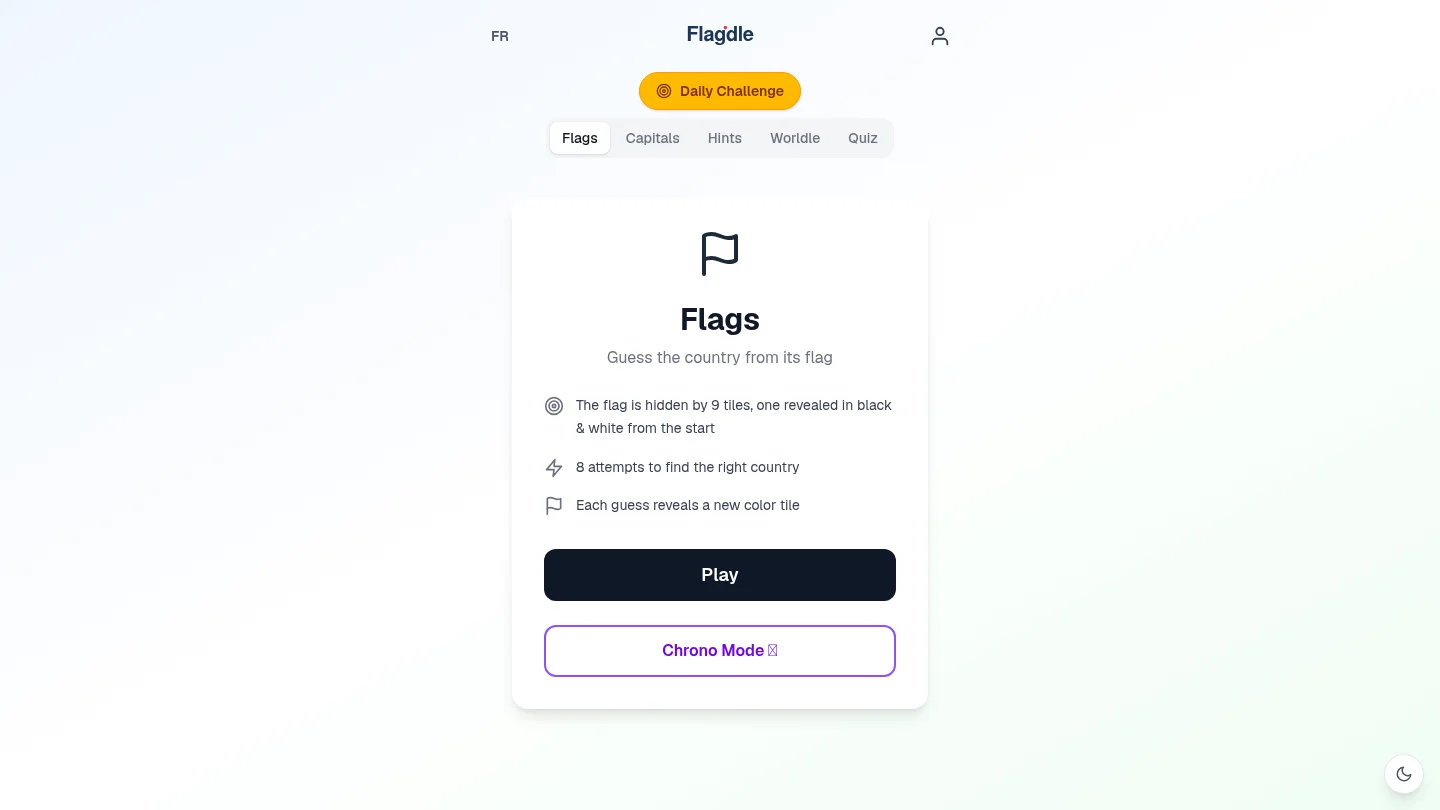
With our free daily flag game, you identify a country in three tries from a flag hidden behind nine tiles, with the same puzzle for everyone worldwide. Switch to capitals, progressive hints, or Worldle-style silhouettes, tackle the daily challenge of six chained mini-games, and compare your score on the daily, weekly and monthly leaderboards. It covers all 195 UN countries, needs no account, and runs right in your browser. Five minutes a day is all it takes.
Frequently Asked Questions
What's the fastest way to guess a country from its flag?
Start by identifying the likely continent from the color palette and design style, since flags cluster by region. Then narrow down using a distinctive feature like a star, emblem, or unusual ratio. Confirm your guess with the capital or map shape if you're unsure.
Why do so many flags look the same?
Many nations share colors and layouts because of shared history, ideals, or regional influence, like Nordic crosses or pan-African colors. That overlap is exactly why a single glance often isn't enough. Pairing the flag with a capital or silhouette removes the ambiguity.
Does learning flags really help with geography?
Yes. Linking a flag to a country's real location strengthens both visual memory and spatial understanding at once. It builds place knowledge, cultural awareness, and map skills, which is why flag games are a popular classroom tool.
How often should I practice to remember flags?
Short, spaced sessions work far better than one long cram. Research on quiz practice shows that repeating a short exercise over several days makes recall much stronger. Five focused minutes a day, mixing continents, is an ideal rhythm.
Is there a free way to practice guessing countries daily?
Absolutely. Our free daily flag game lets you identify a country in three tries and switch between capitals, progressive hints, and silhouette modes. It covers all 195 UN countries, needs no account, and takes about five minutes a day.