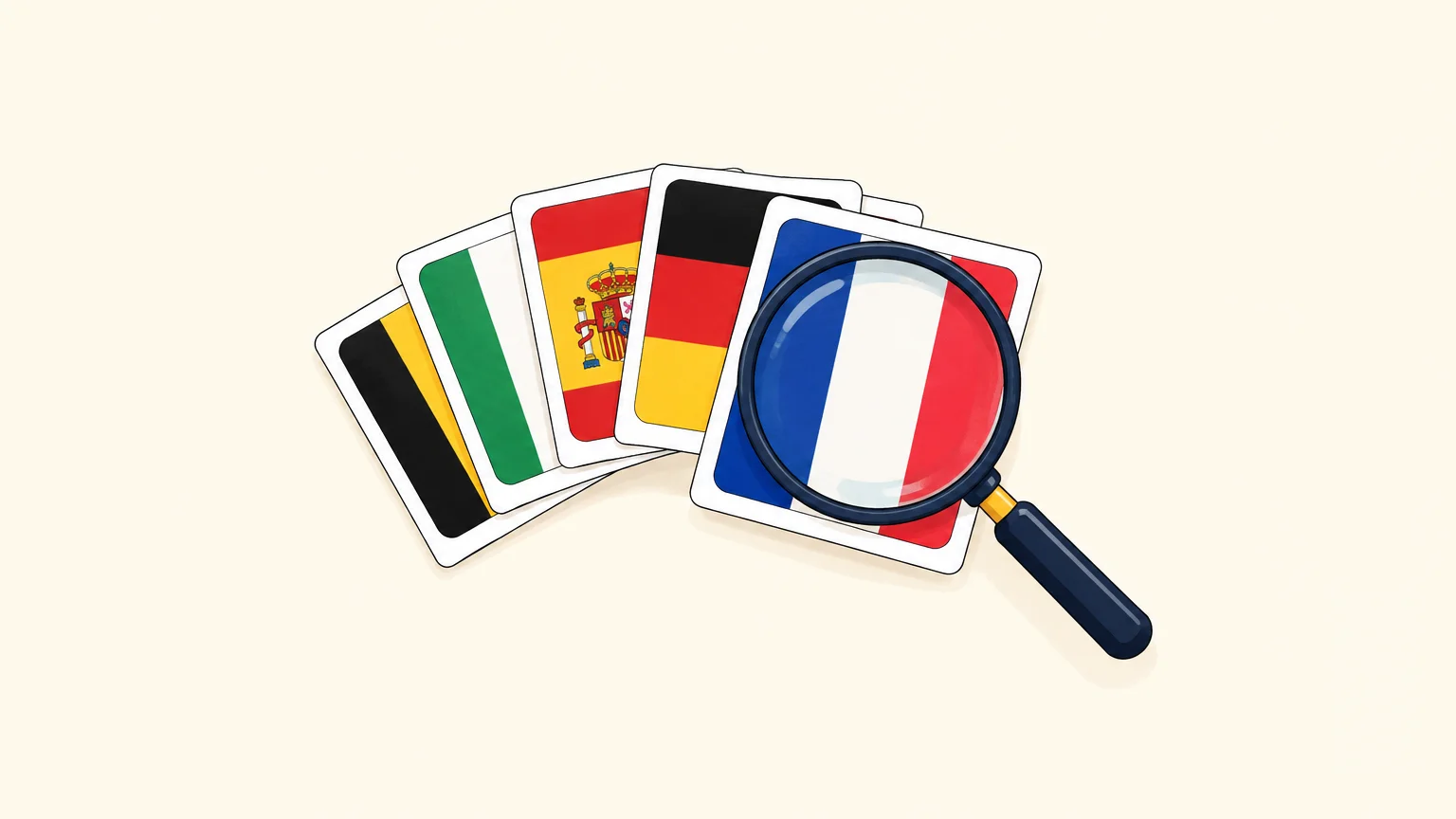

Which flag details stick when colors repeat across borders? A good European flag game asks you to retrieve a country name, not just spot a familiar palette. For a country by country test, start with our European flag quiz, then use the format to decide what you want to practice next.
Searches for “europe flag game” often lead to quick quizzes, matching activities, or timed rounds. Each trains a different skill: recognizing a design from options is easier than naming it without help. A strong practice session combines recognition with recall and gives you a way to review mistakes. Check whether the game covers Europe broadly or only European Union members.
What does a European flag game actually test?
The format changes the challenge. In a multiple choice round, you recognize a flag among options. In a matching activity, you connect flags with country names. A timed quiz adds speed, while a no-option round tests whether you can recall the name on your own.
The European Union Learning Corner’s EU matching game pairs flags from the 27 EU countries. That gives you a clear example of a matching format, but an EU-focused activity is not automatically a complete quiz on European flags.
Choose a format that fits your starting point. If you’re still learning designs, use options or pairs first. Once you recognize the flags, hide the choices and try naming each country from memory. That small change turns a recognition exercise into active recall.
Why do some European flags blur together?
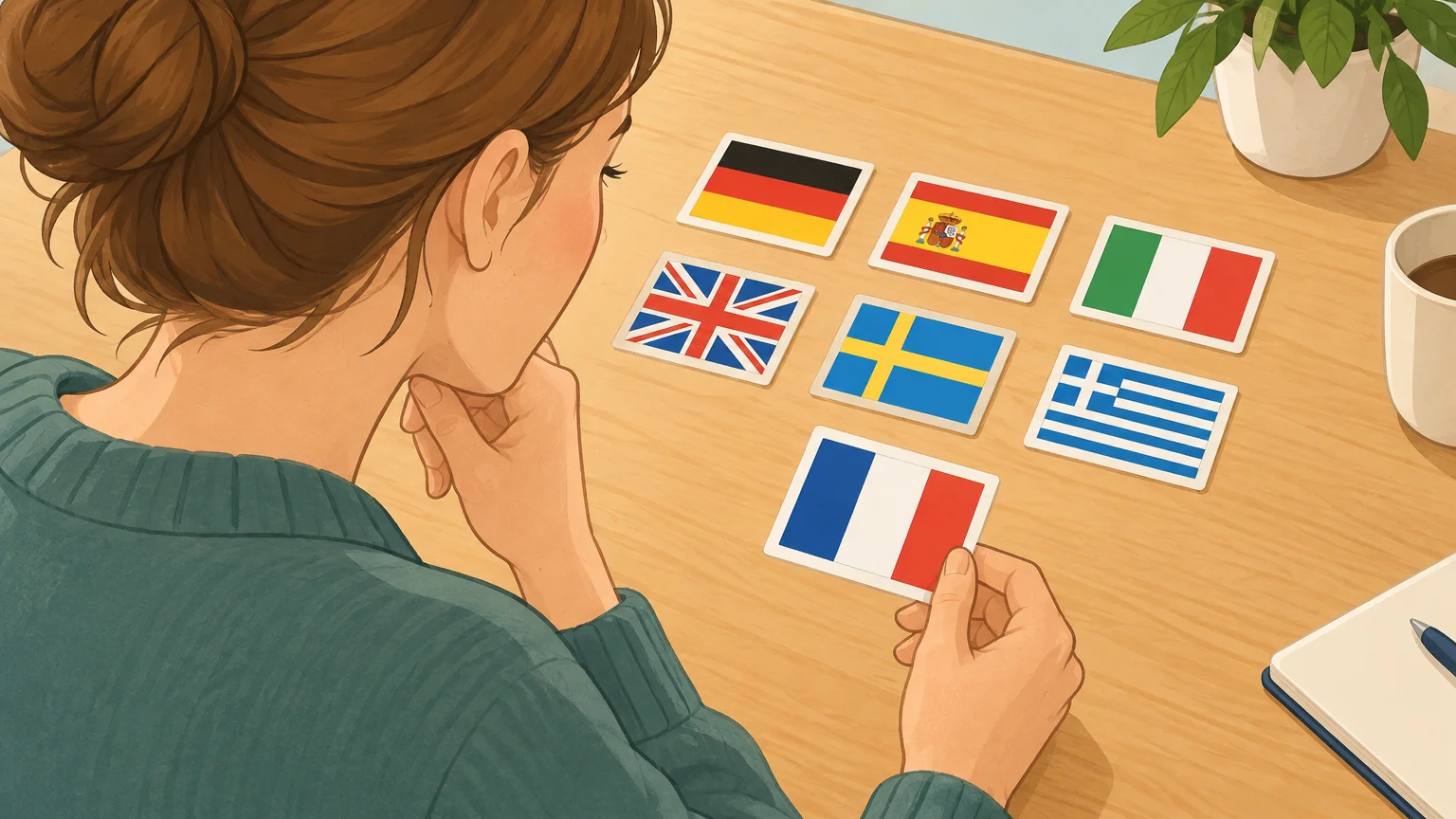
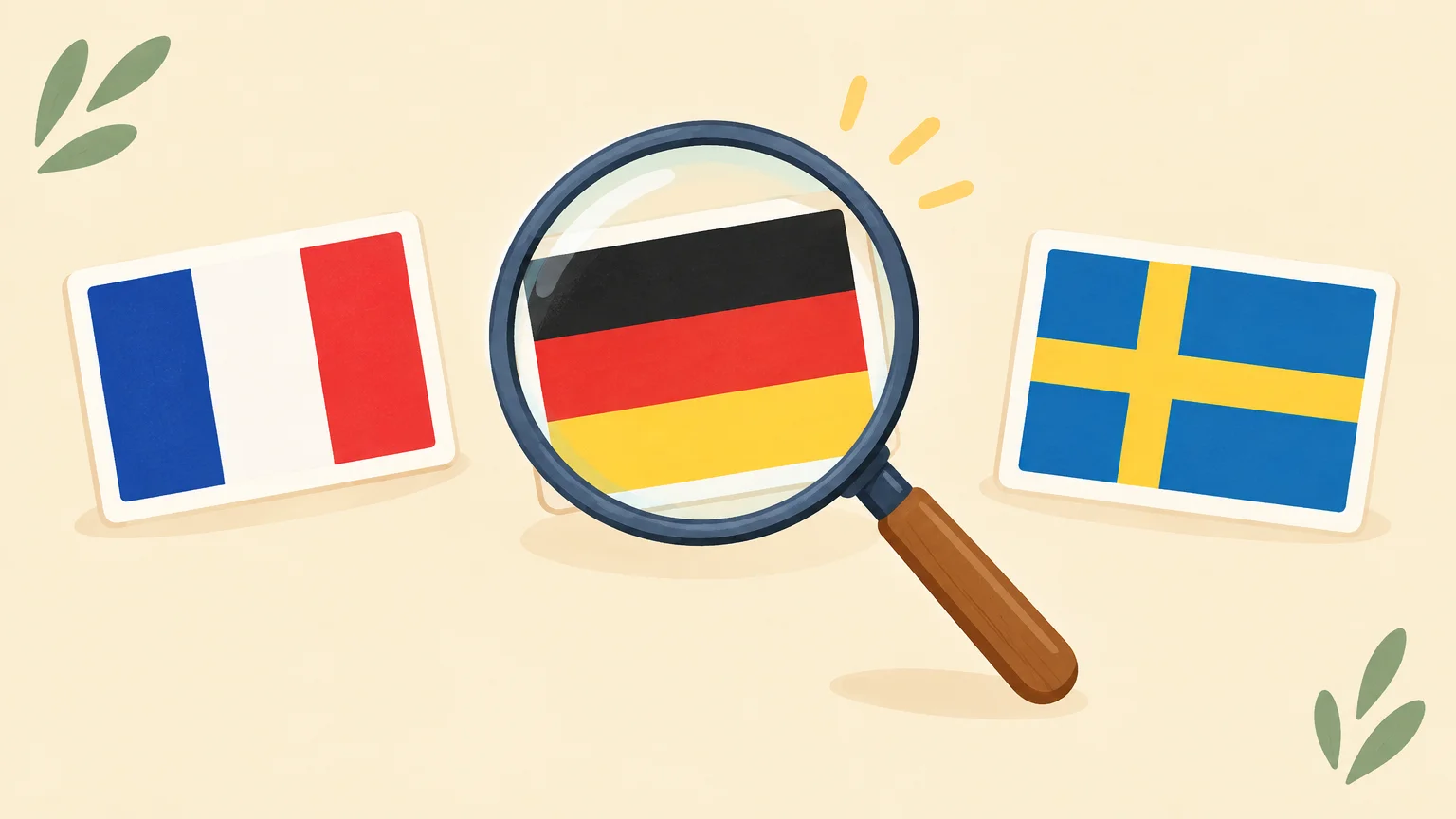
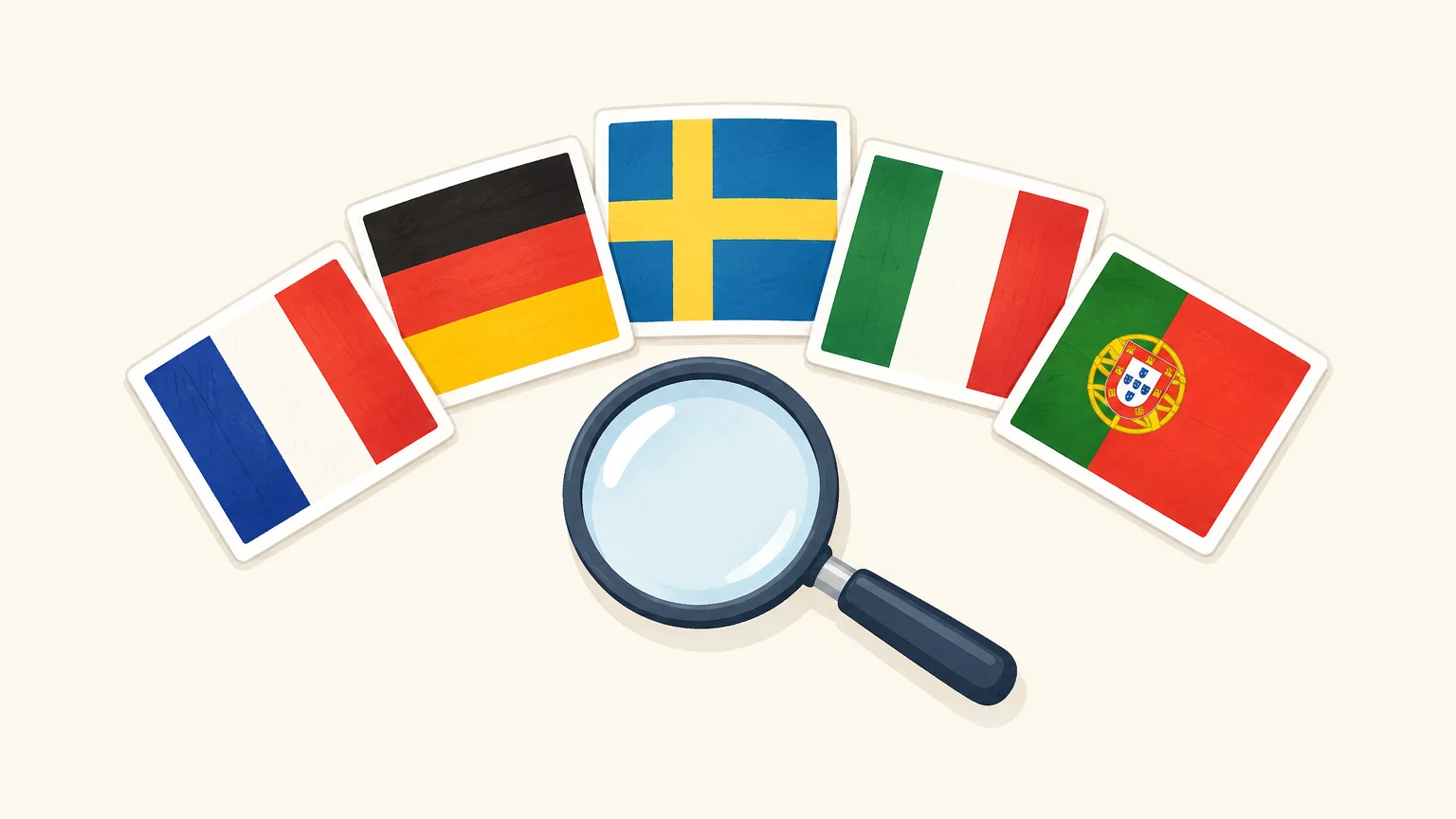
Many flags reuse familiar colors, so begin with structure rather than color alone. Compare the direction and order of stripes, the location of a cross, and whether a crest or other emblem appears. Those visual cues help separate flags that share a palette.
For example, vertical stripes point you toward a different group of designs than horizontal bands. Nordic crosses are another useful pattern, but their colors and cross placement still matter. Train yourself to notice one distinctive feature before guessing, then check the full design.
When you want another round of country and flag identification, try our European flags identification quiz. Use it to practice naming the country, then pause on any design you recognized only by elimination.
Should you choose an EU quiz or a wider Europe quiz?
Start by checking the quiz’s stated scope. Some activities focus on EU member countries, while others use a broader European set. They may also differ on whether territories appear. A clear list helps you understand what a score actually measures.
For an offline activity, the European Commission’s printable flag matching game offers a paper-based version. A printed set is useful for a classroom, a study group, or a screen break, while an online quiz is convenient for short solo practice.
Don’t compare scores across quizzes until you know they use similar country lists and question styles. A smaller set can feel easier simply because it excludes flags you haven’t studied. Treat the scope as part of the exercise, not a footnote.
What should you do after each wrong answer?
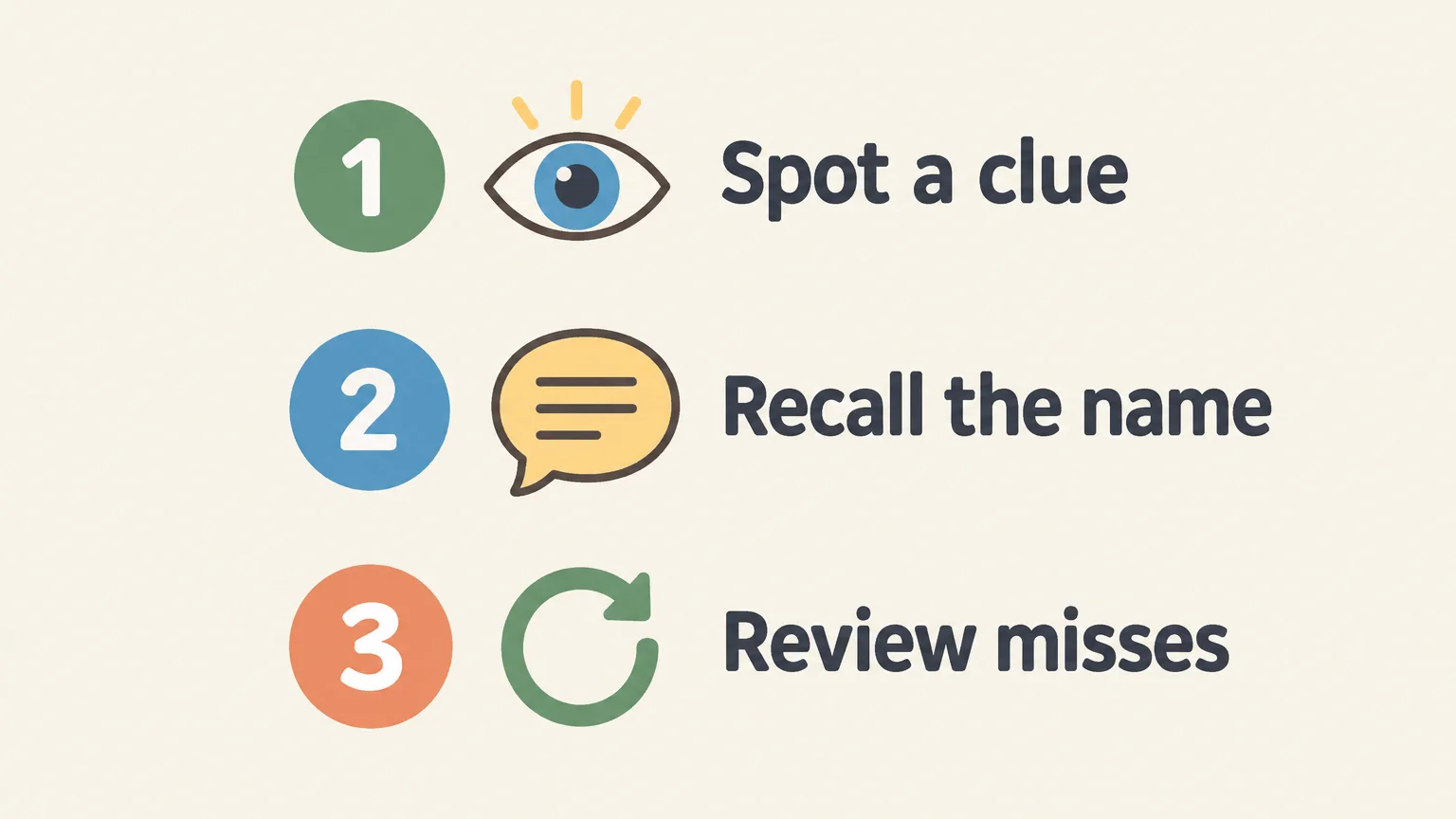
Turn each miss into a specific reminder. Instead of repeating “I forgot the flag,” name the clue you missed: stripe order, emblem, or cross placement. Then cover the answer and try to recall the country again.
A simple routine works well: look closely, name the country without options, check the answer, and return to missed flags later. This spaced review makes it easier to see which designs need another look. Keep a short list of mistakes so you can revisit them instead of replaying only the easy flags.
For a separate self-test, our European flag test focuses on identifying countries from their national flags. Try it after a first review, then use any uncertain answers to guide your next practice round.
How can you keep a short quiz useful?
Choose one goal per session, such as naming flags with Nordic crosses or distinguishing similar tricolors. After the quiz, review uncertain answers as well as incorrect ones. A lucky guess is still a useful signal that the design needs another look.
Be consistent about the country set you’re studying. The European Parliament’s 2022 facts and figures reference organizes election information by member state. That’s one example of an institutional grouping; make sure your quiz’s own scope matches your learning goal.
Build recognition one flag at a time
A good European flag quiz moves from spotting patterns to naming countries without hints. Check the country list, focus on one visual clue at a time, and review missed flags later. That way, a quick game becomes a repeatable way to strengthen your flag knowledge.
Practice European Flags at Your Own Pace
If you want to make flag practice part of your routine, our Flags mode progressively reveals a hidden flag as you guess. Each incorrect guess uncovers more tiles and leaves fewer attempts. It covers 195 UN-recognised countries, so it provides broad flag practice rather than a Europe-only set.

Open our progressive flag practice game in your browser, with no account or payment required. You can use a round to test your recognition, then pair it with a Europe-specific list to focus on the flags you’re learning. The browser game also supports home-screen installation on your device.
Frequently Asked Questions
What is the best way to learn European flags?
Start by noticing stripe direction, cross placement, and distinctive emblems. Then hide the answer choices and try naming each country from memory.
Are European and EU flag quizzes the same?
No, an EU quiz focuses on European Union member countries, while a broader Europe quiz may use a different country list. Check the activity’s stated scope before comparing results.
Should I choose matching or multiple choice?
Matching and multiple choice are useful when you’re learning the designs. Once you recognize them, switch to a round that asks you to name the country without options.
How can I tell similar flags apart?
Look beyond the colors and compare stripe order, orientation, cross position, and emblems. Pick one distinguishing feature and use it to explain your answer before checking it.
Can I practice flags beyond Europe?
Yes. Our Flags mode covers 195 UN-recognised countries and reveals more of a hidden flag after incorrect guesses, so you can practice flags from around the world.