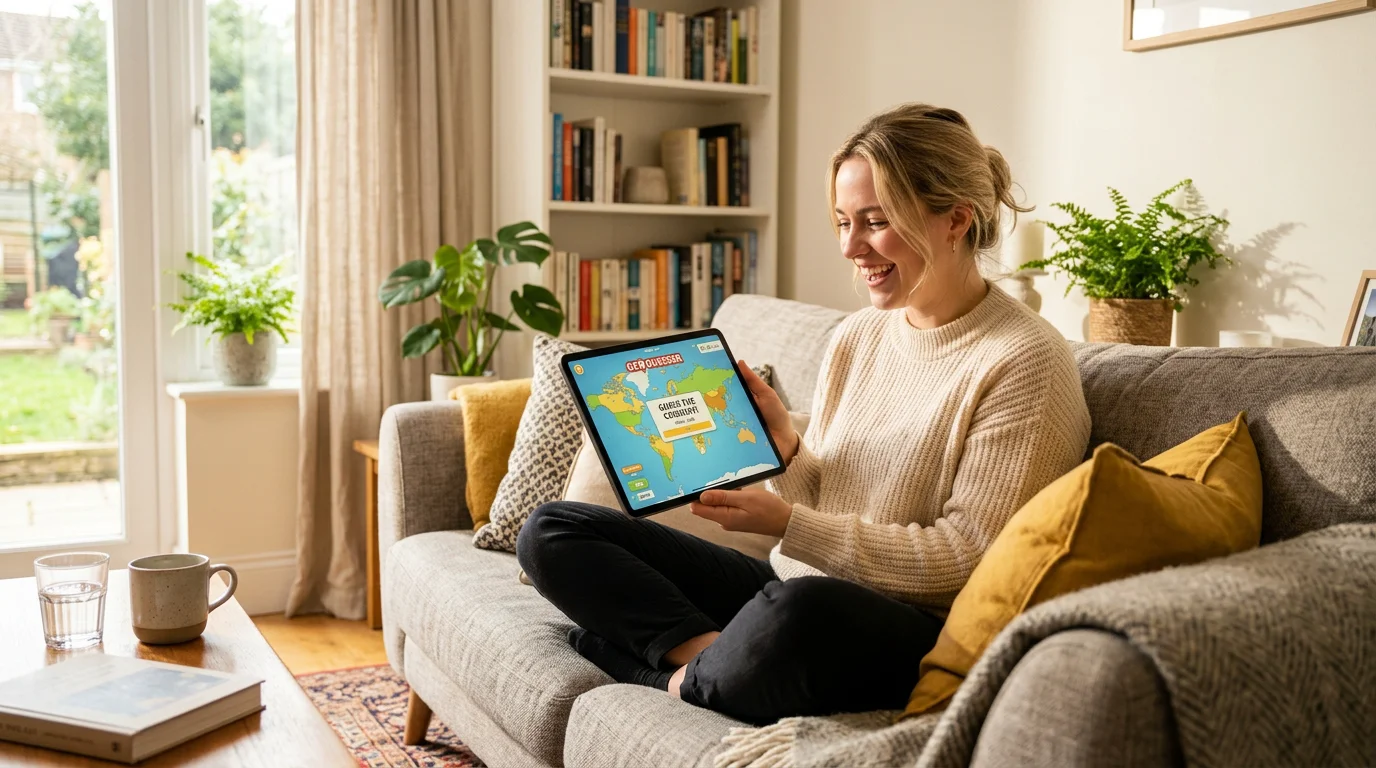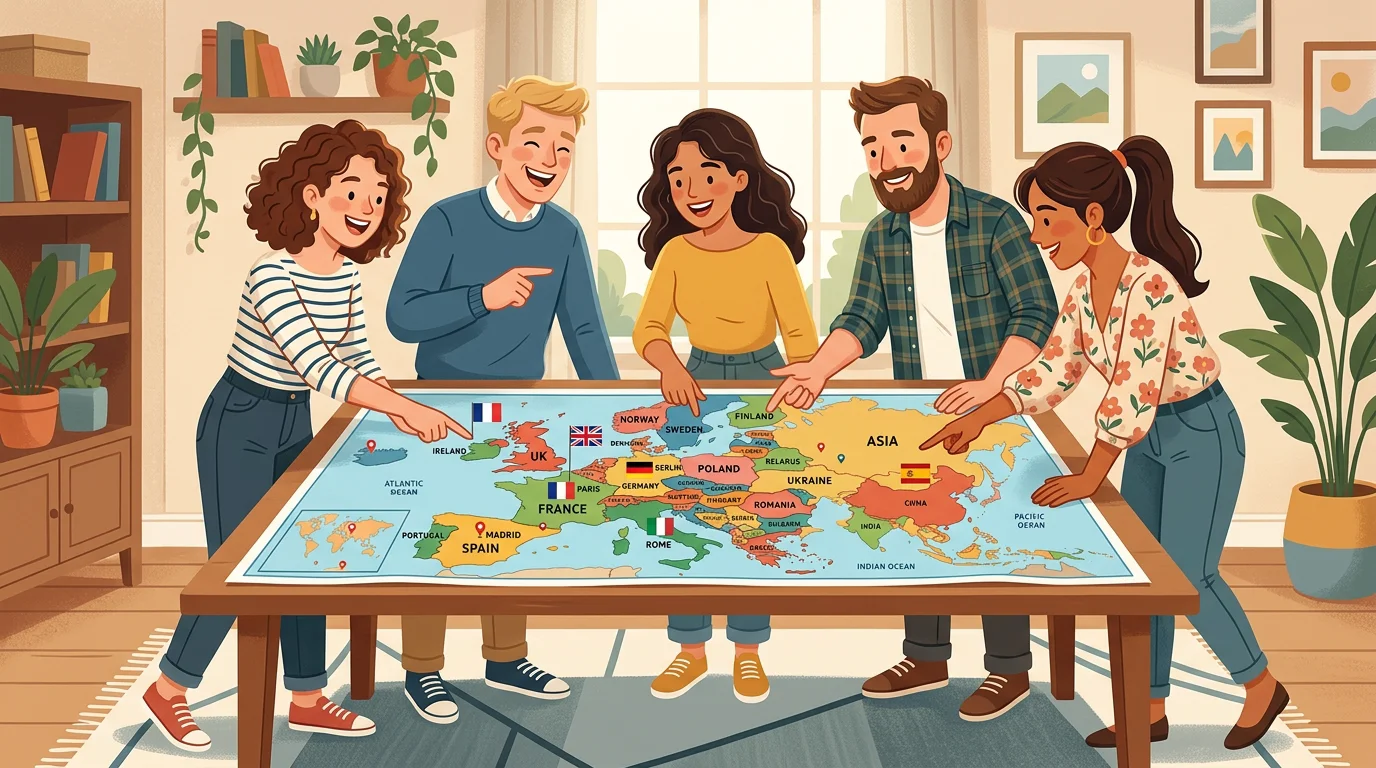
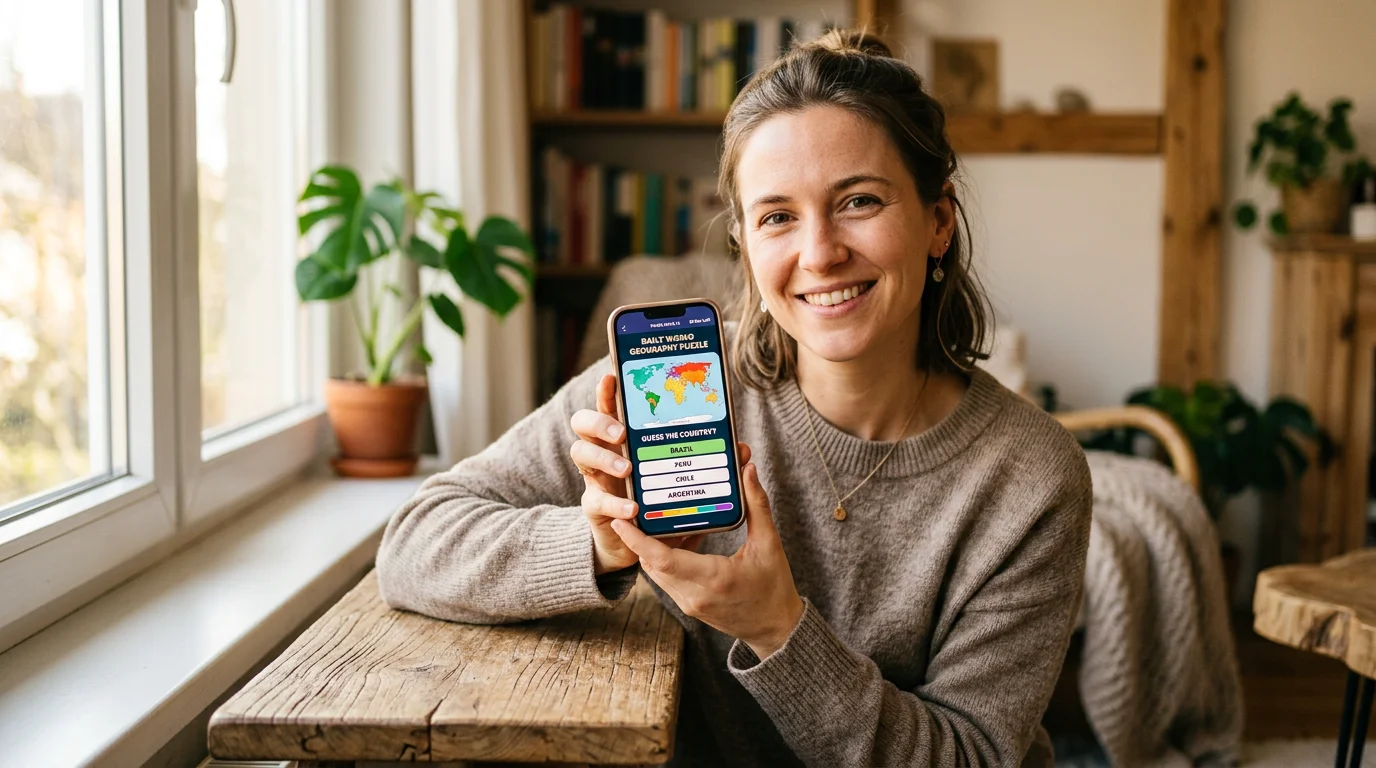

Here's a slightly embarrassing stat to start your day: in the 2002 National Geographic Roper survey, fewer than a quarter of young adults across nine countries could point to Israel on a blank map. Most of us can name a hundred brands but freeze on a world map. That's exactly the gap a good country-guessing game fills, and why so many people now want to our daily guess-the-country game as part of their morning routine.
The trick isn't cramming. It's short, repeatable play that rewards pattern recognition. According to National Geographic, geographic knowledge climbs with travel and language exposure, and a daily puzzle is a low-effort way to simulate that curiosity from your couch. So let's break down how to pick one that actually sticks.
What makes a country game worth playing daily
When you set out to find a country game that you'll keep opening every morning, three things matter more than flashy graphics. First, clear clues that teach you something on a wrong guess. Second, a bite-sized round you can finish in a coffee break. Third, a format that's free and doesn't bury you in pop-ups.
The strongest daily games share one clever detail: everyone in the world gets the same puzzle. That shared answer turns a solo brain teaser into a social one. You compare scores, screenshot your grid, and argue about whose guess was smarter. If you want a walkthrough of the mechanics, our guide to flags, shapes and capitals covers how the clue system rewards smart early guesses.
The main types of country games, side by side
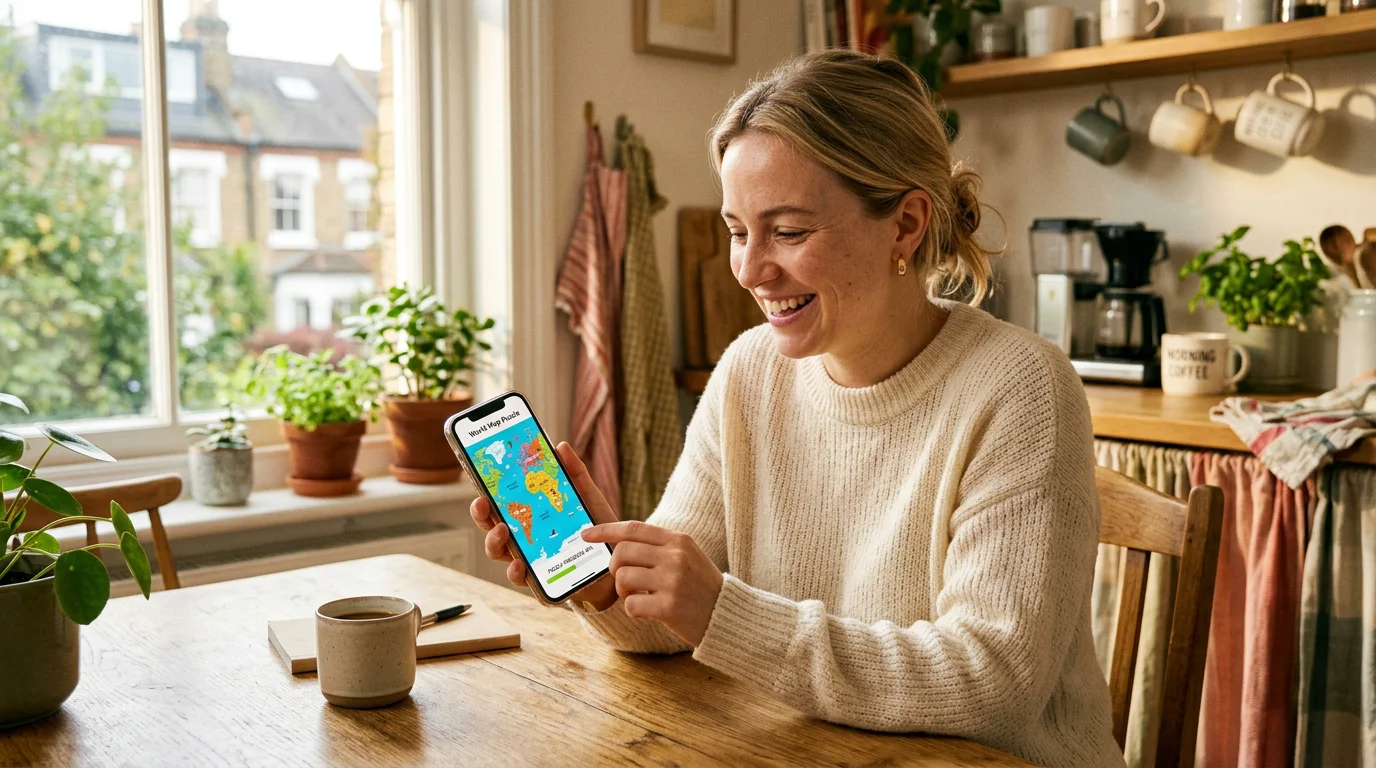
Not every country game asks the same thing. Some show you a flag. Some show a bare silhouette. Some drop you on a map and heat up the colors as you get closer. Each one trains a different mental muscle, and the smartest players rotate between them.
Here's a quick comparison of the common formats, including how our own daily game fits in:
| Game style | What you identify | Attempts | Cost |
|---|---|---|---|
| Our daily flag game (Flagdle) | A country from its flag, masked behind 9 tiles, plus capitals and hints modes | 3 | Free, no account |
| Silhouette games | A country from its outline, with distance and direction clues | 6 | Free (archive paid) |
| Map heat games | A country on a globe, colors warm as you close in | Unlimited | Free |
The masked flag approach is a nice middle ground. A flag gives you real visual detail, but hiding it behind tiles keeps the challenge honest. You reveal a little, guess, and learn the colors and symbols along the way. If flags aren't your thing, country silhouettes and map-based games are worth a look too, though each one narrows what you actually practice.
How the clues actually teach you geography
Wrong answers are where the learning happens. A distance-and-direction clue tells you not just that you missed, but by how much and which way to move. Over a week, your brain quietly builds a mental map without you sitting down to memorize anything.
The gap this fills is real. A National Geographic study reported by CBS News found young Americans could locate on average only seven of 16 countries on a world map, while Swedish students managed 13. Those numbers aren't about intelligence; they're about exposure. A daily flag puzzle or capital quiz simply keeps countries in front of your eyes often enough that they stop being strangers.
That's also why layering modes helps. Guessing a country one day and its capital the next builds two connected memories instead of one lonely fact. Our geography guess games lean into that, mixing flags, capitals, silhouettes, and progressive hints so no single skill gets stale.
The shared daily puzzle: one country, everyone, worldwide
Here's the differentiator that turns a quiz into a ritual. When the answer is identical for every player on the planet that day, the game stops being solo homework. It becomes a conversation. You and a friend on the other side of the world tackle the same masked flag, then compare how many tries it took.

This social pull isn't a gimmick. It's what kept the whole daily-puzzle genre alive after the Wordle craze. The original geography spin-off, Worldle, was built as a tribute to Wordle by a French developer, the Washington Post reported back in 2022. The shared-answer format and shareable grid of colored squares are what made these games spread. A daily leaderboard just adds a friendly scoreboard on top.
Turning a country game into a real habit
A game only teaches you if you keep showing up. The five-minute daily loop is what makes that easy. Teachers have leaned into this hard, using a single daily round as a classroom warm-up before the real lesson starts.
And the appetite is there, even among adults who claim geography isn't their thing. A Gallup survey for the Council on Foreign Relations and National Geographic found adults answered just over half of the knowledge questions correctly, yet seven in ten respondents still considered world affairs relevant to their daily lives. People want to know this stuff. They just need a format that doesn't feel like studying. That's the whole pitch of a daily country-guessing game: curiosity in, no homework guilt.
Tips to guess the country faster
Want to improve your average score? A few habits go a long way, whether you're staring at a flag, a shape, or a map.
- Start broad. Your first guess should scope the continent, not nail the answer. Use the distance clue to zoom in from there.
- Learn flag families. Nordic crosses, pan-African red-gold-green, pan-Arab stripes. Spotting a family narrows the field fast.
- Watch for distinctive shapes. Italy's boot, Chile's ribbon, island chains. Silhouettes reward memory of outlines, not size.
- Pair capitals with countries. Practicing both together locks each fact in place better than either alone.
- Play every day. Consistency beats marathon sessions. Ten rounds over ten days teaches more than one long cram.
None of this requires a textbook. The guess-the-capital and progressive-hint modes exist precisely so you can fail gently, learn, and come back tomorrow a little sharper.
The bottom line on picking your game
The right pick when you want to find a country game comes down to fit: clear clues, a quick daily round, a free format, and modes that mix flags, shapes, and capitals so you're not drilling the same skill forever. Geography gaps are common and stubborn, but they close fast when you swap cramming for a five-minute daily habit. Start broad, learn the flag families, and let the wrong guesses do the teaching. Play tomorrow, and the day after, and the map slowly stops being a blur.
Take action with Flagdle
If all of this made you want to actually test your world knowledge instead of just reading about it, that's the point. You don't need an account, a subscription, or a free hour, just five minutes and a little curiosity about the 195 countries out there.
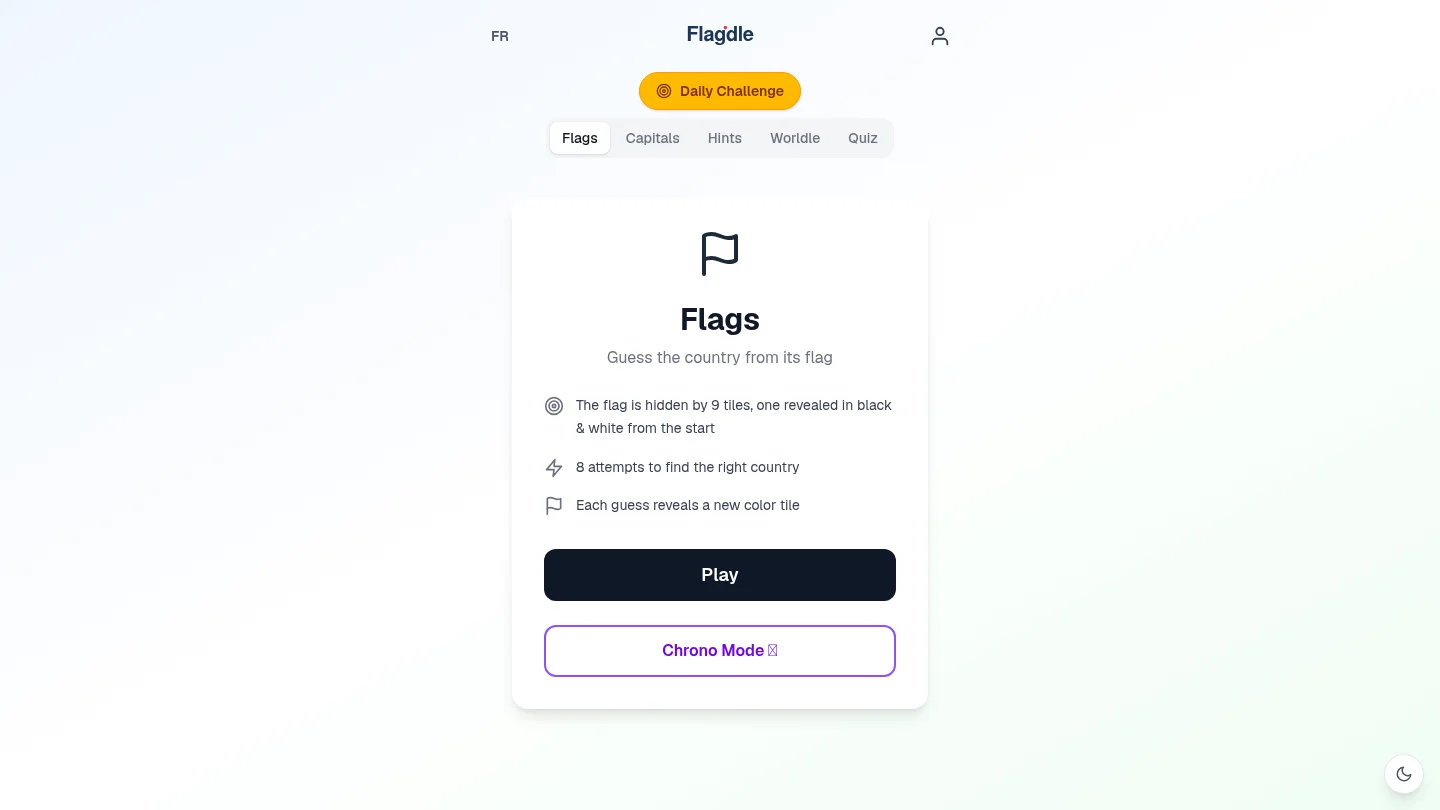
Give our free daily flag game a try: identify the day's country from a flag masked behind nine tiles in three guesses, then jump into capitals, silhouettes, progressive hints, and the Daily Challenge. The puzzle is the same for everyone worldwide, so you can compare scores with friends on the daily, weekly, and monthly leaderboard. It's free, ad-light, and your stats stay on your device.
Frequently Asked Questions
What is a country game, exactly?
It's a puzzle where you identify a country from a clue like its flag, silhouette, or capital city. Most give you a limited number of guesses and feedback after each try. The daily versions refresh with a new country every 24 hours.
Are these country games actually free?
Most daily geography games are free to play in your browser, including ours. Some lock extras like a full puzzle archive behind a paid tier, but the core daily round is usually free. With Flagdle, the flag, capitals, and hint modes are all free with no account needed.
Can a country game really improve my geography?
Yes, mostly through repetition and useful feedback on wrong guesses. Studies have long shown big gaps in map knowledge, and short daily exposure is a proven way to chip away at them. Playing a few minutes a day beats occasional cramming.
What's the difference between flag, silhouette, and map games?
Flag games test symbols and colors, silhouette games test country outlines, and map games test location. Each trains a slightly different skill, so rotating between them gives you the most well-rounded practice. Games that bundle several modes let you cover all three in one place.
How do I get better at guessing the country quickly?
Open with a broad guess to identify the continent, then use distance and direction clues to zoom in. Learn recurring flag families and distinctive shapes to shortcut the process. Above all, play daily so recognition becomes automatic.