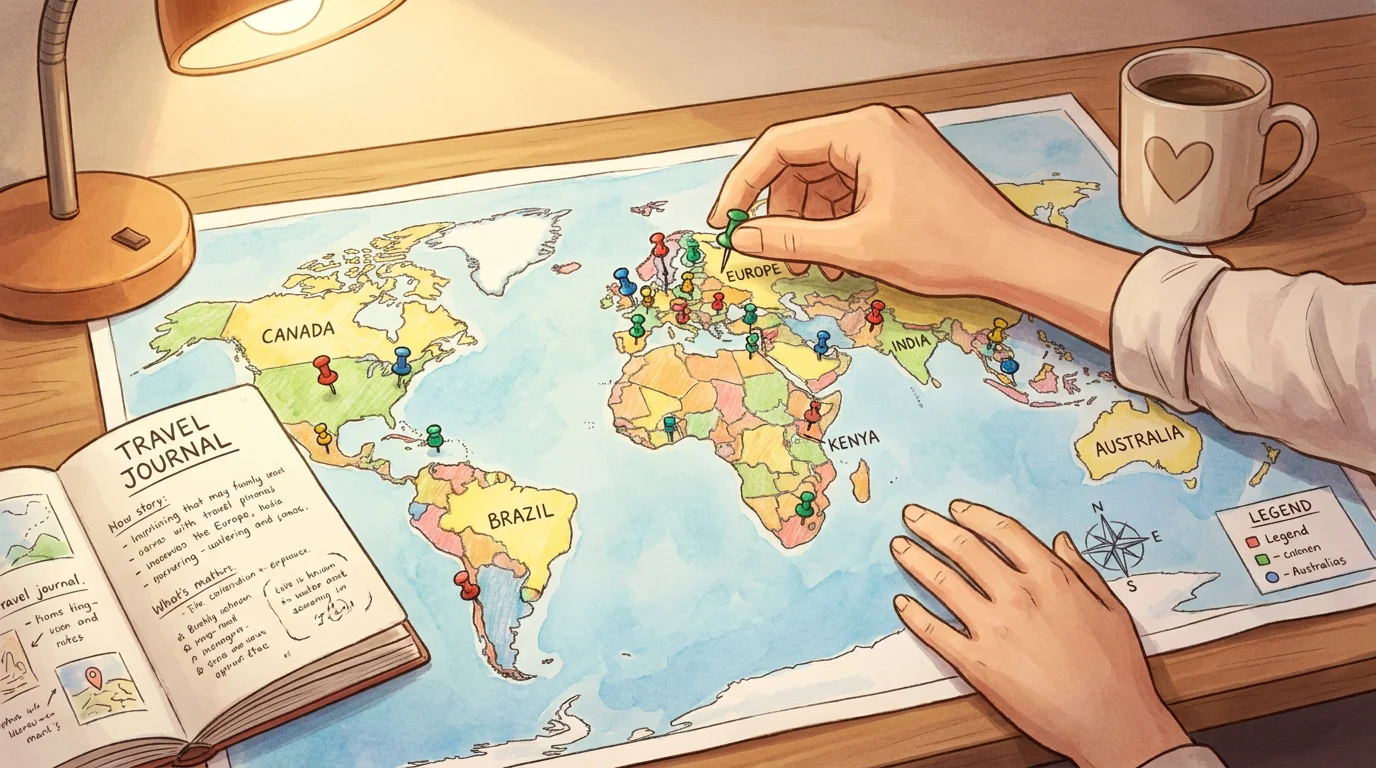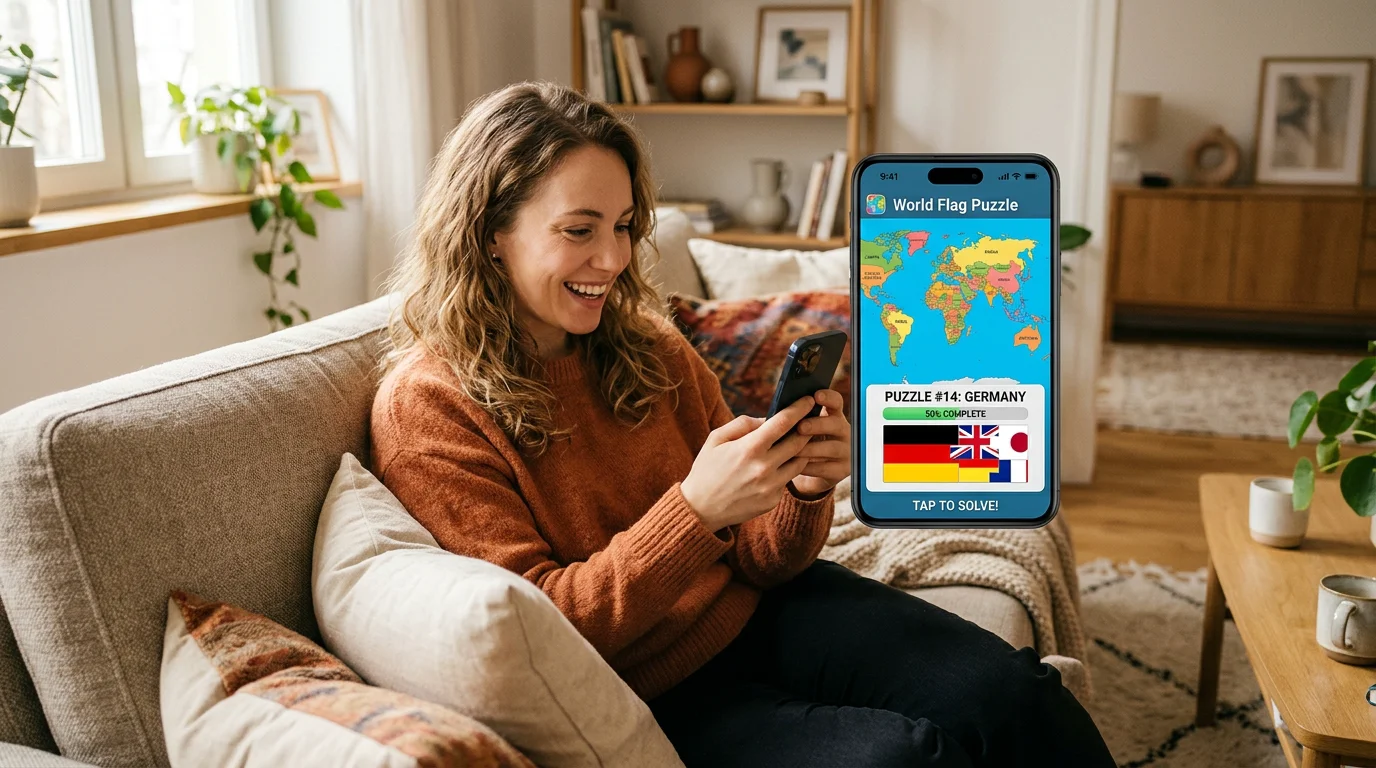

Roughly 90 people played the original Wordle on November 1, 2021. A few months later, millions were sharing colored squares every morning, and a whole family of copycats was born, including one obsessed with maps. If you've ever squinted at a half-hidden flag or a lonely country outline and thought "wait, I know this one," you've already tasted the appeal of guessing countries. Our guide to our Mapdle map game is a good example of how far the format has traveled.
The idea is dead simple, which is exactly why it works. You get one clue, a few attempts, and a tiny hit of satisfaction when the answer clicks. Better yet, these puzzles quietly teach you the world while you think you're just killing time before coffee.
So what counts as a land guessing game?
At its core, land guessing is any game where you name a country or territory from a partial hint. Sometimes that hint is a flag revealed tile by tile. Sometimes it's a bare silhouette with distance and direction arrows. Sometimes you're dropped into a street-view photo and have to read the road signs and vegetation. Different clue, same brain itch.
The daily format is the glue. One puzzle, shared by everyone, resets at midnight. That scarcity keeps you coming back without eating your whole afternoon. If you want the mechanics broken down step by step, our country guessing game walkthrough covers how a typical round plays out and how to think through your attempts.
Why these puzzles took over your group chat
The scale is genuinely hard to picture. According to Fast Company, New York Times puzzles were played 11.2 billion times in 2025, and tens of millions of people play daily. Once a format proves people will guess anything in a shareable grid, geography was an obvious next target.
Wordle itself, now five years old, still carries the crowd. Per Creative Review, it racked up 4.2 billion plays in 2025 alone. The map-based spin-offs rode that wave, borrowing the exact loop players already loved: one round a day, six-ish tries, and a spoiler-free result you can paste into a chat to needle your friends.
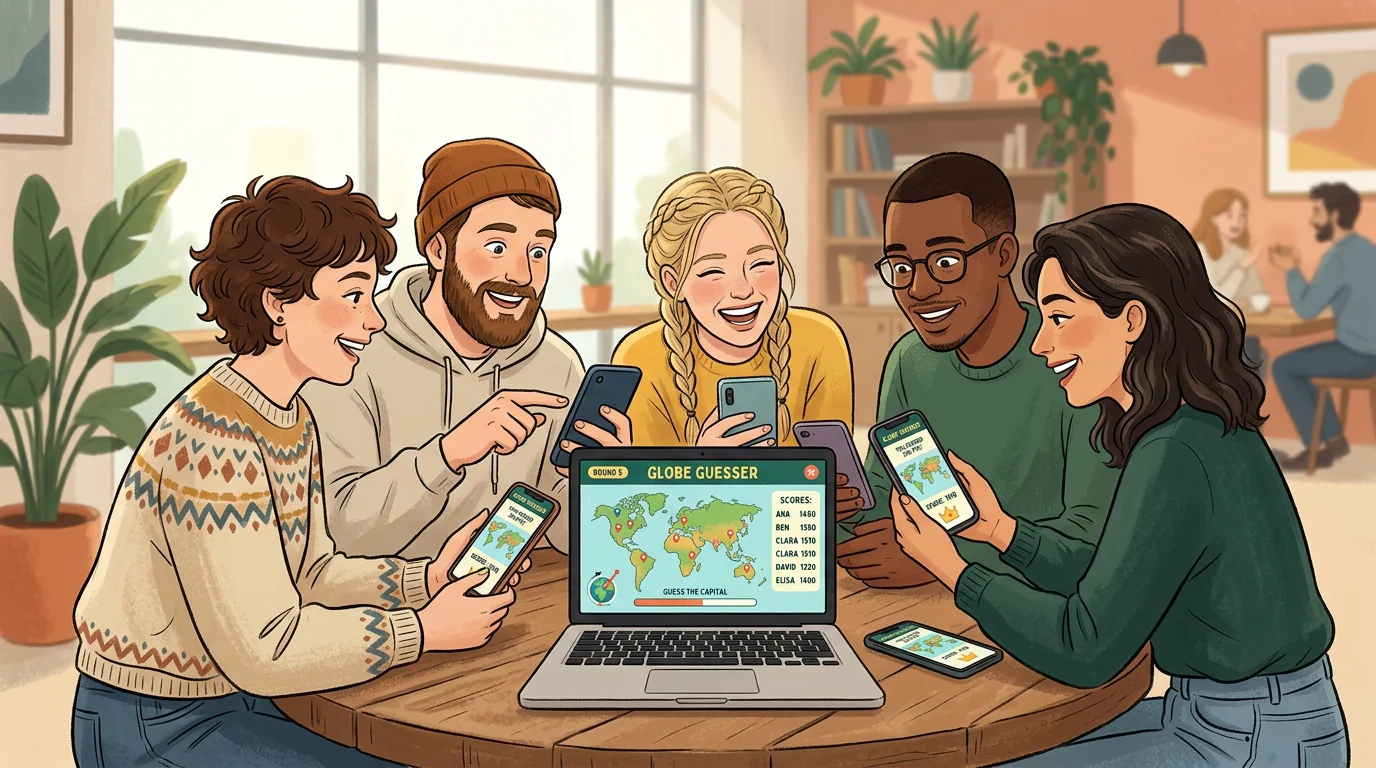
That social layer matters more than the puzzle itself. Comparing scores turns a solo game into a low-stakes competition. When everyone solves the same daily geography puzzle, bragging rights are baked in.
The main flavors of geography guessing
Not all of these games test the same skill. Some lean on flags, some on shapes, some on raw location instincts. Here's how the common formats stack up, including where our own approach fits.
| Format | What you guess from | Typical attempts | Coverage |
|---|---|---|---|
| Flagdle (ours) | A flag masked by 9 tiles, plus capital and hint modes | 3 | 195 UN countries |
| Silhouette games | Country outline with distance and direction | 6 | Countries and territories |
| Proximity games | Hot or cold distance feedback on a globe | Unlimited | Worldwide |
| Street-view games | Photo clues like signage and landscape | Varies | Street-view regions |
Flags are a great on-ramp because they're bold and memorable. Shapes reward map nerds who can spot Italy's boot or Chile's ribbon. If you want a format that mixes several signals at once, our breakdown on how to guess a country by its flag, capital and shape shows how combining clues speeds up the answer.
Do land guessing games actually make you smarter?
Here's the fun part: yes, sort of. The habit trains real spatial reasoning, not just trivia recall. A 2023 study in Cartography and Geographic Information Science used fMRI and behavioral tests to show that students with geography education had stronger mental rotation, spatial visualization, and spatial reasoning than peers without it.
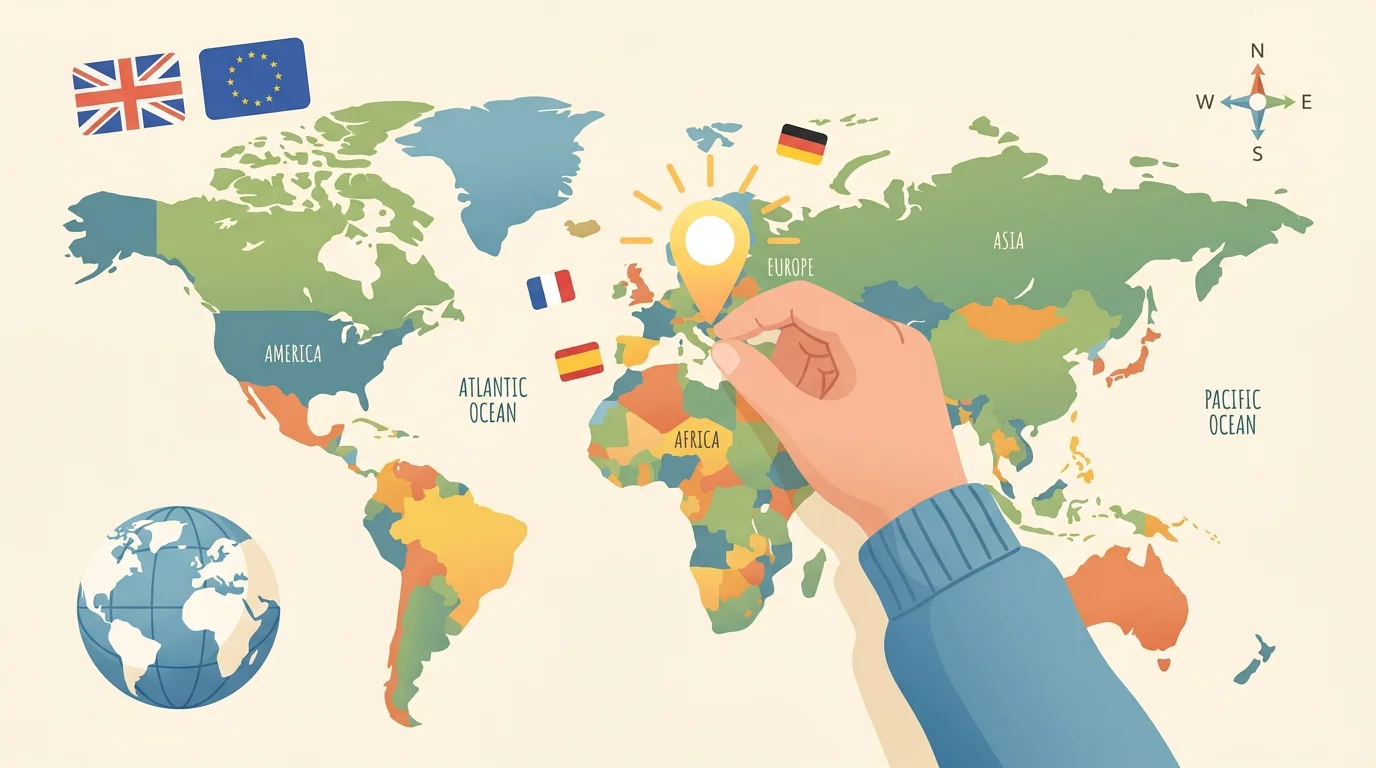
And that ability isn't fixed at birth. Research published by MIT Press points to spatial skills being malleable and responsive to learning across the lifespan. Repeatedly placing countries, comparing distances, and picturing outlines is exactly the kind of low-effort practice that nudges those skills upward. You're not just memorizing flags; you're building a mental map of the planet.
How to actually get good at this
Getting better is mostly about smart repetition, not raw talent. A few habits do the heavy lifting:
- Start broad, then narrow. Your first guess should pin down a continent, especially in silhouette games where distance and direction do the rest.
- Learn distinctive shapes and flags first. The unmistakable ones (island chains, a red maple leaf, a boot) become free points.
- Mind the scale. Outlines have no size cues, so if small guesses fail, think bigger, and vice versa.
- Play across formats. Flags, capitals, and shapes reinforce each other, so mixing modes cements the same country from different angles.
- Show up daily. Five minutes a day beats a two-hour cram, because spacing is what makes it stick.
Curious how flags, capitals, and outlines connect into one skill set? Our overview of geography guess games and world skills lays out a simple routine you can follow without turning it into homework.
Turning a quick game into a daily ritual
The teachers who use these puzzles love them for a reason: a single shared round is a perfect five-minute classroom warm-up. The same trick works for you. Anchor the game to something you already do daily, like your morning coffee, and the streak builds itself.
Because everyone faces the identical puzzle each day, a leaderboard or a group chat gives you a reason to keep the run alive. That mix of routine and light rivalry is what quietly turns a casual player into someone who genuinely knows their flags and capitals.
The bottom line on guessing countries
The best thing about land guessing games is that the learning is a side effect. You show up for the daily hit of satisfaction, and after a few weeks you notice you can name flags, sketch outlines, and place capitals you'd never given a second thought. Pick one format, play it every day, mix in a second mode when you plateau, and compare scores with a friend to keep it honest. That's the whole recipe, and it works.
Take action with Flagdle
If all this map talk has you itching to test yourself, you don't need to sign up or download anything. You just need one clear puzzle and a reason to come back tomorrow, which is exactly what we've built for people who want geography to feel like play instead of revision.
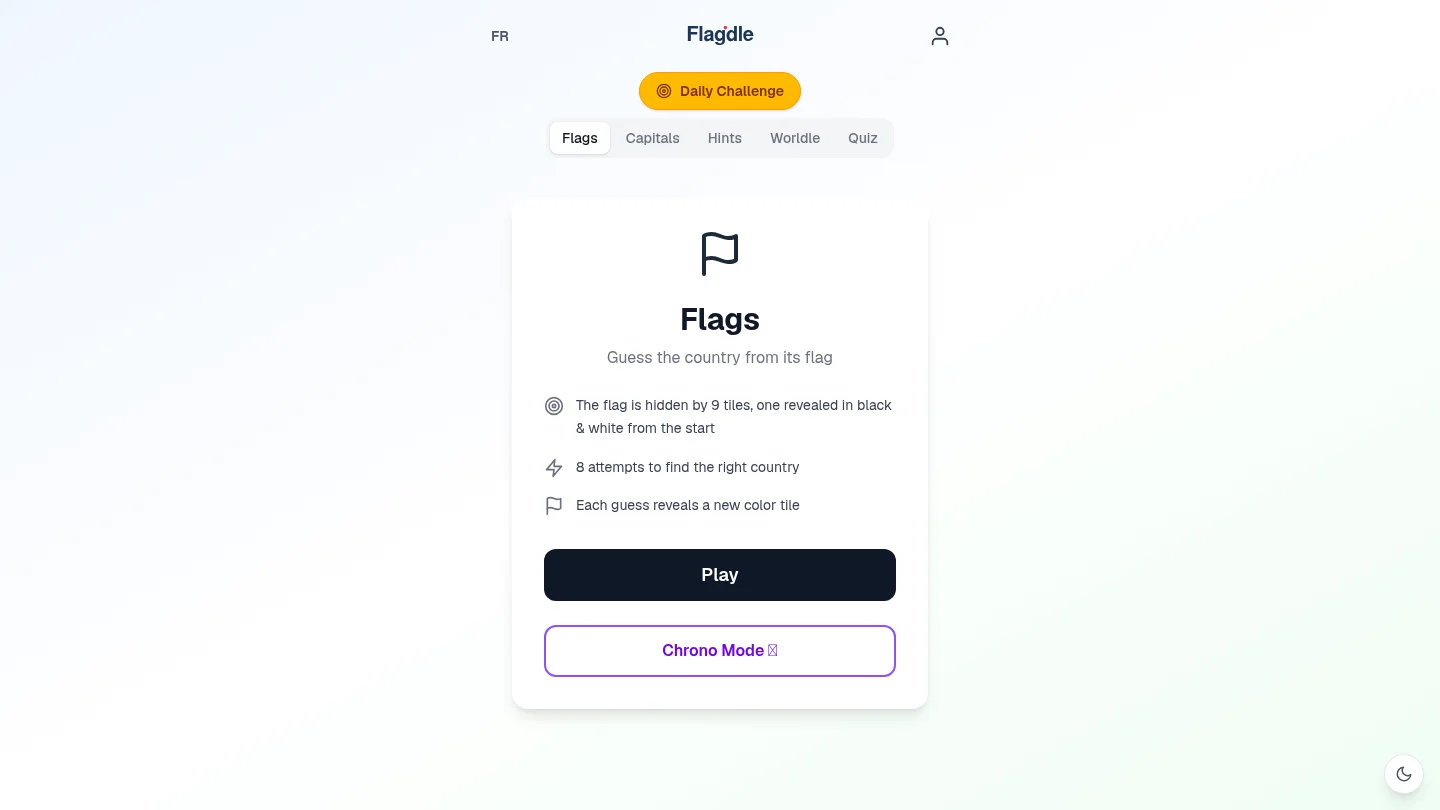
Try our free daily flag game, where you identify the country of the day from a flag masked by nine tiles in three tries, with the same puzzle for every player worldwide. You also get capital, progressive-hint, and silhouette modes, plus a daily, weekly, and monthly leaderboard covering all 195 UN countries. No account, no intrusive ads, just five fun minutes a day.
Frequently Asked Questions
What is a land guessing game in simple terms?
It's a game where you name a country or territory from a single clue, like a flag, a shape, or a capital city. You usually get a set number of tries and hints that narrow things down. The goal is to identify the right place with as few guesses as possible.
Are these geography games actually good for learning?
Yes. Regular play strengthens spatial reasoning and cements flags, capitals, and country shapes through repetition. Because the sessions are short and daily, the knowledge builds up gradually without ever feeling like studying.
How many attempts do you usually get?
It depends on the format. Flag-based games often give you three tries, silhouette games commonly allow six, and proximity games let you guess unlimited times until you land on the answer. Fewer attempts generally means a tougher challenge.
Do I need to pay or create an account to play?
Many of the best options are completely free in your browser. With our flag game, for example, there's no account and no intrusive ads, and your stats stay on your own device. You can just open it and start guessing the country of the day.
What's the fastest way to improve?
Play daily and start each round with a broad guess to lock in the region. Learn the most distinctive flags and outlines first, then mix in capital and hint modes to reinforce the same countries from different angles. Consistency beats marathon sessions every time.