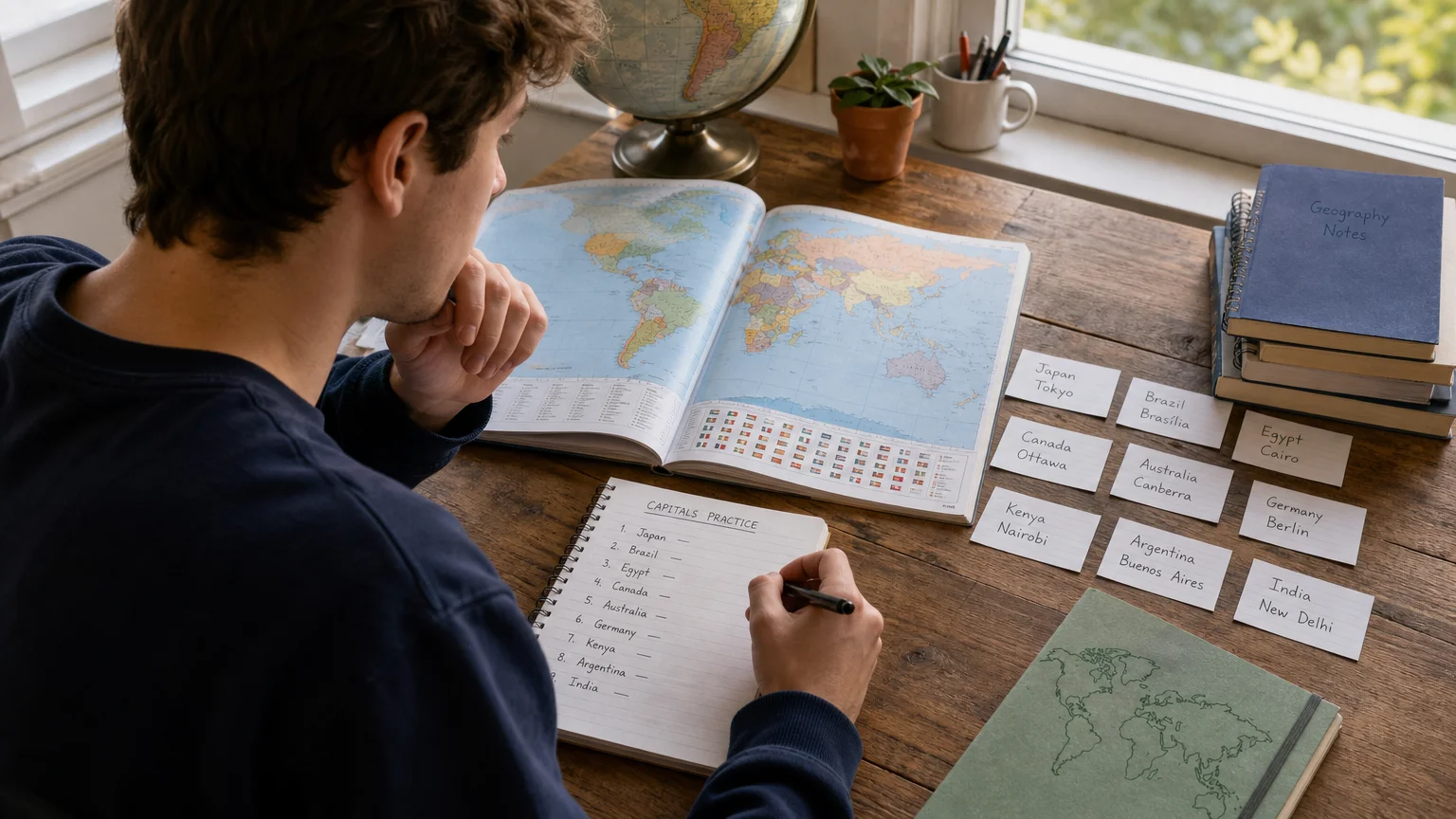
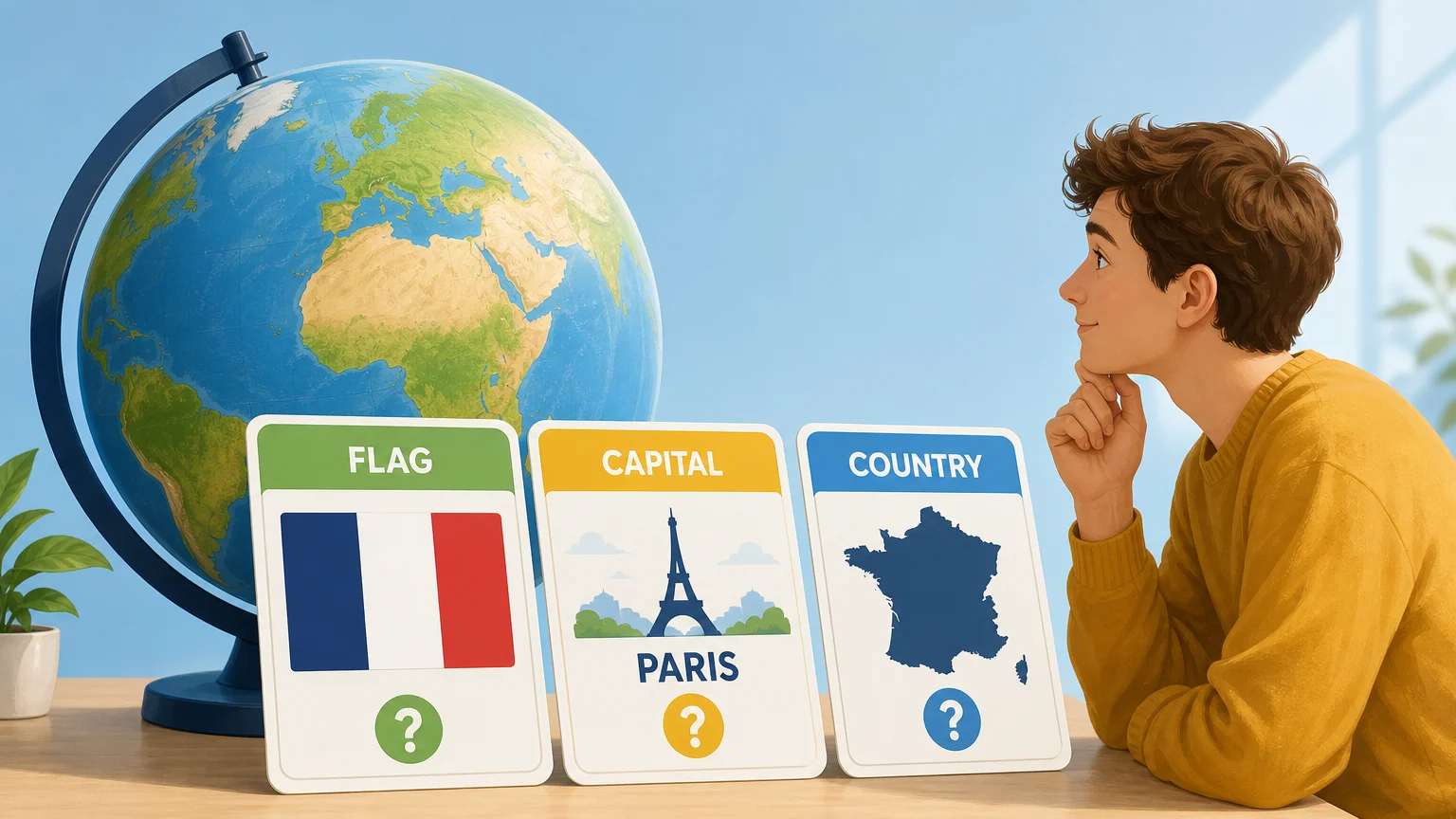

Can you name the capital of Kazakhstan, identify the flag of Ghana, or place Bhutan on a map? If you searched for capital country games, you're probably looking for a faster way to practise than reading a static list. A short quiz can make recall more active, especially when you return to difficult answers over several sessions. For a broader daily challenge, our capital of the world game connects country knowledge with clues, flags, capitals, and other geography tasks.
The best game depends on your goal. A student may need repetition and feedback, while a traveler may want quick recognition of countries and capitals. A teacher may prefer a five-minute activity that works for the whole class. A 2026 systematic review of 40 papers found that gamification can support motivation, cognitive development, and spatial reasoning in geography education, although results depend on design and learning context.
What are capital country games?
Capital country games are digital quizzes that help you connect countries with their capital cities. Some show a country and ask you to select or type its capital. Others reverse the question by showing a capital and asking which country it belongs to.
Many games add related geography tasks, because capital recall becomes stronger when you attach it to more than one clue. You might identify a flag, locate a country by its shape, choose a continent, or answer a question about population, language, currency, or borders.
- Capital quizzes test direct country and city associations.
- Flag games strengthen visual recognition and country recall.
- Silhouette games build basic map awareness.
- Clue-based games offer help through continents, letters, distance, or facts.
- Themed quizzes connect geography with history, sport, literature, and culture.
This variety matters because memorizing capitals isn't only a matter of knowing names. You also need to recognize spelling, distinguish similar places, and retrieve the answer without seeing a complete list. Good games give you repeated practice while keeping each session short enough to repeat.
Why can games help you remember capitals?
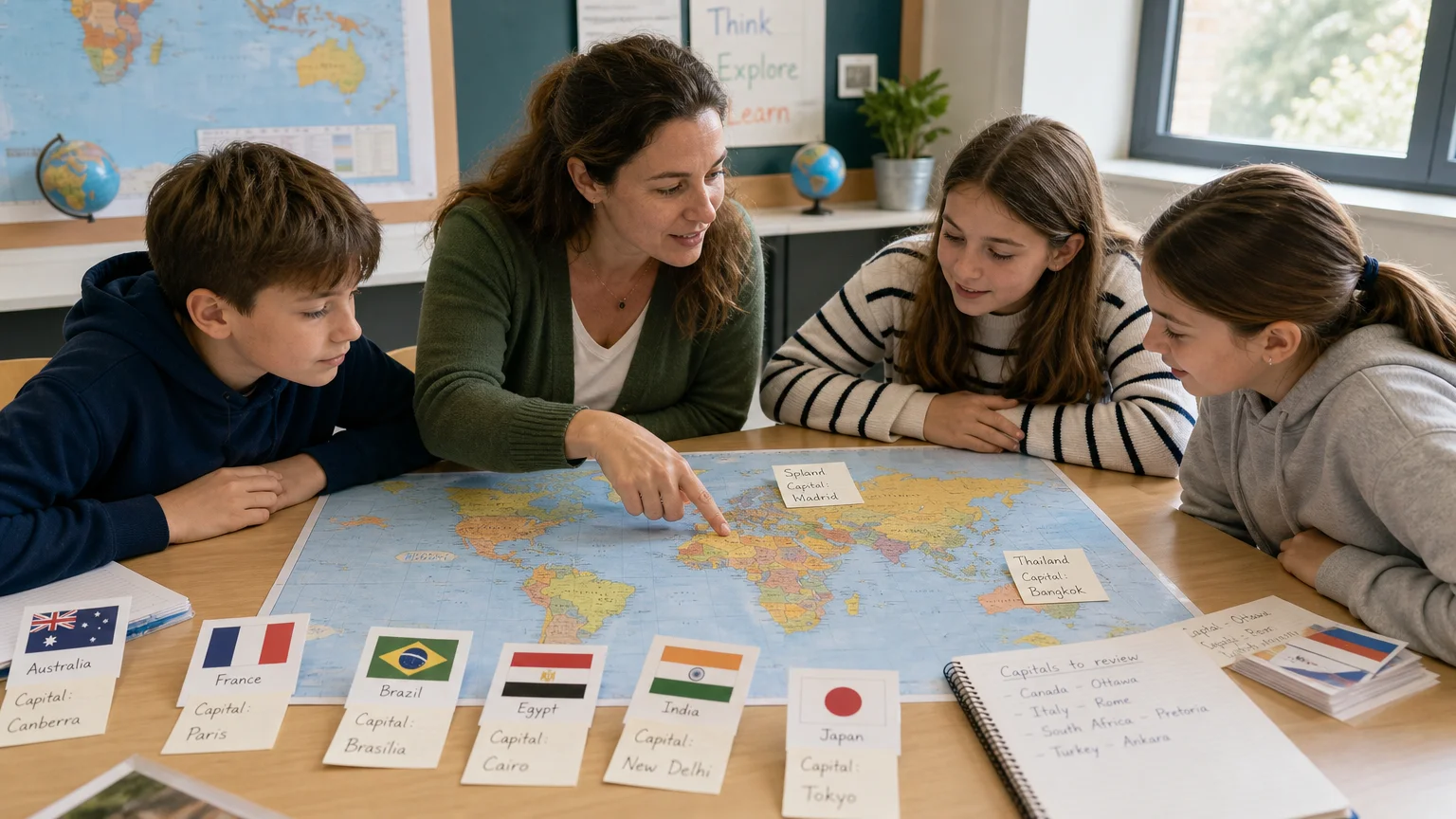
Imagine seeing the same answer once in a textbook and then retrieving it several times in different ways. That process is more demanding than simply rereading the name. It asks your brain to recognize a prompt, search memory, make a choice, and receive feedback.
A 2008 study focused specifically on computer games and geography learning. The researchers reported significant learning gains and higher intrinsic motivation in the game-based environment, while also noting that implementation and teaching context matter. You can read the findings in this geography game study.
The useful mechanism is active recall. Instead of looking at “Canberra” and trying to remember Australia, you see Australia and produce “Canberra” yourself. Each attempt also shows you where your knowledge is weak.
Feedback adds another layer. A wrong answer can reveal a spelling issue, a confusing regional pattern, or a capital you have never encountered. Progressive clues are helpful because they support you without removing the need to think. The challenge stays accessible, but you still practise retrieval.
There are limits, too. A game can improve quiz performance without creating a deep understanding of a country's history, culture, or political geography. Use it as a starting point, then reinforce the answer with a map, a short article, or a conversation about the place.
Which capital game format matches your goal?
Different formats train different skills. Choosing the right one makes your practice more efficient and prevents frustration.
- Multiple-choice quizzes are useful when you're starting. They introduce possible answers and help you build familiarity.
- Typing games demand stronger recall because you must produce the answer without a list of options.
- Timed challenges build speed, but they can encourage guessing if used too early.
- Progressive clue games suit learners who want support while still making the final decision themselves.
- Map and silhouette games develop location awareness, which helps you connect a capital with its surrounding region.
- Daily multi-round games combine several forms of knowledge around one mystery country.
If you want to study by region, our capital cities of the world game gives you a focused way to connect countries and capitals through repeated quiz play. Regional practice can be easier at first because it reduces the number of possible answers. Once you feel comfortable, switch to a worldwide mode to test whether your recall transfers beyond one continent.
Progressive formats are especially useful when the subject feels difficult. You might first receive a continent clue, then a first-letter clue, and finally a factual hint. This sequence gives you a chance to retrieve the answer before revealing too much.
How should you choose a game you'll keep using?
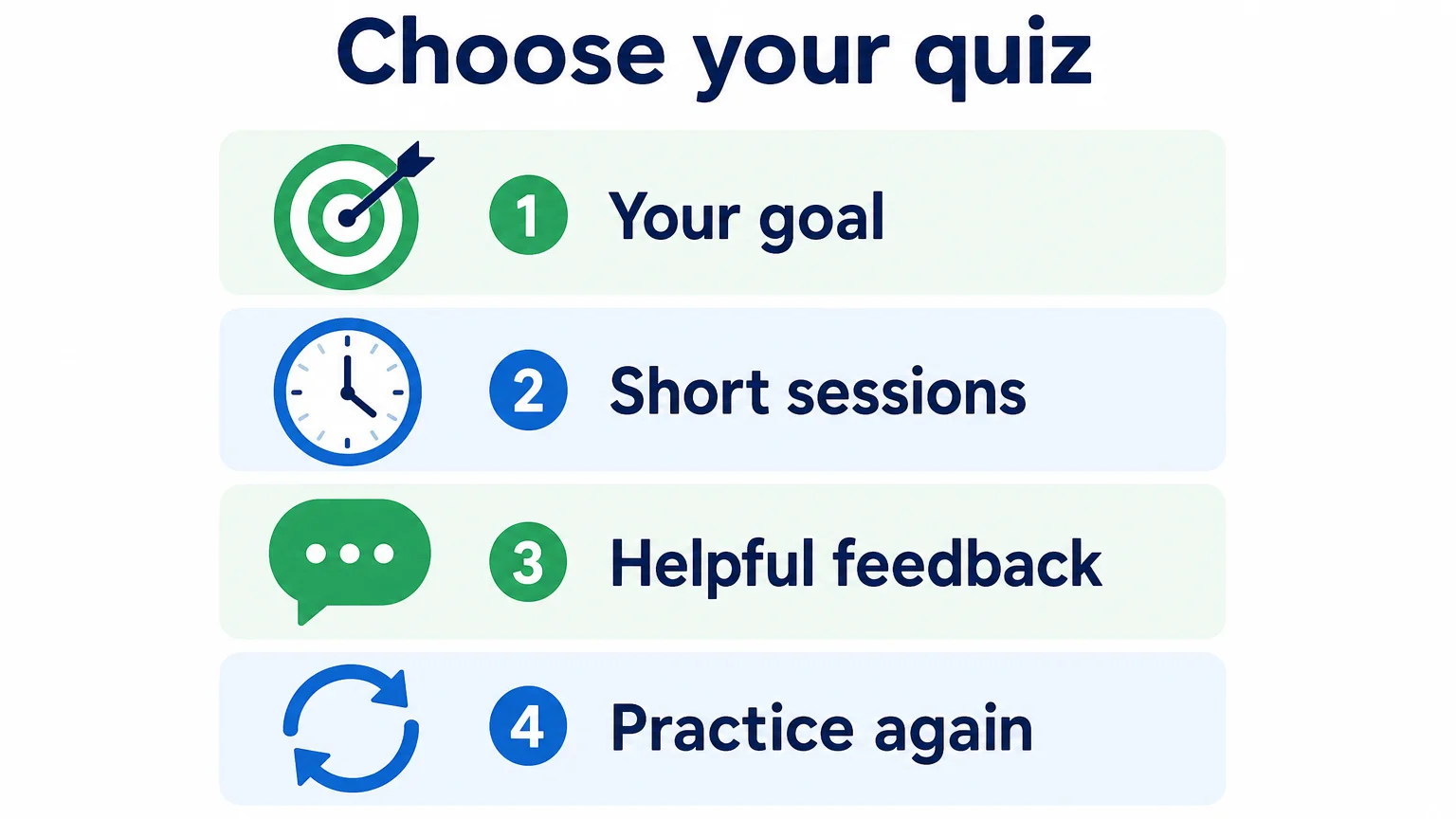
The most impressive-looking game isn't always the most useful one. Before choosing, ask what you need to remember and how much time you can give it.
- Goal: choose capital recall, flag recognition, map skills, or broader geography.
- Difficulty: look for hints or regional filters if you're still building confidence.
- Feedback: prefer games that explain mistakes or reveal useful clues.
- Practice: check whether you can replay questions after completing the daily challenge.
- Access: browser-based play is convenient for classrooms, travel, and short breaks.
- Motivation: leaderboards can encourage consistency, but they shouldn't make learning stressful.
For a mix of direct questions and playful formats, our capital quiz games can help you switch between focused capital practice and wider country knowledge. That variety is useful when repetition starts to feel predictable.
Leaderboards can also influence how often people return. In a 2026 randomized study involving about 10,000 students across 138 schools, a contest-based learning group completed more activities during the contest and remained more active after incentives ended. The result came from language learning rather than geography, so treat it as adjacent evidence, not proof that every geography leaderboard will work. The study is summarized in this leaderboard study.
A healthy game gives you a reason to return without making speed the only measure of progress. Accuracy, improved recall, and learning difficult capitals are useful wins, even when your score isn't at the top.
How can you turn a game into a study routine?
A geography game works best when it becomes part of a simple routine. You don't need a long session. Five to ten focused minutes can be enough if you return regularly and review mistakes.
Start with a mode that matches your current level. If you're new to world capitals, use multiple-choice or regional questions. If you already know the basics, use typed answers, timed rounds, or a global challenge.
For a broader routine, our capitals of the world quiz game can fit into a daily study block, a classroom warm-up, or a travel preparation session. Keep a small list of missed answers, then test yourself again later without looking at the solution first.
- Choose one region or difficulty level for your first session.
- Play one short round without checking outside help.
- Write down unfamiliar capitals and confusing pairs.
- Review each mistake using a map or reference source.
- Return to the same answers the next day.
- Mix old answers with new countries during the week.
- Finish with a worldwide round to check your progress.
This approach uses spaced practice, where you revisit information after a delay. A 2016 meta-analysis of digital games for K to 16 learners found positive learning effects compared with non-game conditions, though game design and context influenced the results. The broader findings appear in this 2016 meta-analysis.
Keep the routine flexible. If you're preparing for a trip, focus on the countries in your itinerary. If you're studying for an exam, group capitals by region and review the ones you miss most often.
What should you watch out for?
Capital quizzes are useful, but they aren't perfect reference tools. Country names, capital status, spellings, and political conventions can vary between sources. When an answer seems surprising, check a reliable geographic or governmental reference rather than assuming the game is correct.
You should also separate memorization from understanding. Knowing that Peru's capital is Lima is helpful, but it doesn't tell you where Lima sits, how Peru's regions differ, or why the city became important. Add context when you have time.
Competition can be motivating for some players and distracting for others. If a timer makes you rush, switch to an untimed mode. If leaderboards help you return regularly, use them as a consistency tool rather than a judgment of your ability.
Finally, check how a game handles progress. Our browser-based games are designed for quick access without an account, and local statistics can be convenient. However, clearing browser data, changing devices, or using private browsing may remove locally stored progress.
Who benefits most from capital country games?
Students can use them to reinforce geography lessons and prepare for general-knowledge exams. Short rounds make it easier to practise between classes or during a study break.
Teachers can use a daily capital question as a five-minute classroom ritual. A shared challenge creates discussion, and students can explain how they reached an answer instead of only checking whether it was right.
Travelers can focus on countries they expect to visit, neighboring states, or airports and cities they may encounter. Learning a capital alongside a flag and map position makes the information easier to recognize in real situations.
Curious players benefit from the same structure without needing a formal study goal. Daily puzzles, replay modes, themed quizzes, and score sharing can turn geography into a low-pressure habit.
Make capital practice part of your week
Capital country games are most useful when they give you repeated retrieval, helpful feedback, and enough variety to stay engaging. Start with a format that matches your level, practise in short sessions, and review mistakes with a map or reliable reference. Whether you're studying, teaching, traveling, or simply curious, a consistent routine will take you further than one long memorization session.
Take action with Flagdle
If you want to turn geography practice into a daily habit, choose a format that makes you curious enough to return. Short challenges can help you practise capitals, flags, country clues, silhouettes, and general knowledge without setting aside a large block of time.
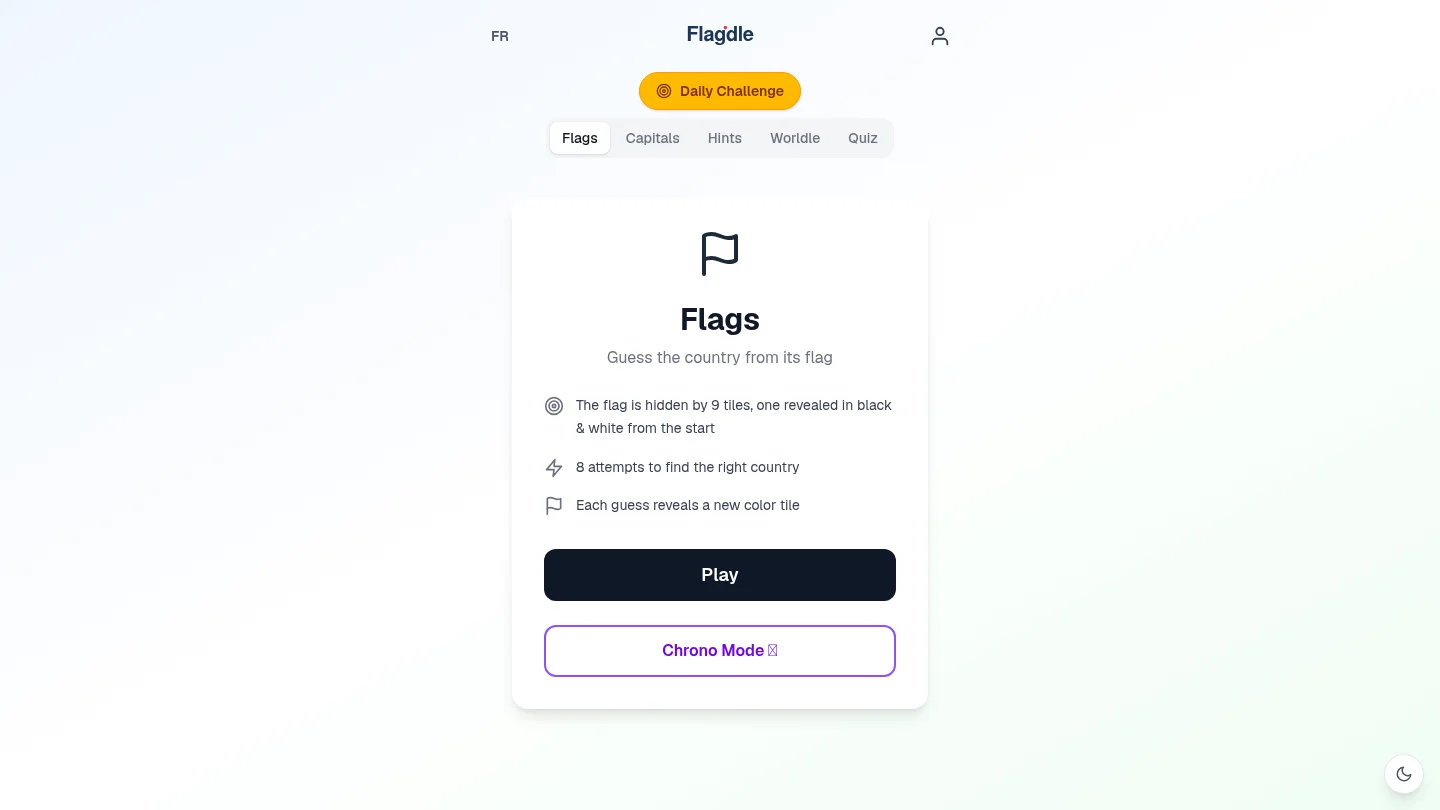
With our free geography game, you can explore a Daily Challenge and separate browser-based modes for flags, capitals, hints, country silhouettes, and themed quizzes. Play in English or French, practise without an account, replay selected modes, and compare Daily Challenge scores through leaderboards.
Frequently Asked Questions
What are capital country games?
They are quizzes and guessing games that help you connect countries with their capital cities. Many also include flags, maps, clues, or related geography questions.
Are capital games useful for beginners?
Yes. Multiple-choice questions, regional filters, and progressive clues can make the first sessions easier. You can move to typing or timed answers as your recall improves.
How often should I practise world capitals?
Short daily sessions usually work better than occasional cramming. Review difficult answers after a delay, then mix them with capitals you already know.
Can I use geography games in a classroom?
Yes, a short daily round can work as a warm-up, review activity, or discussion starter. Choose a format that fits your students' level and allow time to explain unfamiliar answers.
What does Flagdle include besides capitals?
Our Flagdle browser game includes a Daily Challenge alongside flags, capitals, hints, country silhouettes, and themed quiz modes. It is designed for short repeatable sessions covering world geography and general knowledge.