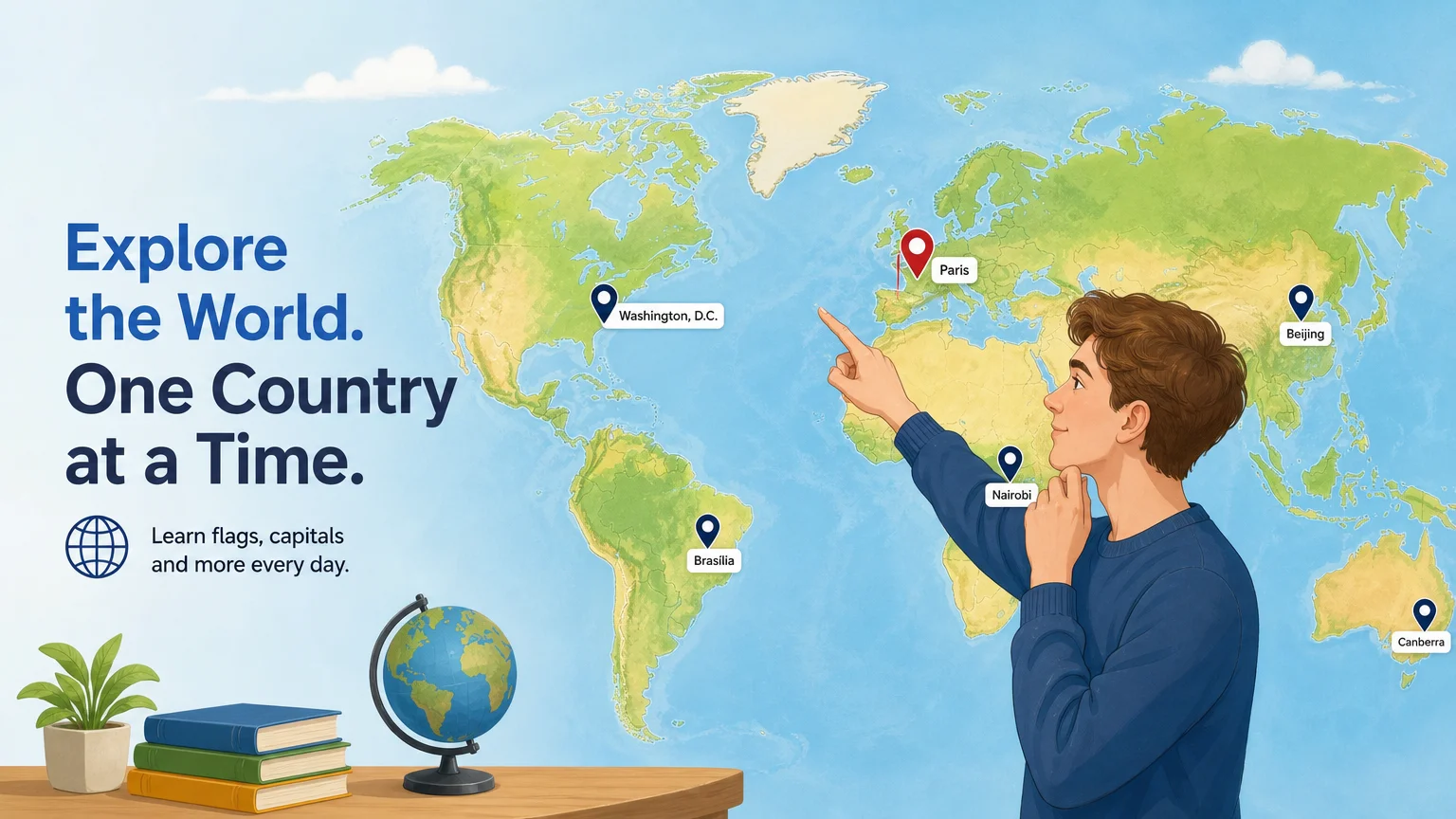

How many capital cities could you name without checking a map? A capital of the world game turns that simple question into a short challenge, helping you practise country recognition, spelling, memory, and global awareness. To make the experience more useful, choose a game that gives you feedback instead of only marking answers right or wrong. For a more connected challenge, try our capital cities of the world game, where capital knowledge becomes part of broader country practice.
Capital games come in several formats. Some use multiple choice, while others ask you to type the answer, follow clues, identify a location, or connect a capital with its country. The right choice depends on how much support you need and whether your priority is speed, memorisation, geography, or general knowledge.
What makes a capital quiz game effective?
A strong capital quiz does more than display a question and reveal the answer. It gives you a reason to retrieve information from memory, then helps you understand and remember the result. That process is more engaging than reading a long list of cities without testing yourself.
One useful principle is active recall. Instead of looking at “France, Paris” and moving on, you try to produce Paris before seeing the solution. Even an incorrect attempt can help because it shows you which association needs more practice. A well-designed game then gives immediate feedback and lets you continue without making mistakes feel discouraging.
Game design can also make large and abstract subjects easier to explore. A 2025 paper on the World Game describes how interactive play can make complex global systems more tangible. Capital learning is simpler, but the same idea applies: a country becomes easier to remember when you actively connect its name, capital, location, flag, and clues.
Look for these features when comparing a game:
- Clear feedback after every answer, so you know what to review.
- Progressive difficulty, so you can begin with familiar capitals and build confidence.
- Multiple formats, including typed answers, hints, silhouettes, and broader quizzes.
- Replay options, which let you practise weak areas instead of waiting for a new challenge.
- Short sessions, making it easier to return regularly.
Which capital game format fits your goal?
Imagine you have five minutes before class, a trip, or a study session. You don't need the same type of challenge in each situation. Choosing the right format can make your practice more efficient and more enjoyable.
Multiple choice is a good starting point if you're still learning the basics. Seeing several options helps you recognise the correct city, although it can provide more support than a real recall task. This format works well for beginners and quick revision.
Typed answer games are more demanding. You must remember the city and enter it accurately, which strengthens spelling and retrieval. They can feel harder, especially when capitals have unfamiliar names, but that extra effort often reveals what you actually know.
Clue based games sit between recognition and recall. You might receive a continent, a first letter, a population clue, or a language hint. This keeps the challenge active while giving you a way forward when the answer is close but not quite available.
Our capitals of the world quiz game is designed for this kind of flexible practice. You can work with capital questions while also building wider knowledge about countries and regions, rather than treating every city as an isolated fact.
Why do progressive clues make a capital game stick?
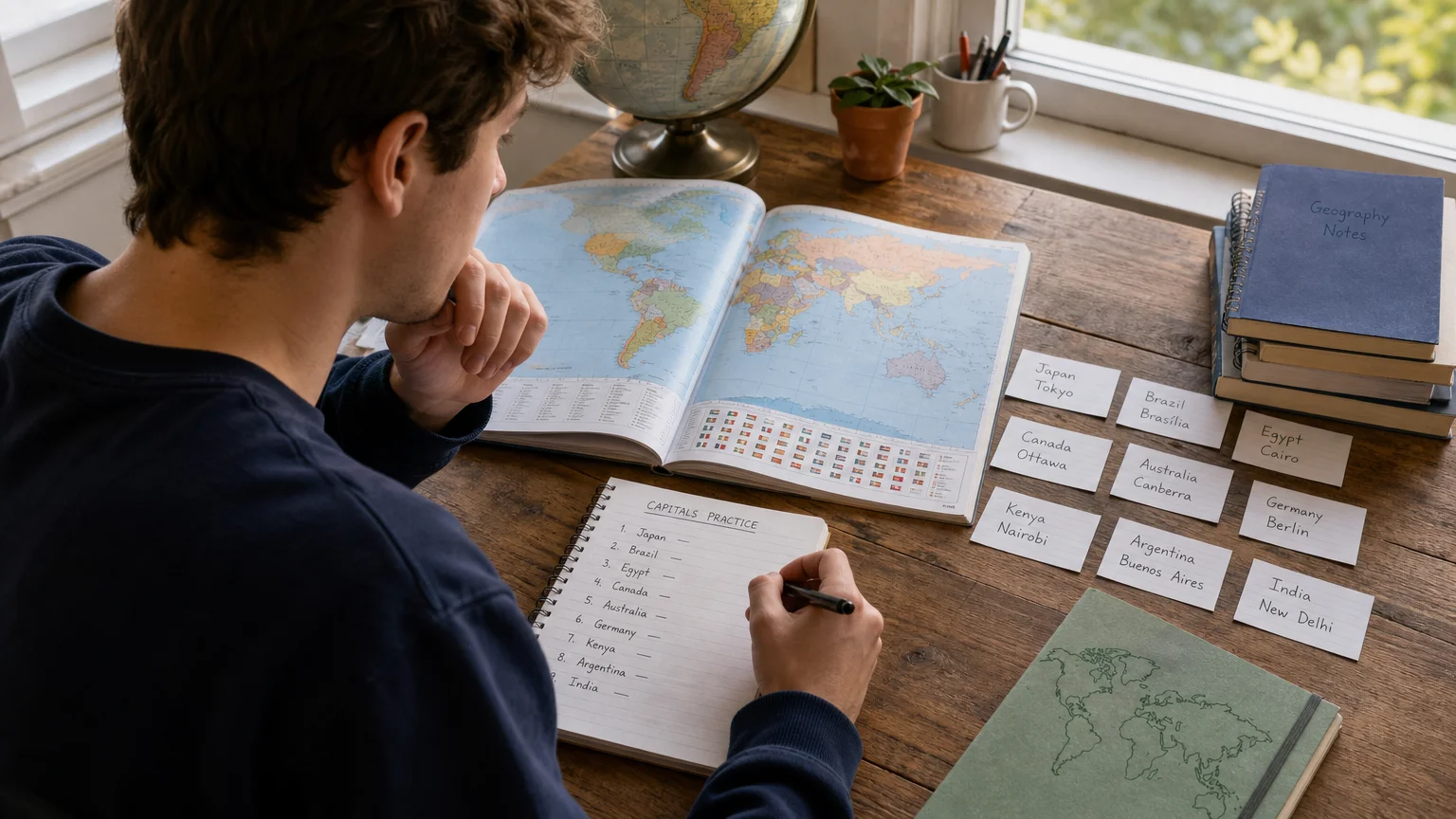
Suppose you know the country but can't remember its capital. A game that immediately shows the answer may end the learning moment too quickly. A game that offers a sequence of progressive clues gives your memory several chances to make the connection.
The first clue might identify the continent. The next could provide a first letter or a fact about the country. If you still need help, another clue can narrow the answer further. This structure protects the sense of discovery while reducing frustration.
Progressive clues also help you notice patterns. You may remember that several countries in one region have capitals that differ from their largest cities. You may connect a city with a language, historical event, coastline, or neighboring country. These links create more retrieval paths, which can make the information easier to access later.
This is especially useful when learning less familiar capitals. A list can make cities such as Gitega, Ngerulmud, or Thimphu look like unrelated names. A clue based on location or country facts gives each answer a context. The goal isn't only to finish the round. It's to build a mental map that becomes richer with every attempt.
How can you use a capital game for study, travel, or class?
Consider three different players. A student may need repetition before an exam. A traveler may want to recognise countries on an itinerary. A teacher may need a short activity that gets everyone involved. The same game can support all three, but the routine should change.
For study, begin with a small group of capitals and revisit missed answers regularly. Mix familiar and unfamiliar countries instead of completing one region only once. After a few sessions, switch from multiple choice to typed answers so recognition develops into reliable recall.
For travel preparation, combine capitals with maps, flags, neighboring countries, and regional facts. Knowing a capital won't replace practical travel research, but it gives you useful geographic context. It can also make news, weather reports, and itinerary planning easier to follow.
For a classroom geography activity, keep the routine short. One daily question can become a warm-up, an exit ticket, or a friendly team challenge. Ask students to explain how they reached an answer, not just whether they got it right. That explanation reveals reasoning and creates opportunities to discuss location, history, and culture.
When you need several formats in one place, our capital quiz games give you ways to practise capitals alongside flags, country clues, silhouettes, and themed knowledge. That variety helps prevent the activity from becoming a repetitive memorisation drill.
What should you check before choosing a world capitals game?
Two games may both promise world capitals practice while offering very different learning experiences. Before you start, check how the game handles country lists, feedback, difficulty, and progress.
First, look at the scope. Some games include independent countries only, while others include territories or constituent countries. Neither approach is automatically right or wrong, but the distinction matters if you're studying from a specific syllabus. Our games focus on 195 UN-recognised countries, giving you a clearly defined base for practice.
Next, check whether the game accepts spelling variations. Capital names can have accents, transliterations, and alternative forms. A useful game should make its accepted answers clear and offer suggestions when your input is close but not recognised.
Privacy and access also matter. A browser game that requires no account can be convenient for a quick session, particularly on a shared classroom device. However, locally stored statistics may disappear if you clear browser data, switch browsers, or use private browsing. Understanding that trade-off helps you choose the right tool for your routine.
Finally, ask whether the game supports your learning style. Do you need a map, visual clues, repeated hints, timed rounds, or a quiet study mode? A useful capital game should make practice more focused, not simply more competitive.
Geography can also become more memorable when it connects with shared interests. A public-sector briefing connected to the 2026 World Cup highlighted the international diversity of the New York and New Jersey soccer audience in a public briefing. The broader lesson is simple: places stick more easily when they connect with sports, travel, history, or people you already care about.
How do you turn five minutes into a daily habit?
Five minutes is enough to create progress if you use it consistently. The goal isn't to memorise every capital in one sitting. It's to make retrieval frequent enough that difficult answers gradually become familiar.
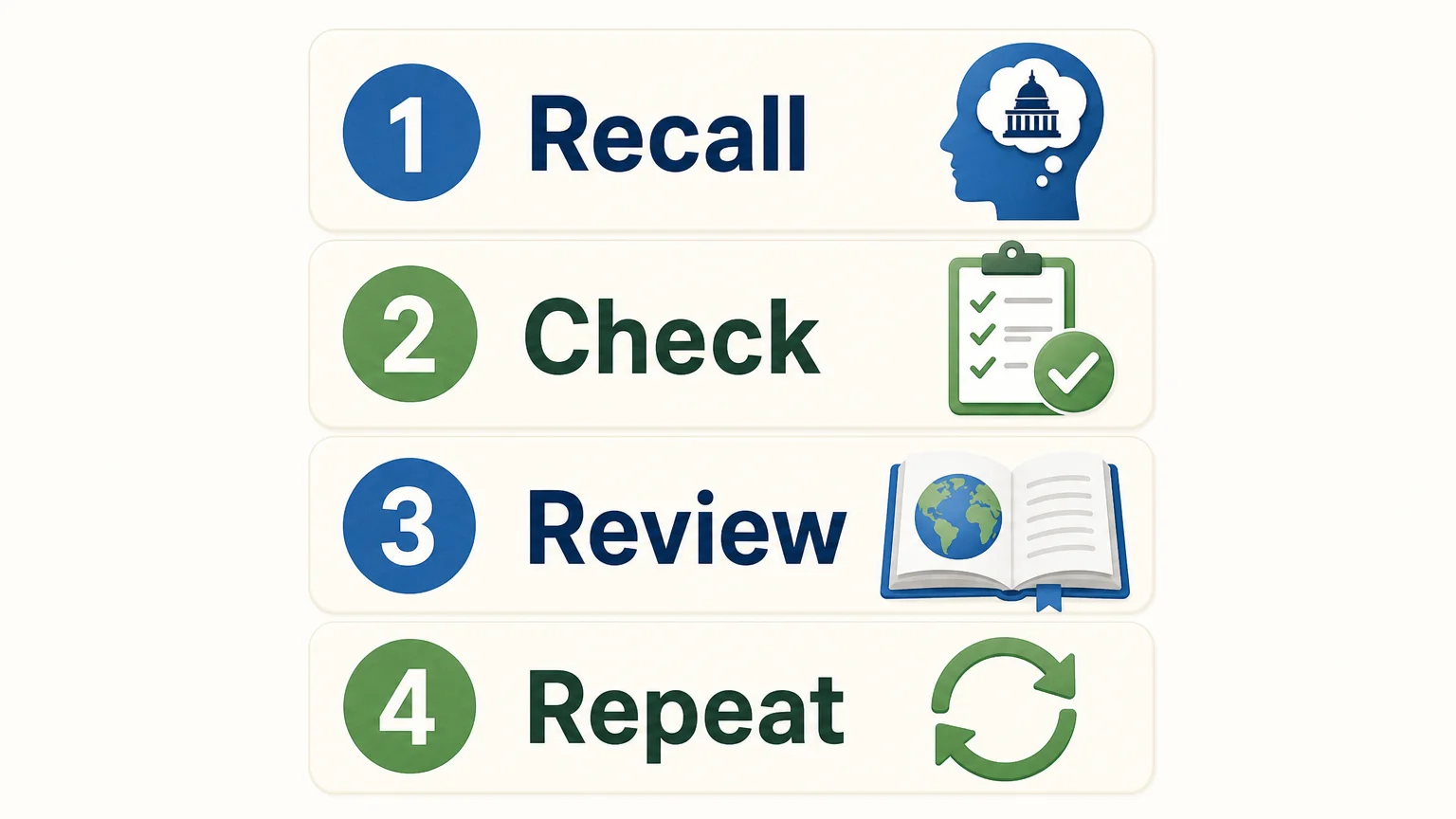
Start with a daily challenge and record the capitals you missed. The next time you play, spend a minute reviewing those answers before beginning. Then test yourself again without looking. This simple cycle combines correction, spacing, and retrieval.
Use a different mode when your attention drops. Move from capitals to flags, then try a country silhouette or a themed quiz. Changing the question type keeps your brain engaged while reinforcing the same geographic knowledge from another angle.
Shared daily puzzles can add motivation without turning learning into pressure. A 2025 systematic review examined how online games can support social capital and connection. Comparing scores with friends or classmates can make practice more social, as long as you still focus on improvement rather than only ranking.
Our country capital quiz game can fit this routine because it combines short play with broader country knowledge. You can practise alone, share a result, or return to replay modes when you want extra repetition.
Choose a capital game that helps you remember
The most useful capital game is the one you'll return to regularly. Look for active recall, helpful clues, immediate feedback, and enough variety to connect capitals with flags, countries, regions, and stories. Start with short sessions, review the answers you miss, and gradually move from recognition to confident recall. That approach turns a list of city names into practical world geography knowledge.
Take action with Flagdle
If you want a simple way to practise capitals without committing to a long study session, a short browser game can fit naturally into your day. You can use it before class, during a travel planning break, or whenever you want a quick geography challenge.
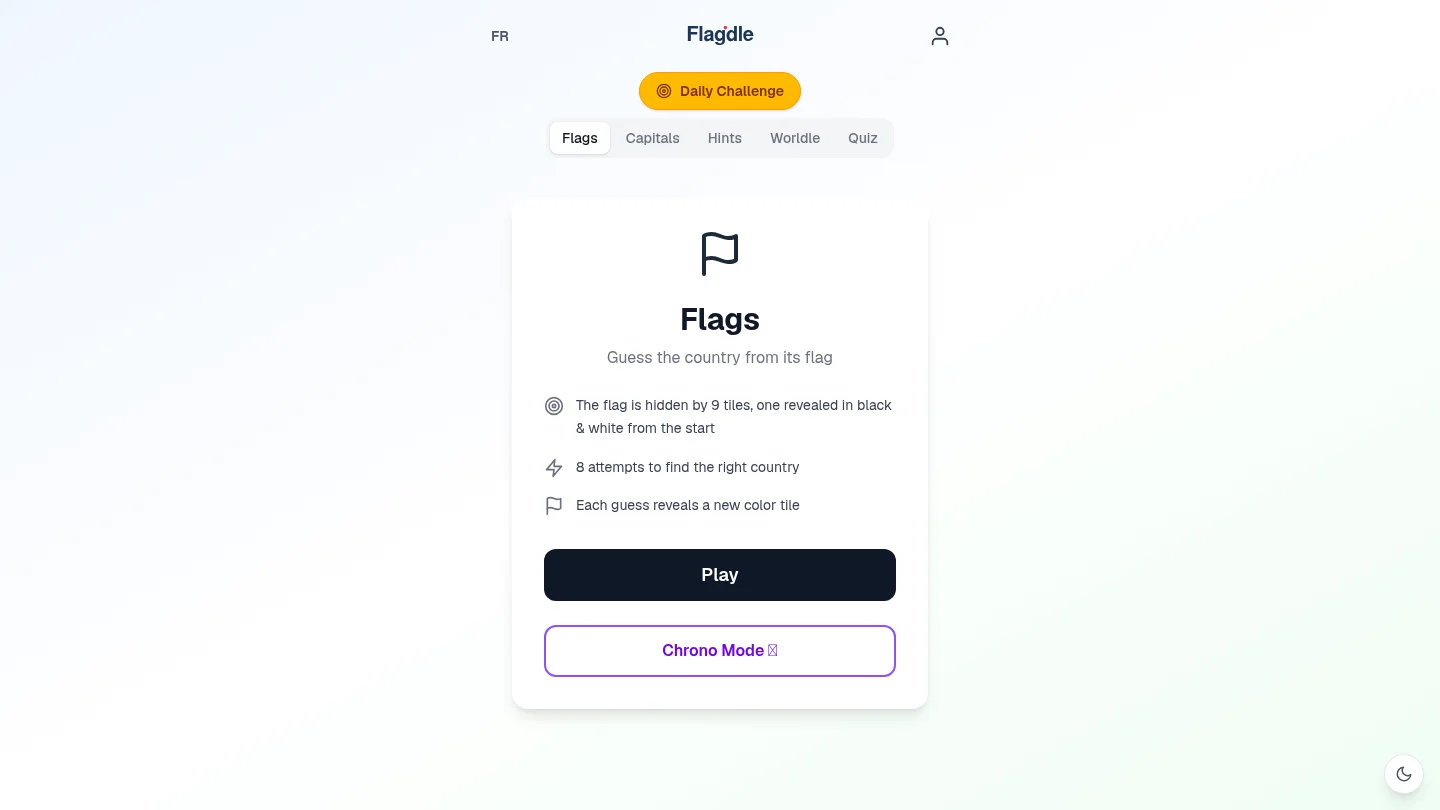
With Flagdle, you can explore a free browser based collection of geography modes covering 195 UN-recognised countries. Practise capitals, flags, progressive hints, country silhouettes, and themed quizzes in French or English, then compare Daily Challenge results through daily, weekly, and monthly leaderboards. When you're ready, play the world capitals game and build your next five minute learning habit.
Frequently Asked Questions
What is a capital of the world game?
It's an online quiz or puzzle that asks you to identify capital cities and connect them with their countries. Formats can include multiple choice, typed answers, clues, maps, flags, or broader geography challenges.
Is a capital quiz useful for beginners?
Yes, especially when the game provides hints, answer choices, and immediate feedback. Start with easier questions, then move toward typed answers as your confidence improves.
How can I memorise difficult capital cities?
Connect each capital with its country, region, flag, language, history, or location. Short repeated sessions usually work better than trying to memorise a full list in one sitting.
Can you use a capital game in the classroom?
Yes, a five minute challenge can work as a warm-up, review activity, or team exercise. Ask students to explain their reasoning so the activity develops geographic understanding instead of relying only on guessing.
Does Flagdle offer more than capital questions?
Yes, Flagdle also includes flags, progressive hints, country silhouettes, a Daily Challenge, and themed quizzes. That variety lets you practise capitals while building wider knowledge of countries and world geography.