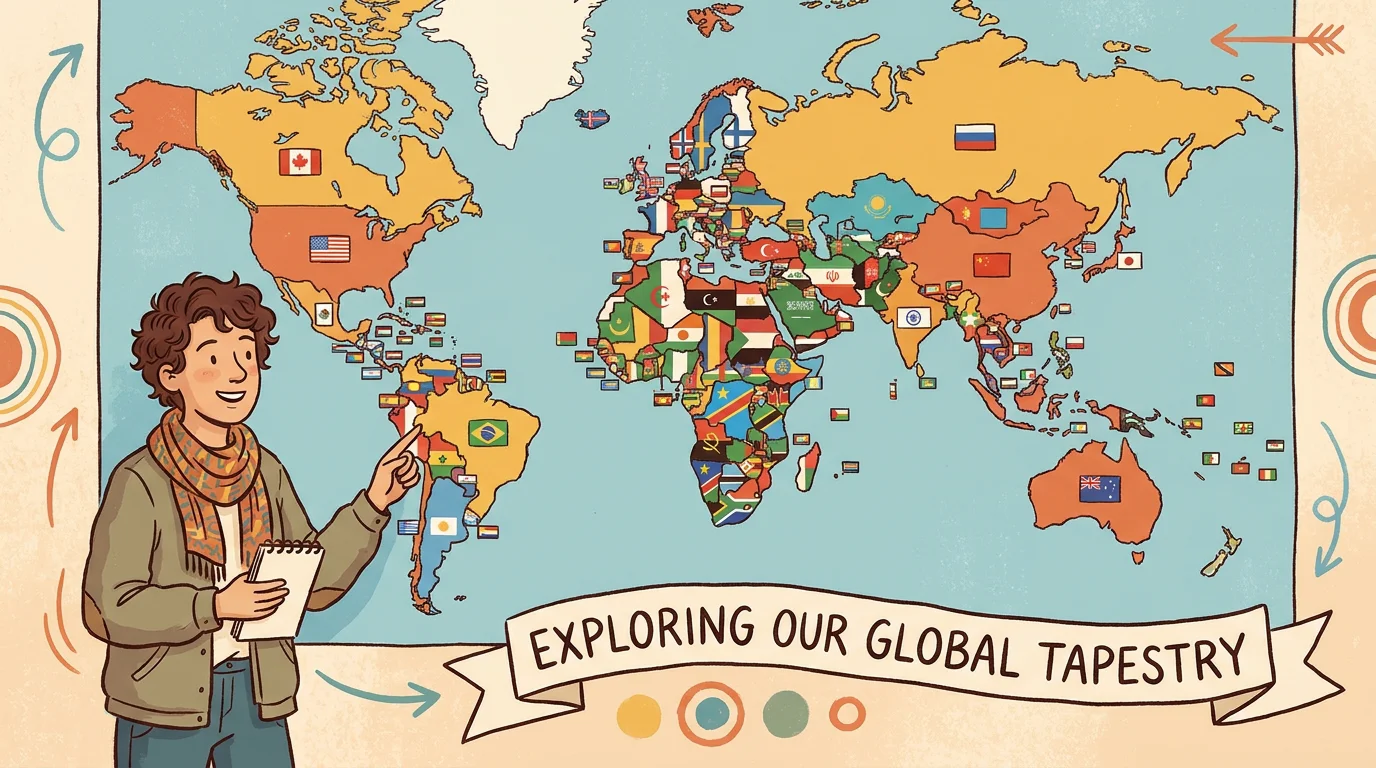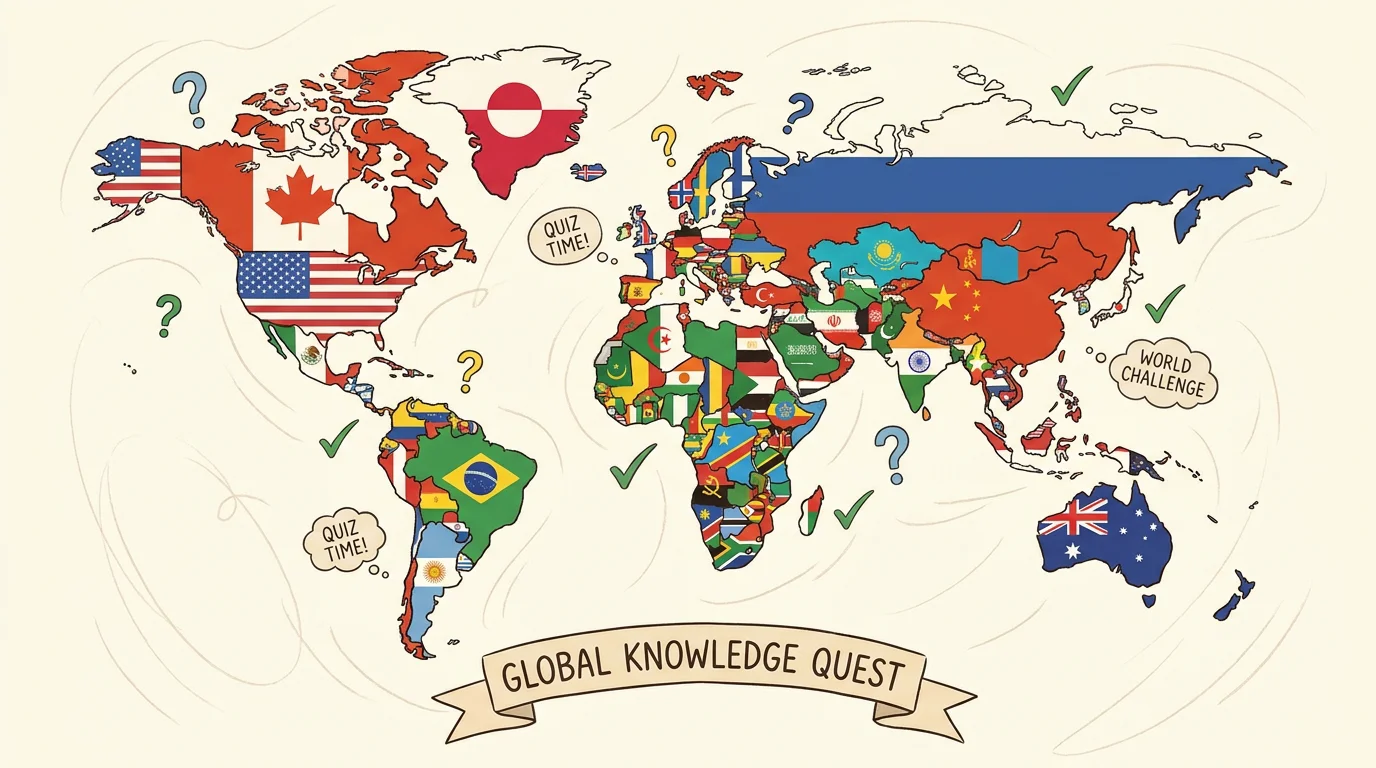
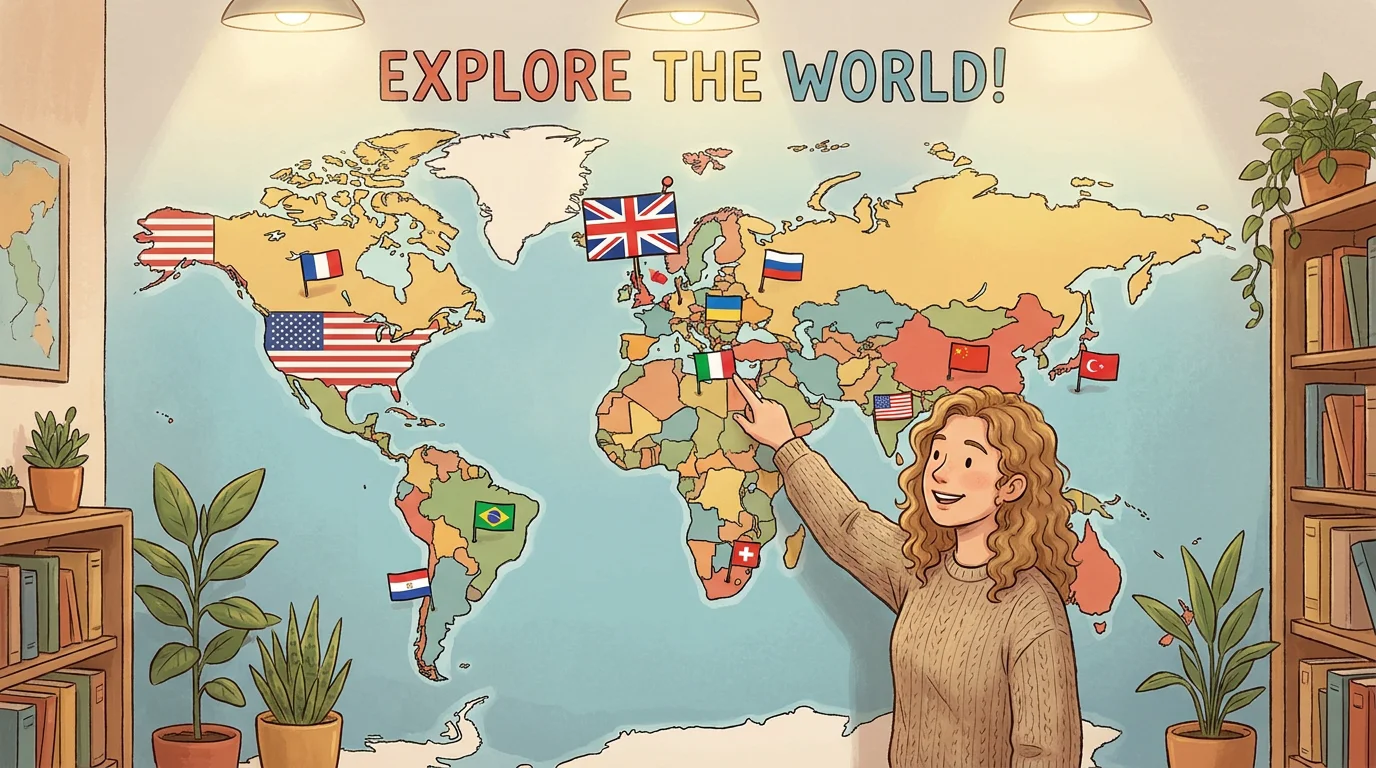

Quick: what country flies a flag with a dragon on it? If you said Bhutan (or Wales, you cheeky geography nerd), you're already ahead of the pack. Country flag guessing games have exploded in popularity over the past few years, turning casual trivia fans into full-blown vexillology enthusiasts. Whether you've stumbled across one during a lunch break or you're hunting for a daily brain challenge, you're in the right place. Our flag guessing game is one of the most addictive ways to put your knowledge to the test.
The concept is beautifully simple: you see a flag, you guess the country. But "simple" doesn't mean "easy." With nearly 200 recognized nations and countless lookalike designs, things get tricky fast. Let's dig into why these games are so popular, how they actually benefit your brain, and how you can go from confused beginner to flag identification pro.
Why Are Flag Guessing Games So Popular Right Now?
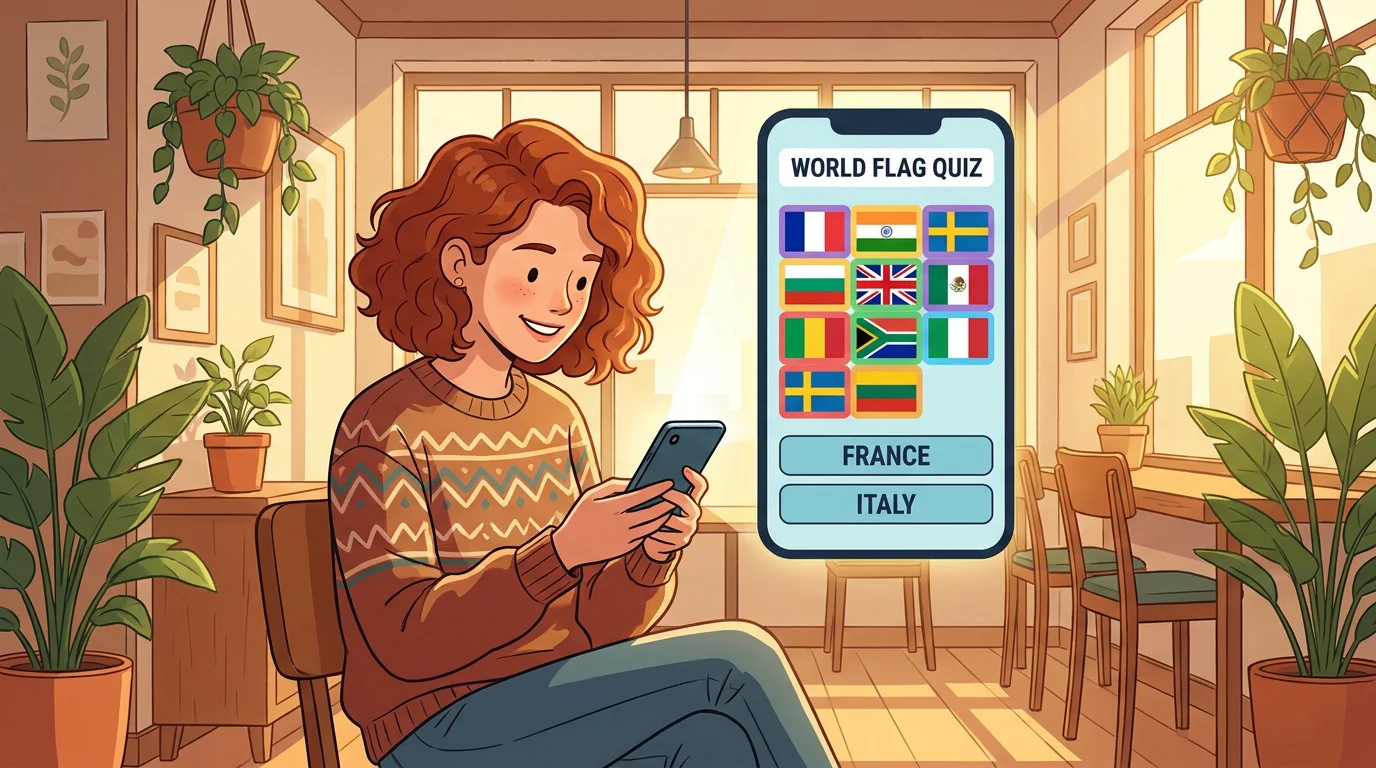
The Wordle effect changed everything. After Wordle showed the world that a simple daily puzzle could become a global phenomenon, dozens of geography and trivia spin-offs followed. Flag quizzes went from dusty classroom exercises to slick, shareable daily challenges that people genuinely look forward to.
Part of the appeal is the competitive element. Platforms like Sporcle offer flag quizzes with 197 questions, updated as recently as February 2026. Meanwhile, mobile apps on the Google Play Store invite "millions of players worldwide" to join their flag guessing communities. The social hook is strong: you guess, you share your score, you challenge a friend.
There's also the "one more round" factor. These games are quick. A single round takes under a minute, but the satisfaction of nailing a tough flag (looking at you, Chad and Romania) keeps you coming back. It's low commitment, high reward.
The Cognitive Benefits You Didn't Expect
Flag games aren't just fun; they're genuinely good for your brain. Recognizing and recalling flags from memory enhances cognitive functions like pattern recognition, spatial memory, and visual processing. That's not a minor perk. You're basically doing a visual memory workout every time you play.
Playing strengthens recall ability by engaging both short-term and long-term memory systems, and as you learn to distinguish similar designs and remember minute details, neural pathways involved in attention to detail and long-term memory encoding are reinforced.
Because flags are tied to countries, cultural meaning, and geography, players also build contextual learning skills, making flag quizzes "an entertaining yet cerebral workout". So next time someone calls it "just a game," you've got a solid comeback.
How a Progressive Flag Reveal Changes the Game
Most flag quizzes show you the whole flag and ask you to name the country. That's fine, but it's basically a flashcard. The really engaging format? A progressive reveal.
Here's how it works with our approach: the flag starts hidden behind tiles, and each guess reveals a new section. You might see a sliver of green and have to decide whether it's Nigeria, Saudi Arabia, or Pakistan. With each wrong guess, another tile flips, giving you more visual information. It's like a puzzle inside a puzzle.
This mechanic changes your strategy entirely. Instead of instant recall, you're using deductive reasoning, color association, and process of elimination. It's a more rewarding experience because you earn the answer rather than just recognizing it. If you want to try this format, our country flag game uses this exact progressive reveal system with 195 countries.
The Trickiest Flags (and How to Tell Them Apart)
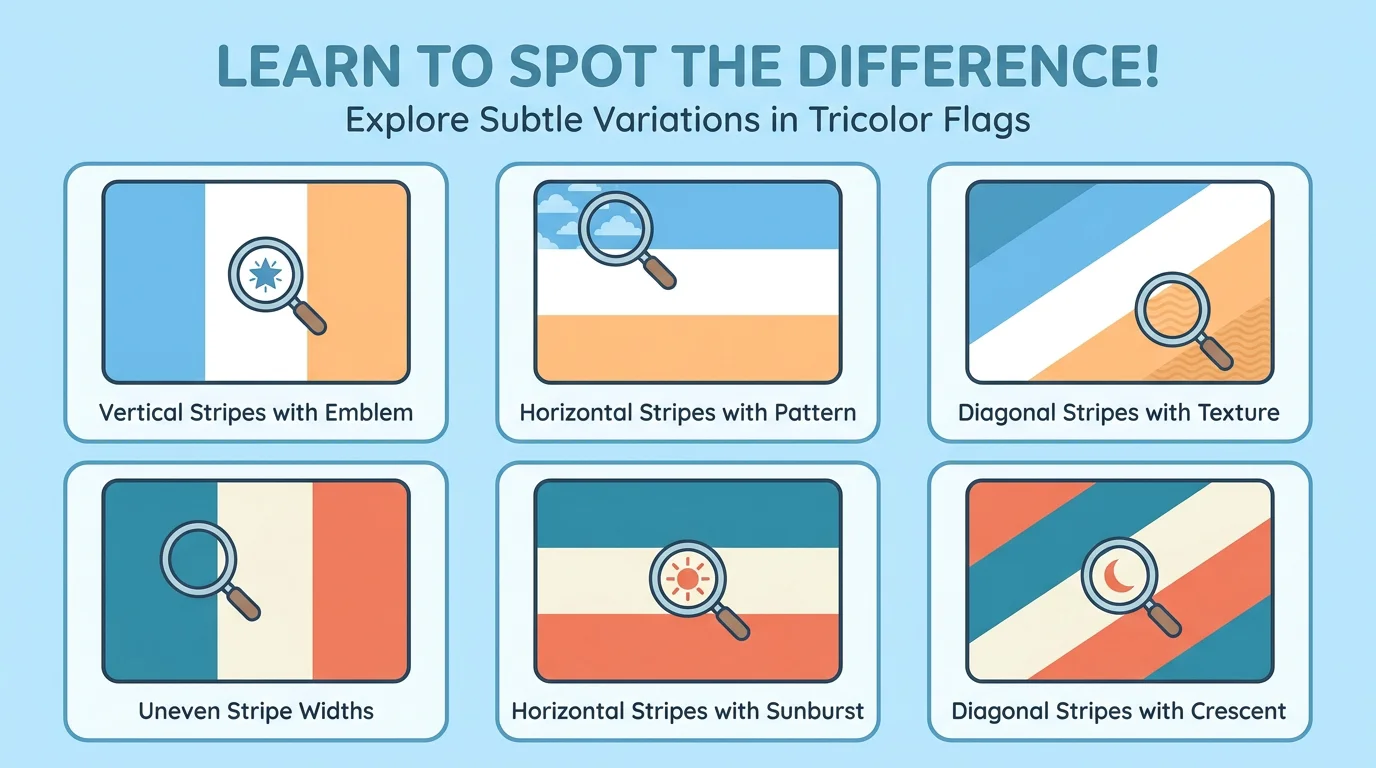
Every flag quiz player has their nemesis. Here are the pairs (and triplets) that trip up even seasoned players:
- Chad and Romania: Nearly identical vertical blue, yellow, and red stripes. The only difference? Chad's blue is slightly darker. Good luck spotting that on a tiny screen.
- Monaco and Indonesia: Both are horizontal red over white. The proportions differ slightly, but in a quiz context, it's a coin flip for many players.
- Ireland and Côte d'Ivoire: Both are green, white, and orange vertical tricolors. Ireland reads left to right as green-white-orange; Côte d'Ivoire reverses the order.
- Australia and New Zealand: Both feature the Southern Cross on a blue background with the Union Jack. New Zealand has four red stars; Australia has six white ones plus a Commonwealth Star.
A solid strategy is to learn flags by region. It's easier to spot similarities and patterns when you group them geographically. Start with Europe, move to Africa (where the color overlap gets wild), and work outward from there.
Daily Challenges vs. Infinite Mode: Pick Your Style
There are two main ways people play flag guessing games, and your preference says a lot about you.
Daily challenges give you one flag per day, the same one for everybody. You get a fixed number of attempts, and when it's done, it's done until tomorrow. This format builds habit and community. You can compare results with friends because you all tackled the same puzzle. It's the format that made Wordle a household name, and it works brilliantly for flags too.
Infinite mode is for the grinders. No limits, no waiting. Flag after flag after flag. This is the format you want when you're actively studying or trying to memorize every flag on the planet. Some platforms feature quiz games including 197 world flags and 130 territory flags from every corner of the globe, giving you plenty of material to chew through.
Can't decide? You don't have to. Our timed flag challenge adds a clock to the mix, combining the urgency of a daily challenge with the volume of infinite mode. It's the best of both worlds for players who want pressure without a one-and-done limit.
Beyond Flags: Geography Games That Go Deeper
If you love guessing flags, you'll probably enjoy the broader world of geography quiz games. The category has grown significantly, with games now testing capitals, borders, currencies, GDP rankings, languages, and even country silhouettes.
Games like those on CrazyGames combine flags, capitals, and independence dates into one package, offering multiple modes that test different layers of geographical knowledge. The trend is clear: players want more depth, not just surface-level recognition.
That's exactly why we built more than just a flag quiz. Our flag quiz game is part of a broader daily challenge that includes clues about coat of arms, capital cities, neighboring countries, currencies, and more. It turns a simple flag guess into a full geography deep dive.
Strategies to Improve Your Flag Knowledge Fast
Ready to stop guessing randomly and start getting flags right? Here are proven strategies:
- Learn the color rules. Pan-African colors (green, yellow, red) dominate African flags. Pan-Arab colors (red, white, black, green) show up across the Middle East. Scandinavian countries use the Nordic cross. Knowing these patterns eliminates dozens of wrong answers instantly.
- Focus on unique elements. Only Nepal has a non-rectangular flag. Only Mozambique features a rifle. Switzerland and Vatican City are the only square flags. These quirks are free points.
- Use spaced repetition. Play a little every day rather than cramming once a week. Daily challenges are perfect for this because they force consistent, low-effort engagement.
- Study the tricky pairs. Make a list of the flags that always fool you and drill them. Players frequently note that similar color schemes across different continents are the biggest source of confusion.
- Play different modes. Mixing timed challenges, progressive reveals, and standard quizzes keeps your brain engaged from different angles.
What Makes a Great Flag Guessing Game in 2026
Not all flag quizzes are created equal. Here's what separates a forgettable quiz from one you'll bookmark:
| Feature | Basic Quiz | Flagdle |
|---|---|---|
| Number of countries | Varies (50–197) | 195 |
| Daily challenge | Sometimes | Yes, same for all players |
| Progressive reveal | Rare | Yes (9-tile system) |
| Beyond flags (capitals, currencies, etc.) | Occasionally | Yes (8+ mini-games) |
| Timed mode | Sometimes | Yes |
| Price | Free or freemium | 100% free |
The combination of a daily puzzle that everyone shares, a progressive reveal that rewards deduction over pure memory, and multiple geography mini-games in one place is what makes a flag guessing experience feel complete rather than disposable.
Whether you're a geography buff, a trivia enthusiast, or someone just looking for a smarter way to spend five minutes, guessing country flags is one of the most rewarding daily habits you can pick up. It sharpens your memory, expands your world knowledge, and gives you serious bragging rights. Our progressive reveal system and daily challenges at Flagdle make the experience uniquely engaging, with fresh content every single day. Ready to see how many flags you can name? Jump into our country flags guess challenge and find out.
Frequently Asked Questions
How many country flags are there in the world?
There are 195 internationally recognized sovereign nations, each with its own flag. Some quizzes include territories and dependencies, pushing the total past 250. Flagdle covers all 195 UN-recognized countries in its daily challenges.
Can flag guessing games actually help you learn geography?
Absolutely. Repeated exposure through play builds strong visual associations between flags, country names, and locations. It's a form of active recall, one of the most effective learning techniques in cognitive science.
What's the hardest flag to guess?
That depends on your experience level, but flags like Chad, Romania, and Monaco consistently rank as the trickiest because they're nearly identical to other nations' flags. Playing a game with progressive hints, like the tile-reveal system on Flagdle, helps you learn the subtle differences over time.