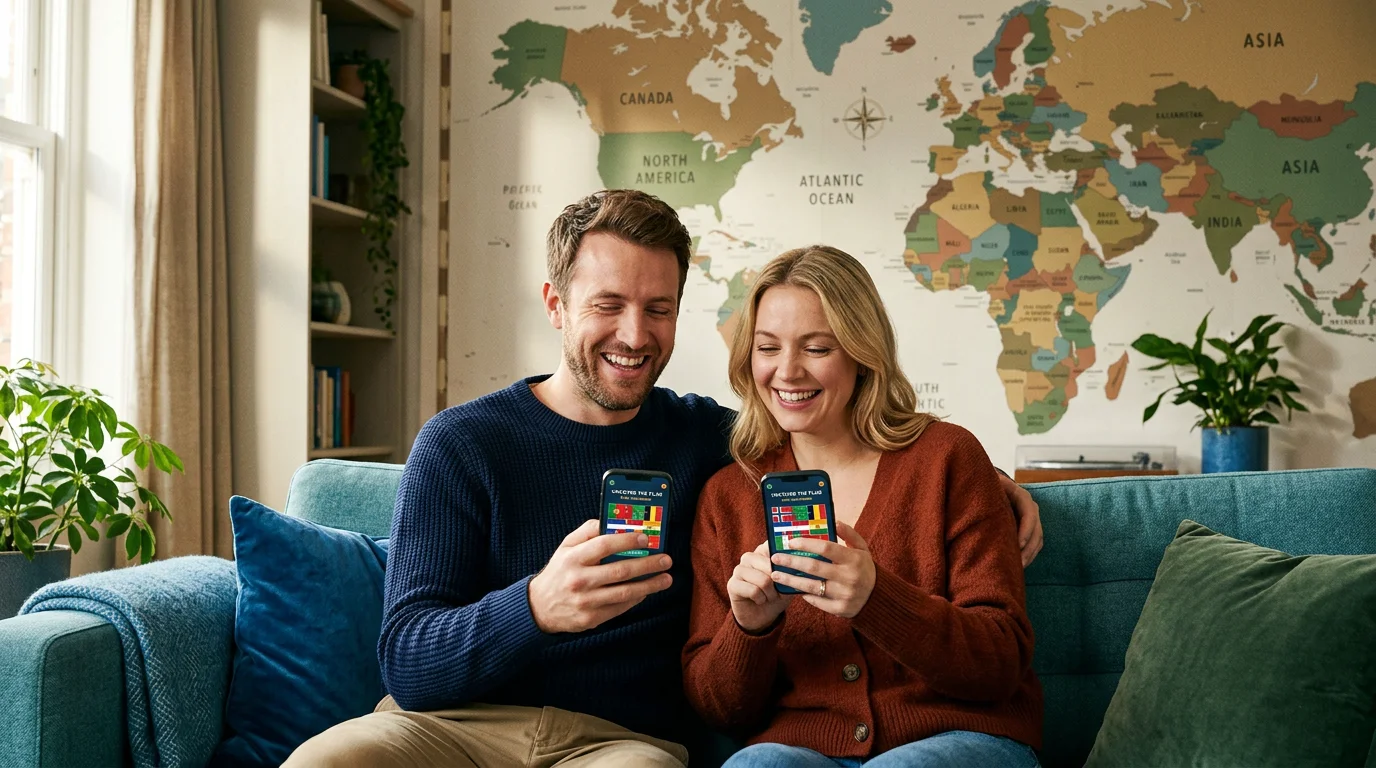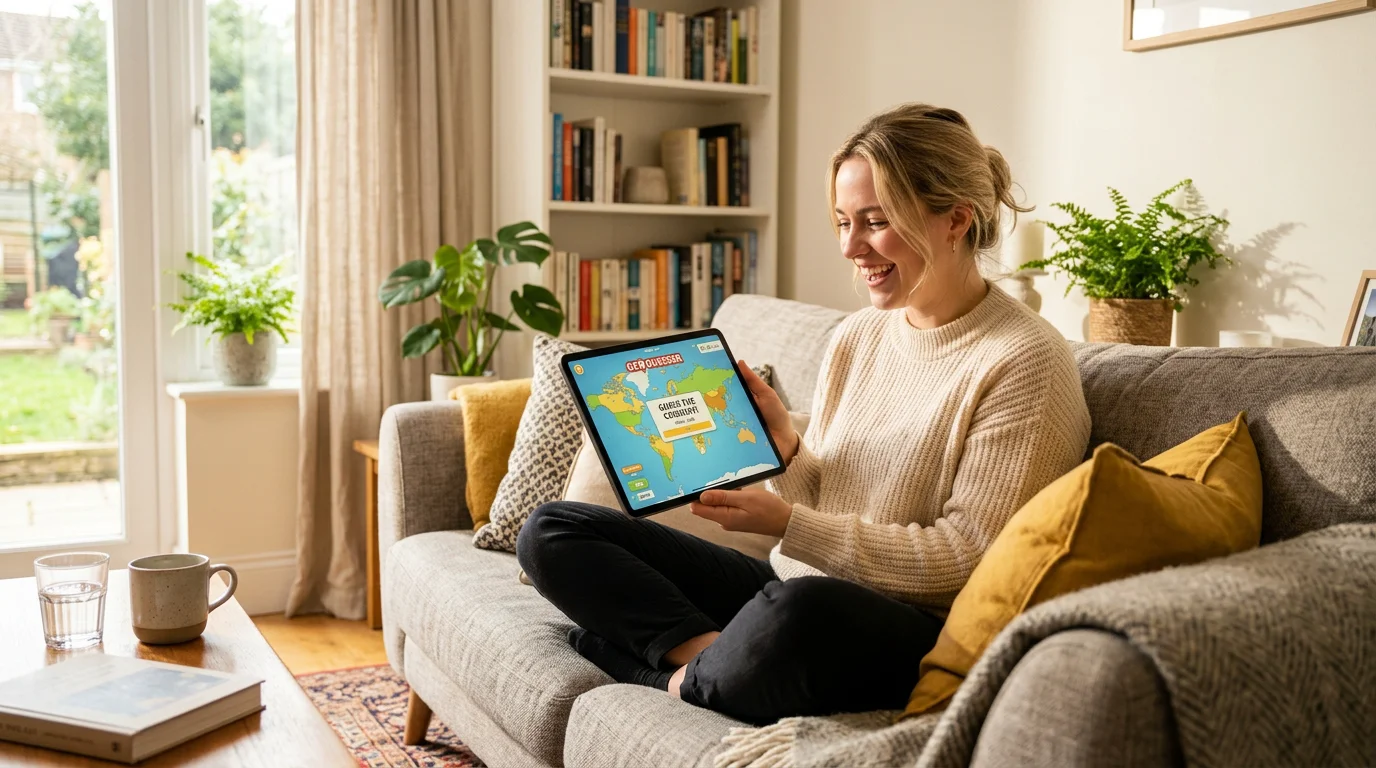

Here's a number that stings: in a landmark survey, about 11 percent of young adults in the United States couldn't even find their own country on a world map. Geography knowledge has been slipping for years, and yet the fix might be sitting in your browser. A quick, fun our daily country guessing game can do what a textbook never managed: make you actually want to learn.
That survey figure comes from National Geographic, and it's not just a US problem. The point is simple. When learning feels like a game, it sticks. So let's talk about how a good country geography game works, why the daily format beats brute memorization, and how to pick one that actually teaches you something.
Why a geography game beats a textbook
Think about the last time you crammed a list of capitals. You probably forgot half of them by the weekend. A game flips that around. Instead of passively reading, you're actively guessing, checking, and correcting, which is exactly how memory forms.
The decline is real and measured. In the US, NAEP results showed that average eighth-grade geography scores in 2018 were lower than in 2014, with the biggest drops among lower-performing students. And it's not only an American story. A 2026 study in Geographical Research found that geography enrolment in Australia fell from 8.1% of Year 12 students in the 1998 to 2017 window to 6.2% across 2012 to 2023.
So the subject is fading in classrooms while the world stays complicated. That's the gap a good map quiz game fills. It's low pressure, it's fast, and it rewards curiosity instead of punishing wrong answers.
The daily format: one country, everyone, every day
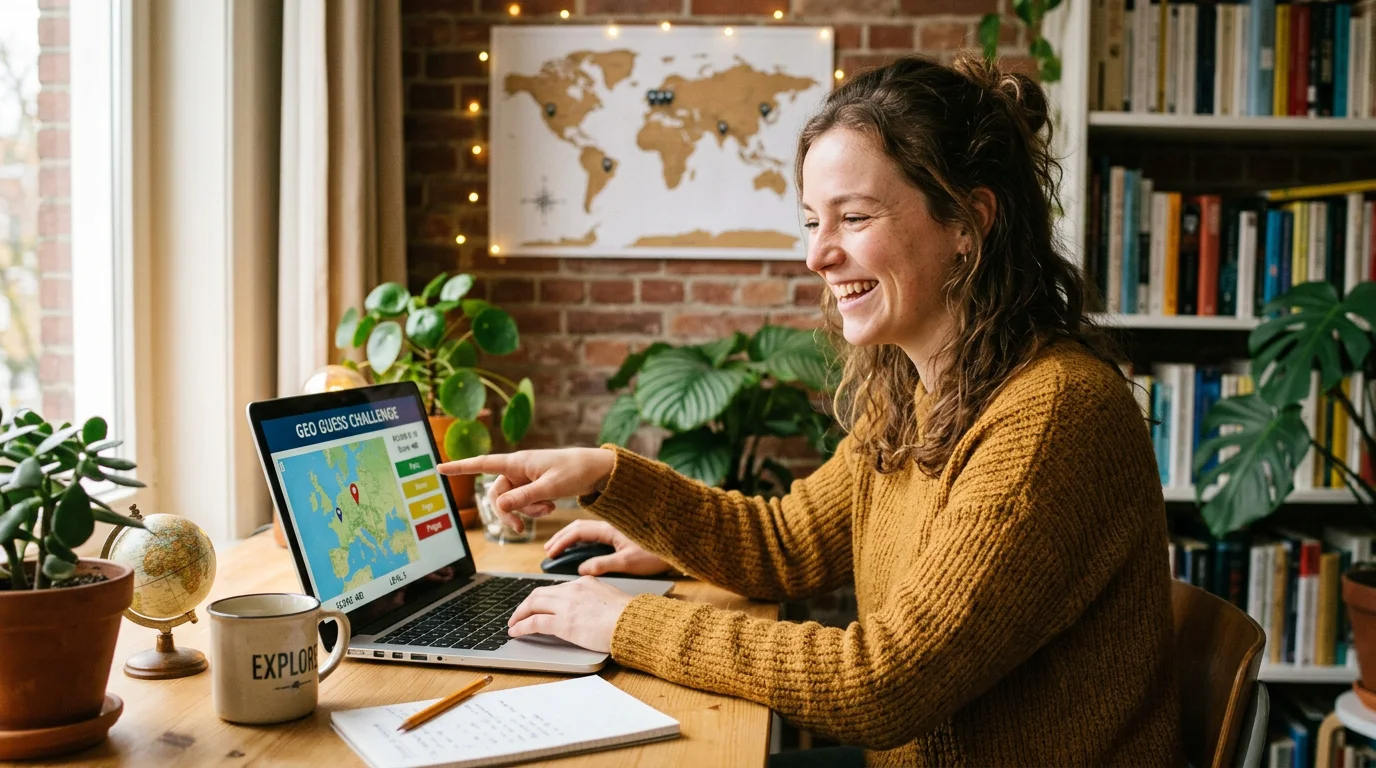
Ever notice how a five-minute daily puzzle is easier to stick with than a 30-minute study session? That's the whole idea behind the daily model. One fresh challenge drops each day, and everyone plays the same one, so you can compare notes with friends.
We built our approach around that rhythm. With our guess the country game, a single flag is masked behind nine tiles, and you get three tries to name the nation. Same flag for every player worldwide, so it's genuinely a shared moment, not a solo grind.
The magic is in the constraint. Three guesses forces you to think, not spam. And because a new flag appears every day at midnight in your local time zone, there's always a reason to come back tomorrow. Small habit, big payoff over a few weeks.
Flags, capitals, or map shapes: pick your mode
Not everyone learns the same way. Some people are visual and lock onto flag colors instantly. Others remember capitals like song lyrics. And some are all about the outline of a country on a map.
The strongest games let you switch between these. A few modes worth knowing:
- Flag mode: identify a nation from its partially hidden flag.
- Capitals mode: match a capital city to its country in a few tries.
- Silhouette mode: guess the country from its shape, with hints like distance and direction.
- Progressive clues: use continent, population and language to narrow it down.
If shapes are your thing, our guess the country by its shape game leans into that visual muscle. Mixing modes is smart, because seeing the same nation as a flag, a capital and an outline builds stronger, layered memory.
What makes one game better than another
There are plenty of options out there. Some apps pile on thousands of questions across hundreds of regions and territories. Others focus on customizable map quizzes across every continent. They cover a lot of ground, but breadth can be overwhelming when you just want a quick, focused session.
Research backs the focused approach. A study on US geography outcomes found that students who took geography before eighth grade built foundational knowledge that boosted later performance. Early, consistent exposure beats one big data dump. A daily game delivers exactly that consistency.
Here's a quick comparison of common formats so you can see the trade-offs.
| Format | Session length | Daily shared challenge | Cost |
|---|---|---|---|
| Our daily flag game | ~3 to 5 minutes | Yes, same for everyone | Free, no account |
| Large quiz app | 10 to 30 minutes | No | Free with ads / in-app purchases |
| Customizable map quiz site | 5 to 20 minutes | No | Free |
The point isn't that other tools are useless. They cover flags, capitals and maps just fine. But if you want a quick ritual you'll actually repeat, a short daily challenge with a leaderboard tends to win the habit battle.
How to actually learn faster while you play
Playing is good. Playing with a little strategy is better. A few habits speed things up without turning fun into homework.
- Play every single day. Consistency beats marathon sessions every time.
- Guess out loud. Saying the country and capital together doubles the memory hook.
- Note your misses. The countries you get wrong are your real study list.
- Compare scores. A friendly leaderboard keeps you honest and coming back.
Travel and language exposure also help. The same National Geographic research noted that geographic knowledge climbs with international travel and speaking more than one language. You can't fake a trip abroad, but you can mimic the curiosity by exploring a new nation each day. If you like variety, our world guessing games string several mini challenges together so you meet a different country daily.
The bottom line
Geography doesn't have to be a subject you dread or forget. A good country geography game turns the 195 nations of the world into a light daily habit, one flag, capital or shape at a time. Start small, play consistently, and track the ones you miss. Within a few weeks you'll surprise yourself, naming countries you couldn't have placed on a map before. The trick was never cramming. It was showing up for five fun minutes a day.
Take action with Flagdle
Ready to stop guessing randomly and actually remember the world? If a quick, no-pressure daily challenge sounds like your kind of learning, we made exactly that. No account, no intrusive ads, just one flag a day and a score to beat.
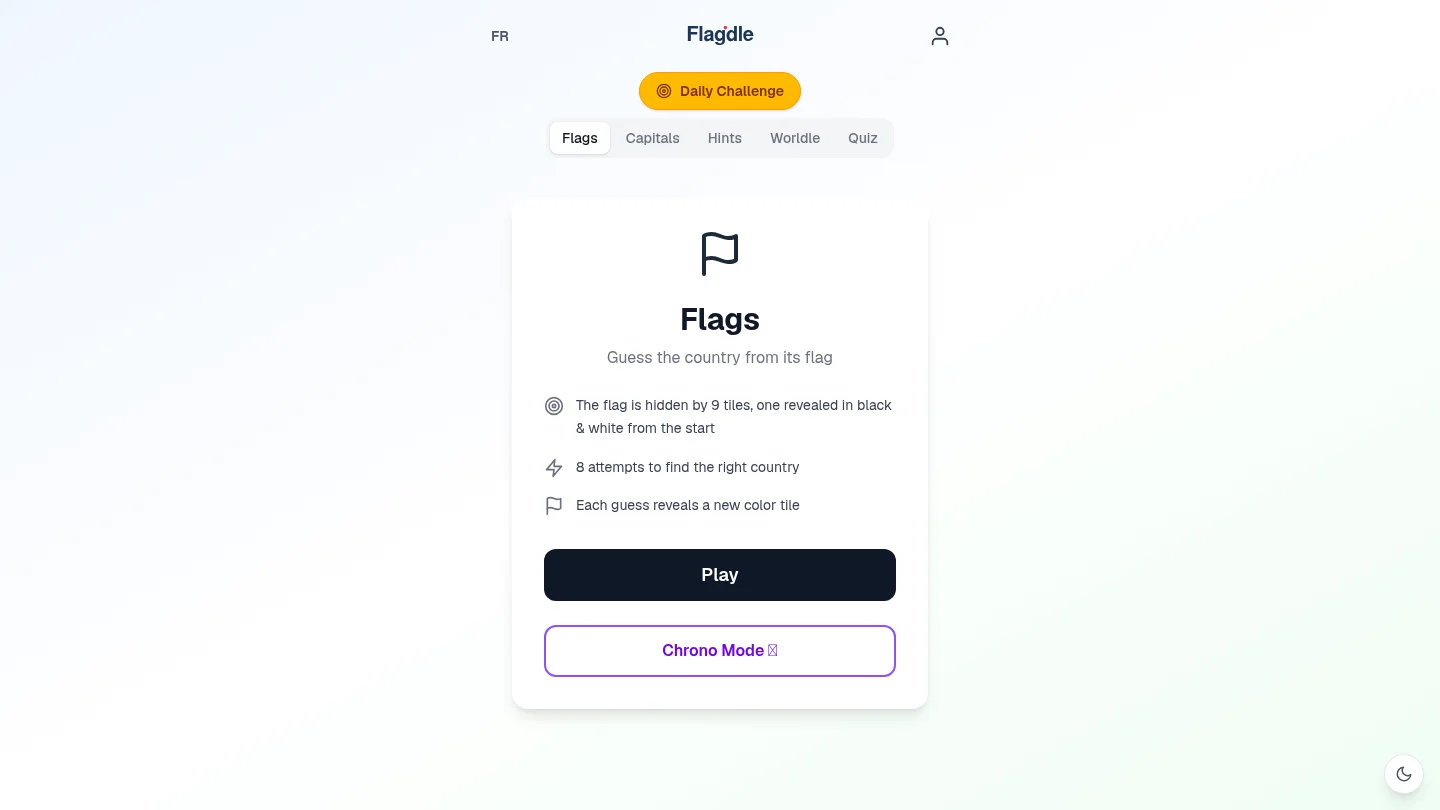
Jump into our free daily flag game and identify the country of the day in three tries. You'll also get capitals, progressive clues, silhouette mode and a daily, weekly and monthly leaderboard covering all 195 UN-recognized countries. Same flag for everyone worldwide, so grab a friend, compare scores, and see who really knows their maps.
Frequently Asked Questions
Is a country geography game good for kids and adults?
Yes, both. The short, forgiving format works for classroom rituals and casual adult play alike. Teachers often use a five-minute daily round as a warm-up, while adults use it to brush up before travel or trivia night.
How many countries should I aim to learn?
A solid goal is all 195 UN-recognized countries, but you don't need to rush. Our daily flag game covers every one of them, so you can chip away at a few per week. Consistency matters more than speed.
Do I need to memorize flags or capitals first?
Neither, really. Start with whichever feels natural, then mix modes so flags, capitals and map shapes reinforce each other. Seeing a country in several ways builds much stronger recall than drilling one list.
Is playing a geography game actually better than studying?
For most people, yes, because active guessing beats passive reading for memory. Research on geography education shows early, consistent exposure improves outcomes, and a daily game delivers that steady practice painlessly.
Are these games free to play?
Many are, though some larger apps run ads or in-app purchases. Ours is completely free with no account required, and your stats stay stored locally on your device rather than on a server.