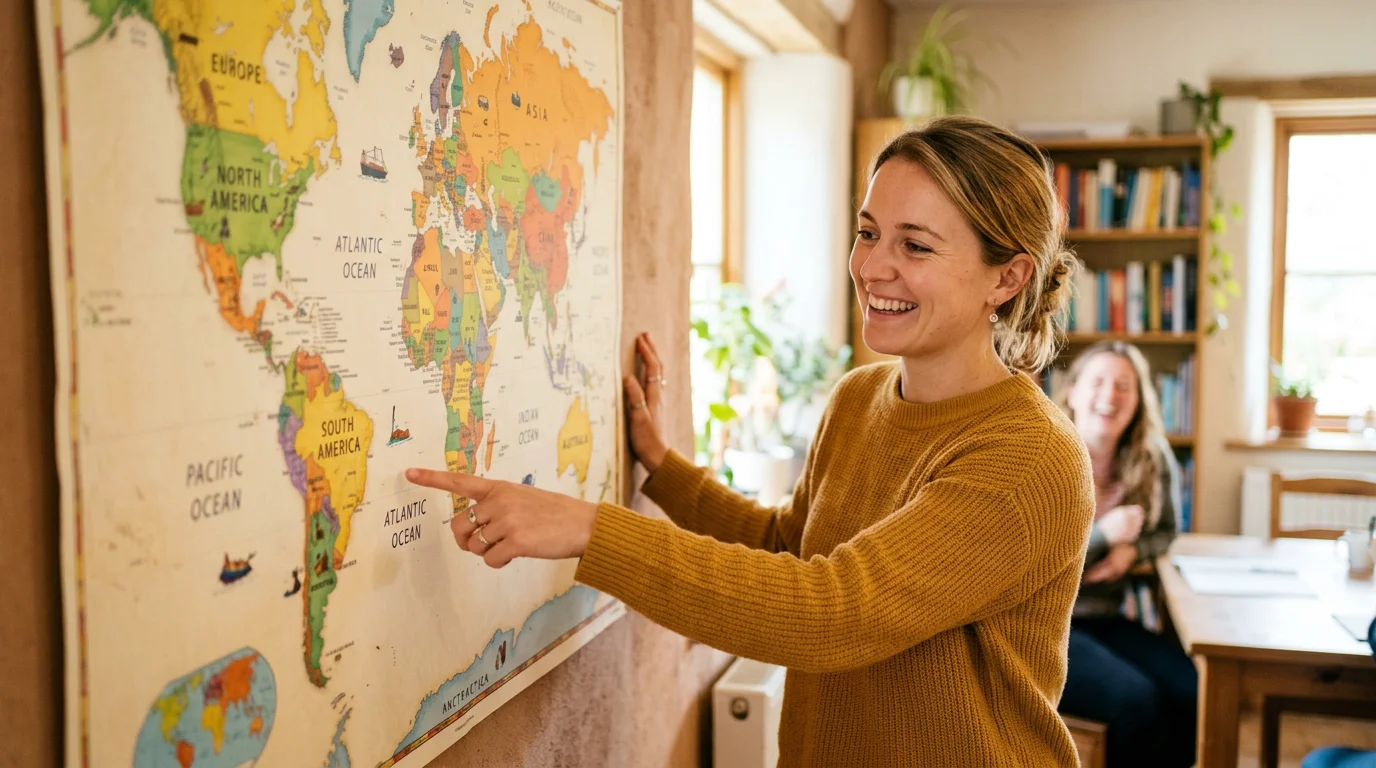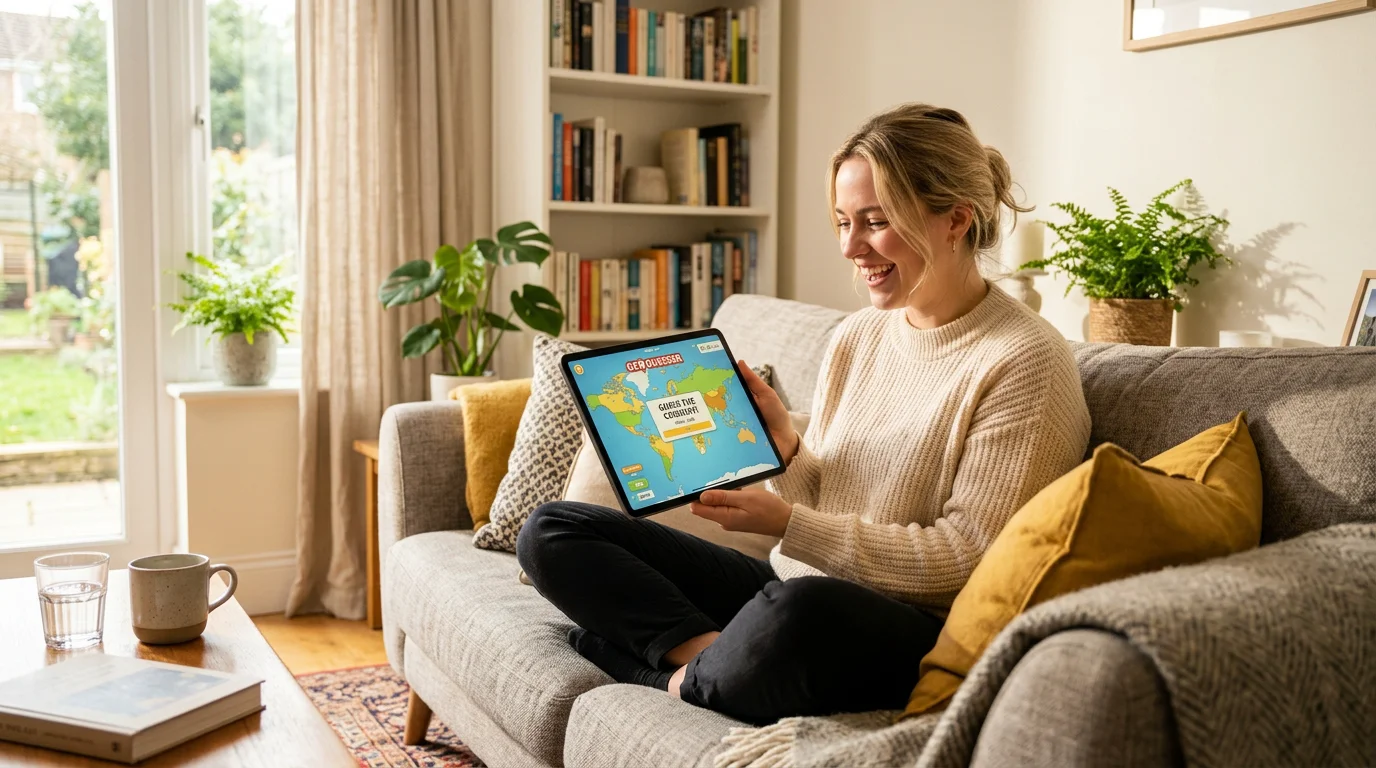
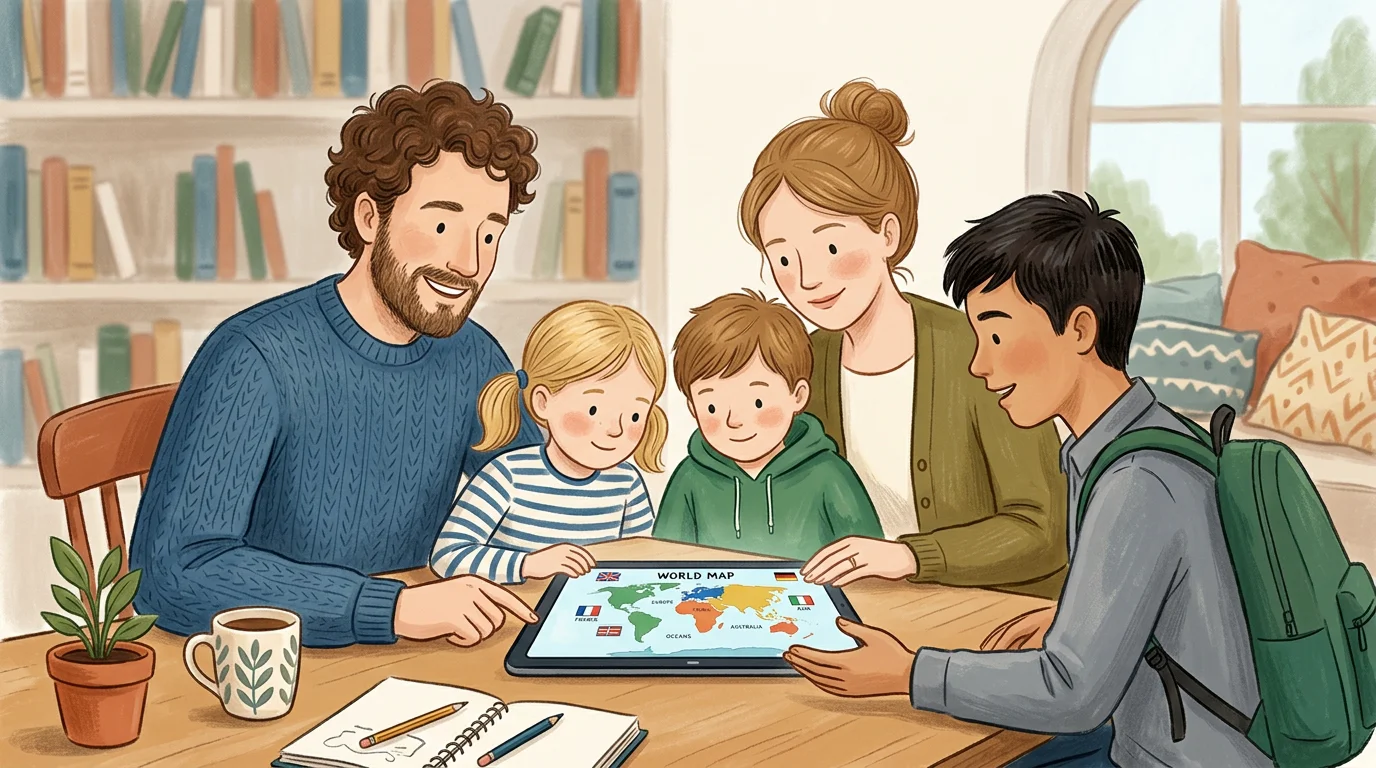

Here's a number worth sitting with: the game-based learning market is booming, and teachers keep reporting that games make lessons stick. Yet most people still try to learn the world's 195 countries by staring at a static map. That rarely works. A well-built country learning game flips the script, turning flags, capitals and borders into a daily habit you actually look forward to. If you want a structured place to start, our Country Geography Game guide breaks down how flags, capitals and maps fit together.
Why does this approach beat cramming? Because games force you to retrieve answers, not just recognize them. According to market research, 88% of teachers using digital games report higher student engagement. That engagement is the whole ballgame when you're trying to remember which flag belongs to which corner of the map.
Why a game beats a textbook for learning countries
Think about the last time you memorized something the hard way. You read it, reread it, and forgot it by morning. Active recall, being prompted to produce an answer rather than reread one, is what makes information stick. A geography game delivers that automatically: a flag appears, you name the country; a capital shows up, you locate it.
The market backs this up. Estimates put the game-based learning market at roughly USD 26.3 billion in 2026, up from USD 21.1 billion in 2025. That growth isn't hype; it reflects schools and self-learners discovering that interactive geography quizzes outperform passive study.
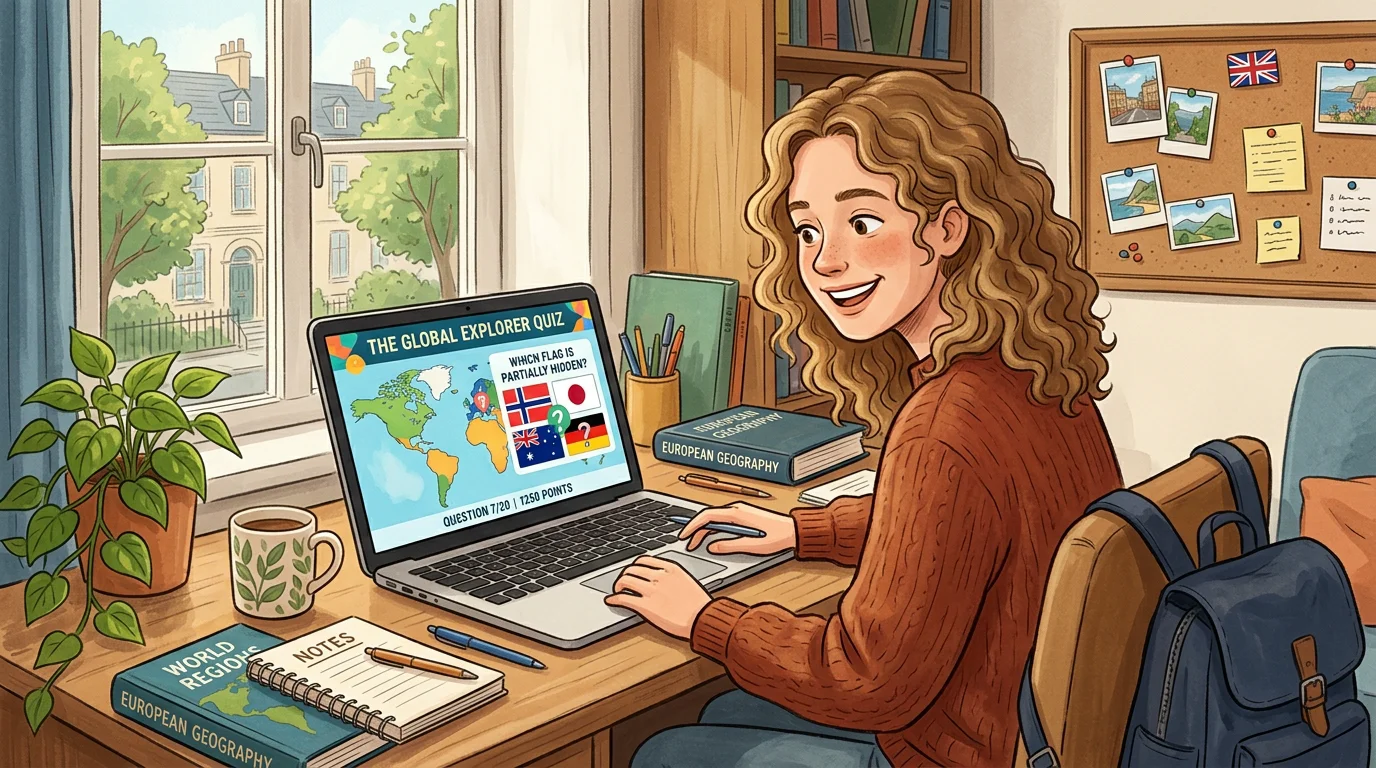
There's a memory reason too. When you have only a few seconds to answer, your brain shifts from lazy recognition to sharp recall, and that small pressure strengthens the neural pathways you're building. It's the same logic behind timed drills: mildly annoying, genuinely effective.
The daily puzzle: your secret weapon for retention
One puzzle a day sounds too small to matter. It isn't. Spaced repetition, revisiting material at short regular intervals, is one of the most reliable ways to move facts into long-term memory. A daily flag guessing game gives you that rhythm without any planning on your part.
The shared-puzzle format adds a social spark. When everyone faces the same country of the day, you get a built-in reason to compare scores with friends or classmates. That's exactly how our Guess the Country game walkthrough frames the daily challenge, one identical puzzle worldwide, three tries to nail it.
Teachers love the format for a reason. Non-profits like Reach the World have long released free interactive activities that turn geography into hands-on play, and a five-minute daily ritual fits neatly into any class routine.
Flags, capitals, silhouettes: which mode teaches what
Not every mode trains the same skill, and that's the point. Flags test visual pattern recognition. Capitals connect a city name to a nation. Country silhouettes push your spatial memory, forcing you to picture the actual shape and position of a place on the map.
Mixing modes keeps things fresh and covers more ground. If you want to move past a single format, our World Guessing Games guide explains how silhouette, distance and direction clues sharpen your mental map far faster than flat memorization.
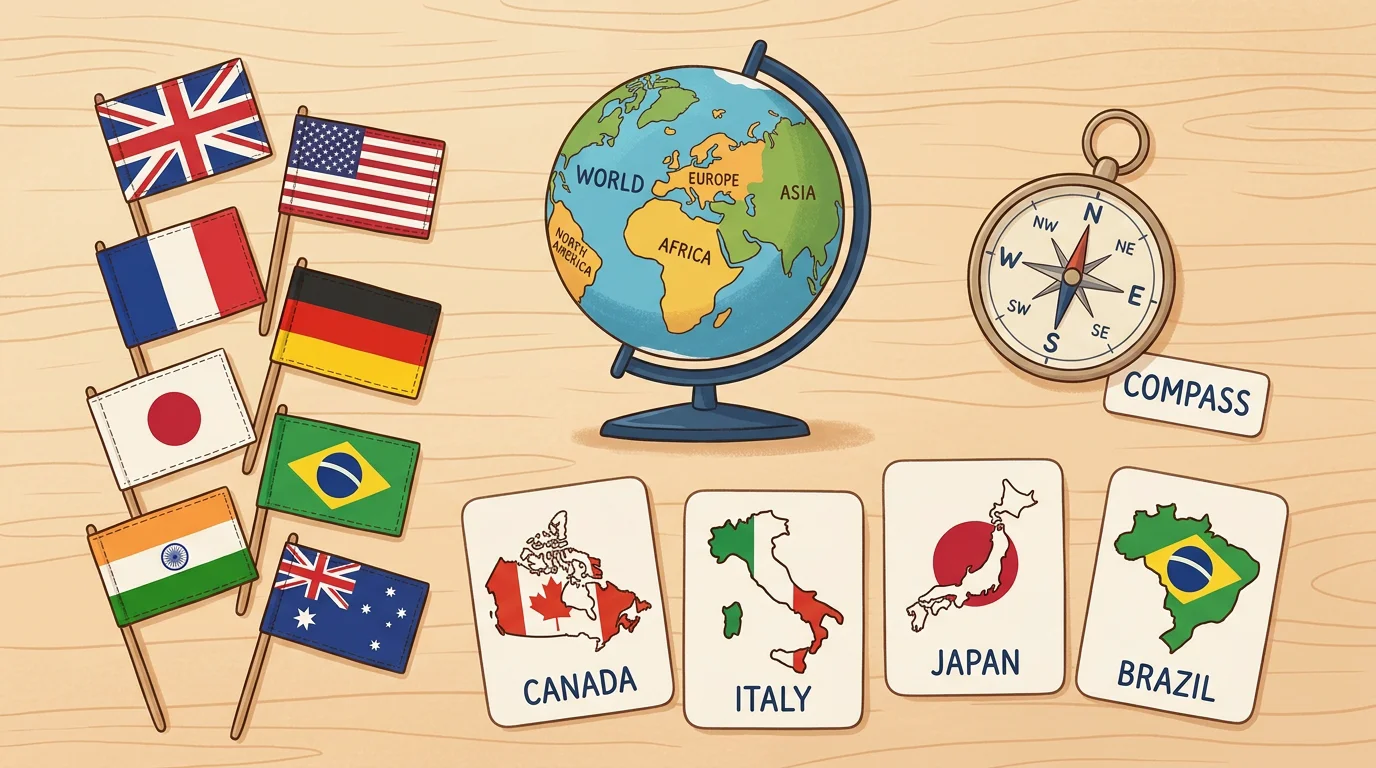
Here's a quick look at how popular free formats compare on the features that matter for daily learning.
| Tool | Daily puzzle | Flags + capitals | Silhouette mode | Global leaderboard |
|---|---|---|---|---|
| Flagdle (ours) | Yes, same for all | Yes | Yes (Worldle style) | Daily, weekly, monthly |
| Map quiz sites | No | Yes | Partial | No |
| Region quiz collections | No | Yes | No | No |
How to build a learning streak that actually sticks
Want the habit to hold? Anchor it to something you already do. Play your country puzzle with your morning coffee or right after lunch. Consistency beats intensity every time; five focused minutes a day outperforms a two-hour weekend cram.
Track your progress and lean into a little friendly rivalry. Gamified learning keeps climbing precisely because scores and streaks keep people coming back, and 2026 industry data shows game-based learning has moved from classroom novelty to mainstream practice across education. If you're comparing options before you commit, our roundup of the best countries games online lays out what to look for in a daily tool.
The bottom line on learning the world through play
Learning the map doesn't have to feel like homework. A good country learning game hands you active recall, spaced repetition and a dash of competition, the three ingredients that turn scattered facts into lasting knowledge. Pick one format, play it daily, and let the streak do the heavy lifting. Within a few weeks, flags and capitals you once blanked on will feel obvious, and the whole world map will start to click into place.
Take action with Flagdle
Ready to stop guessing and start remembering? If you want a daily geography habit that's genuinely fun, this is where the topic turns into action. You get one fresh puzzle a day, the same country for everyone, and just enough challenge to keep you hooked.
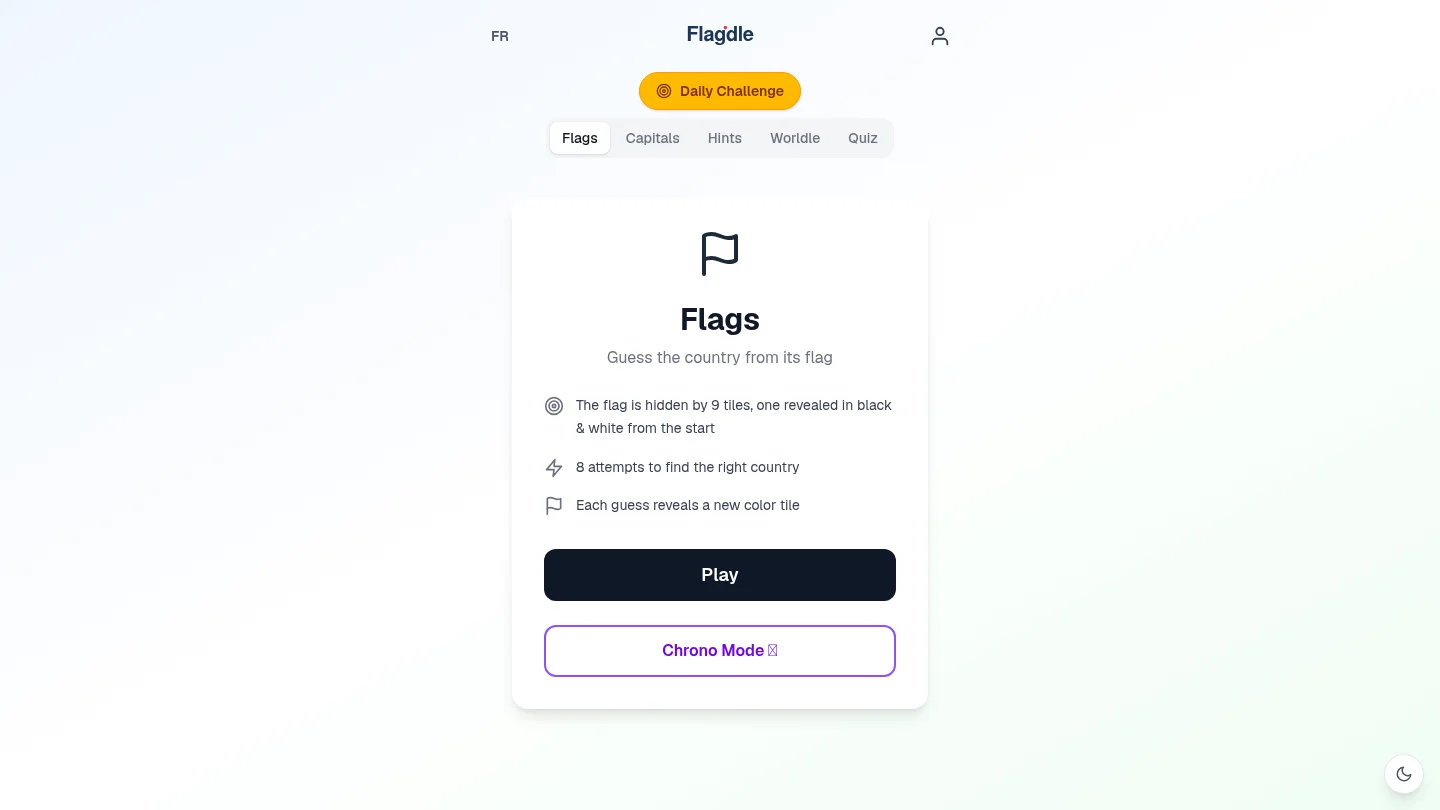
Try our free daily flag guessing game: identify the country of the day in three tries, then explore capitals, progressive hints, silhouette mode and themed quizzes. Everything runs free in your browser, with no account and no intrusive ads, covering all 195 UN-recognized countries. Compare your score on the daily, weekly and monthly leaderboards and see how you stack up against players worldwide.
Frequently Asked Questions
Is a country learning game good for exam revision?
Yes, especially for geography and general-knowledge tests. The quick-recall format trains you to produce answers under light time pressure, which is exactly what an exam demands. Short daily sessions also beat last-minute cramming for long-term retention.
How long does it take to learn all the flags?
It depends on your pace, but daily play makes a huge difference. Most people recognize the majority of common flags within a few weeks of consistent practice. The rarer ones stick once you tie them to a capital or a map location.
Are these games free to use?
Many strong options are completely free and run right in your browser. Our own daily game, for instance, needs no account and shows no intrusive ads, with stats stored locally on your device. Free access is one reason game-based learning has spread so widely.
Can teachers use a geography game in class?
Absolutely, and many do as a five-minute daily ritual. A shared puzzle gives the whole class the same challenge, sparking discussion and friendly competition. It's a low-prep way to warm up a lesson or wrap one up.
What's the difference between flag mode and silhouette mode?
Flag mode trains visual recognition of a country's flag, while silhouette mode tests your memory of its shape and position. Silhouette play often adds distance and direction clues to sharpen your mental map. Using both together covers more ground than either alone.