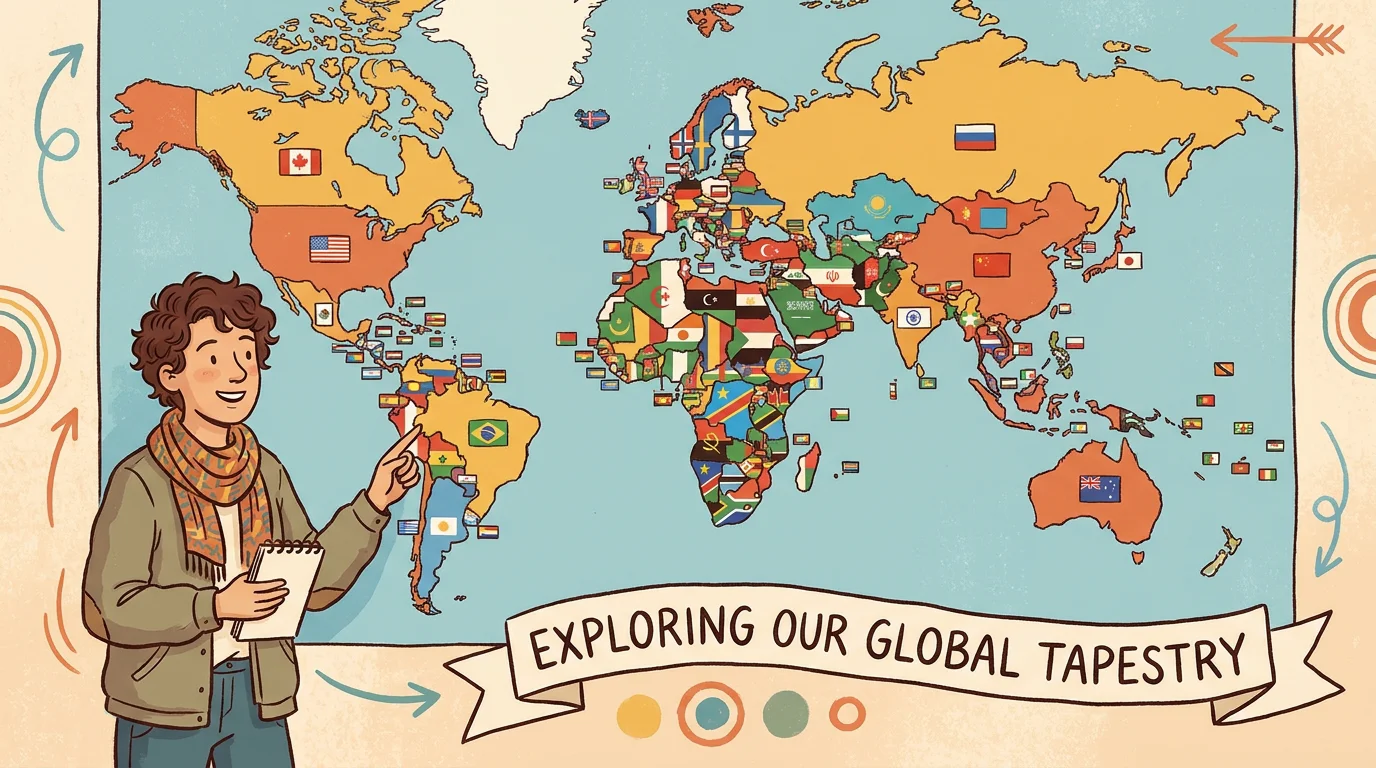

How many world flags could you actually recognize if someone put them in front of you right now? If you're like most people, probably a handful: the Stars and Stripes, the Union Jack, maybe Japan's clean red dot. But there are 195 recognized countries out there, each with a unique flag packed with meaning. That's where the challenge gets fun. If you want to find the flag and name the country behind it, you've got more ways to practice than ever. Our flag guessing game is one of the most engaging options, revealing flags tile by tile so you learn as you play.
Whether you're a trivia night regular, a student brushing up for a geography exam, or just someone who loves a good daily brain teaser, flag identification is a surprisingly addictive skill to build. The best part? You don't need textbooks or boring flashcards. Interactive games and quizzes have turned flag recognition into a genuinely fun hobby, and in 2026, the options keep growing.
Why Identifying Flags Is Harder Than You Think
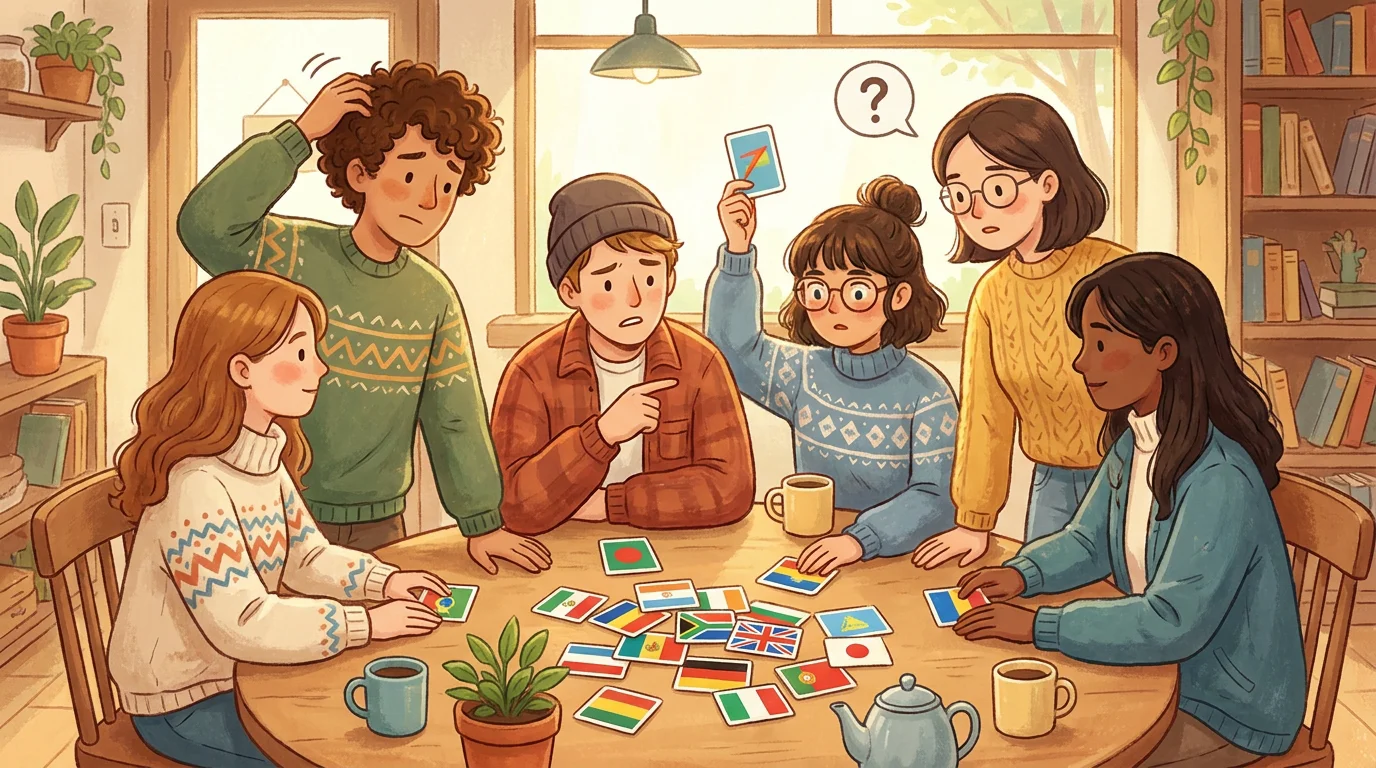
Think you'd nail a flag quiz on the first try? Here's the catch: dozens of flags look nearly identical at first glance. Multiple countries chose red as a dominant color for their flags, making quick identification tricky. Consider the flags of Chad and Romania, or Indonesia and Monaco. They're so similar that even seasoned geography fans get tripped up.
The challenge isn't just about colors, either. Symbols, proportions, and layout all matter. Flags are a brilliant way to build geography knowledge because every design links to a real place. A crescent might point to a Muslim-majority nation, while a specific shade of blue could indicate a Pacific island state. Learning to spot these details is what separates casual guessers from flag identification experts.
That's why progressive hint systems work so well. Rather than showing you the whole flag and asking you to name it cold, games that reveal the flag piece by piece teach you to notice individual elements. Each tile or clue sharpens your eye for the next round.
The Rise of Daily Flag Games in 2026
Daily puzzle games exploded after Wordle showed the world how addictive a once-a-day challenge could be. Geography-themed versions followed quickly. Sporcle's Flags of the World quiz, last updated in February 2026, features 197 questions and remains one of the most popular options. But the daily format, where everyone gets the same puzzle, is what really drives engagement.
The concept is simple: one new flag each day, a limited number of guesses, and bragging rights on social media. It creates a shared experience. You're not just testing yourself; you're competing with friends, family, and thousands of other players worldwide. That daily ritual keeps people coming back and, almost accidentally, makes them better at world geography.
We built our daily challenge around this same idea. Each day, a flag is hidden behind tiles that gradually reveal themselves with every attempt. You get a fresh country every 24 hours, plus mini-games covering capitals, borders, currencies, and country shapes. It's the kind of routine that actually sticks.
How Progressive Clues Make You a Better Guesser
Not all flag quizzes work the same way. The classic format shows you the full flag and asks, "What country?" It's effective, sure, but it doesn't teach you much if you don't already know the answer. Progressive clue systems flip this on its head.
Here's how it works in our flag quiz: the flag starts completely hidden behind nine tiles. Each guess you make reveals a new tile. So even when you're wrong, you're rewarded with more visual information. By your second or third attempt, you've got enough of the flag visible to make an informed guess, and that process of elimination actually builds long-term memory.
Doing one short quiz, then repeating it a few days later, creates spaced practice that makes recall much stronger than one long session. The progressive reveal format naturally supports this because you're engaging with the flag multiple times within a single round. It's not just a game; it's a learning method backed by how memory actually works.
Strategies to Identify Any Flag Faster
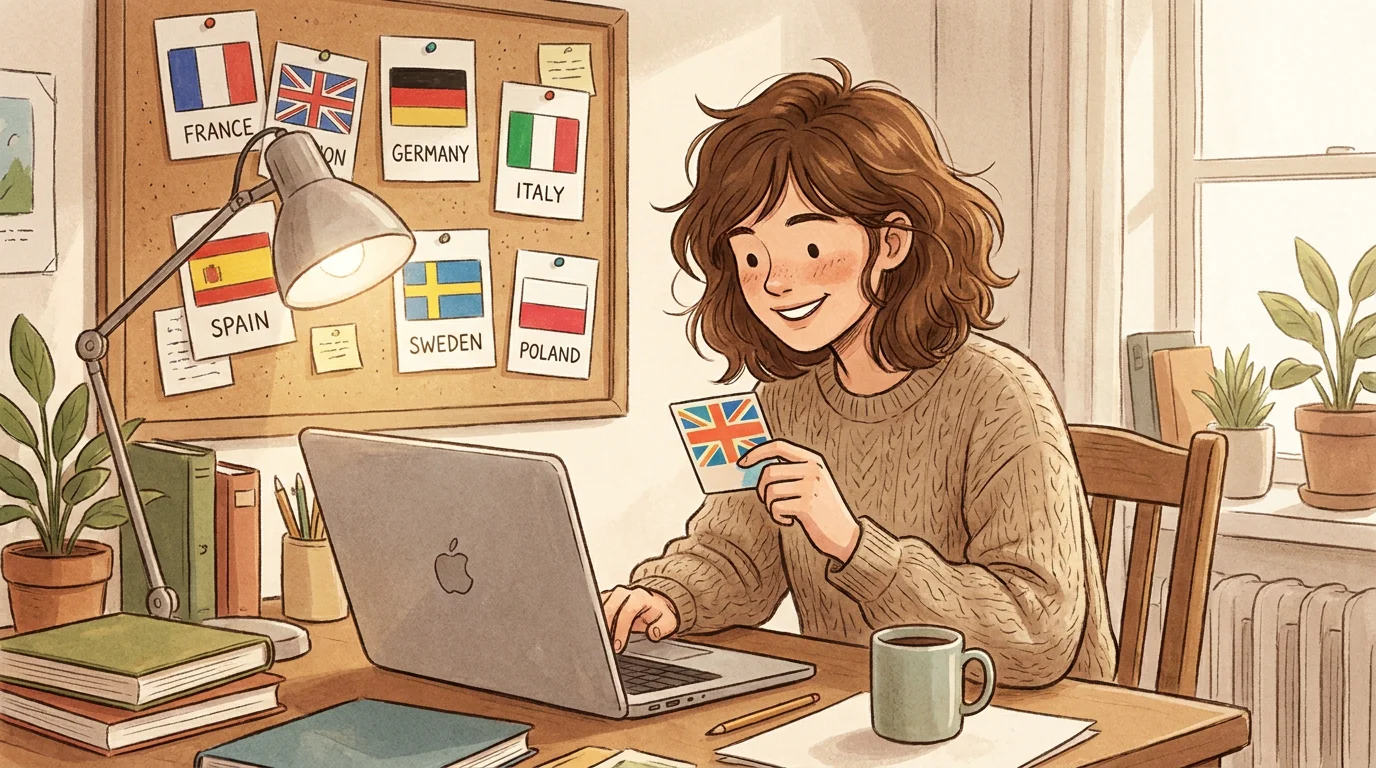
Want to get faster at matching flags to countries? Start with these practical techniques that geography buffs swear by:
- Group by color pattern. Flags with horizontal stripes (Germany, Russia, Netherlands) form one mental bucket. Vertical stripes (France, Italy, Ireland) form another. This narrows your options fast.
- Learn the symbols. Crescents, stars, crosses, coats of arms, and animals all carry geographic and cultural clues. A maple leaf? Canada. A cedar tree? Lebanon. Symbols are your shortcut.
- Focus on one continent at a time. Trying to learn all 195+ flags at once is overwhelming. Start with Europe or South America, get comfortable, then expand.
- Use elimination. If you see green, white, and orange but can't decide between Ireland and Côte d'Ivoire, remember: Ireland's green is on the left (hoist side). Small details like stripe order matter.
- Practice daily. Repetition is everything. Even five minutes a day compounds into serious knowledge over a few weeks.
If you want a structured way to practice, our guess country flags mode lets you go through unlimited rounds at your own pace. You can filter by continent or jump into a timed challenge when you're feeling confident.
Flags as a Gateway to Deeper Geography Knowledge
For many children, flags are a fun bridge into bigger geography skills: locating countries on a map, spotting continents, and learning how countries present their identity. But this isn't just true for kids. Adults who start with flag quizzes often find themselves spiraling into learning about capitals, populations, languages, and borders.
Flag learning improves place knowledge, memory, and visual recognition. It also supports map work by helping learners link a country's name to where it is in the world. That's the beauty of it. You think you're just playing a quick game on your phone, but you're actually wiring your brain with real geographic knowledge.
This is exactly why our platform goes beyond just flags. After you guess the country, you'll see data about its GDP, population, languages, and neighbors. Each round becomes a mini geography lesson without ever feeling like homework.
What Makes a Great Flag Game in 2026
There's no shortage of flag quizzes online. Some platforms feature quiz games covering 197 world flags and 130 territory flags from every corner of the globe. With so many options, what separates a great flag game from a forgettable one?
A few things matter most:
- Daily freshness. A new challenge each day keeps you coming back. Static quizzes get stale.
- Progressive difficulty. The game should meet you where you are, whether you're a beginner or you can already name every flag in Oceania.
- Community. Knowing that thousands of other players are tackling the same puzzle creates a sense of connection. Sharing your score on social media is half the fun.
- Depth beyond flags. The best games use flags as a starting point, then layer in capitals, shapes, currencies, and other country data to keep things interesting.
- Accessibility. Free, browser-based, no downloads required. Everyone should be able to play.
Here's a fun fact: Denmark's flag, the Dannebrog, is the oldest national flag still in use, dating back to the 1200s. Knowing tidbits like this makes the experience richer, and the best flag games weave these stories into the gameplay.
Beyond Solo Play: Flag Challenges with Friends
Flag games aren't just a solo activity. Some of the most fun comes from turning them into social challenges. Here are a few ideas:
Daily score battles. Play the same daily challenge as a friend and compare scores. Who needed fewer guesses? Who finished faster? It adds a competitive edge that keeps both of you motivated.
Classroom quizzes. Flag quizzes work well for quick homework, starter activities, or topic refreshers, especially when studying continents, countries, and global awareness. Teachers can use daily flag challenges as warm-up exercises to get students engaged.
Family trivia nights. Flags are one of those topics where a curious eight-year-old can genuinely beat a parent. Whether you're a seasoned geography buff or a newcomer, flag games level the playing field and make for great intergenerational fun.
Our flag game is built for exactly these moments. The daily challenge ensures everyone's on the same page, and the variety of mini-games means there's something for every skill level in the group.
Start Spotting Flags Like a Pro
Here's the truth: recognizing flags is a learnable skill, not some gift you're born with. With a few minutes of daily practice, you'll go from barely recognizing ten flags to confidently naming a hundred or more. The key is consistency, curiosity, and a game that makes you want to keep coming back.
Flag identification also connects you to a bigger picture. Every flag tells a story about a nation's history, values, and identity. When you learn to spot the Dannebrog or decode why Mozambique put an AK-47 on its flag, you're not just memorizing colors. You're understanding the world a little better.
We've designed our platform to be the easiest, most enjoyable way to build that knowledge, with progressive reveals, daily challenges covering 195 countries, and bonus rounds on capitals, borders, and more. Ready to test yourself? Try our daily flag guessing challenge and see how many countries you can name today.
Frequently Asked Questions
How many country flags are there in the world?
There are 195 recognized sovereign nations, each with its own national flag. If you count territories, dependencies, and historical flags, the number climbs into the thousands. Our daily challenge covers all 195 countries, so you'll never run out of flags to learn.
What's the fastest way to learn world flags?
Practice a little every day instead of cramming. Spaced repetition, where you revisit flags you've missed after a few days, is the most effective technique. Games with progressive clues help because they force you to study the flag piece by piece rather than just guessing randomly.
Are flag quizzes actually educational?
Absolutely. Flags link to real places, and practicing flag recognition helps learners connect country names to locations, symbols, and cultural identity. Many teachers use flag quizzes as classroom tools. Our platform adds layers like capitals, currencies, and country shapes to turn a simple game into a full geography workout.