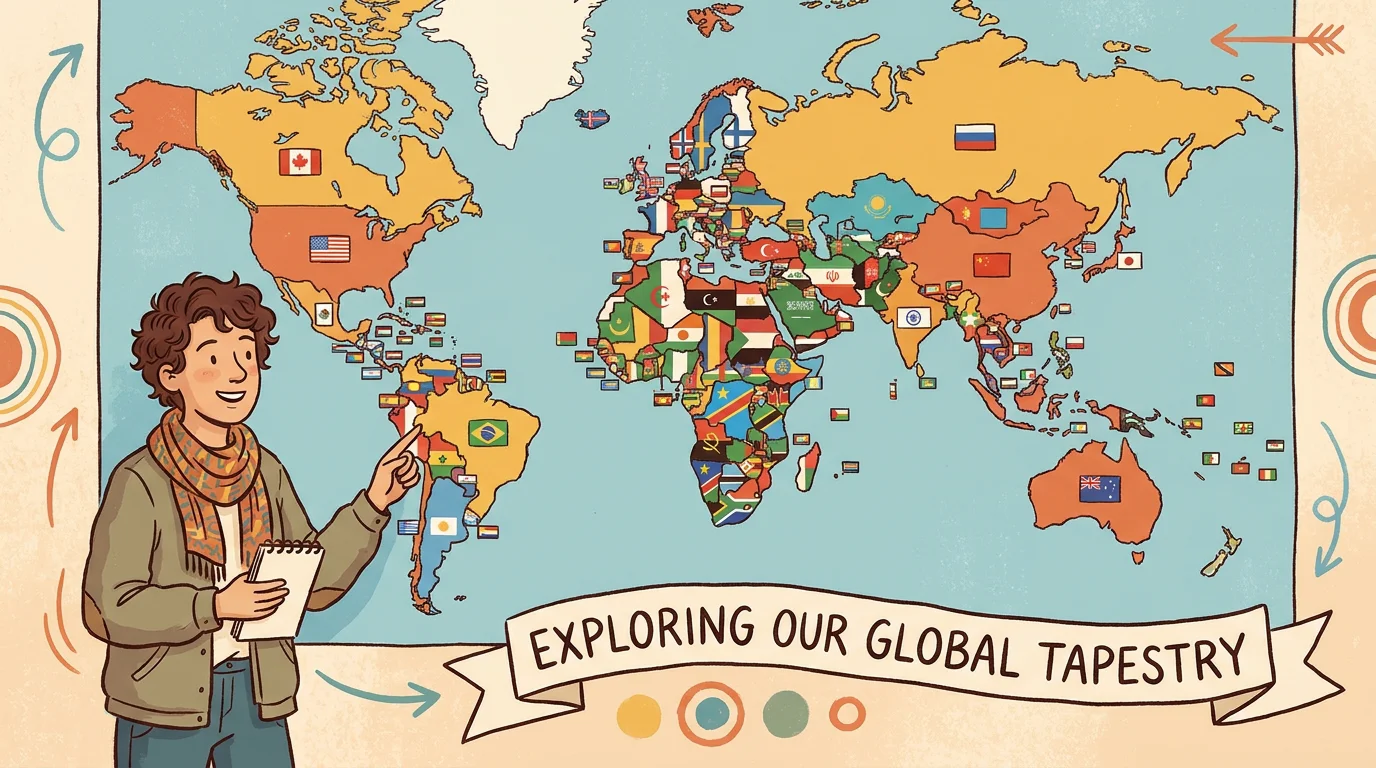
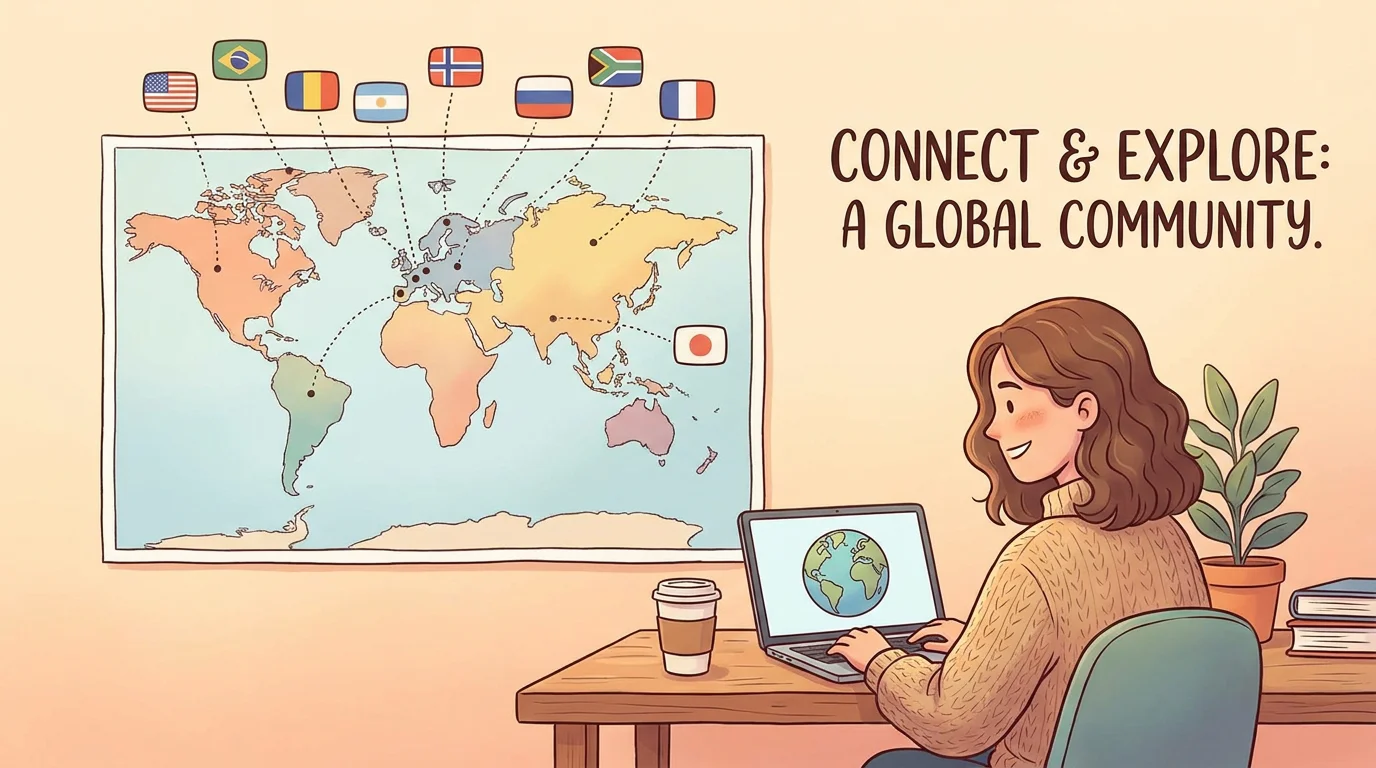

Quick: can you tell Bhutan's flag apart from Eswatini's? If you just hesitated, you're not alone. Those two rank among the most commonly missed flags in online quizzes. The good news? Playing a flag matching game is one of the fastest (and most fun) ways to fix that gap. Whether you're a trivia night regular, a student brushing up for exams, or just someone who loves a good brain teaser, matching flags to countries is a surprisingly addictive hobby. If you've never tried it, our flag guessing game is a great place to start.
Flag games have quietly exploded in popularity, riding the same wave that made Wordle a household name. Millions of players now spend a few minutes each day testing their knowledge of the world's 195+ sovereign nations and their colorful banners. Let's break down what makes these games so engaging, how they actually help you learn, and what to look for when picking one.
What Exactly Is a Flag Matching Game?
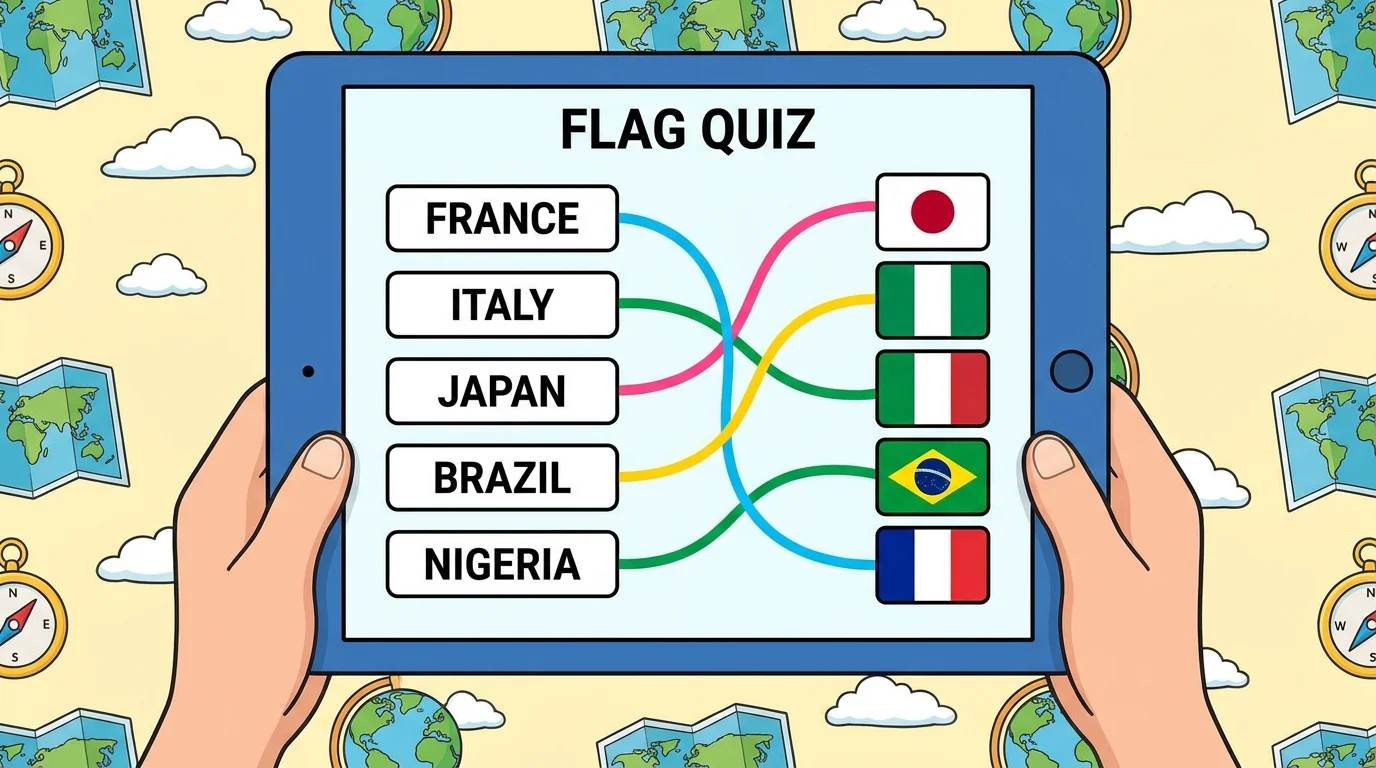
At its core, a flag matching game asks you to pair a country's name (or silhouette, or capital) with the correct flag. Sounds simple, right? It is, until you're staring at three nearly identical tricolors wondering which one is Romania and which one is Chad.
The format varies. Some games show you a grid of face-down cards and you flip pairs, classic memory style. Others line up five flags on one side and five country names on the other, asking you to connect them as fast as you can. Then there are daily challenge formats, where a single flag is gradually revealed and you guess the country in a limited number of attempts.
The key mechanic across all versions is visual recognition under pressure. You're training your brain to associate colors, symbols, and patterns with specific nations. Over time, you'll spot the difference between Indonesia and Monaco (same colors, different order) without even thinking.
Why Flag Games Are More Than Just Fun
Let's get the obvious part out of the way: yes, they're entertaining. But there's real learning happening behind the scenes. According to Market.us, the global game-based learning market is projected to reach $26.3 billion in 2026, up from $21.1 billion in 2025. That's not just corporate training software; it includes every quiz, puzzle, and educational game that makes learning stick better than flashcards ever did.
Matching games tap into what educators call active recall. Instead of passively reading a list of flags, you're forced to retrieve information from memory. Each wrong guess actually strengthens the correct association the next time around. It's the same principle behind spaced repetition systems, just wrapped in a game.
BookWidgets notes that image-to-text pair matching (like linking a flag image to a country name) is "an effective way to strengthen visual associations and enhance learning." That's exactly what flag games do, round after round.
What Makes a Great Flag Game Stand Out
Not all flag games are created equal. Some are glorified slideshows. Others are genuinely well designed. Here's what separates the good from the forgettable.
Progressive difficulty matters a lot. A game that throws 236 flags at you from the start is overwhelming. The best ones ease you in with commonly recognized flags (the US, UK, Germany) before gradually introducing trickier ones like Kiribati or Eswatini.
Hint systems keep frustration in check. Getting stuck on a flag shouldn't mean the game's over. Smart hint mechanics, like progressively revealing a flag tile by tile, give you just enough information to make an educated guess without handing you the answer. That's exactly how our flag quiz game works: the flag starts hidden behind nine tiles and reveals itself one piece at a time with each attempt.
A daily challenge format creates habit. When every player worldwide gets the same puzzle on the same day, it sparks conversation and friendly competition. It also gives you a reason to come back tomorrow.
The Learning Curve: Flags Nobody Gets Right
Every flag quiz has its usual suspects: the flags that trip up almost everyone. Based on data from popular quiz platforms, Bhutan, Eswatini, and Kiribati consistently rank among the hardest to recognize. Meanwhile, the US, UK, and Germany are identified almost instantly by most players.
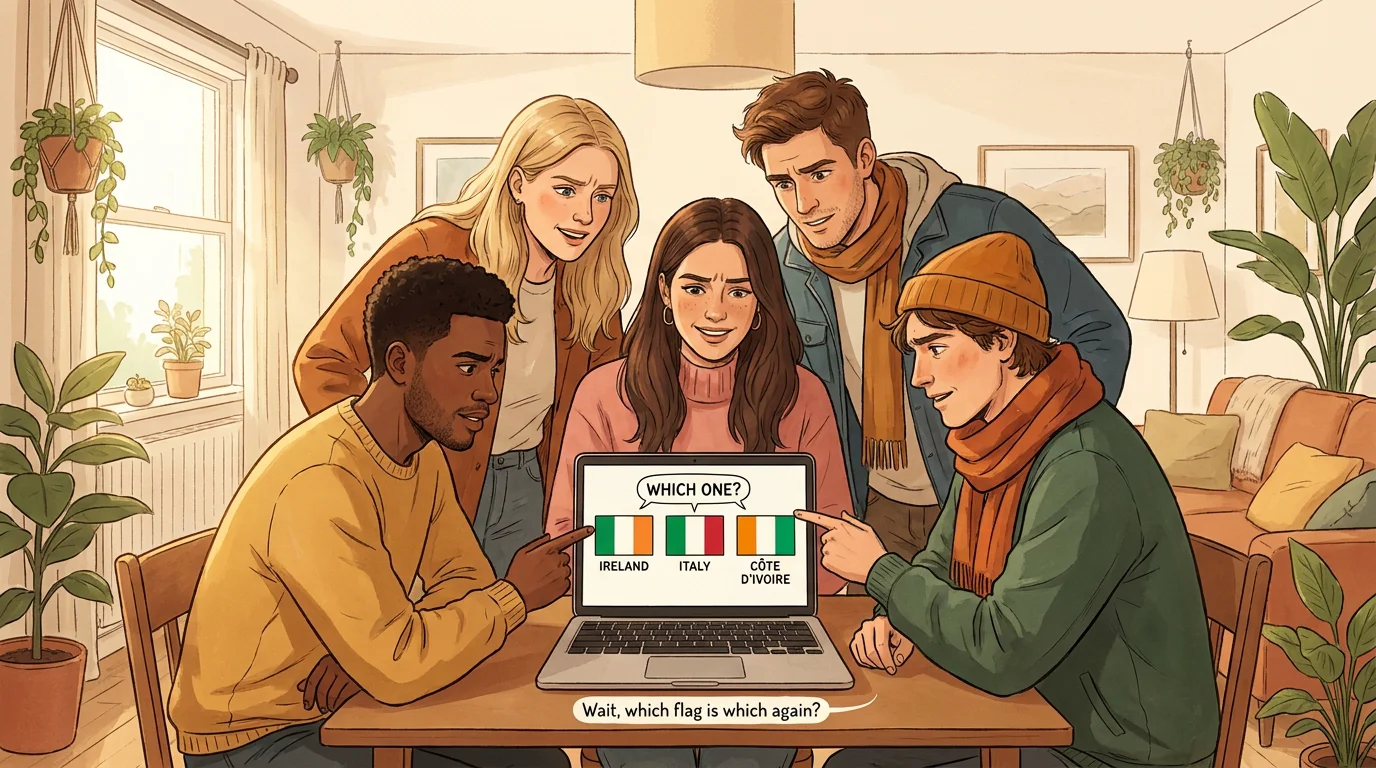
The tricky flags tend to share a few traits. They either belong to smaller nations with less media exposure, or they feature complex designs (Bhutan's dragon, for example) that are hard to distinguish from a tiny thumbnail. Tricolor confusion is another classic trap. Romania and Chad use nearly identical blue-yellow-red stripes. Ireland and Côte d'Ivoire both rock green, white, and orange (just reversed).
This is where repetition pays off. The more you play, the more those subtle differences become second nature. After a few weeks of daily flag challenges, you'll probably shock yourself by nailing a flag you'd never even heard of before.
How to Build a Daily Flag Habit
The best way to actually learn flags (instead of just playing once and forgetting) is to make it a daily micro-habit. Here's a simple approach:
- Start with a daily challenge. One puzzle per day keeps the commitment low and the consistency high.
- Add an infinite practice mode when you want to go deeper. This lets you drill specific regions or flag types.
- Track your streaks. Consecutive-day streaks create positive pressure. Miss a day and you'll actually feel it.
- Mix up the game types. Alternate between matching, multiple choice, and timed rounds to keep your brain from getting lazy.
We built our country flags guess challenges around this exact loop. You get a daily puzzle everyone shares, plus unlimited practice modes so you can keep going if you're in the zone.
Flag Games vs. Traditional Geography Study
Let's be real: nobody's pulling out a textbook to memorize flags anymore. But it's worth asking, do games actually work better?
| Criteria | Textbook / Flashcards | Flag Matching Games | Flagdle |
|---|---|---|---|
| Engagement | Low | High | High (daily + infinite modes) |
| Active Recall | Moderate (flashcards) | Strong | Strong (progressive reveal) |
| Time per Session | 15-30 min | 2-5 min | 2-5 min |
| Social / Competitive | None | Leaderboards | Same daily puzzle for all players |
| Cost | Varies | Usually free | Free |
| Coverage | Varies | Up to 236 flags | 195 countries + bonus quizzes |
The short answer: games win on engagement and time efficiency. A 2025 BookWidgets analysis highlighted that pair matching activities "boost memory, spark curiosity about different cultures, and add variety" to study routines. That's a big deal when your alternative is staring at a printed chart.
Beyond Flags: Expanding Your Geography Game
Once you've conquered the flags, where do you go next? Most serious geography quiz platforms extend into capitals, borders, currencies, coat of arms, GDP rankings, and even neighboring countries.
This layered approach turns a simple matching game into a full geography workout. You might start by guessing a flag, then move on to identifying the country's capital, then its neighbors. Each layer reinforces the others. Knowing that Lesotho is completely surrounded by South Africa suddenly makes its flag easier to remember, because you now have a story attached to it.
Our flag quiz section includes mini-games covering capitals, coats of arms, currencies, languages, and more. It's designed so you can bounce between topics and never feel like you're studying.
Tips to Dominate Any Flag Quiz
Want to go from casual player to flag trivia champion? Here are some pro moves:
- Learn by region. Group flags by continent. African flags tend to use green, yellow, and red (Pan-African colors). Scandinavian flags all feature the Nordic cross. Patterns make memorization exponentially easier.
- Focus on unique elements. Nepal is the only non-rectangular flag. Switzerland and Vatican City are the only square ones. These outliers stick in your memory fast.
- Use the process of elimination. In a matching quiz, start with the flags you're 100% sure about. This narrows the pool for the tricky ones.
- Don't skip the hard ones. Deliberately practicing the flags you get wrong is where the real learning happens.
According to National Geographic Kids, matching games that pair countries with their flags are effective tools for engaging learners and building world knowledge. So don't feel silly for playing; you're literally doing what National Geographic recommends.
Why Flagdle Is Built for Flag Lovers
There are plenty of flag games out there, but most of them give you the whole flag upfront and ask you to pick from a multiple-choice list. That's fine for beginners, but it doesn't challenge your recall the way a progressive reveal does.
With Flagdle, the flag starts completely hidden behind nine tiles. Each guess reveals a new tile, so you're working with partial information and building your answer piece by piece. You get up to 8 attempts, and the challenge resets daily with a brand-new country. It's the same puzzle for every player worldwide, which makes sharing results and comparing scores incredibly satisfying.
Beyond the daily flag challenge, there's a full suite of geography mini-games: country shapes, coats of arms, capitals, neighbors, currencies, GDP, languages, and even land area. And everything's free, no subscriptions, no paywalls.
If you love matching flags to countries and want a game that grows with you, the best move is to make it part of your daily routine. The global game-based learning market isn't booming by accident; people are realizing that a few minutes of play every day beats hours of passive study. Flagdle gives you that daily dose of geography, wrapped in a format that's quick, social, and genuinely challenging. Ready to see how many flags you can identify? Try our daily flag challenge and find out.
Frequently Asked Questions
How many flags should I aim to learn?
Start with the 50 most recognized flags (major countries across all continents) and build from there. Most quiz platforms cover between 195 and 236 flags. With daily practice, you can realistically learn all of them within a few months.
Are flag matching games good for kids?
Absolutely. Most flag games are designed for ages 6 and up, though younger kids can enjoy them with some help. They build visual memory, pattern recognition, and cultural awareness. Flagdle's progressive reveal format works especially well for kids because it turns each guess into a mini detective moment.
What's the fastest way to improve at flag quizzes?
Play daily, focus on your weak spots, and learn flags by region rather than randomly. Grouping flags by geographic patterns (like Pan-African colors or Nordic crosses) makes memorization much faster. Consistent short sessions beat occasional long ones every time.