
Quick: what does Bhutan's flag look like? Or Eswatini's? If you just drew a blank, you're not alone. Most players on popular flag quizzes can only guess about half the world's 196 countries by their flag, which means there's a ton of room to grow. The good news? Playing a flag of the world game is one of the most fun ways to fix that gap, and you can start right now with our flag game guide.
Whether you're a trivia night regular, a student cramming for a geography exam, or just someone who wants to feel less clueless during the Olympics, flag games have you covered. They range from laid-back multiple-choice quizzes to intense timed challenges where every second counts. Let's break down how these games work, why they're surprisingly good for your brain, and how to go from guessing randomly to nailing every single flag.
What Exactly Is a Flag of the World Game?
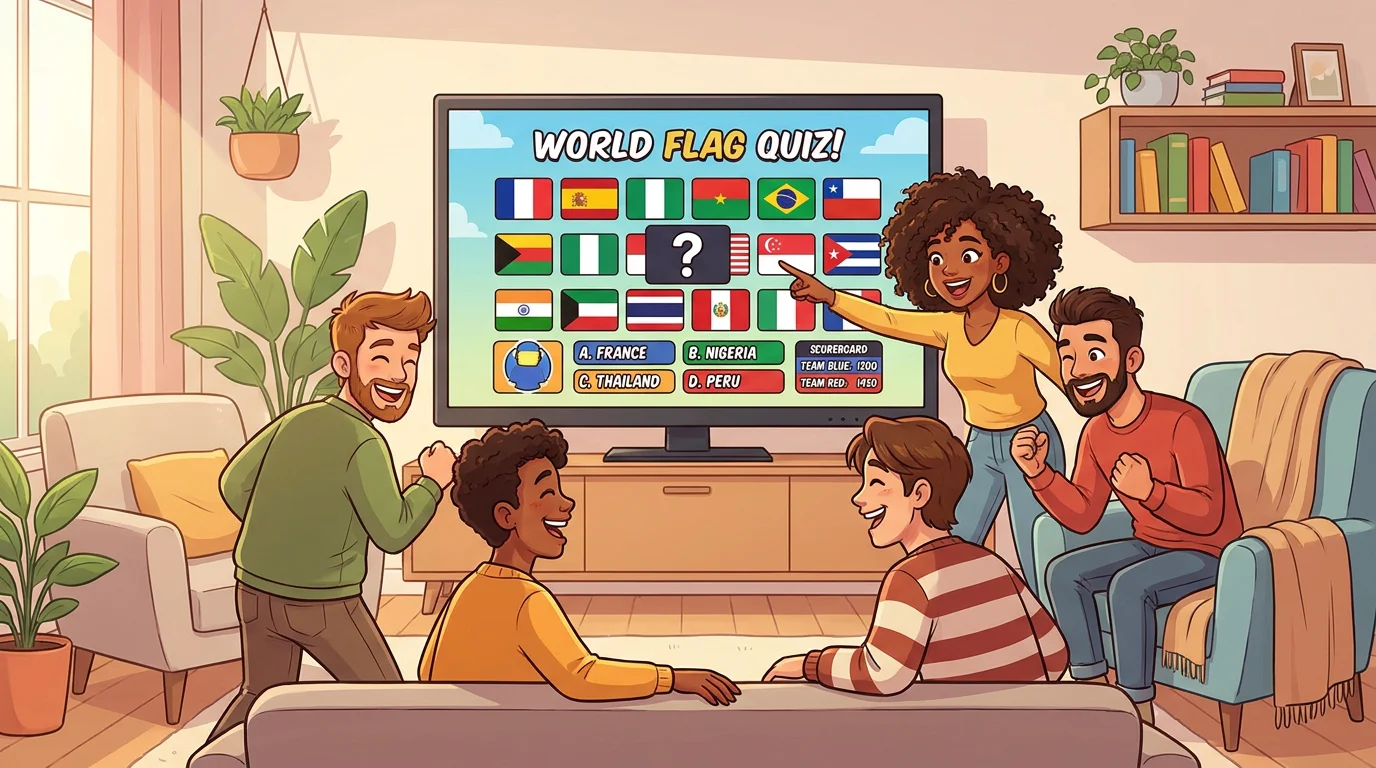
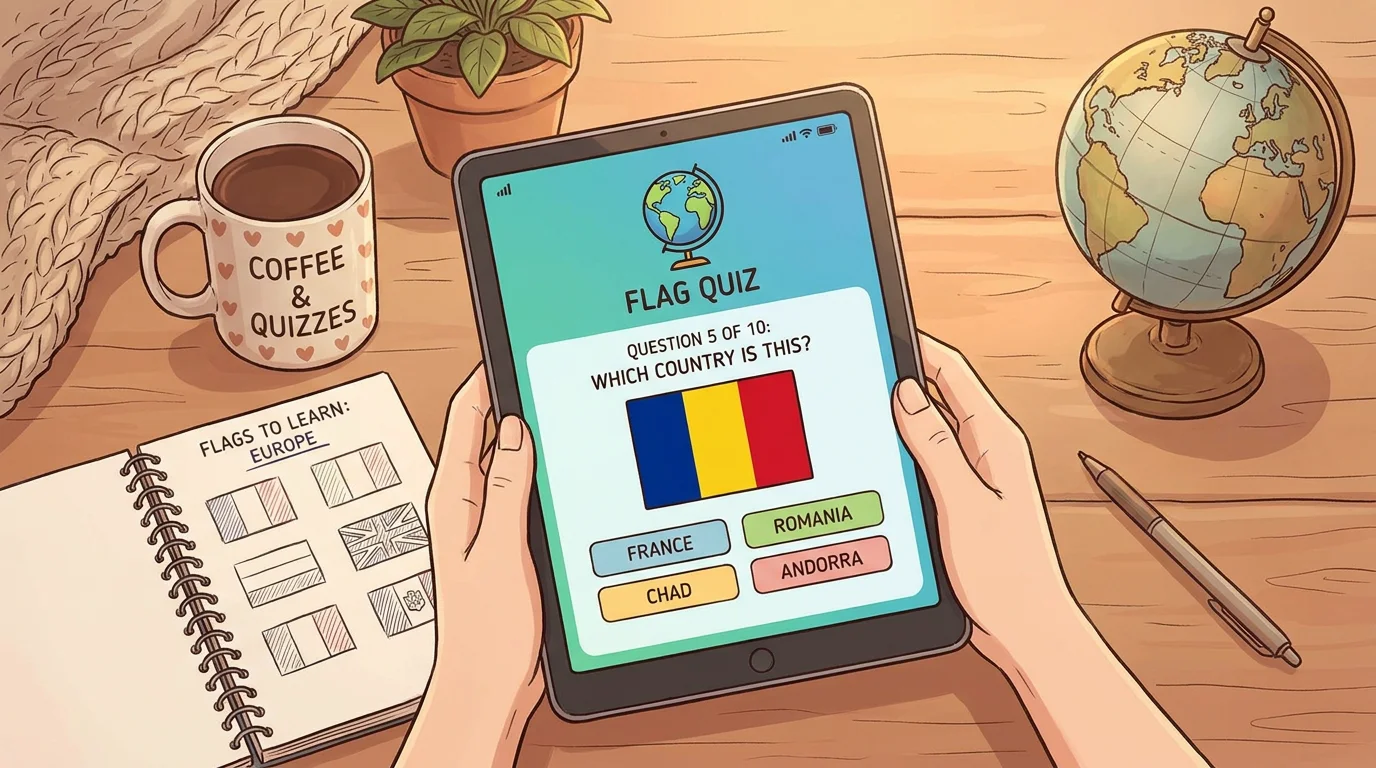
At its core, a world flag quiz shows you a flag and asks you to name the country. Simple concept, right? But the format varies wildly depending on the platform. Some games present you with a flag image and give you multiple-choice options, where your goal is to correctly identify the country to which the flag belongs. Others make you type the answer from scratch, which is significantly harder.
Then there are the progressive-reveal formats, which add a whole new layer of strategy. Instead of showing the full flag, they hide it behind tiles or blur it, and each guess reveals a bit more. It's like a puzzle wrapped inside a quiz. We built our daily challenge around exactly this mechanic: the flag hides behind 9 tiles, and each attempt peels one back in full color.
Some platforms go beyond flags entirely. Games like Geography Quiz: Flags and Capitals offer five different modes, including independence day trivia, population stats, and tournament-style global adventures. The variety keeps things fresh so you're never just grinding the same flashcard deck over and over.
Why Flag Games Are Surprisingly Good for Your Brain
You might think identifying flags is just memorization. It's actually a surprisingly solid cognitive workout. Recognizing and recalling flags from memory enhances cognitive functions like pattern recognition, spatial memory, and visual processing, while strengthening recall by engaging both short-term and long-term memory systems. As you learn to spot tiny details that separate similar designs, your brain builds stronger neural pathways for attention and detail recognition.
Because flags are tied to countries, cultural meaning, and geography, players also build contextual learning skills, making flag quizzes an entertaining yet cerebral workout ideal for sharpening mental acuity and cultivating global cultural literacy. That's a fancy way of saying you'll actually remember where countries are on a map, not just their flag colors.
There's also the daily habit effect. Games that give you one new flag per day create a low-pressure routine. You spend two minutes, learn something, and move on. Over weeks, that compounds into real knowledge. It's the same principle behind apps like Duolingo, just applied to geography.
The Different Formats You'll Find Online
Not all flag games play the same way. Here's a quick breakdown of the main formats out there:
- Multiple-choice quizzes: You see a flag and pick from 4 to 6 options. Great for beginners. Difficulty varies, with beginner levels focusing on prominent countries like the United States or Japan, while advanced stages introduce lesser-known nations such as Bhutan or Tuvalu.
- Type-to-answer quizzes: No options, just a text box. Sporcle's popular version gives you 18 minutes to name all 197 flags. Intense.
- Progressive reveal: The flag is hidden and slowly uncovered. Each wrong guess gives you another clue. This is where strategy matters most.
- Timed challenges: Race the clock to identify as many flags as possible. Perfect for competitive players who want to track their speed improvement.
- Map-based games: You match each flag to its country on the map, combining flag knowledge with geographic placement.
If you enjoy the pressure of beating the clock, you'll love our timed flags challenge, which tests how fast you can identify flags in a speed round.
How to Actually Get Better at Identifying Flags
Ready to stop guessing and start knowing? Here are practical strategies that experienced flag quiz players swear by.
Learn by Region, Not Randomly
Starting with regions makes it easier to spot similarities and patterns. African flags, for example, tend to feature green, yellow, and red (the Pan-African colors). European flags lean heavily on tricolor designs. Once you internalize these regional patterns, outliers become much easier to spot.
Focus on Common Symbols
Identifying common symbols such as palm trees, sun, and stars helps narrow down candidates quickly. A crescent and star? Probably a Muslim-majority nation. A Union Jack in the corner? Likely a Commonwealth country or territory. These visual shortcuts dramatically speed up your recognition.
Master the Lookalikes
Some flags are nearly identical, so you need to differentiate by small details. Chad and Romania have almost the same tricolor (the blue shades are slightly different). Ireland and Côte d'Ivoire are mirror images. Monaco and Indonesia? Identical except for proportions. Knowing these pairs is what separates casual players from experts.
Play Daily, Not in Marathons
Cramming 197 flags in one sitting doesn't stick. Daily geography games give you a new challenge each day so you can come back regularly and track improvement over time. Short, consistent sessions beat long occasional ones every time.
What Makes a Great Flag Game Stand Out
With dozens of flag games available, what separates the forgettable ones from the ones you'll actually keep playing? A few key things matter.
Progressive difficulty is huge. A game that throws Turkmenistan's flag at you on round one is just frustrating. The best games ease you in with well-known flags, then gradually ramp up. Some platforms offer quiz games including 197 world flags and 130 territory flags, which means there's always a harder tier to unlock.
Feedback and hints keep you learning instead of just failing. When you guess wrong, you should walk away knowing the correct answer (and ideally something about why that flag looks the way it does). Our country flag games are designed around exactly this principle: each guess reveals new visual information, so even "wrong" attempts teach you something.
Daily freshness matters too. One-and-done quizzes lose their pull quickly. A daily challenge gives you a reason to come back tomorrow, and the shared experience of everyone tackling the same flag creates a natural social hook.
Comparing Popular Flag Game Platforms
Here's a quick look at some well-known options and how they compare:
| Platform | Number of Flags | Game Modes | Daily Challenge | Price |
|---|---|---|---|---|
| Flagdle | 195 | Progressive reveal, chrono, quiz, infinite | Yes | Free |
| Sporcle | 197 | Type-to-answer | No (static quiz) | Free (with ads) |
| JetPunk | 196 | Type-to-answer | No | Free (with ads) |
| Flags of All Countries (Android) | 245 (incl. territories) | Multiple-choice, spelling, drag-and-drop | No | Free (in-app purchases) |
Each of these has its strengths. Sporcle's quiz was last updated in February 2026 and covers 197 questions in a classic timed format. JetPunk's version has been taken over 3.7 million times, which speaks to its popularity. The Flags of All World Countries app on Google Play offers a mobile-first experience with multiple game modes and multi-language support.
Where Flagdle stands apart is the progressive reveal mechanic combined with a true daily challenge. Everyone gets the same flag, the same 9-tile grid, and the same 3 attempts. It's less about memorizing a massive list and more about strategic deduction.
Flag Games for Students and Teachers
If you're a teacher looking for a classroom activity (or a student trying to ace a geography test), flag games are a goldmine. They're visual, interactive, and self-paced, which checks a lot of boxes for effective learning.
These games are perfect for trivia fans and students looking to build a better mental map of the world. You can use them as warm-up activities, homework challenges, or even team competitions. The JetPunk flags quiz works well for this because it tracks scores and lets students compete on time.
For a more structured daily routine, our flag guessing game gives students a single flag to work on each day, making it easy to integrate into a five-minute classroom opener. The progressive hints system also encourages deductive reasoning rather than pure memorization.
Going Beyond Flags: The Full Geography Experience
Once you've nailed the flags, most players naturally want more. Capitals, country outlines, currencies, neighboring countries; geography runs deep. Some games let you guess which country has more in terms of population, GDP, or even the number of McDonald's locations, helping you build the longest streak.
This is where daily geography games really shine. Instead of being a one-topic quiz, they become a full learning ecosystem. Our daily challenge, for example, goes beyond just flags and includes mini-games about capitals, coats of arms, neighboring countries, currencies, and GDP. It's geography trivia on a broader scale.
If you want to explore this expanded format, check out our flag quiz game, which ties flag identification into a richer set of geographic knowledge challenges.
At the end of the day, world flag games do something rare: they make learning genuinely fun. Whether you're trying to identify 10 flags or all 197, the combination of visual puzzles, daily challenges, and competitive scoring keeps pulling you back. According to BrainPlay, the cognitive benefits alone make flag quizzes worth your time, and according to Sporcle, millions of players clearly agree. The key is finding a format that clicks with your learning style and sticking with it daily. With a progressive reveal that turns every guess into a clue and a fresh challenge waiting for you each morning, our daily flag challenge makes that habit effortless to build.
Frequently Asked Questions
How many flags are there in a typical flag of the world game?
Most games cover between 195 and 197 flags, representing the UN-recognized sovereign nations. Some platforms also include dependent territories and constituent countries, pushing the total past 240. At Flagdle, we cover 195 countries in our daily challenge, with additional mini-games covering capitals, currencies, and more.
Can flag games actually help me learn geography?
Absolutely. Flag recognition engages pattern recognition, spatial memory, and contextual learning. Playing daily for even a few minutes builds lasting geographic knowledge over time. The progressive hints in our daily challenge also teach you to reason through geography, not just memorize it.
Are there flag games I can play for free?
Yes, most online flag quizzes are completely free. Platforms like Sporcle, JetPunk, and Flagdle all offer free access. Some mobile apps use ads or offer in-app purchases to remove them, but the core gameplay is typically free.