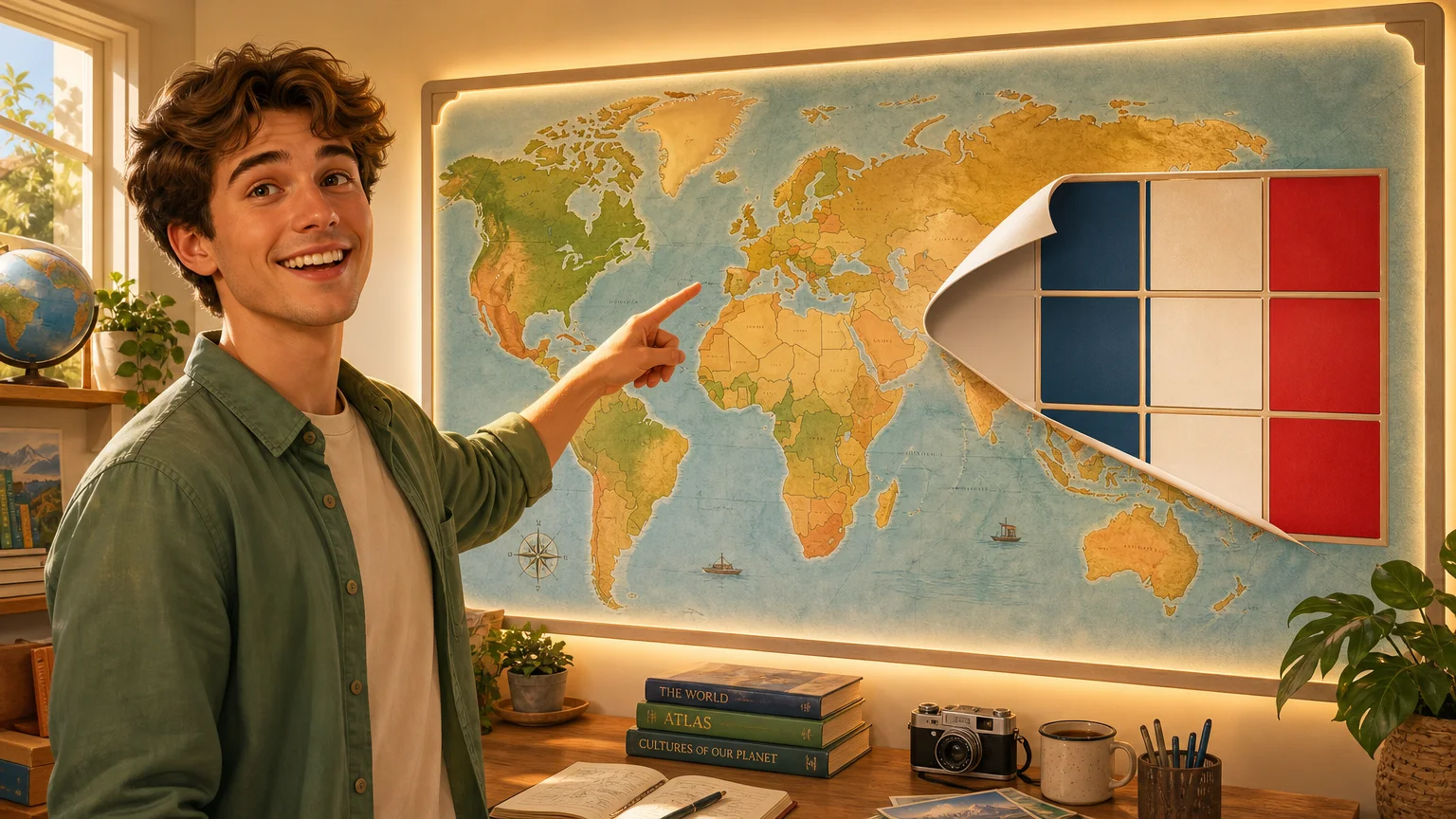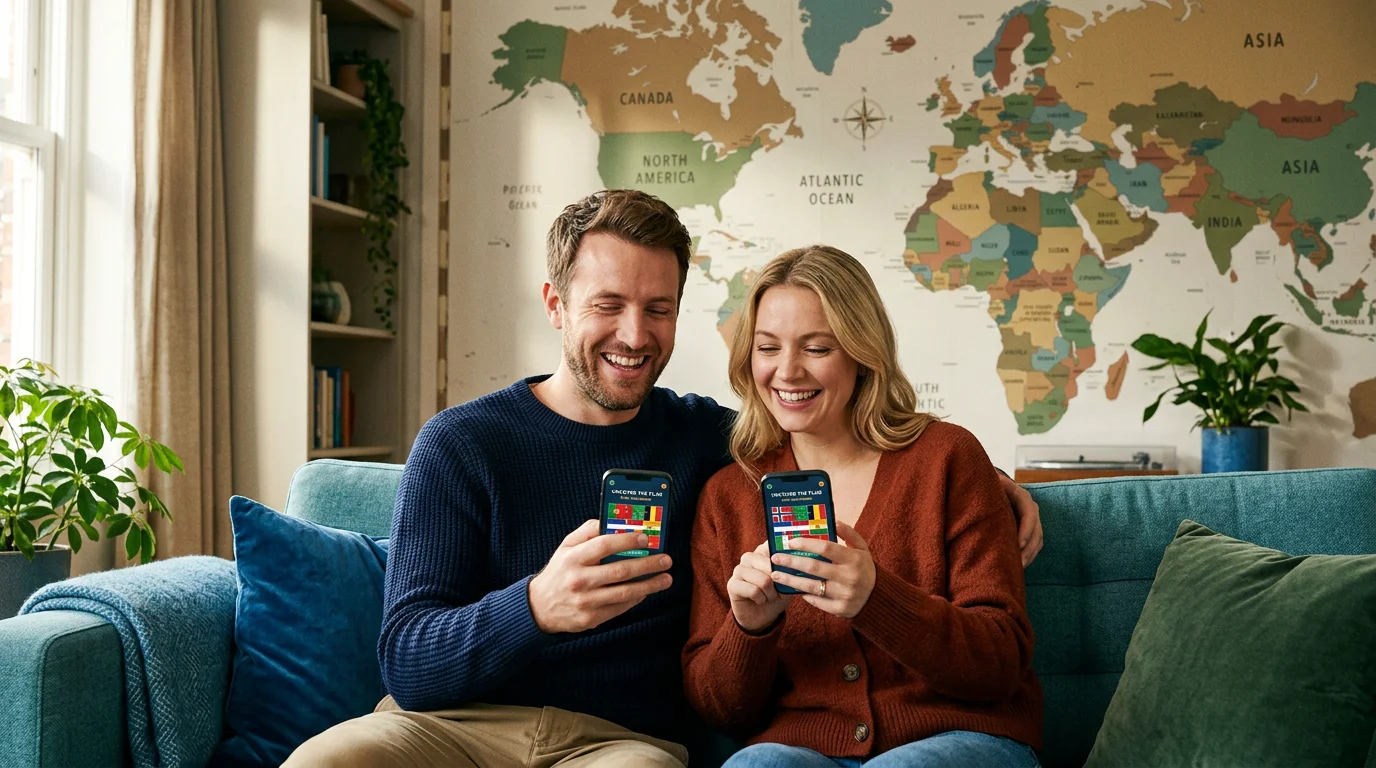

A geography game in French and English should do more than translate its menu. It should let you practise places and concepts in either language. To compare flag clues, capital questions, or map challenges, start with our geography game to guess the country, then check whether its language options fit your goal.
The key distinction is between bilingual navigation and bilingual play. A site might offer French menus while keeping answers, clues, or country names in English. Before you begin, check which parts change when you switch languages, then pick a puzzle format that helps you practise the geography you want to remember.
What does bilingual play actually include?
Look beyond the language selector. A useful bilingual game should make clear whether French and English apply to instructions, clues, country names, answer choices, and results. If you’re practising French, for example, a French interface with English-only country answers may not give you the practice you expect.
A 2023 study of a multilingual educational online activity tracked play by language and found that players’ first-choice missions differed between its French and English versions. That study concerned sustainability topics, not geography, so it doesn’t establish learning results for geography games. It does show why checking the actual activity language matters. Read our French country guessing game article if you want to explore country identification from a French-language angle. The 2023 multilingual study
Which puzzle format fits your learning goal?
If you mix up capitals, choose a game that repeatedly pairs countries with capital questions. If you struggle to recognise country shapes, look for a silhouette or map quiz. Flags, progressive clues, and multiple-choice questions practise different kinds of recall, so pick the format that targets what you want to learn.
For a change of pace, try alternating between map quizzes, flag puzzles, and country clues rather than repeating one format. Our country geography game article explores ways to practise flags, capitals, and maps. In our browser game, the Capitals mode gives continent and first-letter clues, while Worldle uses a country silhouette with distance, direction, and continent guidance.
If you want one short session to cover several angles, our Daily Challenge links nine country-focused mini-games around one mystery country. For focused revision, standalone modes let you concentrate on flags, capitals, hints, or silhouettes instead.
How much country coverage do you need?
A regional quiz can be a practical starting point if you’re studying one continent or preparing for a specific lesson. For broader practice, check whether the game covers countries worldwide and whether its description distinguishes countries from territories or regions.
Our game covers 195 UN-recognised countries and supports French and English. That scope is useful for practising country recognition across the world, though it isn’t a claim to include every territory or region. For a wider look at what country-focused practice can include, see our country learning game article.
What should you check before starting?
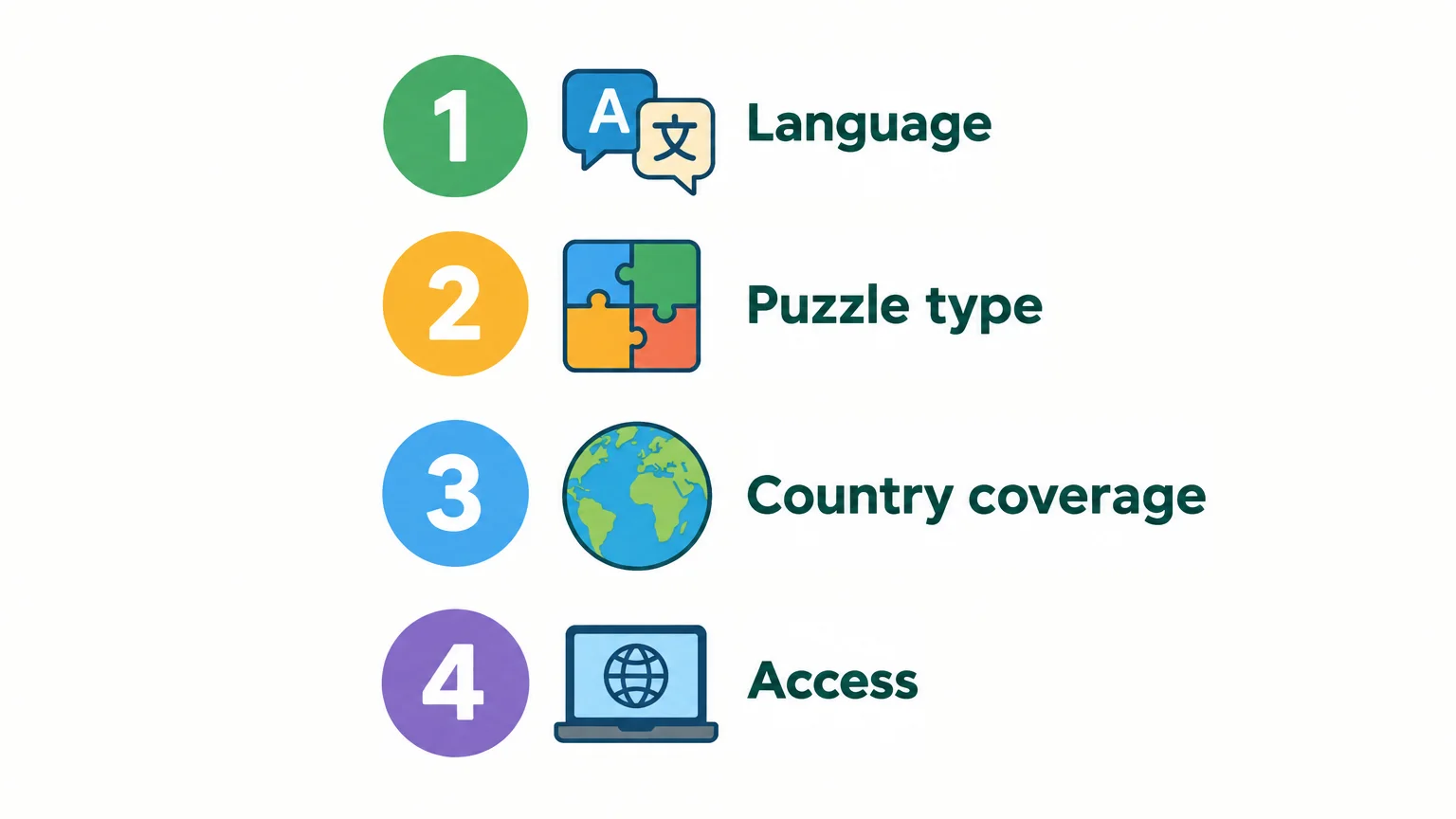
Before you play, run through a few practical checks. They can help you avoid starting a quiz that has the right topic but the wrong language, format, or access conditions.
- Language: Confirm that questions and answers, not only menus, are available in the language you want.
- Puzzle type: Match the activity to your goal, such as capitals, flags, maps, or country facts.
- Coverage: Check whether you want a regional quiz or broader country practice.
- Access: Look for browser, device, account, and cost requirements before you begin.
Our game runs in a responsive browser app, is free to play, and doesn’t require an account. You can choose French or English, then use a Daily Challenge or a standalone mode for a shorter, more focused round.
How can you make a short game useful practice?
Set one small aim before each round: name five capitals, recognise a set of flags, or locate countries in one region. After each answer, pause long enough to connect the country with a clue, such as its continent or nearby countries. That quick review makes the activity more deliberate than guessing through questions without noticing what you missed.
A 2026 European Geosciences Union conference abstract described a digital ocean-focused educational game available in French and English for higher education. It’s a different subject from a country quiz, but it’s a useful reminder that language options don’t tell you which topics or learners a game serves. The 2026 EGU abstract
Choose the language and challenge you need
A good bilingual geography game makes its language options clear, offers a puzzle format that fits your goal, and covers the places you want to practise. Check those basics before you play, then use each round to review a specific skill. That’s a straightforward way to make geography practice in French and English more focused and enjoyable.
Start a Daily Geography Challenge
If you want a short activity that combines country clues with repeatable practice, choose a game format that suits your day. A daily puzzle can make it easy to build a small geography routine on your own or compare results with friends.

Our browser game is free, works without an account, and supports French and English across 195 UN-recognised countries. Choose from flags, capitals, progressive hints, country silhouettes, themed quizzes, or a Daily Challenge that links nine mini-games around one country. Try our daily browser geography games and pick a mode that matches what you want to practise.
Frequently Asked Questions
How can I tell whether a game is really bilingual?
Check whether the questions, clues, answer choices, and country names switch languages, not just the site navigation. If that information isn’t clear, try a sample round before using it for study.
Can I use a geography game to practise French vocabulary?
Yes, if the game presents its clues and accepted country names in French. Read the language details first, since a translated menu alone doesn’t guarantee French-language questions.
Which puzzle type should I choose first?
Start with the skill you most want to practise: a capital quiz for city names, a flag puzzle for visual recognition, or a map activity for location. Switch formats when you want to test the same countries in a different way.
Can I play Flagdle in French and English?
Yes. Our browser game supports French and English, covers 195 UN-recognised countries, and offers several country-focused puzzle modes.
Do I need an account or an app download to play?
Not to play our browser game: it’s free and doesn’t require an account or an app-store download. You can also install the responsive web app on your device’s home screen through your browser.