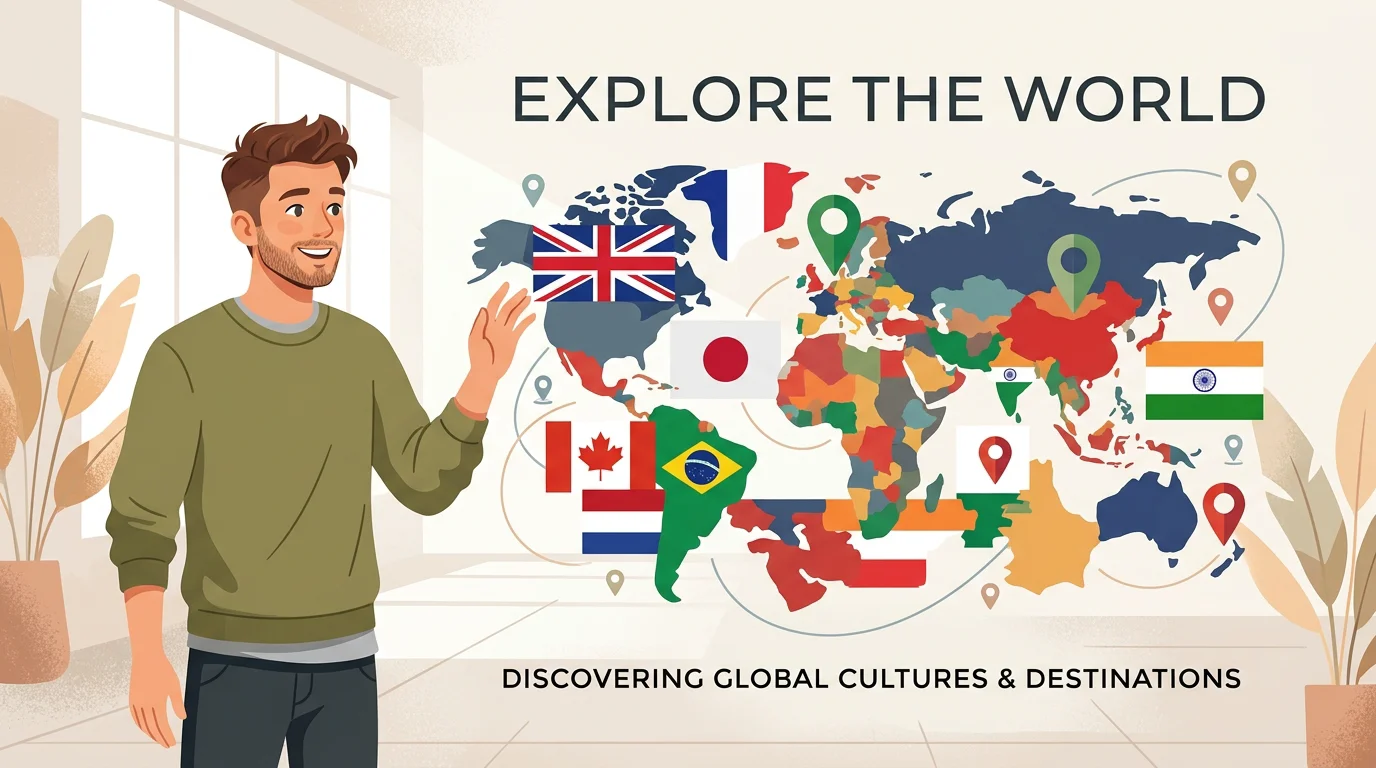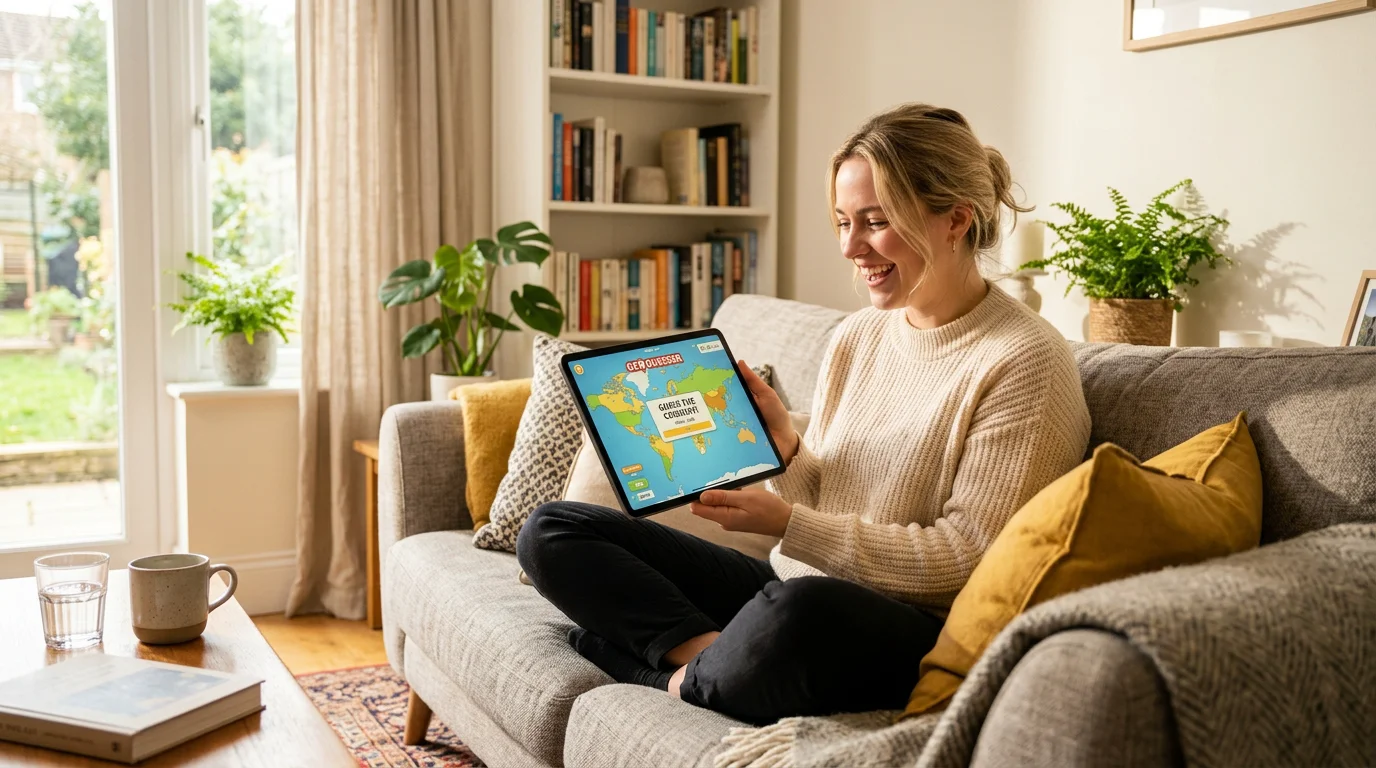
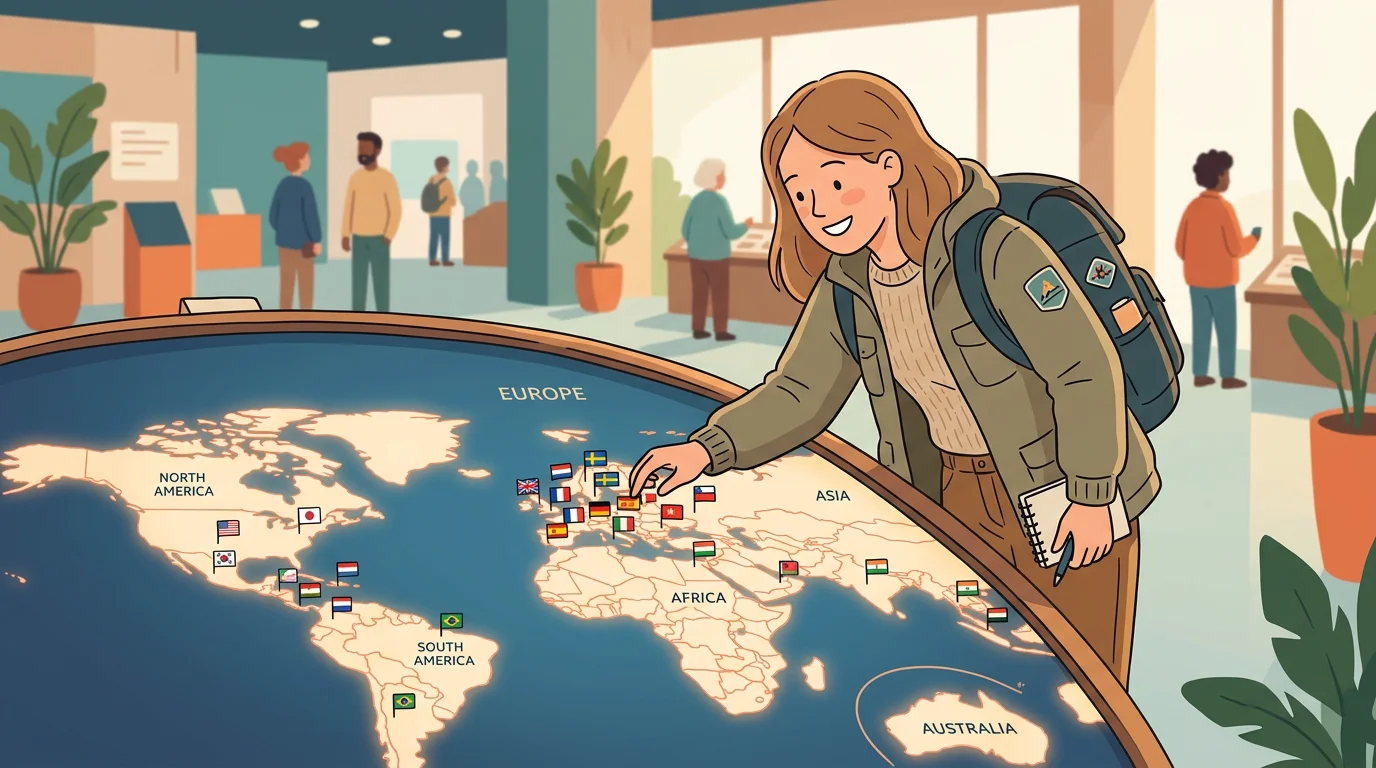

Only about one in four American students was rated proficient in geography on the most recent national assessment, and adults don't fare much better. That gap is exactly why a whole genre of quick puzzles has exploded: games where you guess the country from a single clue like a flag, an outline, or a capital city. They're fast, free, and weirdly addictive. If you want a structured starting point, our guide to guessing a country by its flag, capital and shape walks through the basics.
The appeal is simple. You get a bite-sized daily challenge, a little dopamine hit when you nail it, and, without really noticing, you memorize maps and flags. According to a National Geographic survey, most young people struggle to place major countries on a map, so turning practice into a game genuinely helps.
What "guess the country" games actually are
At their core, these are identification puzzles. You're shown a partial or full clue and asked to name the nation behind it. The trick that made them huge is the daily format borrowed from Wordle: one puzzle, shared worldwide, with a limited number of attempts.
There are a few main flavors. Some show you a country flag and count your tries. Others reveal only a country silhouette and give distance and direction hints. A third type asks you to match a capital city to its nation. The common thread: you guess the country using one narrow piece of information, which forces your brain to really commit to an answer instead of passively skimming a map.
Flag-based versions are especially beginner-friendly. Flags carry loads of visual data (colors, symbols, ratios) packed into one small image. That's why a masked-flag format, where tiles slowly reveal the design, works so well for daily play.
Why these games make geography stick
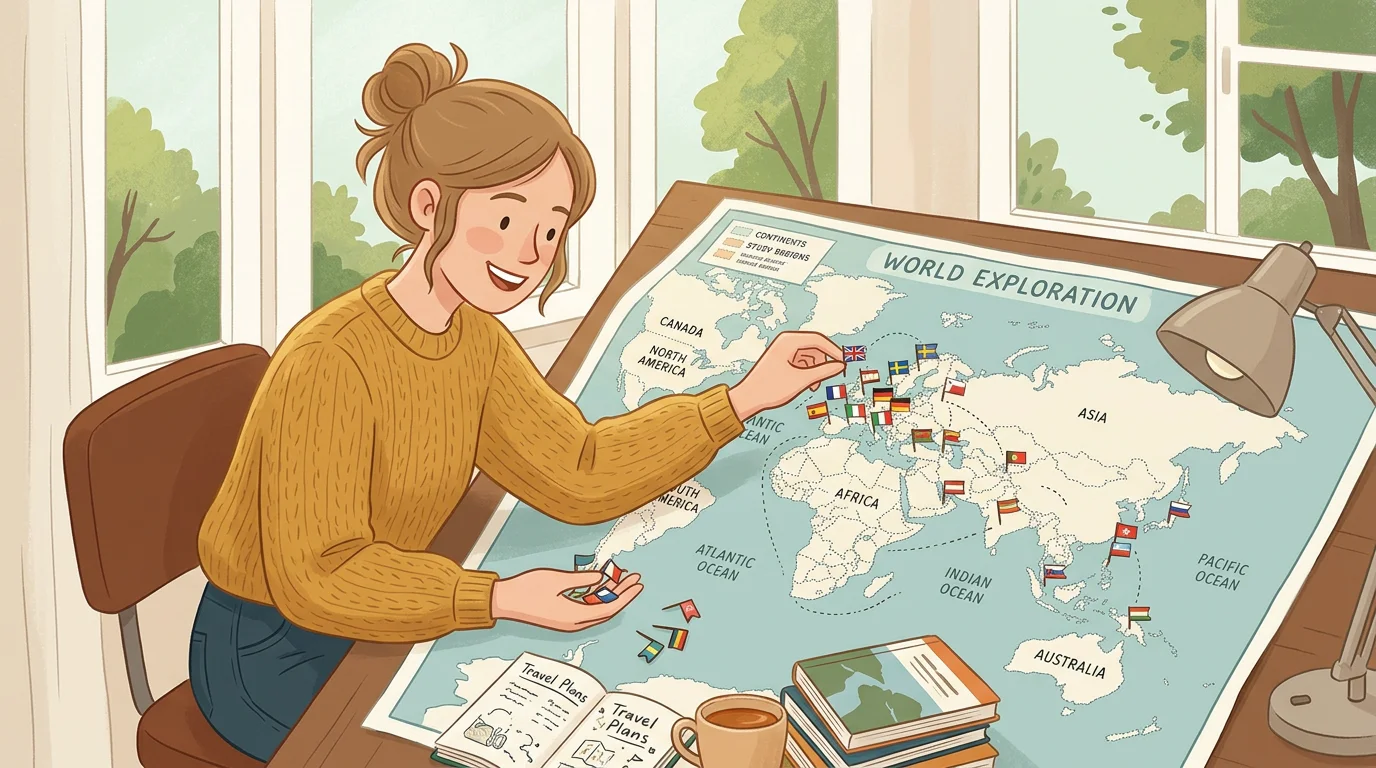
Here's the thing that surprises people: guessing games aren't just fun, they're solid learning tools. The mechanic relies on active recall, being forced to produce an answer rather than recognize one. That's one of the most reliable ways to build long-term memory.
Educational research backs this up. A study on using games in geography courses found that game-based practice increased student interest and supported more permanent learning of map skills. When you're actively hunting for an answer, you remember it far better than when you're reading a list of capitals.
Teachers have noticed too. If you want a quick classroom or study ritual, five minutes a day beats an hour of cramming once a month. Our breakdown of the guess the country game and how to play, win, and learn faster is built around exactly that daily-habit idea.
How to read the clues: flags, shapes and capitals
Every clue type has its own tells. Learn them and your hit rate jumps fast.
Flags: Start with color combos and layout. A red-white-red horizontal stack narrows things instantly. Look for unique symbols: a maple leaf, a cedar tree, a crescent and star, a dragon. Flag proportions and central emblems often separate two otherwise similar designs.
Silhouettes: Focus on distinctive outlines. Italy's boot, Chile's long strip, or an island chain are dead giveaways. Remember that shape alone has no scale, so if small guesses fail, think bigger. Direction and distance hints, when a game offers them, let you triangulate the answer in two or three tries.
Capitals: Build clusters in your head. Group capitals by region so one correct guess pulls neighbors along with it. Progressive hints like continent, population, or main language can turn a total blank into an educated guess. For a deeper walkthrough, our tips on guessing a country by its flag, shape and capital cover each clue type in order.
Why the daily format is so addictive
One puzzle a day sounds limiting. It's actually the secret sauce. Scarcity keeps it fresh, and a shared daily answer turns solo play into a social race with friends.
The wider game-based learning space is booming right along with it. According to market research, the sector was valued at roughly USD 21.1 billion in 2025 and is projected to reach about USD 26.3 billion in 2026. The same research notes that 88% of teachers using digital games reported higher student engagement, which explains why so many classrooms now open with a quick daily puzzle.
That daily loop also builds streaks, and streaks build habits. A country you struggled with on Monday sticks with you by Friday, because you keep circling back to the same world map from slightly different angles.
Comparing the main guess-the-country formats

Not all guessing games work the same way. Here's how the popular formats stack up on the things that matter for daily play and learning.
| Game format | What you guess | Attempts | Cost / access |
|---|---|---|---|
| Flagdle | Masked flag (9 tiles), plus capitals, silhouette and progressive-clue modes covering all 195 UN countries | 3 | Free, no account, no intrusive ads |
| Silhouette game | Country outline with distance and direction hints | 6 | Free daily; archive behind subscription |
| Street-view game | Real-world location from panoramic imagery | Varies | Subscription for most features |
| Quiz site | Typed list answers (e.g. countries by letter) | Timed, open | Free with ads |
What sets our approach apart is variety in one place. We combine a daily masked flag with capitals, silhouettes, progressive clues, and a Défi du jour that chains six mini-games, so you're not stuck with a single mechanic. If you like collecting formats, our guide to mastering the country flag guessing game shows how to string them together.
How to actually get better, faster
Improvement isn't magic. It's a handful of habits repeated.
- Play daily. Consistency beats marathon sessions. Five focused minutes a day locks in far more than a weekend binge.
- Review your misses. After each puzzle, look up the country you got wrong. Note its flag, capital, and neighbors.
- Learn by region. Master one continent at a time instead of scattering your attention across the globe.
- Use flashcards for gaps. Pair games with a flag-and-capital deck to hammer the ones that keep tripping you up.
- Explore free tools. Educational nonprofits offer solid resources; National Geographic's education blog highlights interactive geography activities worth mixing in.
Combine game play with a quick review afterward and you cover both halves of learning: recognition and recall. That's what turns a casual habit into real, lasting geography knowledge.
Bringing it all together
Games where you guess the country from a flag, shape, or capital are more than a time-killer. They lean on active recall, they're built for daily habits, and they quietly fix the geography gaps most of us carry around. Pick one clue type to start, play a round every day, and always review what you missed. Do that for a few weeks and you'll be naming flags and capitals you couldn't place before, without ever feeling like you studied.
Take action with Flagdle
Ready to stop guessing blindly and actually learn the map? A daily puzzle is the easiest on-ramp, and it takes about five minutes. You get one shared challenge, three tries, and a reason to come back tomorrow.
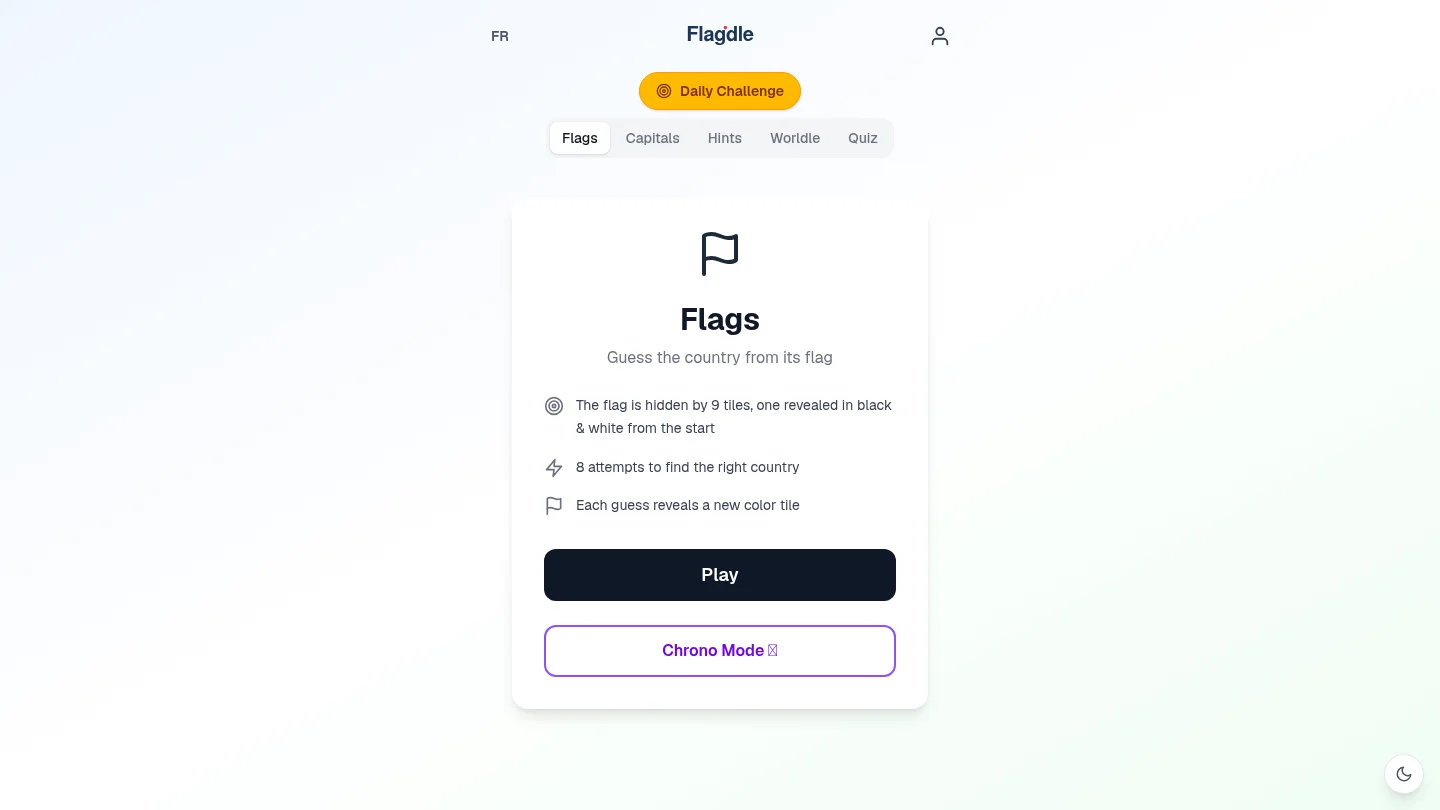
With our free daily flag game, you identify a masked flag in three attempts, then branch into capitals, silhouettes, progressive clues, and the Défi du jour across all 195 UN countries. It's free, needs no account, has no intrusive ads, and keeps your stats stored locally. Compare your score with friends on the daily, weekly, and monthly leaderboards.
Frequently Asked Questions
How many countries should I expect to learn?
Most comprehensive games cover the 195 countries recognized by the UN. You won't learn them all at once, but daily play steadily builds coverage. Focusing on one region at a time makes the total feel far less overwhelming.
Are guess-the-country games good for kids and classrooms?
Yes, they're a great fit for short daily rituals. A five-minute round works as a warm-up before a geography lesson. The game mechanic delivers active recall naturally, which supports stronger long-term memory.
What's the difference between flag and silhouette games?
Flag games test your memory of colors, symbols, and layouts, while silhouette games test outline recognition plus spatial reasoning. Flags are usually friendlier for beginners because they pack lots of clues into one image. Many players enjoy switching between both to stay sharp.
Do I need to pay or create an account to play?
It depends on the game. Some lock archives or premium modes behind a subscription. Our daily flag game, by contrast, is free, needs no account, and stores your stats locally on your device.
How long does it take to get noticeably better?
With consistent daily play and a quick review of your misses, most people see clear improvement within a few weeks. Reviewing wrong answers is the fastest lever. Pairing games with flashcards for stubborn gaps speeds things up even more.