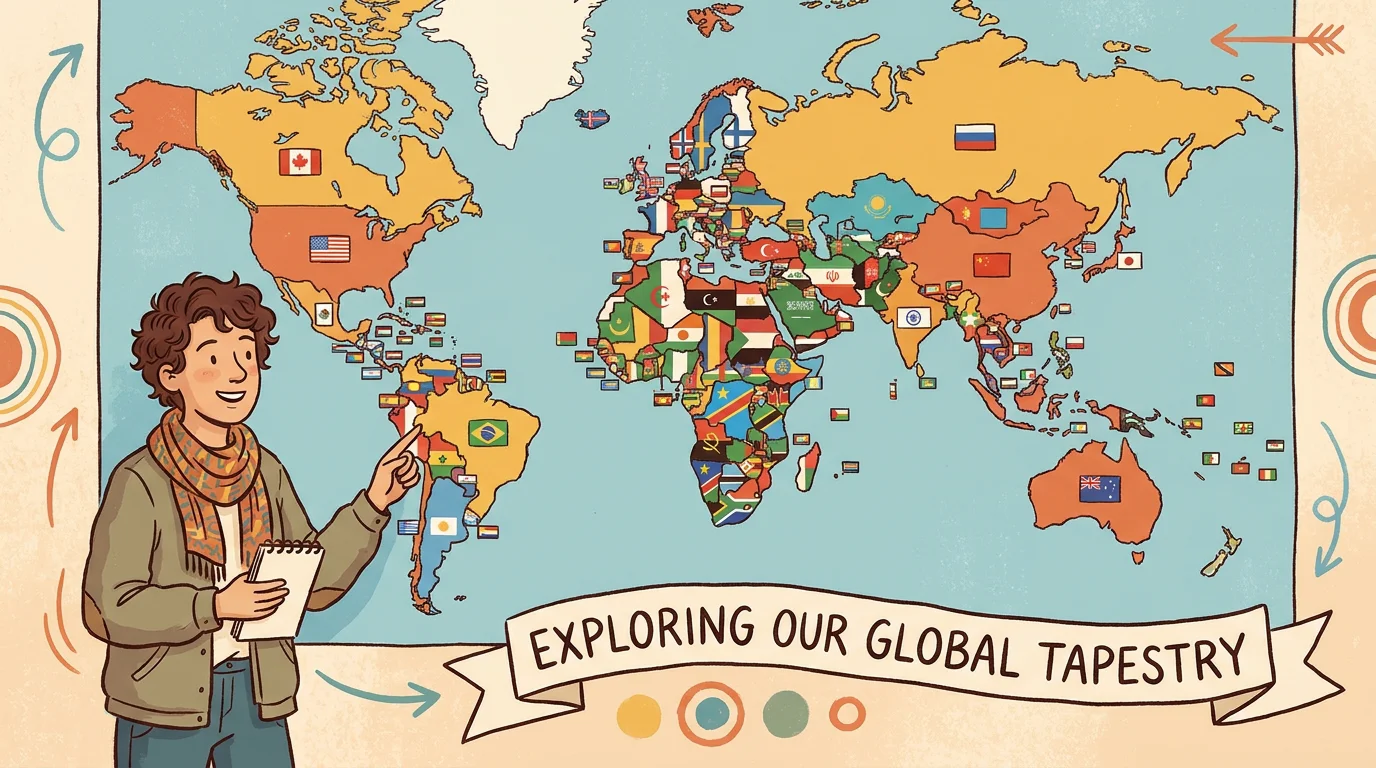
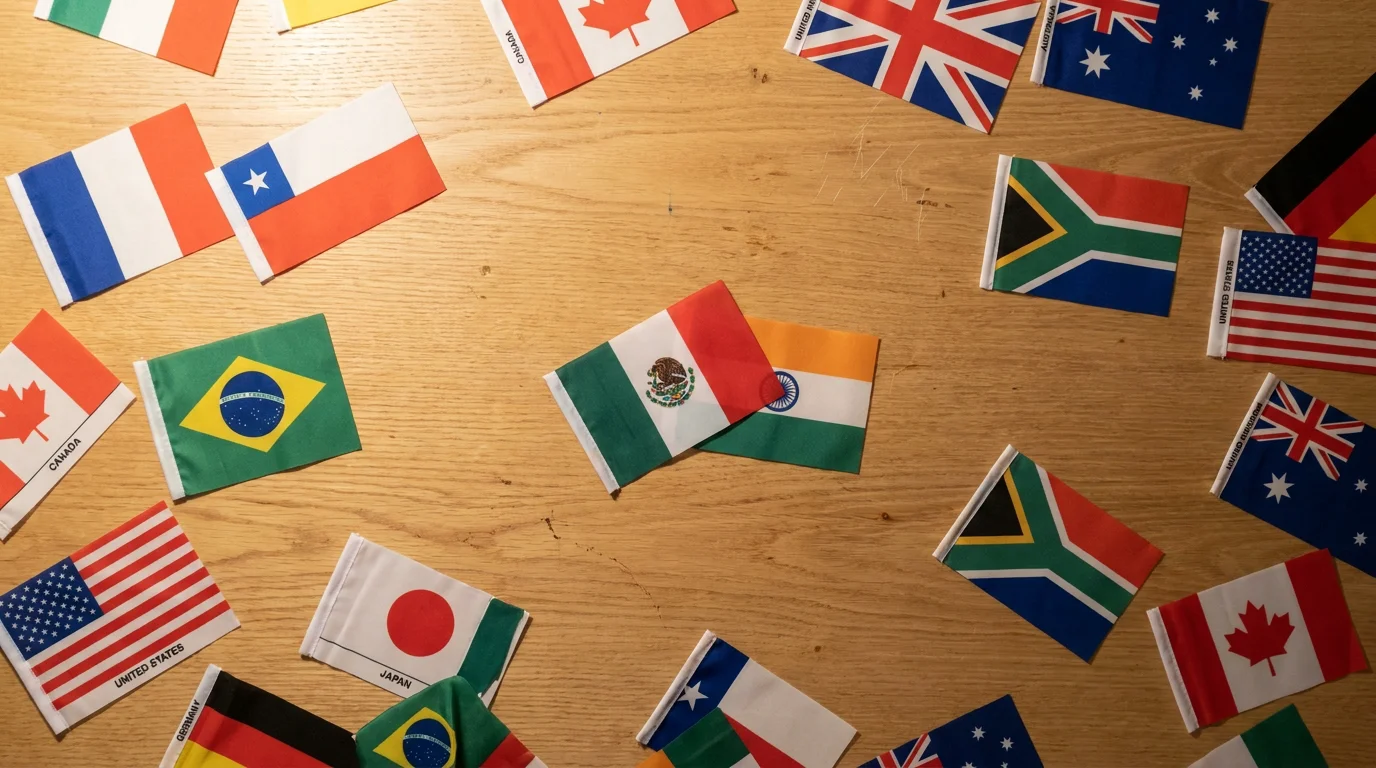

Can you tell Chad's flag apart from Romania's? If that question made you pause, you're not alone. Flags are powerful symbols of a country's identity, and learning about them can enhance your geographical knowledge, yet most people can barely name 20 flags off the top of their head. The good news? A flag identification game makes picking up that knowledge way easier (and way more addictive) than you'd expect. If you've never tried one, our flag guessing game is a perfect place to start.
Whether you're a trivia night regular, a geography student cramming for finals, or just someone who stumbled into the rabbit hole of vexillology (that's the fancy word for flag studies), these games turn rote memorization into genuine fun. Let's break down what makes flag identification games tick, why they actually work for learning, and how to pick the format that suits you best.
What Exactly Is a Flag Identification Game?

At its core, a flag quiz shows you a flag and asks you to name the country it belongs to. Sounds simple, right? It is, until you're staring at three nearly identical tricolor flags and sweating over the answer. The format varies from game to game: some give you multiple choice options, others make you type the country name, and a few (the really fun ones) reveal the flag bit by bit so you have to work with partial clues.
Sporcle's popular "Flags of the World" quiz, for instance, challenges players with 197 questions in 18 minutes. That's a speed test as much as a knowledge test. On the other end of the spectrum, daily challenge formats give you just one flag per day, turning it into a habit rather than a sprint.
The game types generally fall into a few buckets:
- Multiple choice quizzes: you see a flag and pick from several country names.
- Type-to-answer: no safety net; you either know it or you don't.
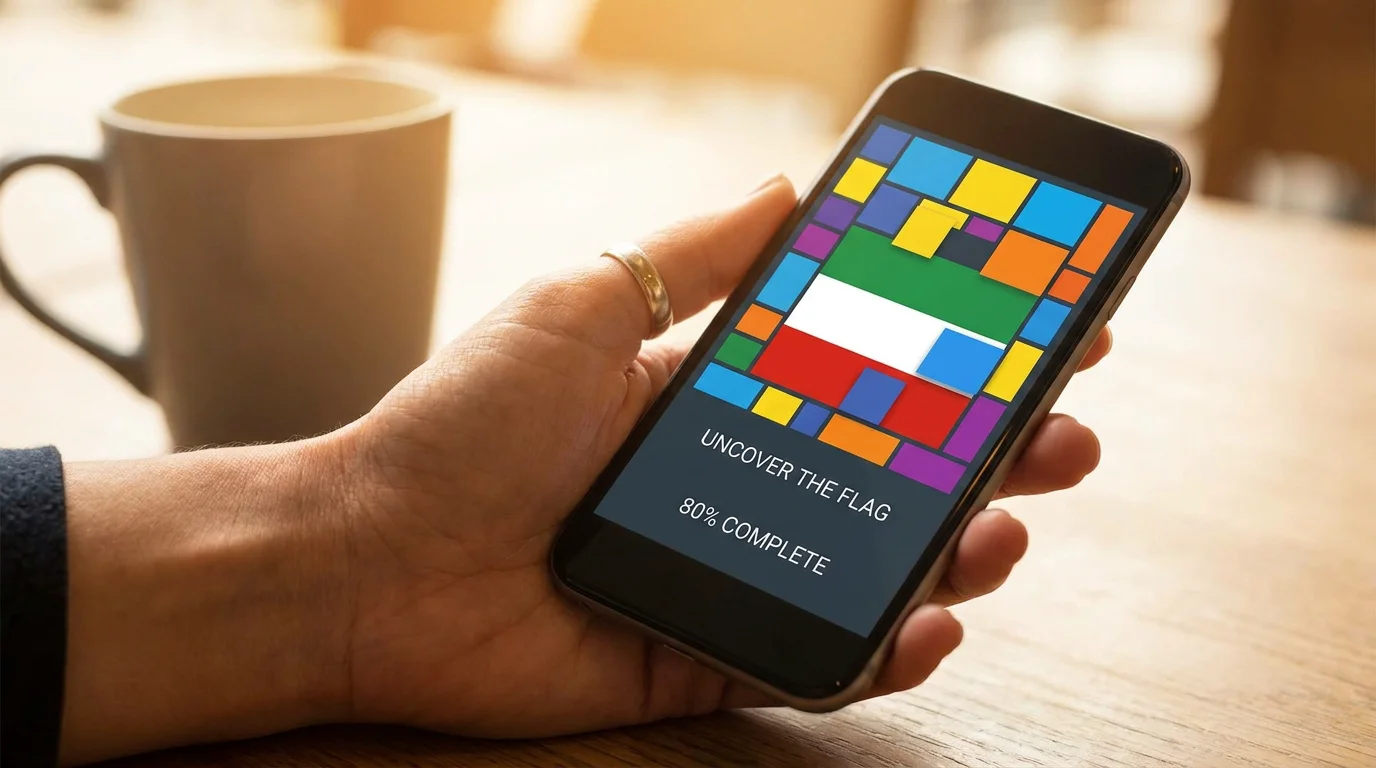
- Progressive reveal: the flag is hidden behind tiles that peel away with each guess, rewarding partial knowledge.
- Map-based matching: you see a flag and click the correct country on a world map.
Each format exercises a slightly different skill, from pure recall to spatial reasoning. The best approach? Mix them up.
Why Flag Games Actually Help You Learn
You might wonder if clicking through a quiz really does anything for long-term memory. It does. The psychology behind it is solid: active recall (being tested on something) beats passive review every time. When you see a flag and have to retrieve the country name from memory, you're strengthening that neural pathway far more than if you just read a list.
As education expert Dr. Matthew Lynch notes, flags are powerful symbols of a country's identity, and creating a flag identification game where students match flags to their respective countries is one of his recommended geography activities for students. This activity can also lead to discussions about the history and meaning behind each flag, which adds another layer of context that makes flags stick in your memory.
The progressive reveal format adds an extra learning twist. When you can only see a sliver of a flag, you start noticing design details you'd normally overlook: the specific shade of blue, the placement of a star, the width of a stripe. That deeper visual processing is exactly what locks the image into your brain.
The Tricky Flags That Stump Everyone
Let's be honest: some flags are just unfair. Not "unfair" in a bad way, but in a "wait, those are the same flag" way. Geography quizzes that cover 233 countries and territories are packed with look-alikes that trip up even seasoned players.
Here are some of the classic confusion pairs:
| Flag Pair | Key Difference | Difficulty |
|---|---|---|
| Chad vs. Romania | Slightly different blue shade | Brutal |
| Monaco vs. Indonesia | Slightly different proportions | Very Hard |
| Ireland vs. Côte d'Ivoire | Reversed green and orange | Hard |
| Senegal vs. Mali | Senegal has a green star | Medium |
| Australia vs. New Zealand | Different star count and layout | Medium |
Interactive games that show you a flag and ask you to click the correct country on the world map, covering 195+ countries, are especially good at helping you learn these tricky pairs because you're forced to make a definitive choice rather than just glossing over similarities.
What Makes a Great Flag Game Stand Out
Not all flag games are created equal. Some are genuinely engaging; others feel like a geography textbook got lost inside an app. Here's what separates a memorable experience from a forgettable one:
Progressive difficulty matters a lot. The best games offer quiz levels designed to suit players of all ages and expertise, providing an enjoyable and educational experience for everyone. Starting with Canada and Japan, then working up to Kyrgyzstan and Eswatini, keeps the challenge curve satisfying.
Daily challenges create a habit loop. When there's one new puzzle per day, the same for every player, you get a shared social experience. You can compare with friends without anyone having an advantage. This is exactly the mechanic that made Wordle a global phenomenon, and it works just as well for flags.
Hint systems keep frustration in check. A good flag game gives you just enough information to learn without giving away the answer. Progressive tile reveals, geographic clues, or details about the country's capital and currency all serve this purpose. If you're curious about that kind of layered hint experience, our find the flag challenge is built around exactly that concept.
Formats Worth Trying in 2026
The landscape of online flag quizzes has expanded a lot over the past few years. Here's a quick breakdown of the main formats you'll find:
Browser-based quizzes are still the easiest entry point. Sites like Sporcle and World Geography Games offer instant play with no downloads. They tend to focus on speed and completeness, with timed rounds covering all 197 recognized flags.
Mobile apps add gamification layers like streaks, leaderboards, and achievements. Many are free with ads, while premium versions remove interruptions. They're great for quick sessions on the bus or during a lunch break.
Daily challenge games are the newer breed. You get one flag per day and a limited number of guesses. The flag reveals itself progressively, so each wrong answer actually gives you more visual information. It's a format that rewards coming back every single day.
Map-based games go beyond just naming flags. You see a flag and click the right country on the map, mastering world flags while exploring geography. This format builds spatial awareness alongside flag knowledge.
How to Get Better at Identifying Flags
If you're tired of guessing randomly, here are some concrete strategies that'll speed up your learning:
Learn by region. Don't try to memorize all 195+ flags at once. Start with one continent, nail it, then move on. African flags have distinct patterns (lots of green, yellow, and red pan-African colors). European flags tend toward crosses and tricolors. Oceanian flags often feature the Southern Cross constellation.
Focus on unique elements. Nepal's flag is the only non-rectangular one. Switzerland's is a perfect square. Mozambique's flag has an AK-47 on it. These quirky details are memory anchors.
Use the process of elimination. If a flag has a Union Jack in the corner, you've narrowed it down to about a dozen countries. If it's a horizontal tricolor with a coat of arms, you're likely in Central America or the Balkans. Working individually or in pairs to match flags to countries trains this deductive thinking naturally.
Want to put these strategies into practice right away? Our flag quiz game lets you drill specific regions or go global, so you can build up your knowledge layer by layer.
Flag Games as a Social Experience
One thing people don't expect about flag quizzes is how social they can get. The daily challenge format creates a shared puzzle that friends, classmates, and coworkers can discuss without spoiling it. "Did you get today's flag?" has become a real conversation starter in geography circles.
Global leaderboards let you compete with players worldwide and challenge friends and family to beat your high score. This competitive element turns a solo learning activity into a multiplayer experience. Teachers are catching on, too. Creating stations with geography tasks like matching countries to their flags, where students compete in teams, encourages teamwork while reinforcing geographical knowledge.
If you enjoy the competitive side, our country flags guess mode gives you the same flag everyone else gets that day, so you can compare your score directly.
Beyond Flags: The Bigger Geography Picture
Flags are often the gateway to a much deeper geography obsession. Once you can identify 50 flags, you start wondering about capitals. Then currencies. Then GDP rankings. Then you're 2 a.m. deep into learning about microstates and wondering why Nauru even exists (it's a long story involving phosphate mining).
Geography quiz apps now include world maps with 233 countries, country flags, trivia contests, and features for training your memory and memorizing information about countries. The flag quiz is just the entry point. The best games let you expand your knowledge of countries and their flags while discovering fascinating facts about each nation as you progress.
This is where daily geography challenges really shine. Formats that combine flags with clues about coats of arms, neighboring countries, languages, and population size create a well-rounded learning experience that sticks.
Picking the Right Game for You
With so many options out there, here's a simple decision framework:
- Total beginner? Start with a multiple choice quiz covering well-known flags. Build confidence before going hard mode.
- Intermediate player? Try progressive reveal games that make you work with partial information. It's the sweet spot between easy and impossible.
- Expert level? Go for timed challenges covering all 197 flags, or try the tricky "confusable flags" quizzes that specifically target look-alikes.
- Daily habit seeker? Daily challenge formats with a single flag per day keep you sharp without overwhelming you.
Whatever level you're at, the key is consistency. Five minutes a day beats one hour-long cram session every month.
At the end of the day, flag identification games work because they tap into something deeply human: the satisfaction of recognizing a pattern and connecting it to a place in the world. Whether you're competing on a leaderboard, quizzing friends at dinner, or just killing time on your commute, every round makes you a little more globally aware. And with daily challenges that reveal flags progressively, complete with clues about capitals, currencies, and more, the learning never gets stale. Ready to test yourself? Try our flag matching game and see how many you can nail on your first try.
Frequently Asked Questions
How many country flags are there in the world?
There are 195 internationally recognized sovereign states, each with its own flag. Some quizzes include territories and dependencies, pushing the count above 200. Our daily challenge at Flagdle covers all 195 countries so you can work through every single one over time.
What's the hardest flag to identify?
Chad and Romania are widely considered the trickiest pair because their flags are virtually identical except for a barely noticeable difference in the shade of blue. Other commonly confused pairs include Monaco and Indonesia, and Ireland and Côte d'Ivoire.
Can flag games really improve geography knowledge?
Yes. Active recall, the process of retrieving information during a quiz, is one of the most effective learning techniques. Flag games apply this principle naturally. You're not just reading about countries; you're actively identifying them, which builds stronger and longer-lasting memory.