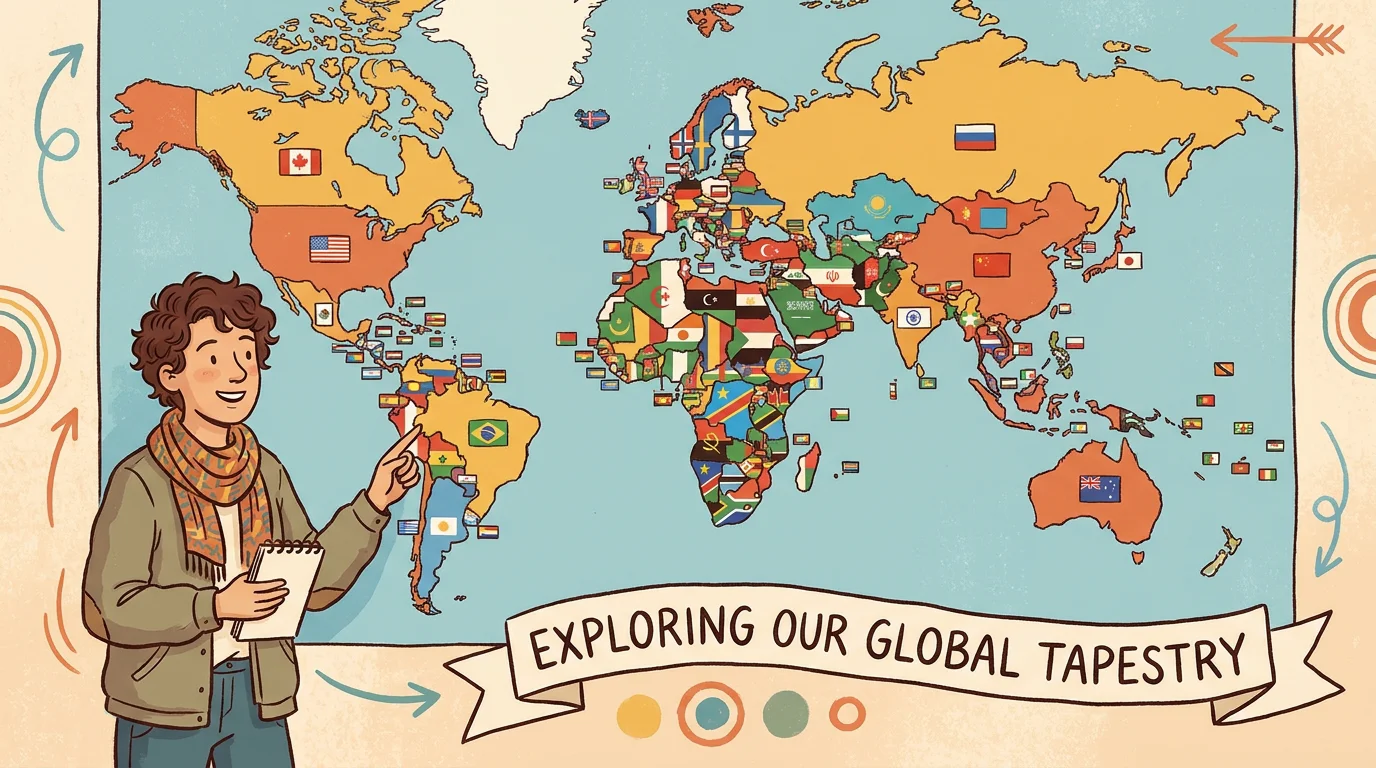
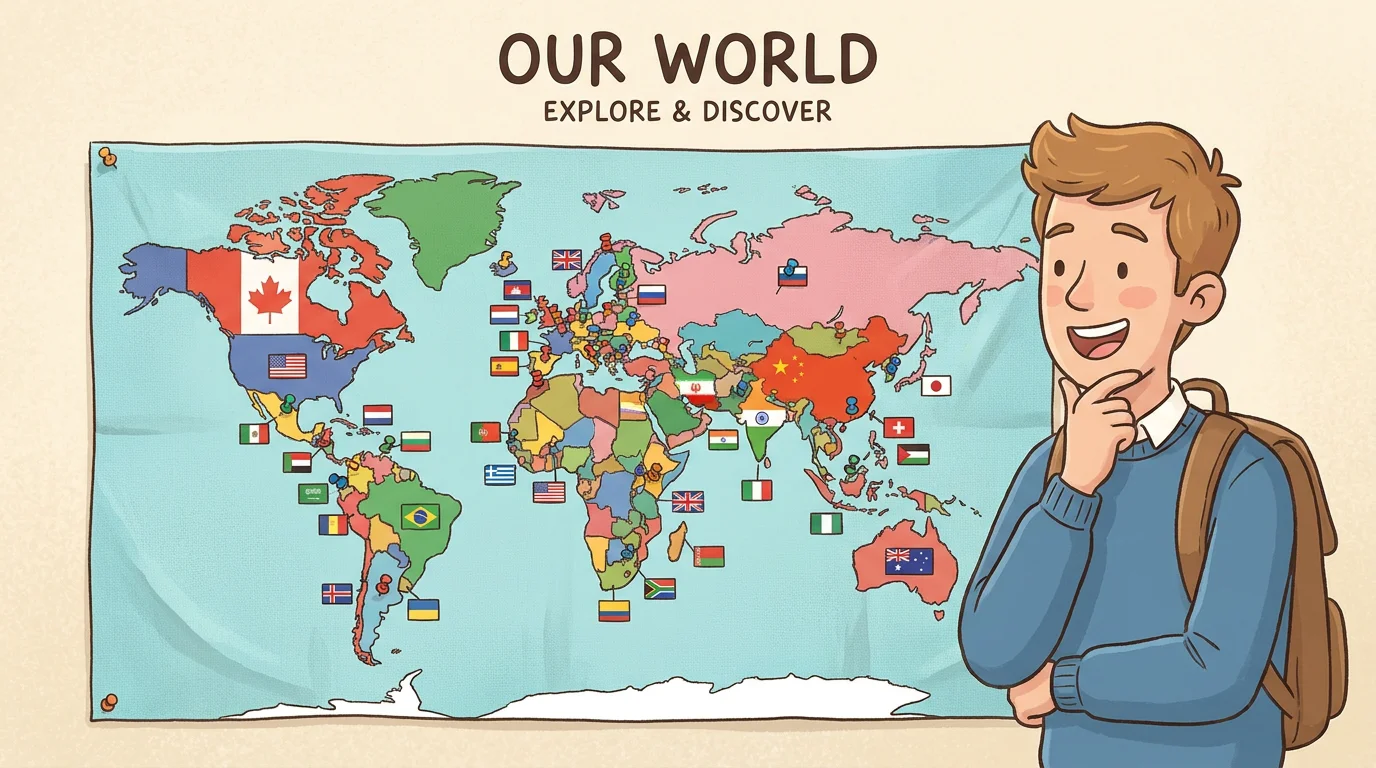

Quick: can you tell Chad's flag apart from Romania's? If you just paused, you're not alone. Chad and Belgium are so similar it's hard to distinguish between them, and Romania's only difference is a slightly more vibrant shade of blue. That's exactly the kind of brain teaser that makes a flag naming game so addictive. Whether you're a trivia night regular or someone who just wants to feel smarter on your lunch break, naming flags is one of the most satisfying ways to flex your geography muscles. If you've never tried one, our flag guessing game is a great place to start.
These games have exploded in popularity, riding the wave of daily puzzle formats that took over in the early 2020s. From "adventurous road trips across the world of flags" to brain training with quiz games including 197 world flags and 130 territory flags, there's no shortage of ways to challenge yourself. But not all flag games are created equal. Let's break down what makes them tick, why they're surprisingly good for your brain, and how to actually get better at them.
What Exactly Is a Flag Naming Game?
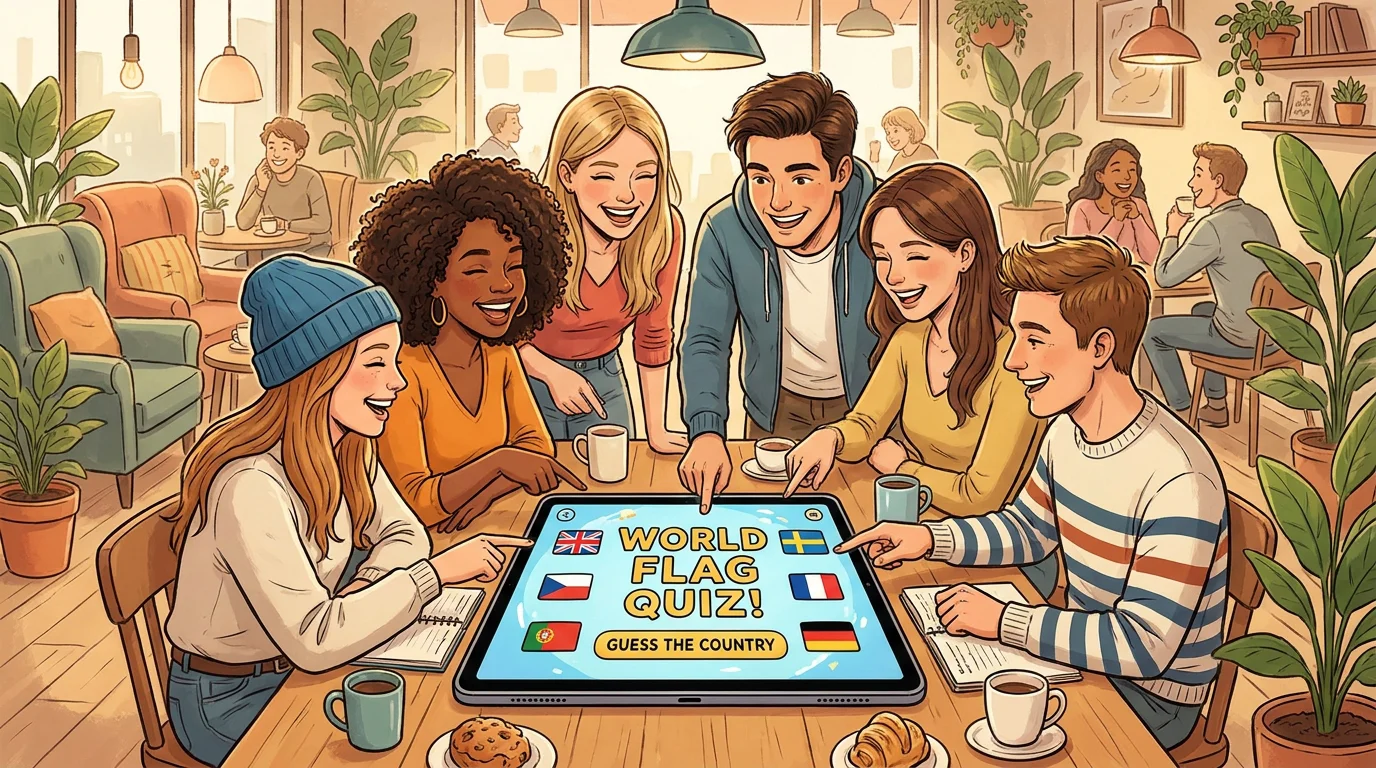
At its core, a game where you name flags is pretty simple. You see a flag; you identify the country. Also known as "Guess the Flag" or "Guess the Flags of the World," it's an engaging and educational trivia game that challenges players to identify national flags. The game presents you with a flag image and gives you multiple choice options, and your goal is to correctly identify the country to which the flag belongs.
But modern versions have layered on clever twists. Some use progressive reveals, where parts of the flag are hidden and slowly uncovered with each guess. Others throw in bonus rounds about capitals, currencies, or country shapes. The format can be multiple choice, timed typing, or free recall, and each variation tests a slightly different skill set.
The number of flags you'll face depends on the platform. Sporcle's version, for instance, includes 197 questions and gives you 18 minutes to name them all. Others call themselves "the hardest multiple-choice flags quiz game, including 197 world flags." Meanwhile, our daily challenge focuses on one country at a time with a progressive tile reveal, which is a different kind of rush.
Why Naming Flags Is Surprisingly Good for Your Brain
You might think flag games are "just trivia," but there's real cognitive payoff happening behind the scenes. Playing flag quizzes isn't just about expanding world knowledge; it also provides serious brain-boosting benefits. Recognizing and recalling flags from memory enhances cognitive functions like pattern recognition, spatial memory, and visual processing. It strengthens recall ability by engaging both short-term and long-term memory systems. As you learn to distinguish similar designs and remember minute details, neural pathways involved in attention to detail and long-term memory encoding are reinforced.
That's not just hand-waving. Think about what you're doing when you see a tricolor: you're scanning colors, comparing arrangements, recalling geographic context, and making a snap decision. Because flags are tied to countries, cultural meaning, and geography, players also build contextual learning skills, making flag quizzes an entertaining yet cerebral workout ideal for sharpening mental acuity and cultivating global cultural literacy.
And according to one geography trivia platform, geography trivia games improve spatial awareness, cultural knowledge, and memory retention, with students who play geography games showing 40% better performance in world studies. That's a compelling number, even if more formal research is needed to pin it down precisely.
The Progressive Reveal: A Game-Changer
Here's where things get interesting. Traditional flag quizzes show you the full flag and ask you to name it. That's fine, but it can become routine once you've memorized the big ones. The progressive reveal format flips the script.
In this variation, the flag starts fully hidden behind tiles or a blur effect. Each wrong guess uncovers a new section. So you're not just recalling; you're deducing. You spot a crescent on the first tile and think, "Turkey? Pakistan? Tunisia?" Then a second tile reveals green, and suddenly your list narrows. It's part memory, part detective work.
This is exactly how we built our daily challenge. The flag is masked by nine tiles, and each attempt reveals a new one in full color. You get eight attempts to figure it out. It transforms a simple recall exercise into a strategic puzzle, and that's why players keep coming back. If you enjoy that kind of challenge, you'll love our flag quiz game format too.
How to Actually Get Better at Naming Flags
Alright, let's talk strategy. Whether you're trying to beat a timed quiz or just want to stop mixing up Indonesia and Monaco (spoiler: Indonesia is on top, red over white), here are proven approaches that work.
Learn by Region
Start with regions: learn flags by region, like all South American flags at once. It's easier to spot similarities and patterns. African flags, for example, tend to feature green, gold, and red (Pan-African colors). Scandinavian flags all use a left-offset cross. Once you know the regional "template," individual flags become variations, not mysteries.
Focus on Symbols and Details
Identify common symbols such as palm trees, sun, and crescents. A star and crescent? You're probably looking at a Muslim-majority country. A Union Jack in the corner? Former British territory. Some flags are nearly identical; learn to differentiate by small details. The Ivory Coast and Ireland, for example, differ only in the order of their orange and green stripes.
Use Flashcards and Repetition
Repetition is king. One JetPunk user reported memorizing all flags in a single day of school using flashcards. That's extreme, but the principle holds. Interactive quizzes built to help you remember countries, flags, capitals, and map shapes through repetition are incredibly effective. Spaced repetition, where you review cards at increasing intervals, is the gold standard for locking information into long-term memory.
Practice with Timed Challenges
Speed matters when you're testing true recall versus educated guessing. As JetPunk's all-countries flag quiz demonstrates, some players know nearly all flags but find there "literally isn't enough time to pause for even a moment, type, and continue." Timed practice builds automaticity, the ability to recall without conscious effort.
The Trickiest Flags You'll Encounter
Every flag game has a few land mines. Here are the pairs that trip up even experienced players:
| Flag Pair | Key Difference |
|---|---|
| Chad vs. Romania | Chad's blue is slightly darker (indigo vs. cobalt) |
| Indonesia vs. Monaco | Indonesia is slightly wider; colors are identical (red over white) |
| Ireland vs. Ivory Coast | Ireland: green-white-orange (left to right). Ivory Coast: orange-white-green |
| Luxembourg vs. Netherlands | Luxembourg uses a lighter shade of blue |
| Australia vs. New Zealand | Australia has 6 stars (including a large Commonwealth Star); New Zealand has 4 red stars |
Knowing these common mix-ups is half the battle. The other half is seeing them over and over until the differences click. A daily practice habit, even five minutes, makes a huge difference.
Daily vs. Infinite Modes: Which One's for You?
Flag naming games generally come in two flavors: daily challenges and unlimited/infinite modes. Each has its charm.
Daily challenges give you one puzzle per day, the same one everyone else gets. It's the Wordle model applied to geography. The shared experience creates community: you can compare scores, share results, and debate strategy. Our flag game follows this model, offering a fresh country every day with multiple mini-games covering shapes, coats of arms, capitals, neighbors, currencies, and more.
Infinite and timed modes let you grind. They're great for systematic learning when you want to drill through every country in one sitting. Some platforms offer multiple game modes including flags of the world with increasing difficulty, independence day trivia, country identification, and population recall. If you're prepping for a geography bee or just enjoy marathon sessions, infinite mode is your friend.
The sweet spot? Do the daily challenge for consistency, then hit infinite mode when you want to target weak spots.
Flag Games Across Platforms in 2026
The landscape for flag identification games is broader than ever. Here's a quick snapshot of what's out there:
Sporcle's Flags of the World quiz was last updated in February 2026 and remains one of the most well-known browser-based options, featuring 197 flags in a timed typing format. It's solid for experienced players who want a full world run.
On mobile, apps like "Guess Flags of the World" on Google Play have crossed the 5 million download mark, offering multiplayer modes, leaderboards, and multi-language support across 25 languages. Other platforms target students, teachers, travelers, and trivia players, with interactive quizzes that are mobile-friendly and built around repetition-based learning.
What sets our approach apart is the combination of daily ritual and progressive difficulty. Instead of drowning you in 197 flags at once, we give you one country per day, revealed tile by tile, with bonus rounds that test your knowledge of capitals, neighbors, GDP, languages, and country shapes. It's geography in bite-sized portions, and it sticks.
Making Flag Games Work in the Classroom
Teachers have caught on. Flag naming activities are showing up in geography curricula as warm-up exercises, competitive review sessions, and even assessment tools. Teachers and students love using these games for geography lessons, making world studies engaging and memorable through competitive learning.
The key is matching the difficulty to the audience. Games spanning varying levels of difficulty work best; beginner levels may focus on prominent countries like the United States, Japan, or the United Kingdom, while advanced stages introduce lesser-known countries such as Bhutan, Eswatini, or Tuvalu.
For educators looking for a free tool that requires no setup, our flag quiz is a solid fit. Students can play individually on any device, and the daily format means there's always a fresh challenge to discuss.
In conclusion, games that challenge you to name flags are more than idle fun. They sharpen your memory, expand your cultural literacy, and turn 195 countries into familiar friends rather than abstract dots on a map. Whether you prefer timed sprints through every nation or a leisurely daily puzzle, the best approach is the one you'll actually stick with. What makes our daily challenge special is the tile-by-tile reveal that turns each guess into a strategic decision. Ready to put your flag knowledge to the test? Try our find the flag challenge and see how many countries you can identify.
Frequently Asked Questions
How many countries' flags are there to learn?
There are 195 internationally recognized sovereign nations, though some quizzes include up to 197 by counting non-member observer states. Our daily challenge draws from this full set, so you'll eventually encounter every country.
Can flag naming games really help with school geography?
Yes. Studies and player reports suggest that interactive flag quizzes improve memory retention and spatial awareness. The visual and competitive elements make them more engaging than traditional textbook study, especially for younger learners.
What's the fastest way to memorize all world flags?
Start by learning flags grouped by continent, then focus on commonly confused pairs like Chad and Romania or Indonesia and Monaco. Daily practice, even just five minutes, is more effective than occasional long sessions. Combining flashcards with a daily game like Flagdle reinforces both recall and recognition.